
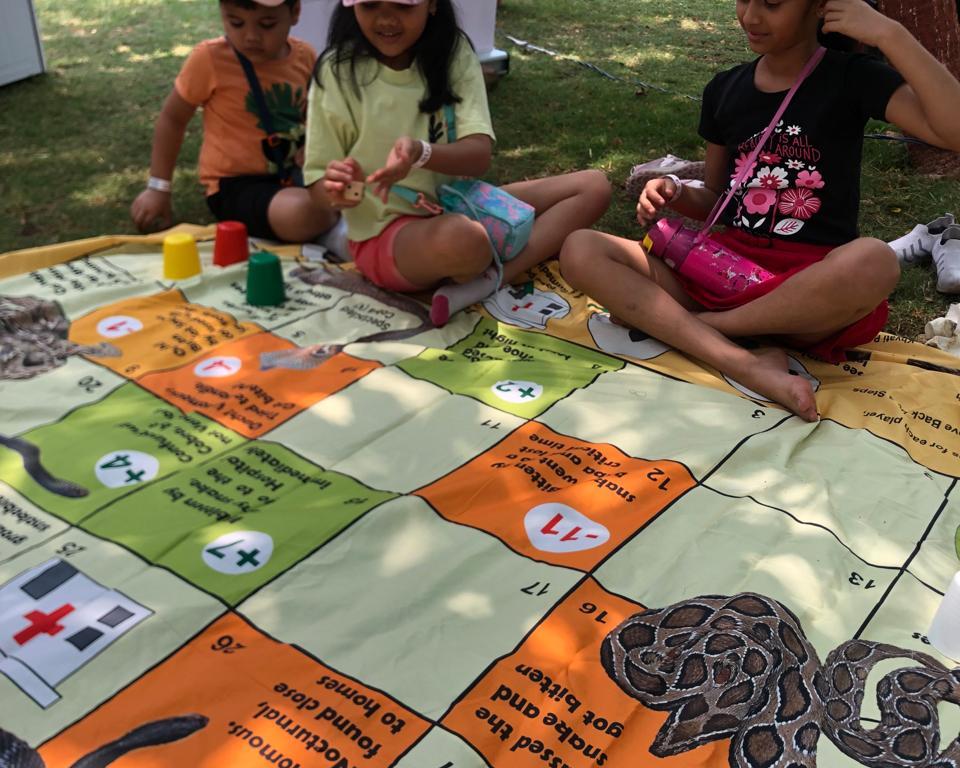
Childhood treasures return with Rootopia 2025, a unique heritage and ecology festival where traditional Indian games, folk rhythms, indigenous food reconnect children with nature, culture, and community.
- Science Backs Traditional Games
- The Revival: Rootopia 2025 – Paramparik Khel Utsav
- The Festival Zones
- Games, Sports & Development
- Cultural Corner – Tunes from Nature
- Farmer’s Corner – Taste, Talk, and Tradition
- Stone balancing
- The Purpose
On my daily walks, I often pause to watch the gardeners’ children playing in the mud. It’s good to see how indigenous games haven’t been lost to smartphones.
Their unfettered laughter reminds me of my childhood days of skipping and hopscotch with friends on the terrace. We called Hopscotch Stapu in Hindi, some call it Kit Kit, or Langdi.
A game I never mastered was the spinning top or Lattoo/Bambaram. Based on the gyroscopic effect, a skilled player makes the top spin while balancing on its pointed tip. Unfortunately, my lattoo never quite spun. But I was pleasantly surprised to see the older children in the park playing with wooden lattoos.
Another outdoor activity I love to watch is Kite Flying (Patang Udayan). The sharp kite string (manja), laced with glass, cut my hand, so my enthusiasm waned after one attempt, but it’s still fun to watch kites of all shapes, colours, and sizes fly high. In fact, kite flying festivals are a rage across the world. It’s good to know that some outdoor games have survived the turmoil of the digital storm.
Science Backs Traditional Games
Much before outdoor games became pixels, they were an important aspect of growing up and overall development. In fact, the importance of traditional, non-digital games for child development is strongly supported by research.
Developmental paediatricians, such as those associated with the American Academy of Pediatrics (AAP), emphasize that physical, unstructured play is essential for developing gross motor skills, dynamic balance, and coordination (AAP Policy Statement, 2018). The unique skill required for kite flying specifically enhances spatial awareness, kinesthetic perception, and the hand-eye coordination needed to manage the line and adjust to wind dynamics.
Cognitive psychologists, building on the work of Swiss psychologist and epistemologist Jean Piaget, note that these games promote cognitive growth by requiring children to engage in problem-solving, strategy planning, and memory enhancement (Siddharth, V., Kreeda, 2021).
Furthermore, the complex action of winding and launching a top refines fine motor skills and dexterity, while sociologists stress that these communal activities foster critical social-emotional skills such as cooperation, negotiation, and adherence to rules — foundational for healthy social integration (Ginsburg, K. R., American Academy of Pediatrics, 2007).
The Revival: Rootopia 2025 – Paramparik Khel Utsav
Promoting child development through heritage sports, Pune-based social enterprise The Youth COSMO organised first-of-its-kind festival — Rootopia 2025: Paramparik Khel Utsav. Supported by Two Brothers Organic Farms, Pune International Centre, and INTACH (Pune Chapter), the festival aimed to build eco-conscious learning ecosystems through play. It was graced by Arti Kirloskar, Founding Member and Convenor of Art & Culture at Pune International Centre and Convenor of the Kirloskar Vasundhara International Film Festival.
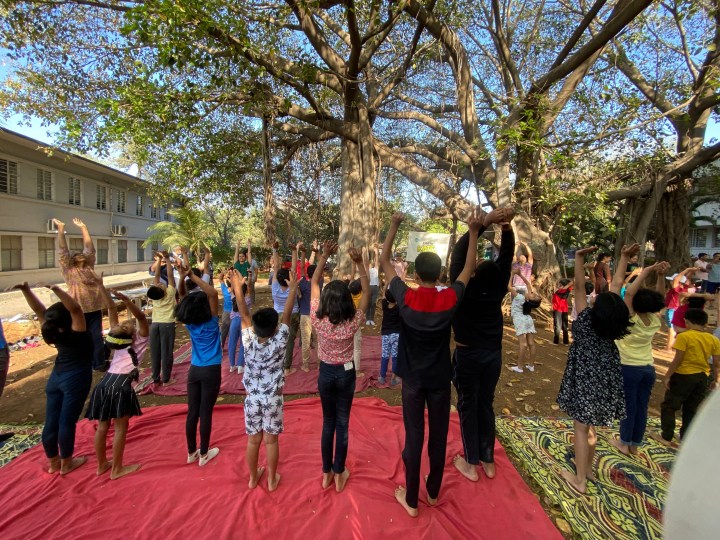
Rootopia 2025 promoted mindfulness, family bonding, heritage learning, and science-backed play in a way that felt fresh and child-friendly.
“Traditional Indian games were once rooted in local landscapes, seasons, and community life. They were more than play; they taught agility, resilience, empathy, patience, and ecological awareness. Rootopia revived this long-forgotten wisdom by turning play into a ‘living classroom’ where families learned together, moved freely, and reconnected with the soil,” says Nidhi Bennur, Co-Founder and Outreach Head, The Youth COSMO.
“By taking play outdoors again, Rootopia 2025 promoted the idea of ‘naturalist intelligence’, the understanding that children need space to explore, touch the soil, breathe freely, and connect with the planet they are part of. The aim was to rebuild the weakening bond between young people and nature, their oldest relationship, in a way that felt relevant, playful, and immersive,” adds Bennur.
The Festival Zones
The festival offered four immersive zones:
• Outdoor Play Arena
• Traditional Board Games Lounge
• Cultural Corner – Tunes from Nature
• Farmer’s Corner – Taste, Talk, and Tradition
Games, Sports & Development
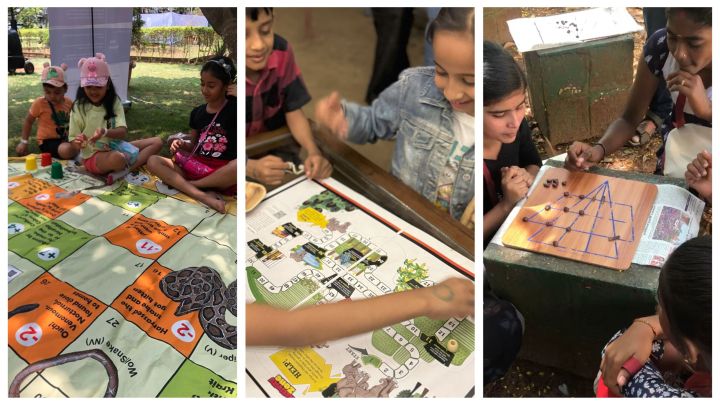
The festival introduced children to various traditional board games and sports that promote strategic and intergenerational play:
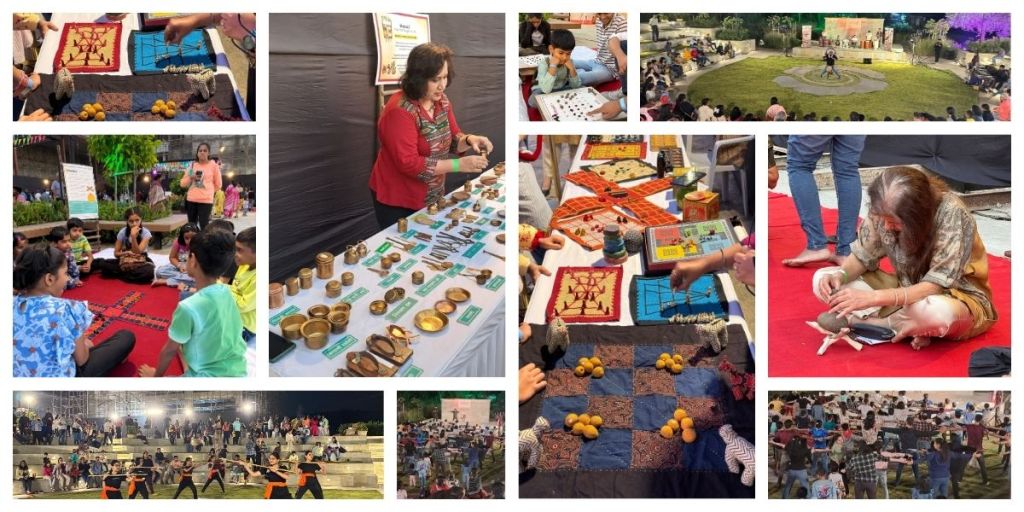
Pallanguzhi (traditional Math-based counting game using seeds): This is a centuries-old game from Tamil Nadu, played with seeds, stones, or shells. It develops fine motor skills, arithmetic thinking, and strategy. Traditionally played by women in courtyards, it teaches resourcefulness and slow living.
Bagh Chal (tiger vs goats strategy game): A Himalayan strategy game symbolising the ecological balance between predator and prey. Created by Nepalese communities to mirror real interactions between tigers and goats, it teaches planning, patience, and resilience.
Chaturanga (the parent game from which modern day chess has evolved): It teaches probability, decision-making, and adaptability.
Vimanam (two-player race game): A race game for two players where cowrie shells are used as dice & wooden pieces as pawns. This is primarily a game of chance, but involves thinking and planning. It also helps in developing counting skills.
Lathi-Kathi by Jnanaprabodhini(heritage martial arts of Maharashtra): A folk martial art used by village communities for self-defence and strength-building. Movements are rhythmic and rooted in nature-based combat.
The all-girls troupe delivered a powerful showcase, tracing the lineage of lathi-kathi to the era of Chhatrapati Shivaji Maharaj. Their demonstration of swords, bamboo sticks, and daan patta highlighted the depth of traditional martial intelligence.
Kalaripayattu with Nikhil Bollapragada (also known as the mother of all martial arts from Kerala): This is considered one of the oldest martial arts in the world, meaning “practice in the arts of the battlefield”. The movements represent those of animals.
Cultural Corner – Tunes from Nature
Led by a Pune-based drum circle artist, among others, cultural corner celebrated music crafted from nature itself.
Drum circle: Artist Yudi showcased instruments made from bamboo, gourd, clay, and seed. Indian communities once crafted instruments from natural materials; this space revived that tradition by showing children how sound emerges from Earth-derived elements.
Folk rhythmic storytelling: Vaishali Kulkarni of The Story Station brought history, culture and nature together in immersive stories.
There were stalls with toys crafted in wood, brass, clay, and glass. The wooden toys and the newly introduced cloth-based games, along with the clay water whistle (chirping like a bird) proved to be very popular.
Farmer’s Corner – Taste, Talk, and Tradition
Visitors met local farmers, tasted native snacks and organic native food which were millet- and jaggery-based by Two Brothers Organic Farms.
Stone balancing
A hands-on demonstration by Gautam Vaishnav, where he taught children about centre of gravity while helping them learn to focus and concentrate. In this, children handled rocks of different types, weight and density.
The Purpose
The event fostered mindful, screen-free play and deepened ecological awareness:
• Children connected with soil, movement, and nature
• Development of strategic thinking, patience, focus, balance, and agility
• Cultural grounding through folk rhythms
• Fostering eco-consciousness and a low-waste, sustainability-first mindset
• Sensory awareness and joy-based learning through natural materials
We hope to growth this into a movement, where heritage-and ecology-based youth festival celebrate India’s cultural and environmental intelligence through play,” emphasises Nidhi Bennur.
Date: Saturday, November 29, 2025
Venue: Pune International Centre, Panchwati — Pashan
Entry: Open to all ages (children 6+ and families)
For more details, visit Rootopia – Paramparik Khel Utsav
You may like to read
Rewire Your Brain: Heal Your Mind and Body
Habitat Restoration: Volunteer Programme at Asola Bhatti Wildlife Sanctuary
My Train Journeys Through India
COP30, Delhi-NCR Pollution & Article 21: India’s Fight for Clean Air
Healing POWER OF An Urban Forest Bath
Grandma’s Secrets for a Sustainable Lifestyle: Ditching the Disposables
From Pedometer to Peace: My Journey with Mindful Walking
The Green Lungs of Delhi-NCR
Jungle On Foot—6 days of Tiger Census 2018
This blog post is part of ‘Blogaberry Dazzle’ hosted by Cindy D’Silva and Noor Anand Chawla.

 Queen of Treasures
Bringing back games once rooted in local landscapes, seasons, and community life is an admirable enterprise.
LikeLiked by 1 person
Yes, it’s also better. Digital makes us stupid over time. Balance is crucial.
LikeLike
Unplugged, screen-free play and reconnecting with nature is a needed breath of air in today’s screen-obsessed world for kids. It’s true that these games don’t just entertain but teach strategy, coordination, community, and a sense of rootedness. I think the oldest games are the best way to grow.
LikeLiked by 1 person
It is a great initiative by Rootopia to reintroduce and popularise or traditional games and martial arts at such a low cost through their events. Yes they are great low cost and eco-friendly options that promote motor coordination and social skills.
LikeLiked by 1 person
What a fantastic venture, Ambica. I am reading this today, Nov 29 and wondering how it must be going there. I wish I could start something like Rootopia. I keep lamenting that the internet has killed all the games and activities that we used to play. Kids these days just know their gadgets.This was nostalgia for me..I could play the top on my palm. My brother taught me. As for kite flying, I would be his assistant holding the charkha.We used to play with halved tamarind seeds or shells as dice and draw the game on the floor with a chalk.
LikeLiked by 1 person
You should make a club where you live and take this idea forward. Am sure it would be amazing👍
LikeLike
What a clever and apt twist to ‘Zootopia’ with that name. This feels so good to see traditional Indian games get a second life. There’s something magical about childhood memories, nature, and community coming together, isn’t it?
LikeLiked by 1 person
Yes. It’s good to use all the physical faculties instead of digital stuff all the time.
LikeLiked by 1 person
Wow! This is the 1st time I have heard of Rootopia! Sounds wonderful as well! A great way to introduce children to the games we grew up playing.
LikeLiked by 1 person
Traditional games focus on many aspects of growth and development including strategy, logic, motor skills, concentration, etc. Loved the idea behind this event and would’ve loved to attend if I was in Pune. Great initiative!
LikeLiked by 1 person
I would have also gone if I had been in Pune!
LikeLiked by 1 person
I hope they do something like this in chennai too. The idea of spending even a day without the gadgets and using the senses to enjoyy seems wonderful.
LikeLiked by 1 person
You should write to them on insta.. it’s a good idea
LikeLike
We also have these initiatives taking place in our community. This is very much needed for kids and sometimes even for adults.
LikeLiked by 1 person
That’s nice to know.
LikeLike
I had written about traditional games in Deccan Herald some years back. There were a couple of places in Bangalore that was kind of reviving them. There might be more . My favourite indoor game is Ludo ( dhayamkatti) and 5 stones. I like to pick nice pebbles wherever I go and try a game of two to test my motor and hand-eye coordination
LikeLiked by 1 person
Never played 5 stones. I should look that up.
LikeLike
I really hope they do this in Mumbai and the games are really so enriching. These are games that actually help overall body and mind. Hope more and more people read this blog!
LikeLiked by 1 person
You should send your suggestion on Instagram to them😊
LikeLike
Your article beautifully captures how traditional Indian games reclaim relevance at Rootopia 2025. I loved the nostalgia, cultural context, and modern perspective. It inspires readers to reconnect with heritage while celebrating community, playfulness, and sustainable joy across generations together today.
LikeLiked by 1 person
this is a lovely initiative to revive long lost games. Thanks for sharing this with us
LikeLiked by 1 person
Reading about Rootopia 2025 warmed my heart. Seeing traditional games celebrated and children reconnecting with nature feels like a revival of childhood magic,
LikeLiked by 1 person
What a lovely idea! But kids games do make me think of the show Squid Games!
LikeLiked by 1 person
I haven’t watched squid games, and still prefer the old-world ludo, chinese checkers etc :P
LikeLiked by 1 person