

Originally published in The Times of India, May 18, 2015
Updated for digital clarity: March 2026
A sapling that traveled 4,000 miles in a special climate-controlled box is now a towering canopy in the Gyeonggi province. It is not just a tree; it is a living bridge between the soil of Bodh Gaya and the soul of Korea
The roots of peace and harmony lie deep within the souls of nations. In the Asian region, these roots are shared between two progressive spirits: India and the Republic of Korea. (ROK)
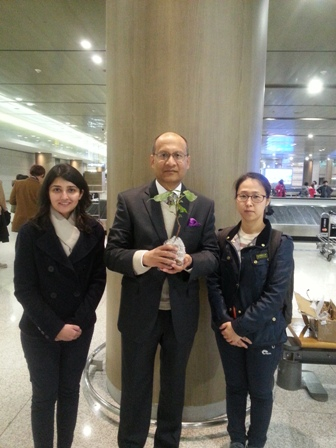
A living symbol of this harmony—a Bodhi tree sapling gifted in 2014—has matured from a fragile 30 cm plant into a sturdy landmark of friendship. Originally a gesture of goodwill from former Prime Minister Manmohan Singh to the Korean people, the tree has transitioned from its nursery at the Korea National Arboretum to its permanent home, where it stands as a testament to a shared Buddhist heritage that claims nearly a quarter of the ROK’s population.
Enlightenment in Exile
Bodhi means enlightenment. It was under the heart-shaped leaves of such a tree in Bodh Gaya that the Buddha attained awakening. Legend says that after his enlightenment, the Buddha spent an entire week simply gazing at the tree in gratitude.
In Korea, as the roots of this specific tree have taken hold in foreign soil, the diplomatic and economic roots between our nations have mirrored its growth.
The “400 Percent” Growth
During the External Affairs Minister Sushma Swaraj’s visit to Myanmar in August 2014, South Korea’s foreign minister Yun Byung-se had announced that his country’s relations with India had grown by 400 per cent. He had even brought a photograph of the growing tree to prove this—the sapling was barely 30 cm when it had been flown to Seoul but by August 2014, it had grown to 120 cm.
By the time Prime Minister Narendra Modi visited in 2015, the tree was no longer just a gift; it was a catalyst. It paved the way for the ‘Make in India’ initiative, welcoming Korean giants like Samsung, LG, and Hyundai into the heart of the Indian household.
The View from 2026
Today, the “Bodhi Connection” has evolved. We are no longer just trading electronics and automobiles. We are trading culture. We are no longer just trading hardware; we are sharing heartbeats through the “K-Wave.”
- From the “Hallyu” (Korean Wave) sweeping through Indian cities to the spiritual tourism of Koreans visiting the Buddhist Circuit in Bihar and Uttar Pradesh, the branches of this tree have spread wider than ever imagined.
- Wooing the Masses: From the streets of Northeast India to the suburbs of Mumbai, K-Dramas (K-Series) have become the “comfort food” of Indian television.
- A Rhythmic Bond: K-Pop has turned into a bridge of “awakening,” mirroring the very meaning of the word Bodhi.
- Digital Play: Competitive gaming has added a layer of modern “community welfare,” connecting youth across borders in ways the early planners could only dream of.
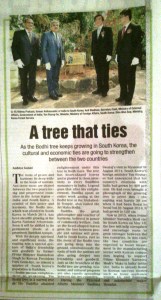
As the roots of the Bodhi tree go deep into Korean ground, the friendship between our nations reaches into every corner of modern life—from spiritual enlightenment to the glowing screens of our smartphones.
Ambica Gulati is a journalist and editor whose work explores global affairs, travel, environment, and the intuitive arts. From short stories to wellness mantras, she focuses on meaningful experiences in a complex world.
From the Archives
If you enjoyed reading this, you may like to continue the journey:

 Queen of Treasures
11 thoughts on “The Living Bridge: A 20-Year Legacy of the Bodhi Tree in Korea”