

In the labyrinthine heart of Kashi—the world’s oldest living city—the air is thick with the scent of incense, the persistent chime of temple bells, and the low hum of ancient chants. While the rest of the world raced toward the future, this city made a different choice: it chose to stay present. To witness a morning here is to see a thousand years distilled into a single moment.
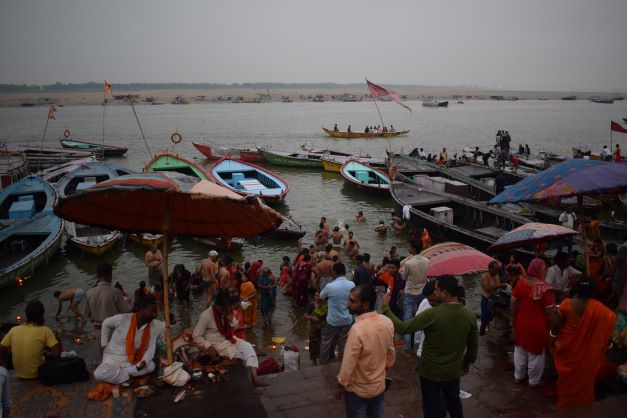
Pitter patter…the raindrops fell into the Ganga, melting into the waves to continue their journey into the Bay of Bengal. Just like the little droplets, the sea of humanity continued its fervent morning rituals along the embankment on Dashwamedha Ghat. Grey clouds loomed, dawn had no colours. It was the colourful humans who looked to the skies for moksha, some praying to the river mother to wash away their sins, while others bathed, yet more kept arriving for a ride in the boats. Here ends the cycle of birth and rebirth, here awaits moksha.

Among the oldest inhabited cities in the world, Varanasi continues to be the most important pilgrimage for many in India. The name seems to stem from two tributaries of the Ganga at the city’s border—Varuna in northern Varanasi, and Assi, now a stream in the southern part ,near Assi Ghat.

The roots of the city lie in the Rig Veda, where it is mentioned as Kashi, originating from the Sanskrit word kas meaning ‘to shine’. Also referred to as Avimukta or never forsaken by Shiva, Rudravāsa or abode of Rudra, the city has been the shining light for intellectuals, seekers and pilgrims for centuries. In 528 BC, Buddha gave his first sermon, ‘The Setting in Motion of the Wheel of Dharma’ at Sarnath, just 20km from the main city. Adi Shankara established the worship of Shiva in Varanasi in the 8th century. Since then, Shiva devotees throng here in search of salvation at the 84 ghats and numerous temples, where life and death mingle.

It is here Tulsidas wrote the Ramcharitmanas in Awadhi. Kashi has been home to revered ones such as Kabir and Ravidas. Mughal emperor Akbar built two large temples dedicated to Shiva and Vishnu in the 16th century here.

The temple city never sleeps. Dawn or dusk, the ghats and temples are live with prayers and prasad. Legend says that Dashashwamedh Ghat was created by Brahma to welcome Shiva. He sacrificed 10 horses during the Dasa-Ashwamedha yajna performed on this ghat. Pilgrims throng in the evening to take part in the spectacular evening aarti.

Timeless, magnificent, and fascinating, Varanasi continues to inspire, with every morning ringing in a new day, a new ray of hope.


 Queen of Treasures
7 thoughts on “Kashi: The City That Never Stopped Praying”