

At 50, this thrilling caving adventure in Meghalaya tested my strength and fitness levels, but the adrenaline rush was unforgettable
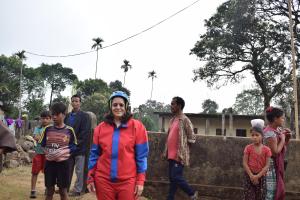
My curiosity always gets the better of me, pushing me beyond my boundaries, challenging my biological clock. And my ignorance adds to the spirit. Blame it on my stars—Mars and Rahu! This is exactly what happened when I heard the word ‘caving’. Had I known of the rocky parts, I would have backed off like a coward.
Much as I love physical activities, I am not very fit—I need to speed up, have stronger muscles and bones, and be a little spunky. More often, my greys and fine lines make it easy, but then life isn’t about being easy.
They call Meghalaya the abode of the clouds. But I call it time travel. This is where the current Meghalayan Age springs from. Meghalaya is home to some of the world’s oldest caves, which store the secrets of Earth’s evolution. In fact, an international team of scientists have been studying these caves since 2014 and have mapped many of them.
Come, walk with me through the forest and then I will tell you more about the Meghalayan age. Caving is not just an adventure activity, as I realised on this trip. Caving means going into the most sacred space, to the Earth’s womb to understand what the stalactites, stalagmites and pearls are saying, as they are the Earth’s spokespersons.
With expert native guides, we went to see Krem Krung Krang Muhabon (krem means cave) near the village of Lakadong (famous for the turmeric, which I did bring back). In 2015, Krem Muhabon’s exploration had revealed the cave’s length to be close to 1,248 metres.
Cavers have been exploring the caves in Meghalaya for almost 23 years. There are said to be over 1,580 caves in the state and 970 have been fully or partially explored.
Forest Trek to Krem Krung Krang Muhabon
While the distance from the road to the cave through the forest wasn’t long, or so our guide said, it wasn’t easy for the city dwellers used to sedentary lives.

With unmapped trails, the walk can only be done with trained adventure guides or natives. You also need special equipment for this such as a suit, headlight, gloves, ropes.
Walking through the humid jungle in a special suit, rubber boots and a helmet with a headlight wasn’t the best way to trek. It was too hot to walk in the suit that had a strong resemblance to what the astronauts wore (or hazmat suit) — guarding against branches, rocks and tiny particles and insects who don’t like humans.
But then, we didn’t know that there would be a drop to the cave and we probably wouldn’t find place to put this on. It also meant we would have to carry this through the jungle.
It’s best to do all this activity during daylight hours, for the dark forest sure looks sinister. It can also be a long day in the forest and you can leave nothing behind, except trampled leaves. Nature is only to be seen, studied and enjoyed, not tampered or soiled. Caves hold the secrets of our existence.
Loose soil, fallen trees, slippery leaves, uneven terrain meant it took far longer than anyone had perceived. We all had to go in a single queue and each one had to eventually wait for the other. I was pretty slow and clumsy. But everyone was patient.
Crawling into the Cave

Finally, we reached the spot, where the Earth caved in and there was a huge opening. It was all mossy and slippery and I couldn’t find anything to hold on to. I sat down to crawl into the cave as I couldn’t balance my feet on the uneven rocky surface. The experts just moved swiftly from rock to rock.
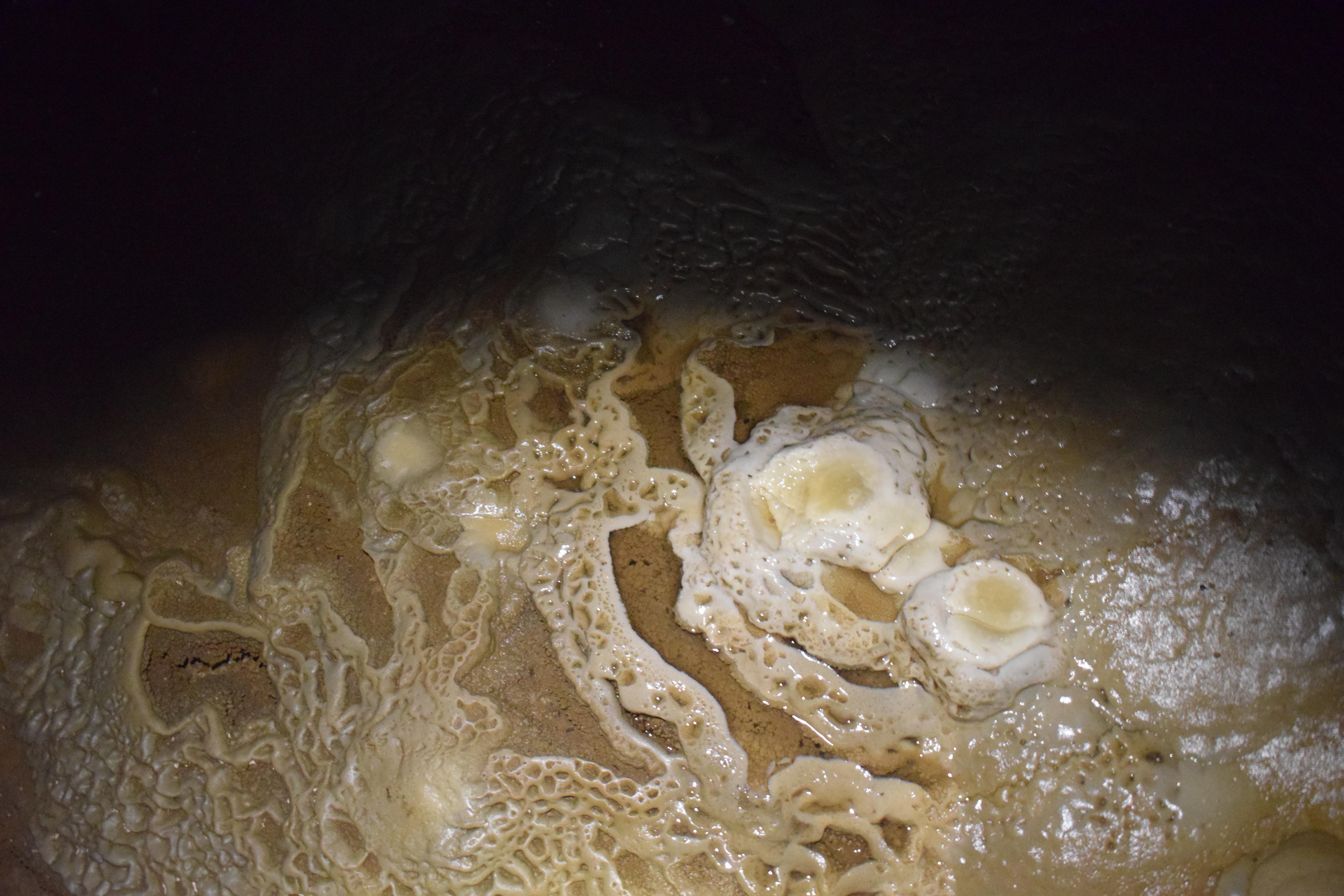
A little spring trickled inside the cave, from which I did have some water—sweet and clean. I bent where I could to get some pictures of the formations, the stalactites and stalagmites. And then a short walk in a short dark passage meant a sight of the glowing pearls.
All through the exploration, the guide instructed us not to touch anything, as it would stunt the growth. Nature is delicate and fragile. While I had seen these formations in documentaries, seeing them in person made for a surreal experience.

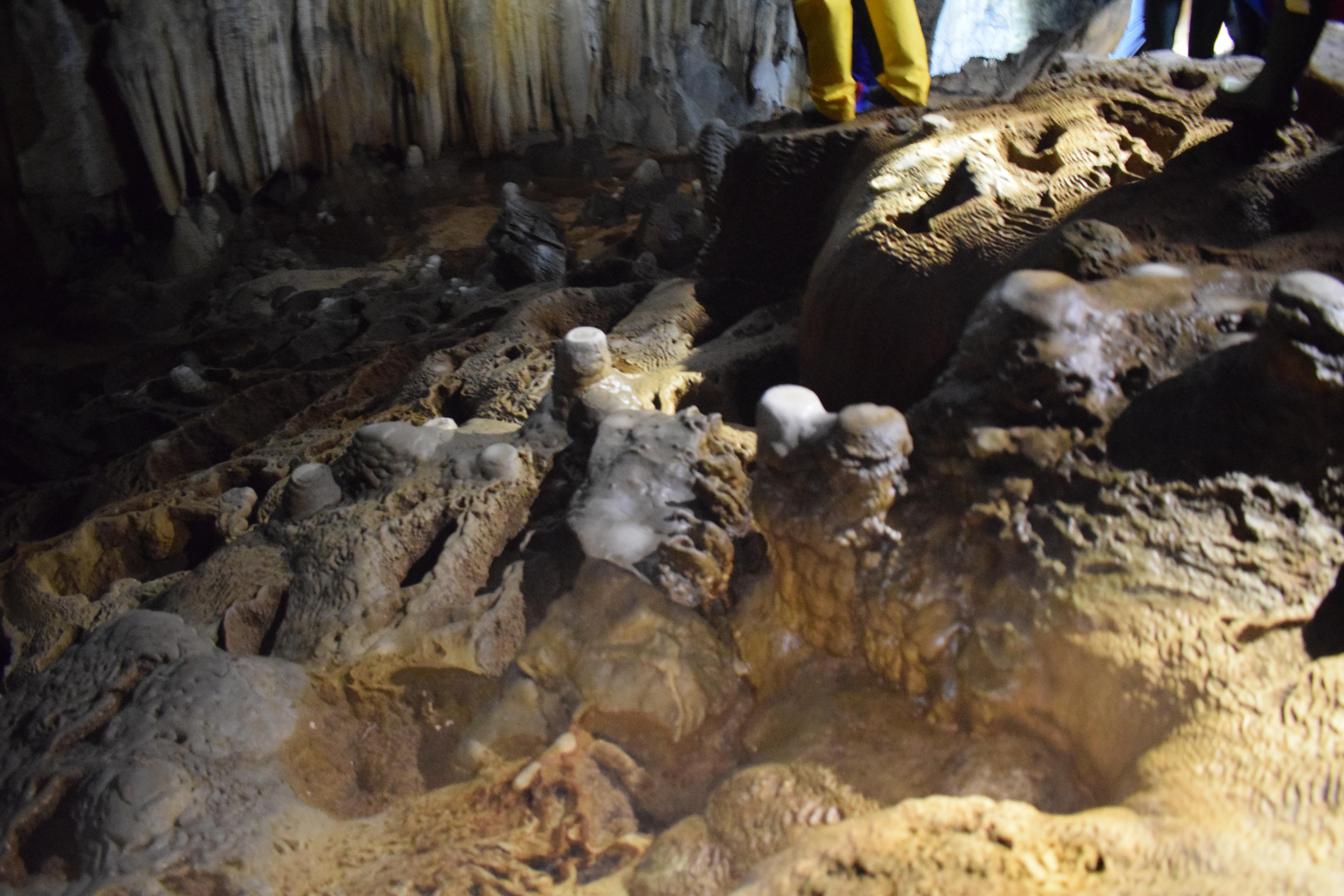
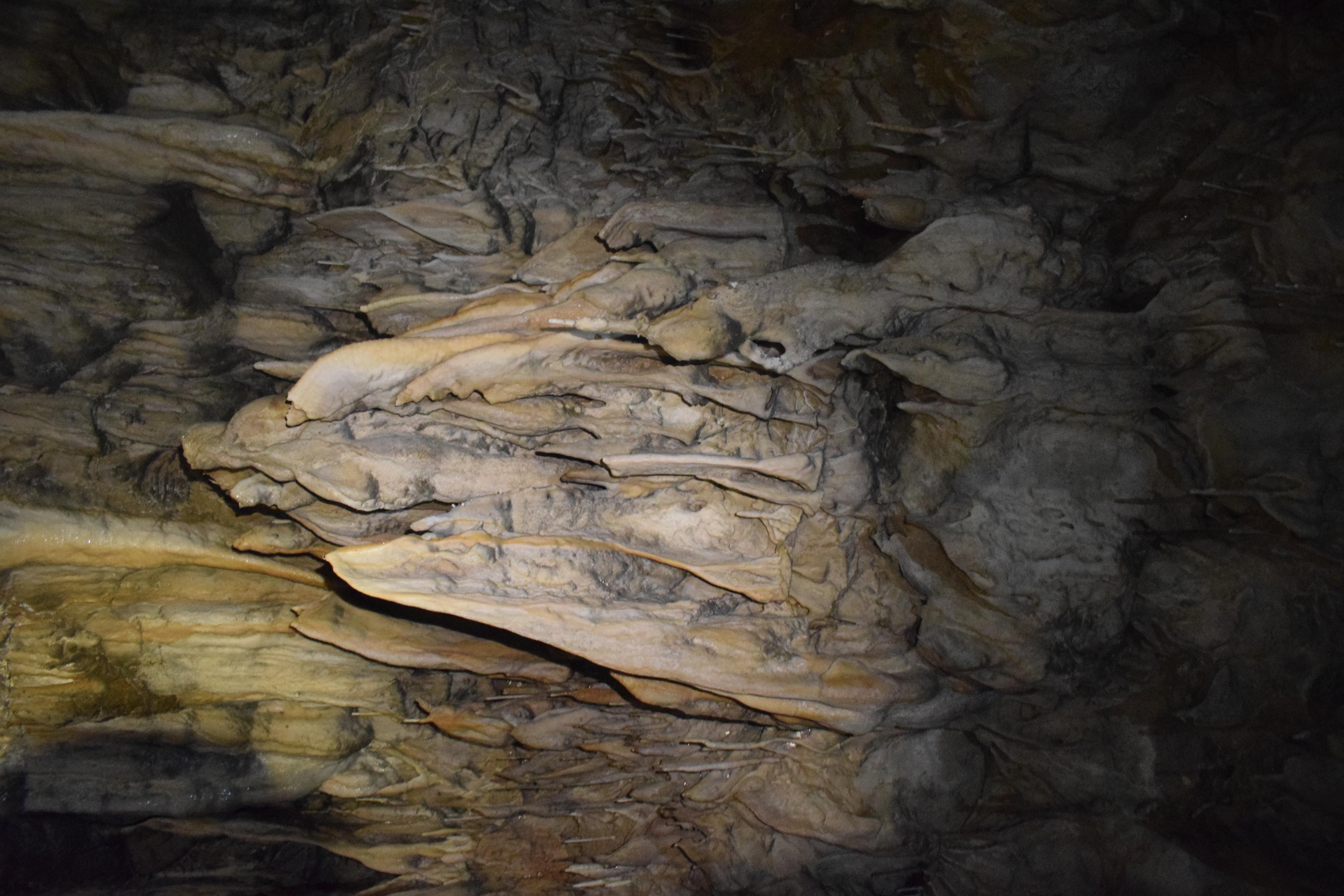
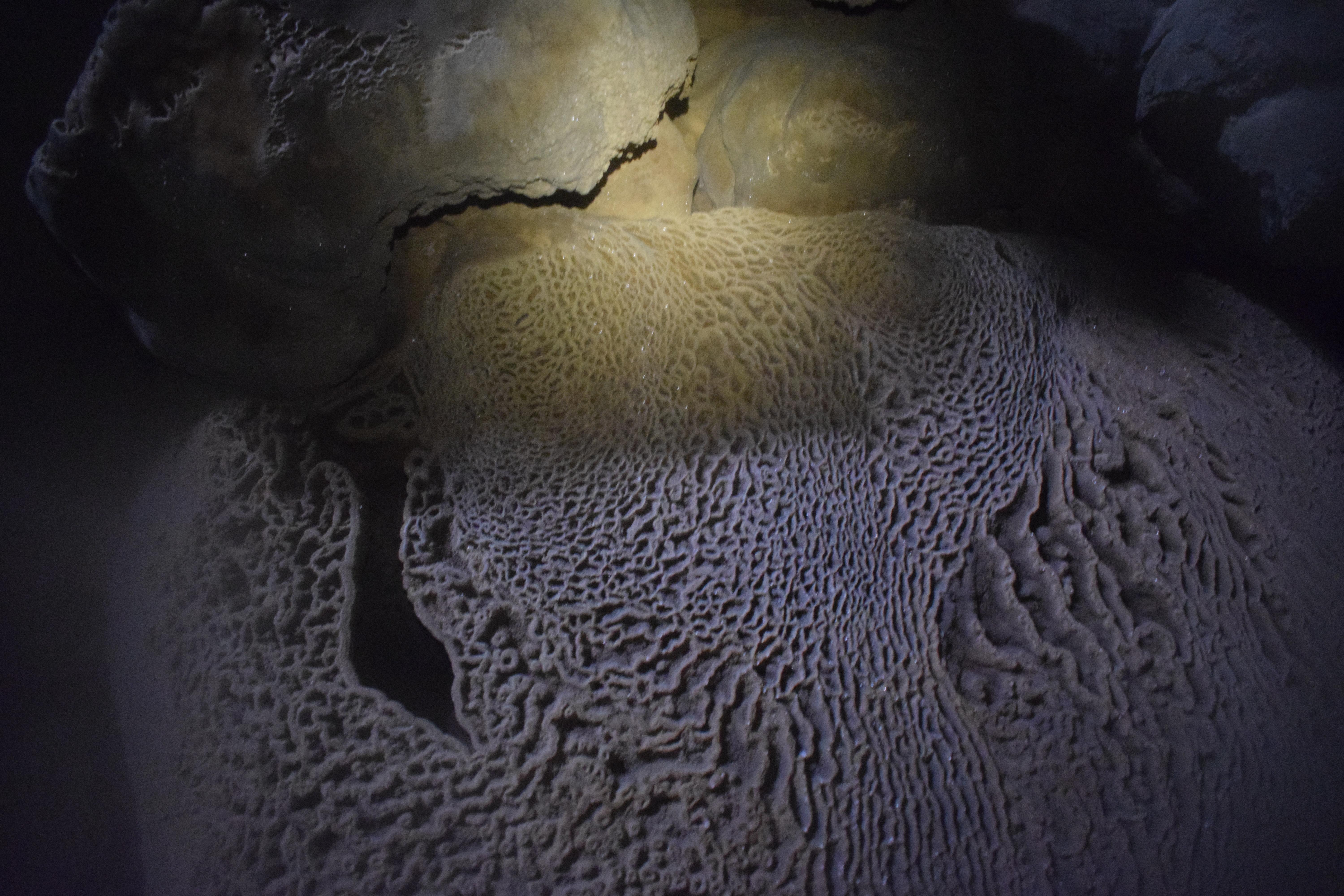
A stalagmite means rock formation rising from the floor due to the accumulation of material deposited from ceiling drippings. I gazed studiously at the white crown near my foot. The little light streaming out of the bulb on my helmet turned everything eerie. It was pitch dark at that spot. Only some rays streamed in through the wide opening but did not reach where I stood.
Close to a wall, I saw a stalactite, an icicle-shaped formation hanging from the ceiling. The tip looked sharp and we had been told not to touch anything, break or carry back with us. These formations are produced by precipitation of minerals from water dripping through the cave ceiling. All these were mirrors to evolution.
It had been a hero’s journey, going down through a non-existent path into the dark to see these magnificent things. It had taken me precisely five minutes to reach the bottom but for the guide it was a matter of few seconds. He later told me this was a difficult cave for a beginner and I patted myself for my successful attempt.
Meghalayan Age
Now, the epoch we live in. We are in the geological epoch called the Holocene. This began about 11,650 years ago. It is divided into three parts-beginning with Greenlandian, going to Northgrippian and to the present Meghalayan Age, traced to the last 4,200 years. The evidence of this time scale lies in the caves of Meghalaya. Hence, the name.

Caves are eco-sensitive systems; they are slow natural forming clocks or the Geologic Time Scale. Wikipedia defines it as “a system of chronological dating that relates geological strata (stratigraphy) to time. It is used by geologists, palaeontologist, and other Earth scientists to describe the timing and relationships of events that have occurred during Earth’s history”.
This geologic time scale is based on the study of chemical signatures in stalagmite in the Meghalayan caves. As per data collected by experts, a mega drought, lasting almost two decades, caused the end of global societies close to 4,200 years back.
These cave systems comprise river-cave passages mixed with massive and richly decorated relics along with magnificent clean-washed shafts. Only serious cavers can go into some as there are vertical drops and waist-deep water, besides bats.
And I kept thinking, I should have explored Krem Krung Krang Muhabon at a slower pace with a scientist.
Trekking back
THUD, THUD… with not a drop of water for the last seven hours, my heart was beating fast and I kept huffing and puffing all the way back. My guide was the only human there and he followed me patiently.
Beautiful as the forest was, it wasn’t silent. The breeze whistled through the trees, the dry leaves rustled, but there was no birdsong.
The special suit now hung around my neck, and night was fast approaching. The rays had become dimmer. But I walked and walked, till I emerged on the road, giving myself a mental pat.
I had been a visitor to the mother’s womb, privy to her secret life, seen the living rocks that were the guardians of time.
Best time to go caving: Winter season (November to February)
How to reach Meghalaya
There are flights to Guwahati from all over India, even abroad. Then it takes a five-hour drive to Jaintia Hills, which are part of Jowai district. You can stay in Shillong overnight and do a day trip for this, or stay in a homestay in Jaintia Hills.
I’m participating in #BlogchatterA2Z
Read previous posts: A, B

 Queen of Treasures
Reading your experience now I am craving the hiking experience. Kudos to you girl
LikeLiked by 1 person
Go for it. And give us some laughter chronicles about hiking with a baby!
LikeLike
Oh this sounds so so adventerous Ambica! I have seen stalactites and Stalgamites in underground caves, calle Prometheous caves in Georgia, but these look totally amazing
LikeLiked by 1 person
I am a sucker for geological sites Harshita, you have given a new bucket list.
LikeLike
Love the details you provide.
LikeLiked by 1 person
The way you describe the caves, makes me really scared. No wonder northeast was one of the places of analysis of bats.
LikeLiked by 1 person
Caves ar safe, just something Delhi people are not used to! I will look up the bats research since I find those creatures very fascinating.
LikeLiked by 1 person
I certainly love the idea of exploring the Meghalaya caves. Awesome that they have already explored 970 of the 1580 caves. But I am not sure about actually climbing into the caves or walking with all my gear through the forest. You sure got amazing sights inside the caves. I would sure be huffing and puffing if I tried that adventure!
LikeLiked by 1 person
Wow – what an adventure you had! I went caving years ago in Malaysia and we literally had to squeeze through some small crevices. I loved it! I would definitely sign up for this tour, if I am in the area.
LikeLiked by 1 person
Tully.. something that surpassed my expectations. I do hope you get to see the caves in India.
LikeLike
Krung Krang Muhabon Cave looks very beautiful and definitely worth the trek through the jungle, wearing the heavy suits, to reach it. Indeed, go, see, and leave no trace behind you. I wouldn’t imagine how people could break the stalactites, that formed over thousands of years, just for a souvenier. I have visited many caves but only a few were as challenging to get in as Krung Krang Muhabon. That uneven rocky way down looks pretty difficult to navigate without anything to hold on to.
LikeLiked by 1 person
As I read through this blog post, I got a little sweaty imagining your adventures to the Krung Krang Muhabon Cave. My adventurous spirit does not extend to caving so I am admiring you so much for taking this cave on. The slippery way down sounds like a very perilous but then you were rewarded with the beautiful geological sights inside. What a cool experience indeed.
LikeLiked by 1 person
Wow! Hats off to you! I enjoyed the adventure through your story. Walking through unmapped and unmarked paths (as is in most parts of India) to the caves is the biggest challenge! Guides certainly are of help. I can imagine the discomfort in wearing those thick suits in humid and hot weather. I am glad you got to see some beautiful geological stuff inside including stalagmites, unusual rock formations and pearls. Well-done! You are very brave!
LikeLiked by 1 person
What an experience! I don’t mind crawling on slippery rocks and getting scratched here and there. It’s the darkness inside the earth that will get me because of my claustrophobia. I agree with you, only a go with a trained experienced guide.
LikeLiked by 1 person
I used to spelunk when I was younger, so I can totally relate to the challenges of trekking and climbing cliffs or narrow pathways to reach a cave, especially when you don’t have the same stamina as before. Despite these difficulties, reaching your destination is incredibly rewarding—nothing beats the natural beauty that greets you when you enter Krem Krung Krang Muhabon. The sight of ancient stalactites, stalagmites, and other formations is simply breathtaking. However, having to wear that special suit, rubber boots, and a helmet with a headlight can be quite uncomfortable. The suit feels bulky and hot, and the boots aren’t the easiest to walk in. But these discomforts pale in comparison to the thrill and wonder of exploring such a magnificent cave.
LikeLiked by 1 person
It was thrilling for sure
LikeLike
Wow! That was such an experience. I am not sure if I have the capacity to do this too but you are inspiring. It is awesome and exciting to see all these formations up close.
LikeLiked by 1 person
I love that you did this while you were in India of all places! Meghalaya may be the abode of the clouds, but you chose to head far from the clouds and have an underground adventure. I used to go spelunking and haven’t been in so long. But your photos and experience make me want to head out again. So fun!
LikeLiked by 1 person