

Experience the thrill of spotting tiger trails, exploring the legacy of Jim Corbett, discovering indigenous practices and hidden gems! This Jim Corbett National Park guide unveils must-see sights, historical sites and tips for a memorable wildlife adventure.
Time has a strange way of changing hearts and minds. The Jim Corbett National Park in Uttarakhand is India’s oldest national park, named after a hunter-turned-protector Jim Corbett. It is also a special place for me, as I began my wilding journey here.

The park is said to be the first national park in Asia. In 1936, the park zone was called Hailey National Park, after Sir Malcolm Hailey, the first governor of the United Provinces. In 1957, the national park was named after Corbett as a mark of respect for his love for wildlife. Project Tiger was launched here in 1973.
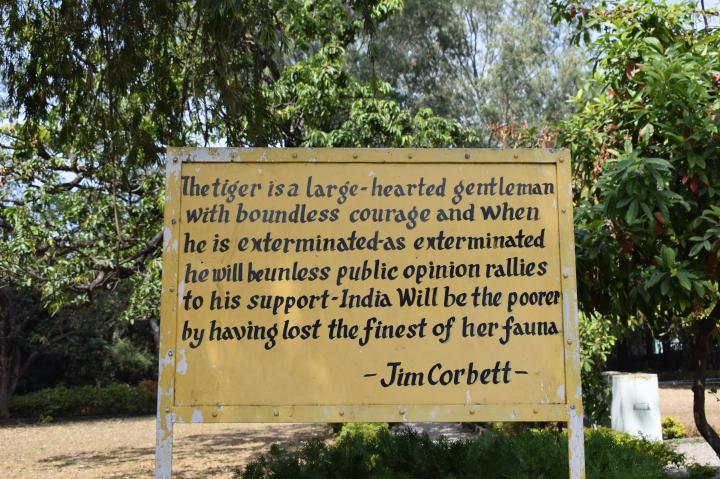
The national park is around five hours drive from Delhi. And my introduction to it was during a school trip. Little did I know it would become a ‘park of firsts’ in my life. It was here that I drove Ford Endeavour all the way from Delhi, not used to driving a SUV. It was my first professional driving travelogue that I penned for Swagat (Air India’s inflight magazine, now reborn as namaste.ai). It is where I saw a tribe called Chunere and their indigenous ways of making wooden containers. It is here, I remember seeing the jackal in the wild, the martens, the pigeons, an elephant family crossing the road and much more.
It is the place that ignited my love for forests and their importance. I enjoyed green drives here, organic food, good sightings and learned about the wheel of time through the life of Jim Corbett, the Britisher who saved the people from maneaters and then later gifted an entire village to them before leaving for Africa.
Let me take you through my journey to this park, the things I saw over 13 years.
Driving Ford
I had been invited to review the grand Ford Endeavour, my first drive in a SUV. I chose to go to the Jim Corbett National Park, which is where Project Tiger started. I hoped for a clash of the titans–the machine beast meeting the wild beast, but didn’t happen. However, the verdant hues got imprinted into my soul forever.
We stayed at a resort by the river Kosi, a fabulous experience seeing the river and the mountains the day through. Packed in an open Gypsy with a group, we drove through winding forest trails to meet members of the Chunere tribe. Every winter, they would descend from the upper parts of the Himalayas to the lower regions and make wooden containers to store ghee, curd, milk. All these containers were made with a wheel that cut the wood using natural flow of the river.
The sale of the containers got them a bare minimum amount to survive the winters. And the ways are perhaps lost in time, as it’s been over a decade since I saw this being done. Who knows, perhaps I would have to find them again to know.
(I wasn’t a picture person in those days and don’t have photographs, feel so sad that I didn’t keep visual documentation, just memory bank)
Wildlife Sightings on the Jungle Safaris
You can’t be in the vicinity of a national park and not do a safari. I have done one on almost every trip and seen different wonders in each.
Wearing muted clothes so as to not scare the animals, we stopped the car to let a herd of deer cross the road, making their way to the riverbank. The drive to the gate was full of scampering langoors. Once officially in the park, we drove through a trail flagged by gnarled, knotted, angry trees.
Somewhere, the barking deer, called out, but didn’t show us its face. Near the riverbed, lapwings hopped. A grey-headed eagle circled above with its mate in the sky. The children were somewhere close by, according to our guide and the parents were keeping track.


The vibrant green bee-eaters followed our drive, as the Gypsy made its way over the loose river pebbles. It is home to crocodiles. We stopped to see tiger pugmarks and deer hair.
On the way back, we saw colourful butterflies, blue magpies, yellow-throated woodpeckers, more langoors and a pair of yellow martens scampering up and down a trunk. Close to our resort, we saw a jackal on the road. The only sad part in those days—I didn’t know photography, had never even thought of it, so I have only words to share this safari.
Over the years, I have seen spotted deers, sambar deers with their fawns, langoors, Asian Flycatcher, Shama Thrush (a mimic and insectivorous), tiger pugmarks and heard more birds, but not known which ones. I have seen peacocks dance on the road, emerald dove (state bird of Tamil Nadu) pass us, migrating Ruddy Shelducks swim in the river along with cormorants and egrets. Ruddy Shelducks are popularly known as ‘surkhaab’ in India. Surkhaab means red in Persian, in sync with the waterbird’s orange-brown plumage.
Jim Corbett Museum, Kaladungi, Choti Haldwani
Dressed in his attire as a hunter, Jim Corbett or Carpet Sahib was a hero for the people of Kaladungi, near Choti Haldwani. Born on July 25, 1875, his winter home is now a museum, where his beloved dogs, Robin and Rosina, are also buried. He was a colonel in the British Army and also worked with the railways.
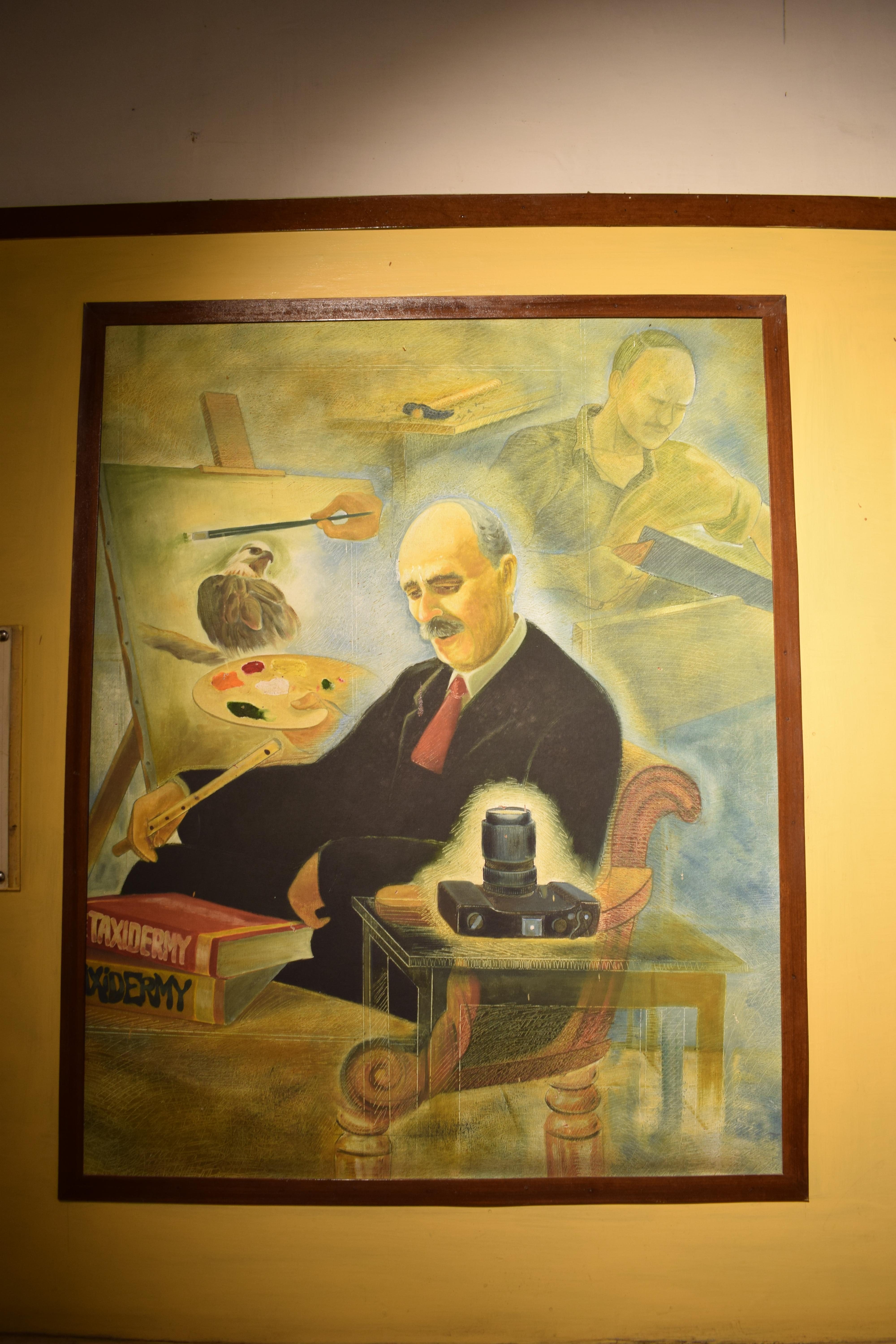

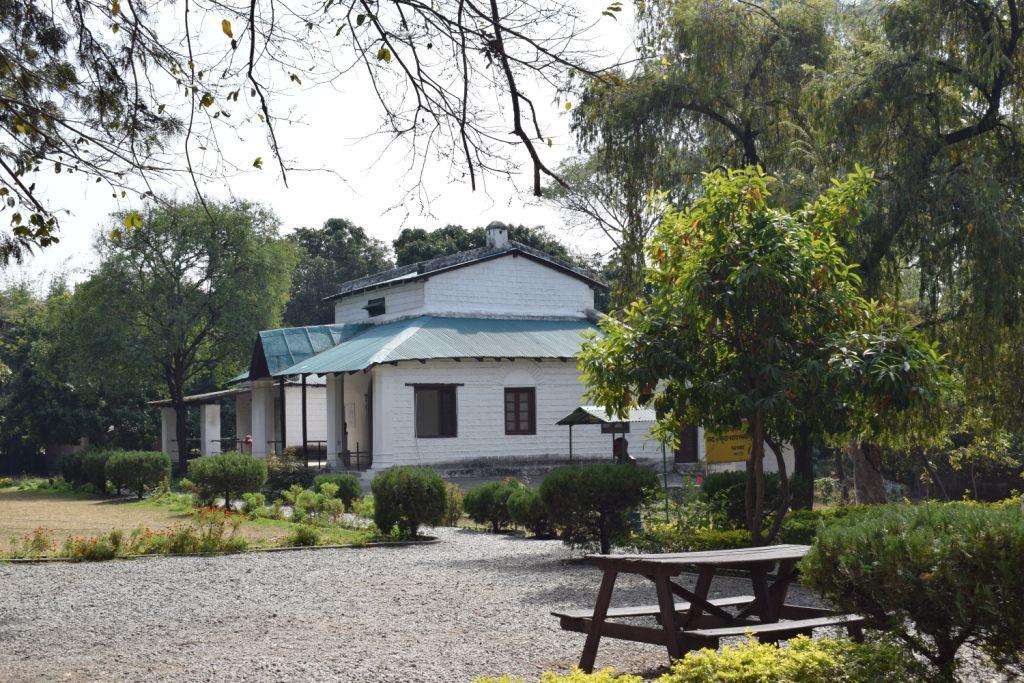

Corbett was born and lived in Nainital in Gurney House. His sister, Maggie, was his companion till his death in Kenya on April 19, 1955. The museum houses his letters and photographs only. Gurney House is where the belongings lie.
The museum grounds also house the graves of his dogs. The souvenir shop run by Corbett Gram Vikas Samiti had lots of organic stuff, besides the tees, toys and magnets. I couldn’t resist a bottle of the yum plum chutney.
He was loved as he hunted man-eaters to save the villagers. And later in life, he started to protect the the magnificent cat, taking photographs of the ones in the wild and established the village of Choti Haldwani.
Corbett left for Kenya when India attained independence in 1947. As his primary work had been that of a real estate agent, the winter home was given to Chiranji Lal Shah because Corbett owed him INR 14,000. In 1965, the government of India bought it from Shah for INR 20,000 and turned it into a museum.
The 221-acres of village land, had been bought from Guman Singh Barua in 1915 for INR 1,500. Here, he introduced irrigation projects, got a wall built to prevent animals from coming in and donated to schools and churches. He framed many wildlife conservation laws.
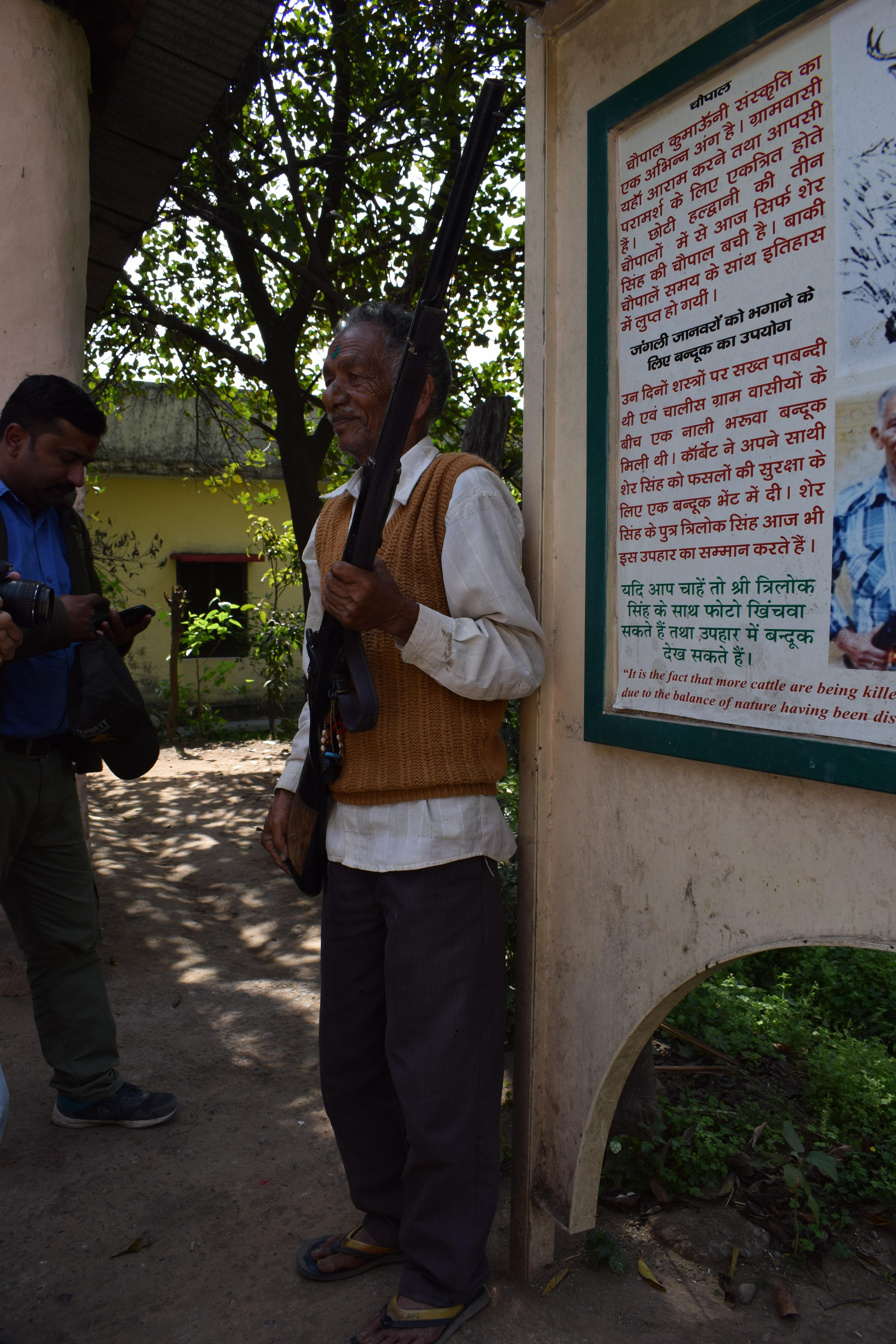
The village, right behind the museum, houses a homestay, Ittu Sa restaurant serving traditional Kumaoni meal and is home to Trilok Singh Negi. His father Sher Singh Negi, used to go with Corbett for shikar. And was gifted a single-barrel, muzzle-loading gun, which he proudly shows to the visitors and allows them to take pictures with it. Singh fondly recalls ‘Carpet Sahib’.
A portion of the wall that Corbett had built to ward off wild animals is also visible.
Bachelor of Pawalgarh

After the village, we drove to a guest house in Pawalgarh. Right under the huge 100-year-old semal tree, Corbett had killed the last tiger, the Bachelor. This magnificent Bengal tiger was 3.23 metres long between pegs, and the only non maneater that Corbett killed.
The story of this tiger can be read in the book Man-Eaters of Kumaon.
Gurney House, Nainital
Very soon, I was lucky to be invited for a trip to Nainital, little knowing that I would actually get to visit Jim Corbett’s childhood home and St John’s church in the Wilderness, the parish of which the Corbett family was a part.
My then host, Reena Kumari, took me for a visit to the legendary Gurney House, over 135 yeas old. The owner Nilanjana Dalmia had arrived from Delhi. Maggie had sold the house to Kalavati Varma for INR 50,000 from whom Dalmia’s father bought it.
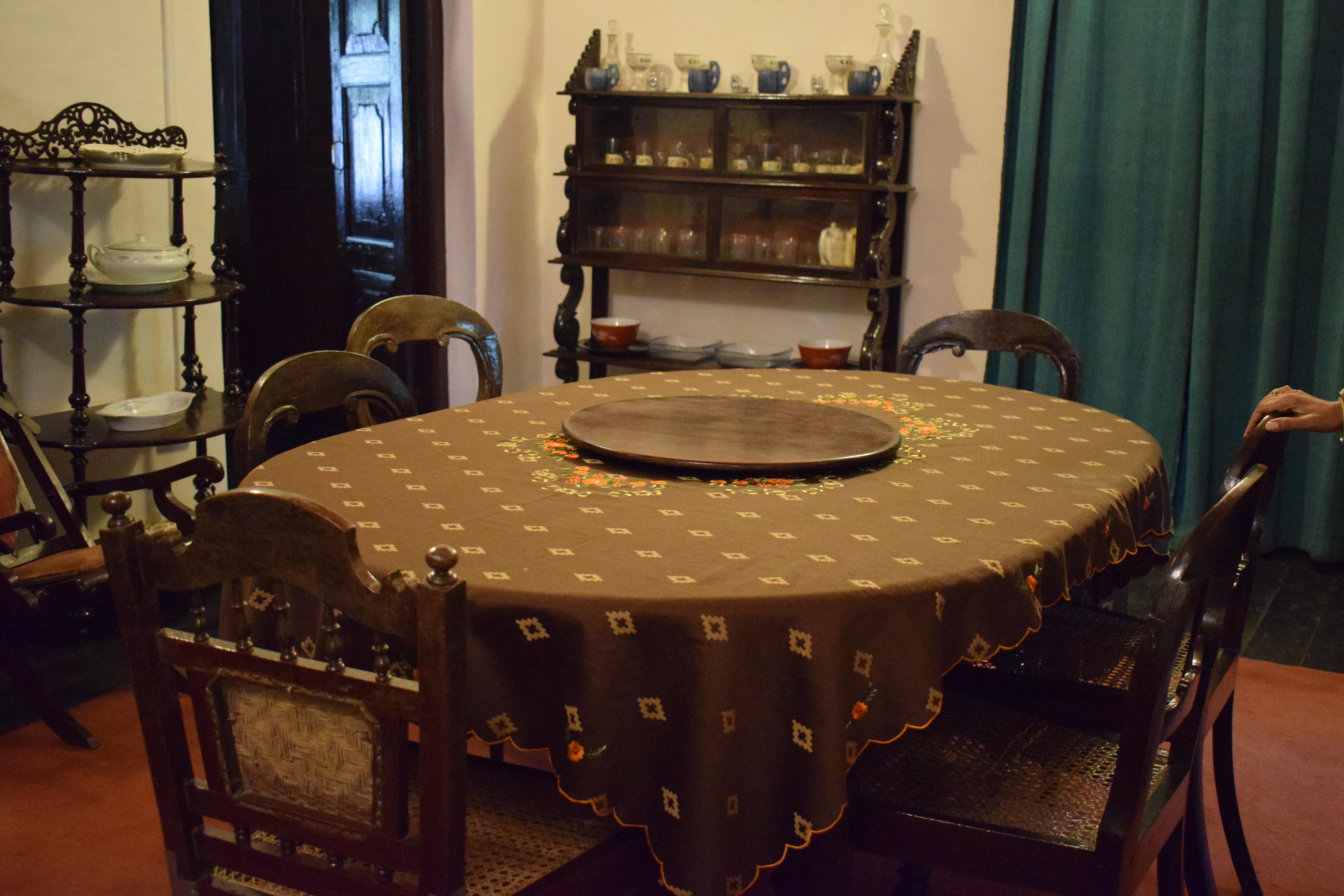

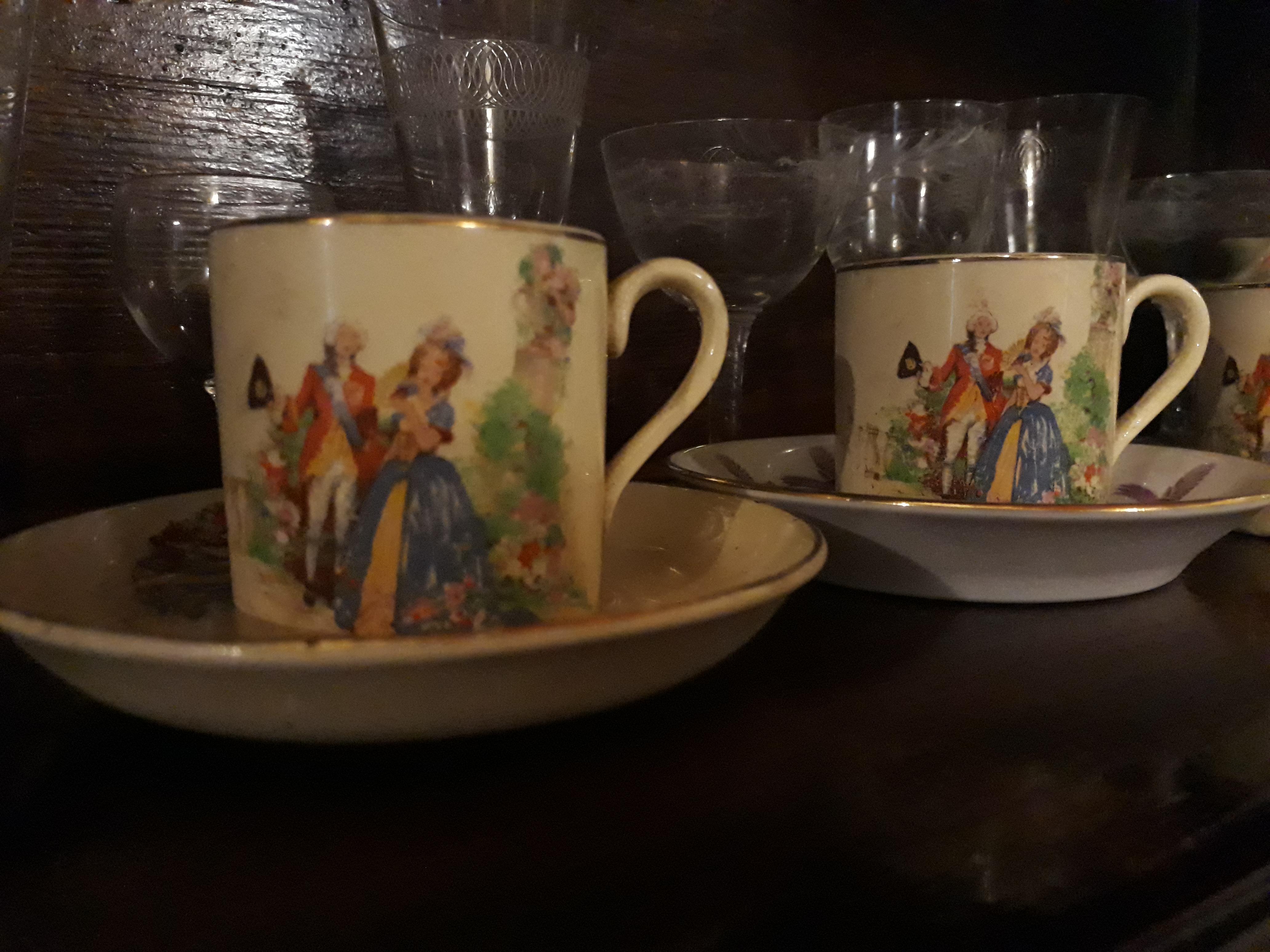
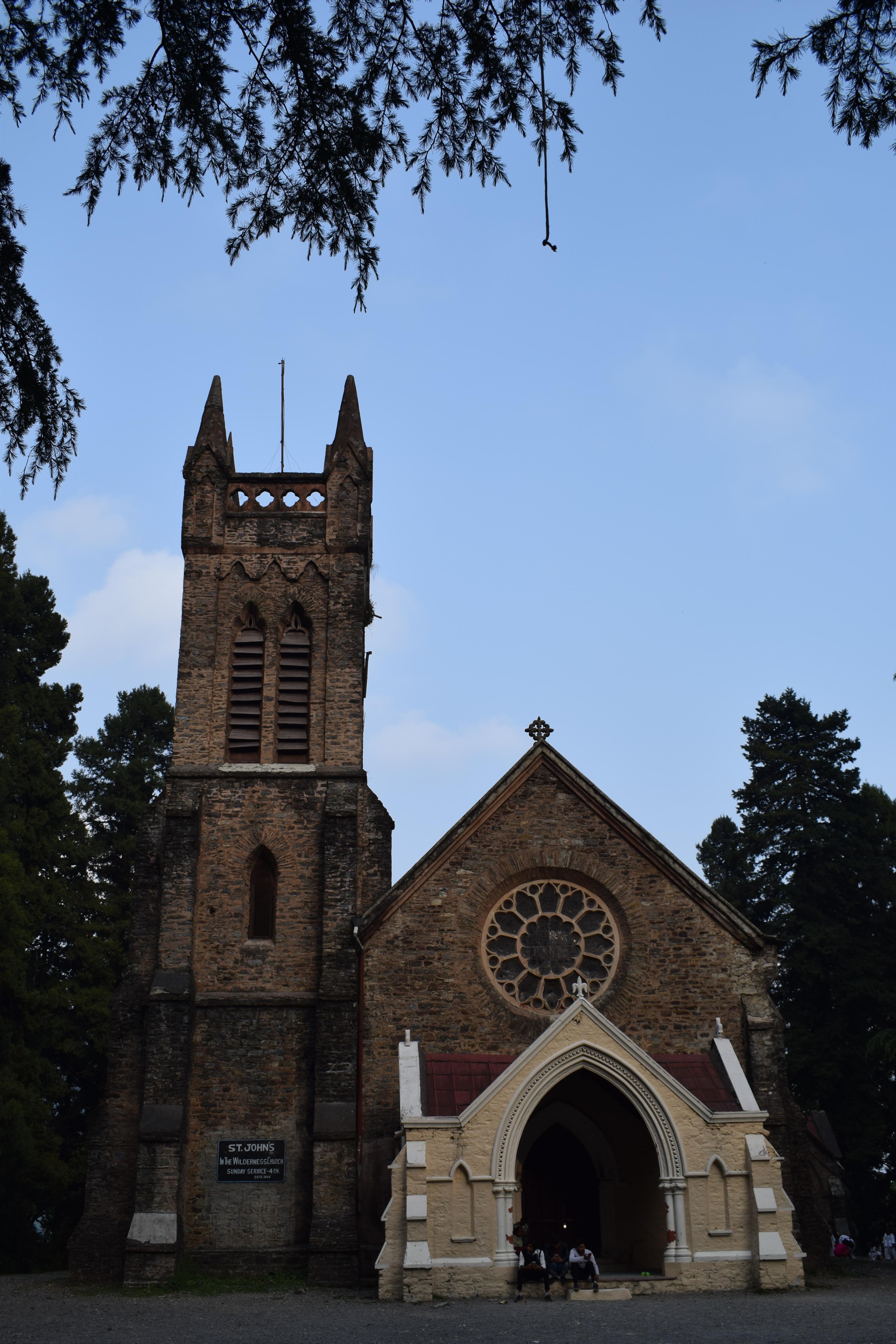
She had kept the home as close to the original as possible. The windows were old-fashioned, the trophies (deer heads) stayed on the walls. There was a money vault, the chair that Maggie sat on, an old African drum, little English cups and saucers and I got to sit at the dining table where Corbett ate his meals — on the very chairs.
I’ve done more in Corbett National Park, like visit a forbidden waterfall, eaten organic food and walked around exploring the canals, watched a water wheel grind flour, dug into Kumaoni sweet bal mithai and bought some at Ramnagar, visited Girija Devi mandir and fed the elephants. I have stopped going on animal safaris, so skipped the elephant safari. You can read about the green community here.
Am I a forest lover now? Yes, I would never miss a chance to visit any national park because now I am adept at making videos too.
How to reach Jim Corbett National Park
The closest town is Ramnagar and is well connected via road to Lucknow (145km), Nainital (66km), Ranikhet (112km), Haridwar, Dehradun and Delhi (260km). The route from Delhi goes via Hapur, Garhmukteshwar, Moradabad, Thakurdwara, Ramnagar, Corbett National Park.
The nearest railway station is also at Ramnagar. Major trains from Delhi are Ranikhet Express, Corbett Link Express and Kathgodam Express.
The Jungle Book
Keep the noise down, wear muted clothes, carry extra batteries and binoculars, bring your garbage back and keep a lookout for birds and animals on the roads too.
Where to stay, click here
Best season to go: September to March, birders and plant lovers can go the year through
How many days holiday should you take? At least a week, if you want to explore the green region well.


This is so cool. The very chairs of Jim Corbett! And those tea cups? Fascinating stuff. I love thinking back to their time and them using it all. I never knew Corbett was a taxidermist. Yeesh. But i wonder why he killed Bachelor if he wasn’t a man eater. Maybe there’s a story there? i’d love to know. I loved reading this!
LikeLiked by 1 person
It was a case of misfortune https://en.m.wikipedia.org/wiki/Bachelor_of_Powalgarh
LikeLike
Did you see tigers there? at Jim CORbett part?
LikeLike
no, I haven’t spotted tigers there, albeit elephants yes. and smaller birds and animals
LikeLiked by 1 person
Although this name is well-known from our textbooks, this is the first time I have read about this gentleman. Nice write-up, accompanied by beautiful pictures. It’s disheartening to see buildings lining the banks of water bodies, to spoil the serene view.
LikeLiked by 1 person
When you see the native in their own land, the experience is different. I guess you relate to things and people better then. I found his life very inspiring.
LikeLiked by 1 person
Your reply provides a compelling reason to visit. I’ll go one day, hopefully!
LikeLiked by 1 person