

Part of Delhi’s Yamuna Riverfront Restoration project underway across the Yamuna floodplains, this is one beautiful nature trail in the middle of the capital.
On a clear March morning, I got a chance to visit the much-talked about Asita East Park on ITO Bridge. The 197-hectare riverfront zone, restored by Delhi Development Authority (DDA), opened for public in September 2022.
WWF-India was celebrating Earth Hour and it seemed like the perfect way to upgrade myself on the green life, or whatever of green remains in Delhi. This park, located off the ITO barrage, is a small trail, a radiant touch in the middle of the snarling traffic and Delhi’s polluted air.

About Asita East
In ancient literature, Yamuna has been called Asita, hence the park’s name. Asita East lies on the eastern bank of River Yamuna, spanning from Old Railway Bridge to ITO Barrage. Out of the 197-hectares, 90 hectares are with DDA and the rest falls under the jurisdiction of UP Irrigation Department, which has also been developed by DDA. The narrow strip of land in the north widens towards the south. It is in close proximity to the dense residential areas of East Delhi.
The Nature Trail
A little water body here attracts common waterfowls and there are grassland birds around it. Though, not many trees are seen, there are shrubs and flowers.
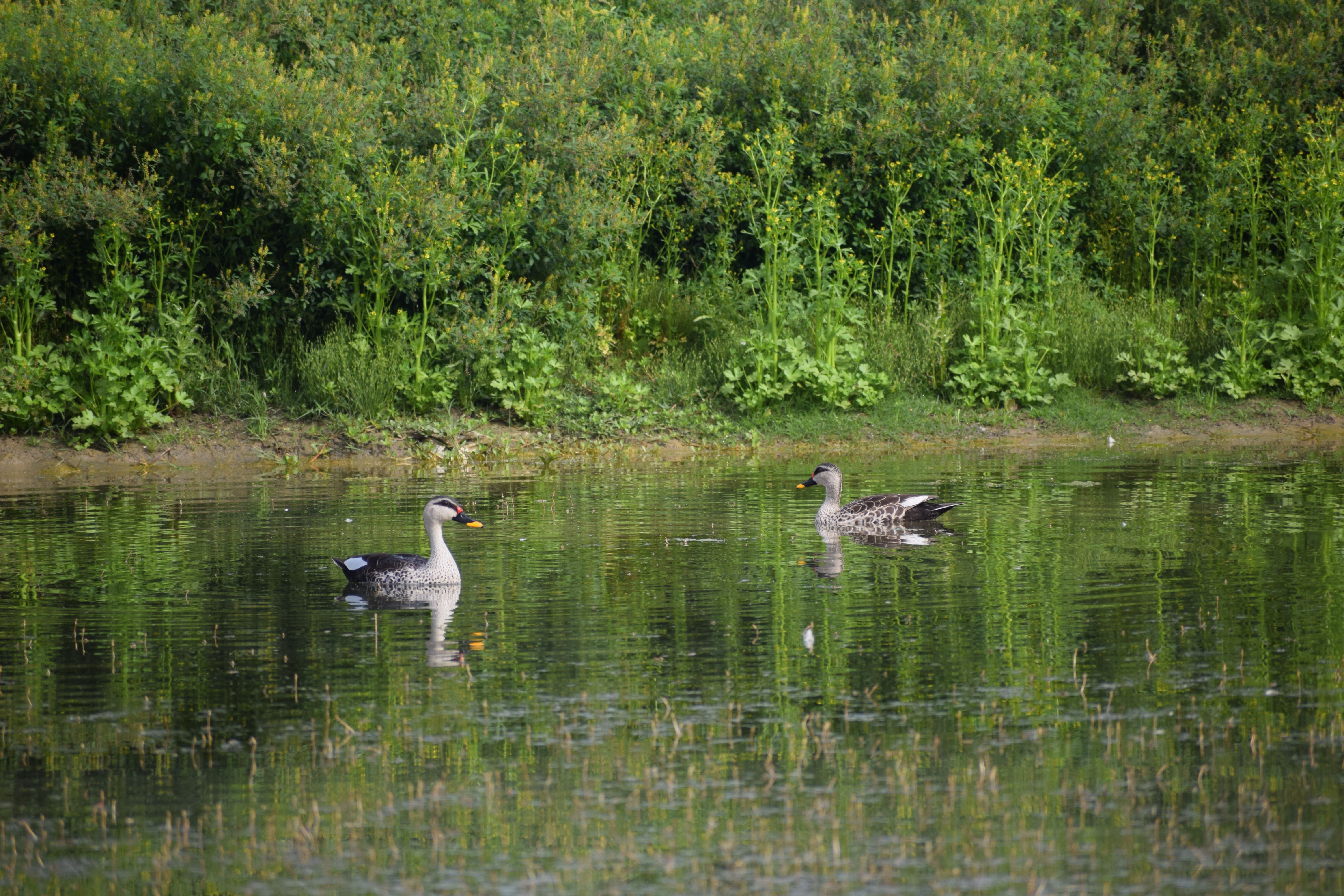


Clockwise from left: Pair of Spot-billed ducks, White-breasted waterhen, Black-winged stilt, Citrine Wagtails, Purple Swamphens with ducks
The light airy morning was just right for this short educative walk with the team from WWF-India and a star scientist, Dr D. Balachandran, was the surprise guest.
With over four decades of experience, Dr Balachandran has conducted researches across the country, including Chilika Lake in Odisha and Bharatpur Bird Sanctuary in Rajasthan. Based in Chennai, he even has a migratory Black-tailed Godwit named after him. In March 2022, the bird, Bala, was tagged with a GPS device in Mumbai by Bombay Natural History Society, from where Dr Bala retired recently.
This tagged Black-tailed Godwit left the city of Mumbai in April 2022 to return back to its site, Bhandup pumping station, in September 2022, after a five-day flight. It spent five months in the cold climes of South-Western Siberia. This return proved the birds’ site fidelity, meaning returning to the same site that they are used to.

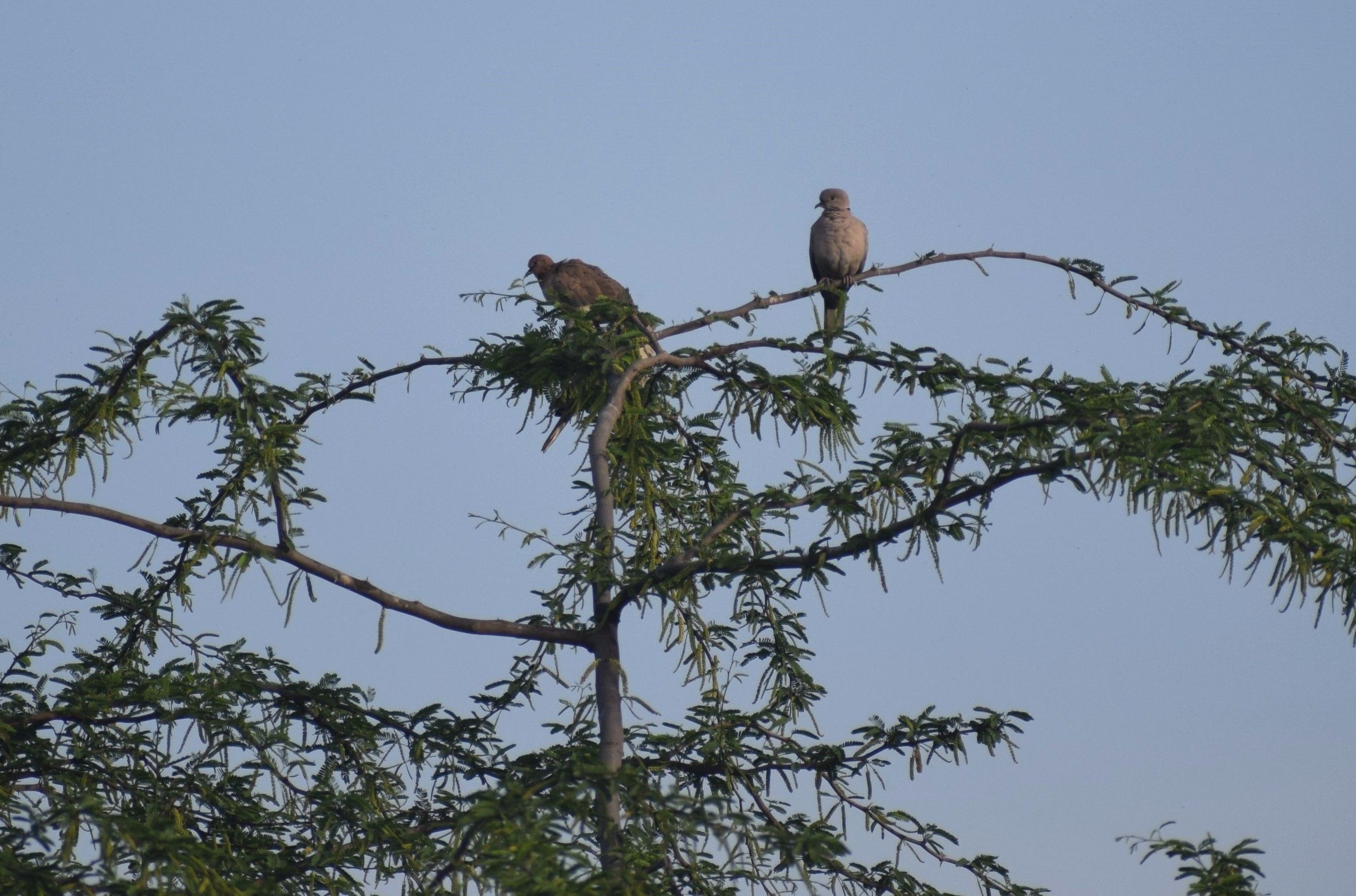

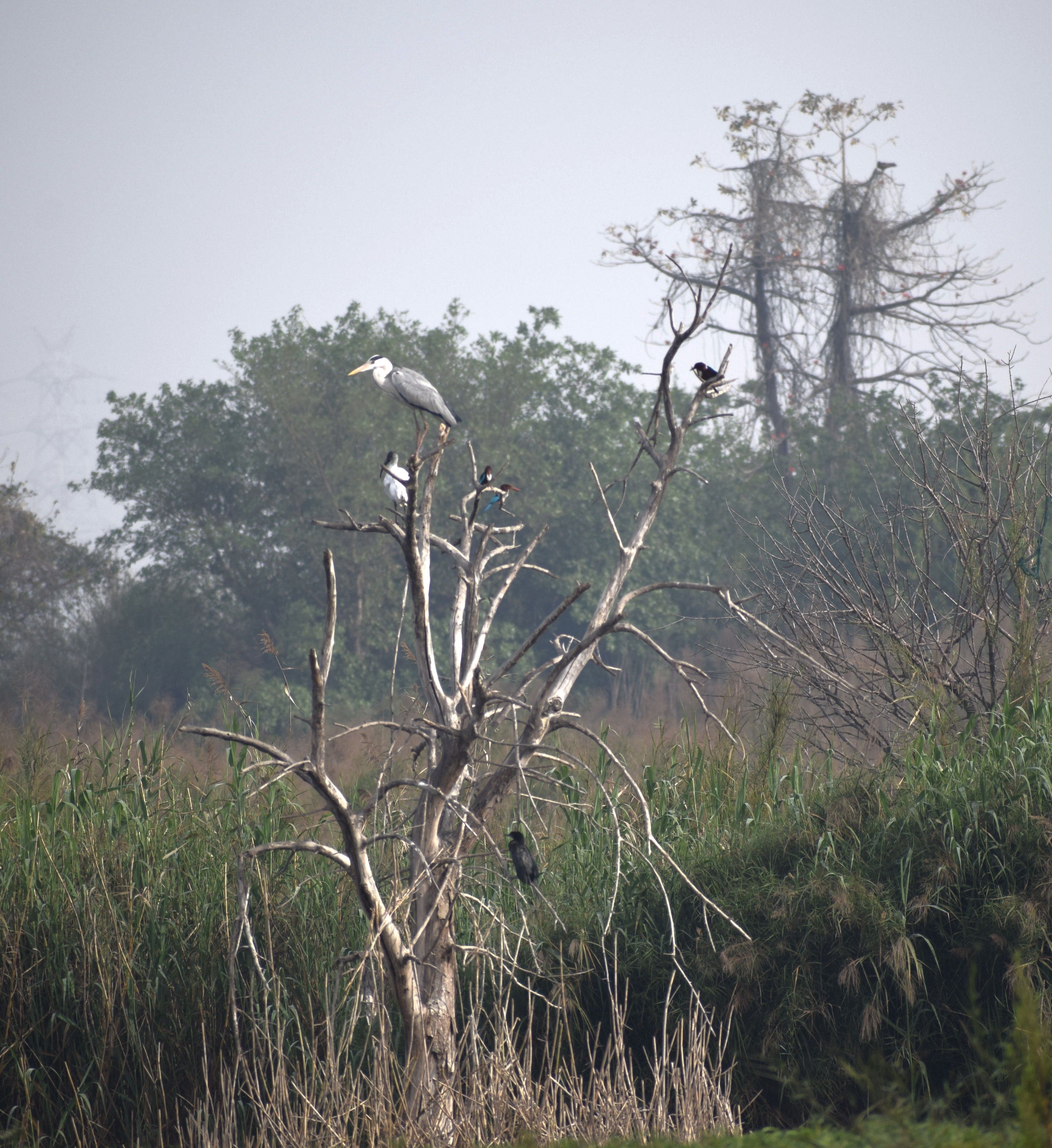


Clockwise from left: Red-whiskered Bulbul, Tree with Little Cormorant/Pied Starling/Grey Heron/White-throated Kingfisher/Black Ibis, Little Grebe, Common Teal, Purple Heron with Egret at back, Pied Starlings, Eurasian Collared Doves
Coming back to Asita East, the shrubs are full of chirps and the colourful hues of the flora are soothing. Besides the birds I managed to photograph on the ground, we even saw a Grey Hornbill fly by. This was a lifer for me (lifer is when the birder sights a bird for the first time). Since then, I have seen the Grey Hornbill in Surajpur Bird Sanctuary and Noida Biodiversity Park, but not managed to get the picture.
I was so floored by this colourful play of nature, that it inspired me to write an award-winning short story. You can read it here.
My Memory of Yamuna
Let’s travel to the 1970s, there used to be a river called Yamuna that flowed through Delhi. And then slowly, over the decades, the polluted river became smaller and smaller, until only a dirty stream remained.
Over the years, some clean-up drives and restoration efforts were made but all to no avail. We see bridges being built on what was once the river bed, the Commonwealth Games Village and Akashardham Mandir. The small farmer fields are long gone, barring a handful.
This is me lamenting the loss of a revered river for rivers are life-givers and civilisation builders. Endless concrete and chemicals do not allow the natural resources to breathe and they die.
Mythologically, it reminds me of the river being polluted by the poisonous snake, Kali, and Lord Krishna forcing it to leave the waters.
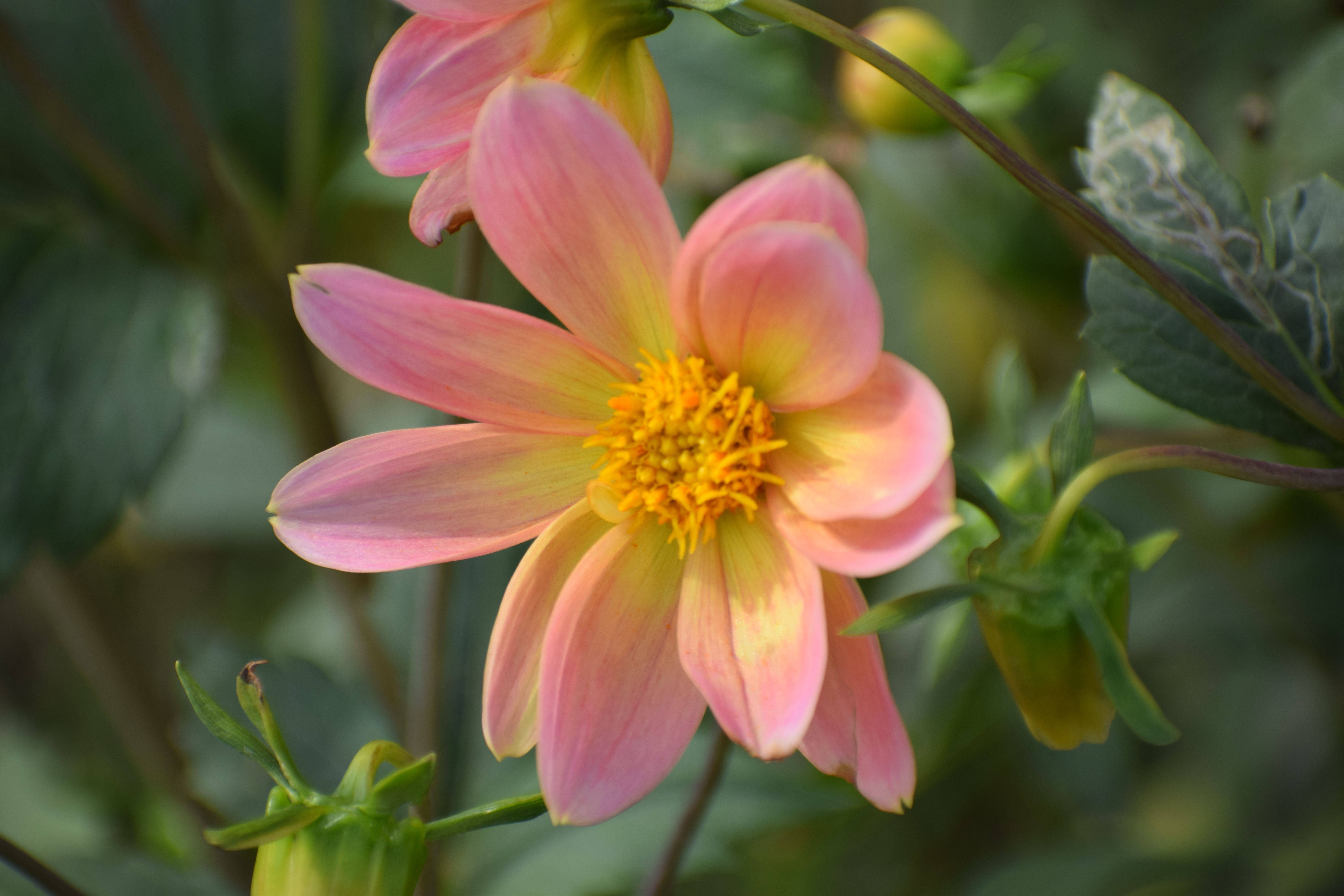
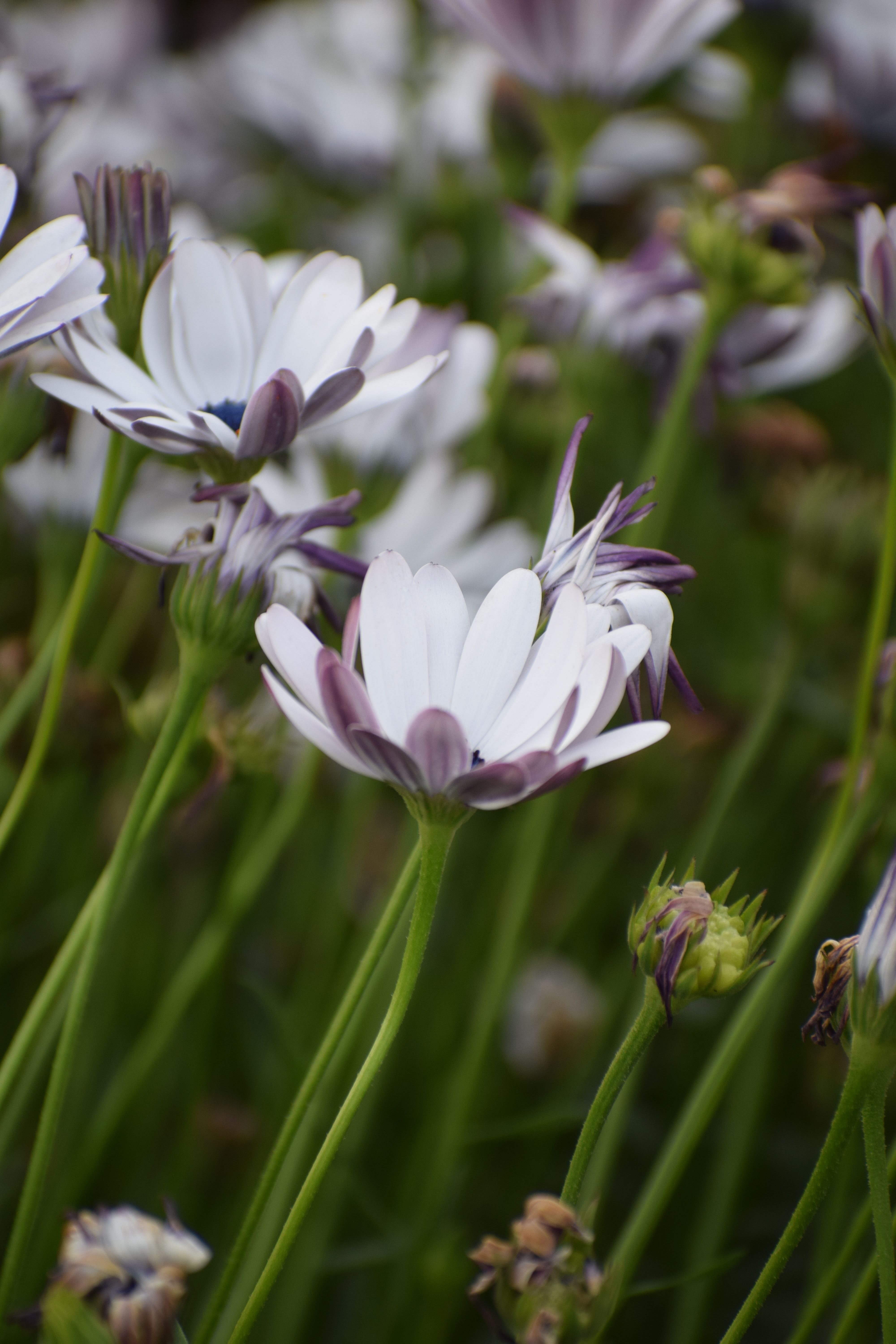

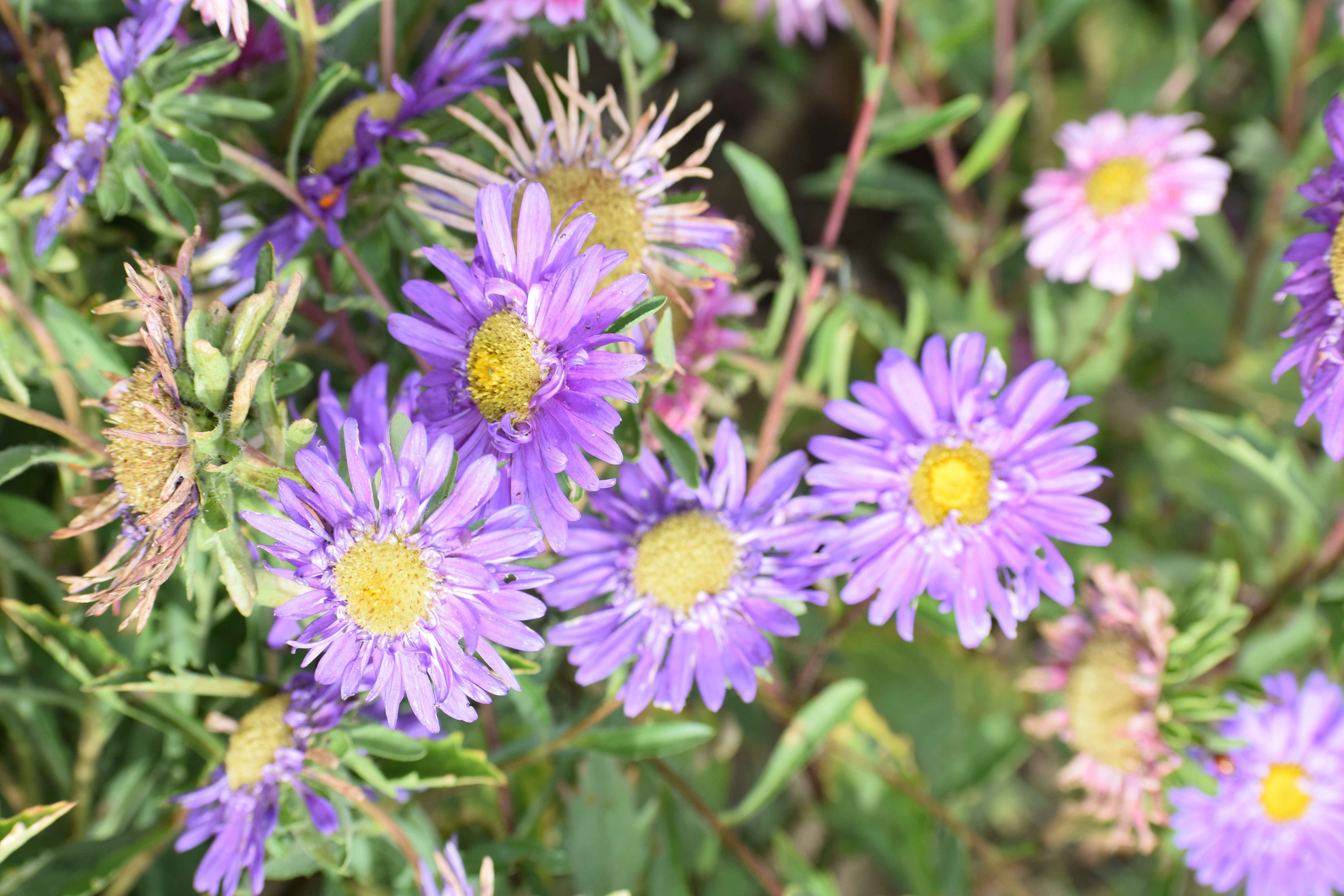
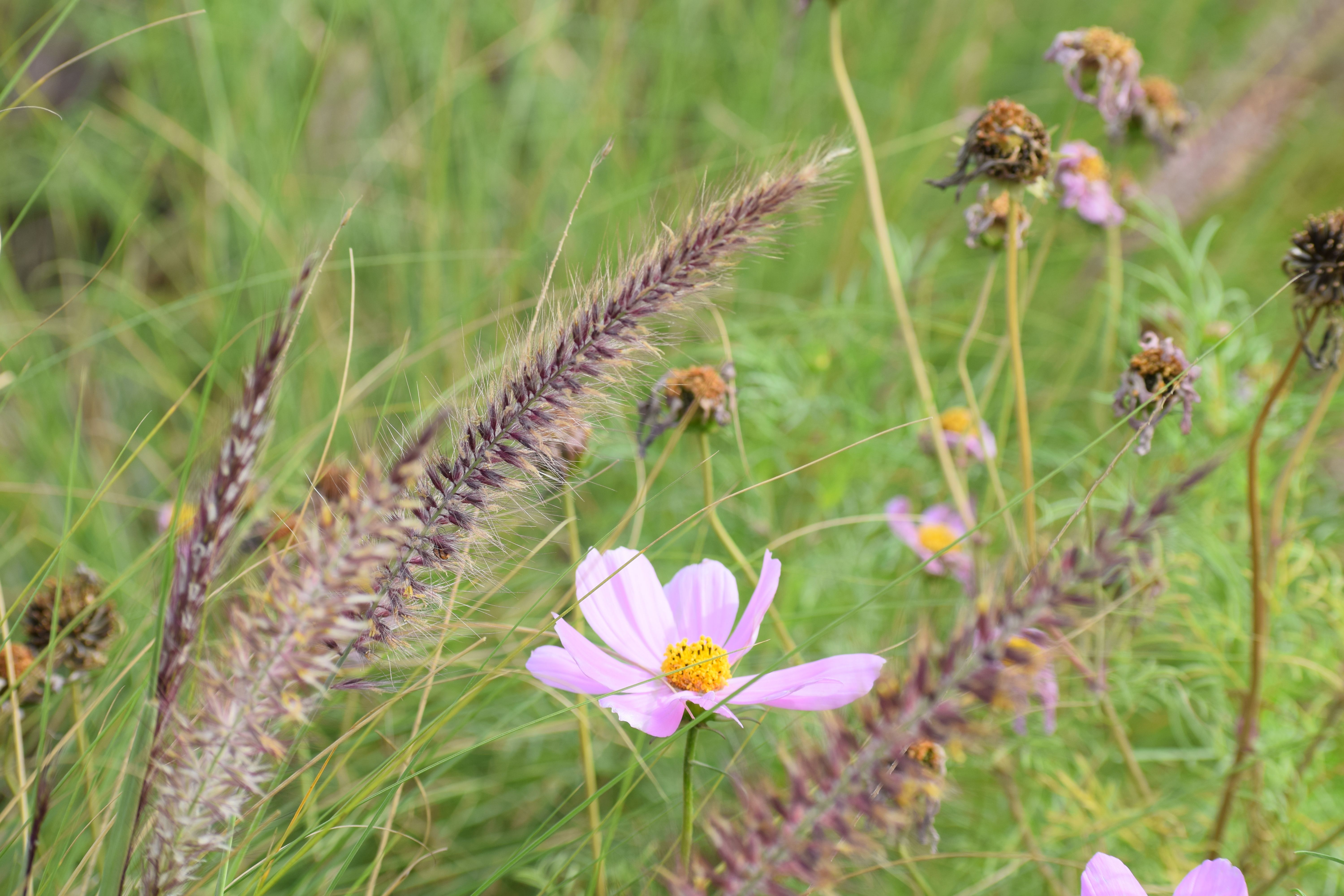
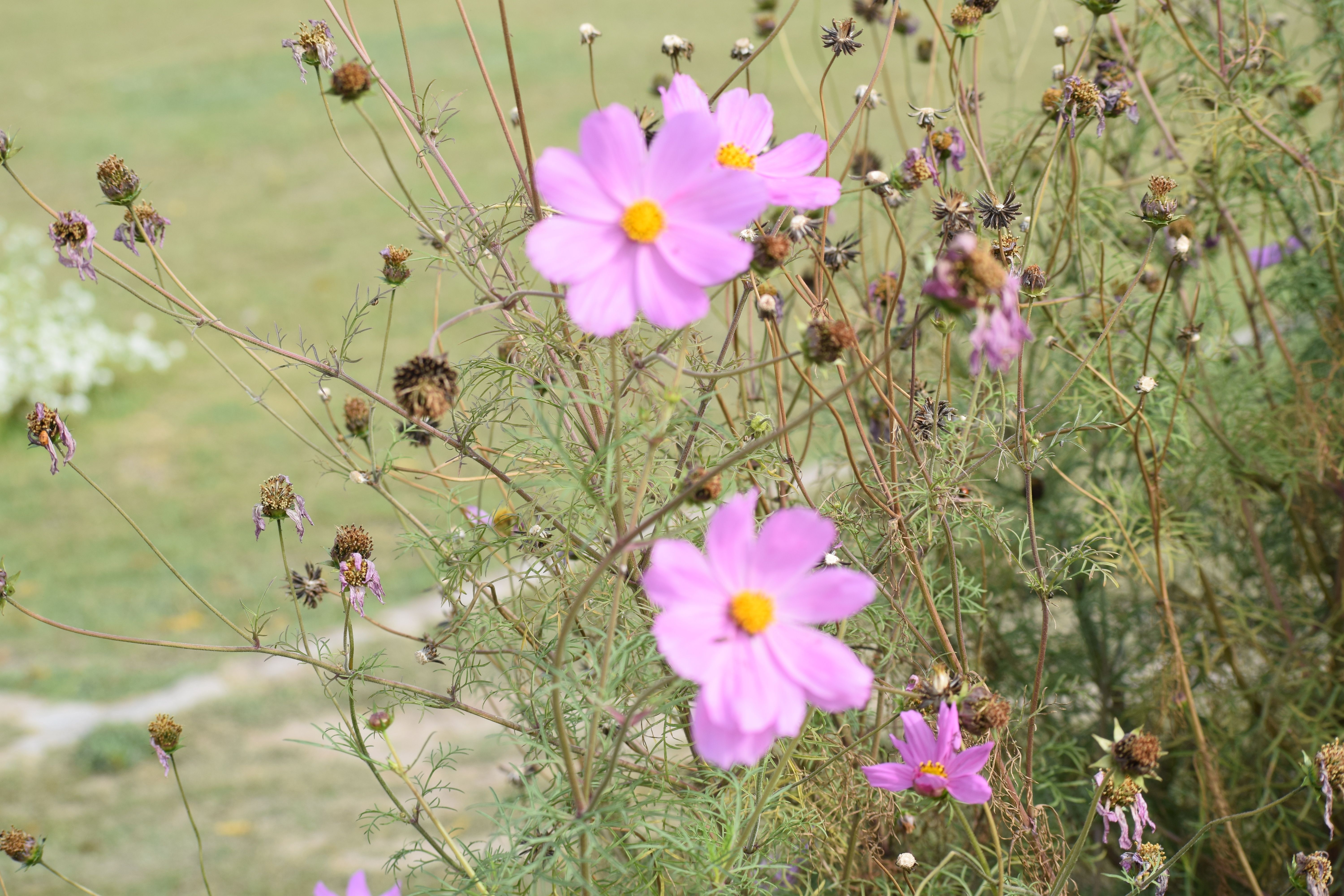
Clockwise from left: Dahlia, Rain Daisy, Chinese Aster, Buffelgrass, Garden Cosmos
Origins of Yamuna
Originating near Banderpooch peaks at a height of 6,387 m at Yamunotri Glacier, the Yamuna travels a length of 1,376 km before merging with river Ganges at Sangam. Once, a tributary of the river Ghaggar (most likely the Saraswati River referred to in the Veda), it changed its course eastwards due to tectonic events, becoming a tributary of the river Ganges.
It is the longest river in India which does not directly flow to the sea. It has four main tributaries in the Himalayan region: Rishi Ganga, Hanuman Ganga, Tons and Giri. In the plains, the main tributaries are Hindon, Chambal, Sind, Betwa and Ken.
Yamuna enters the National Capital Territory of Delhi at Palla Village and exits at Jaitpur totalling 52 km, out of which it flows for approximately 22 km through urban Delhi, from Wazirabad Barrage to Okhla Barrage. There are 8 road bridges, 2 railway bridges, 2 metro bridges and 2 fair weather Pontoon Bridges across river Yamuna.
Effluents from 22 major drains are being discharged into the river.
Yamuna Riverfront Project

Recently, I have seen sign boards marking the Yamuna Floodplains, as you enter from the ring road towards Noida DND and on the road from Noida towards Mayur Vihar. The DDA’s Yamuna Riverfront Project encompasses the following sites:
| Sr. No. | Project title | Stretch |
| 1 | Asita East -197 Hectares | Old Railway Bridge to ITO Barrage |
| 2 | Kalindi Aviral -100 Hectares | Nizamuddin Bridge to DND Flyway |
| 3 | Kalindi Biodiversity Park -115 Hectares | DND to proposed Kalindi By-pass |
| 4 | Asita West -200 Hectares | Old Railway Bridge to ITO Barrage |
| 5 | Amrut Biodiversity Park -108 Hectares* | New Railway Line to Nizamuddin Bridge |
| 6 | Ghat Area -66 Hectares | Wazirabad Barrage to Old Railway Bridge |
| 7 | Yamuna Vanasthali -236.5 Hectares* | Wazirabad Barrage to ISBT Bridge |
| 8 | Mayur Nature Park -397.75 Hectares* | Nizamuddin Bridge to DND Flyway |
| 9 | Eco-tourism area -30 Hectares | Geeta Colony Bridge to ITO Barrage |
| 10 | Hindon Sarovar -45 Hectares | Nizamuddin Bridge to DND Flyway |
These projects are a sign of hope for the revival of the beloved river and its rich riparian ecosystem.
How to Reach Asita East Park
The entry to the park is on the ITO bridge, when you are travelling from ITO to Laxmi Nagar. It’s not a difficult approach but needs a GPS to know where to get off the bridge. There is a bus stand outside this.
The nearest metro station is at ITO. From there you can take a bus or an autorickshaw.

There is free parking inside the park.
You should carry your water bottles, snacks and garbage bags. The park is well-maintained and you should also keep it that way.
There are ample selfie and Instagram worthy spots here.
Do take your camera and binoculars for the Peregrine Falcon watches from high up the electricity towers.
I’m participating in #BlogchatterA2Z
Read previous posts: A, B, C, D, E, F, G, H, I, J, K,L, M, N, O, P, Q, R, S, T, U, V, W, X
This post is part of Blogchatter’s CauseAChatter.
This blog post is part of the blog challenge ‘Blogaberry Dazzle’ hosted by Cindy D’Silva and Noor Anand Chawla in collaboration with Dr. Preeti Chauhan.

 Queen of Treasures
Appreciations to the authorities for restoring the river. The habitability of Indian cities is challenged by the intense pollution, scarcity for green patches and surging concrete junks. Such effort among this chaotic environment should be appreciated.
LikeLiked by 1 person
Thank you for sharing the detailed post about Asita East Park, I was not aware that it is now open to the public and I am so glad that slowly but steadily the river Yamuna is being resuscitated.
LikeLiked by 1 person
Very informative post Ambica. I hope the efforts bear fruit and the Yamuna is revived someday🤞. I have a question, do u take the pictures of the birds and flowers and identify them through Google lens or do u already know all the names? I think I already know the answer, you know some n some u find out… right? But whatever it is, it is very impressive…just wow! Glad that u saw your lifer grey hornbill n I hope you get a pic the next time.
If you come to Bangalore for any project, pls inform me, I would love to accompany you(of course if u can have company).
LikeLiked by 1 person
Your answer is correct. I am schooling myself on the birds and their habitats by visiting and meeting people and generally exploring. I did visit Bangalore in 2018! Wasn’t seriously into birds then ..got to see Cubbon Park and Nandi Hills for some time. And in case the future does bring me Bangalore again, would surely like to meet.
LikeLiked by 1 person
Finally, some hope for Delhi’s polluted environs. It is heartening to see that the authorities are restoring a few places now. Your pictures of the birds and the flowers are beautiful. I love to visit places in nature where you can hear birdsong. Luckily, Hyderabad has KBR park and Botanical gardens which are in the city and a welcome relief from the concrete jungle.
LikeLiked by 1 person
We all.need more greens and less concrete
LikeLike
Asita East Park in Delhi seems to be a ray of hope for the polluted city. I am astonished to learn that authorities are working towards the restoration project.
LikeLiked by 1 person
I was astonished too😊
LikeLiked by 1 person
Delhi must surely be loving this beautiful touch of greenery in the midst of pollution and crowds. Loved the restoration efforts being put in and hope that one day Yamuna will be back to her former glory!
LikeLiked by 1 person
Such a hopeful read this was. Thanks for sharing this informative guide. But a BIGGER THANKS for sharing the links to the stories you wrote for #Storytellersbloghop season 4 and season 3. I particularly enjoyed reading ‘Meeting Prakriti: Nature’s Muse or Mysterious Enigma?’ and it’s no wonder it ended up being the winner. Keep writing such nature stories Ambica 😍
LikeLiked by 1 person
Thank you Manali!
LikeLike
What a pleasure to hear that River Yamuna is being revived, at least a good attempt is being made. I remember I visited Delhi in 2018 and my heart broke at the sight of the river! I should visit our capital again for this reason alone. A highly informative article filled with puranic lore! And of course, the pics you captured are amazing!
LikeLiked by 1 person
Informative and enlightening article. Have also bookmarked your short story for a later date..This revival is so important to build some space for nature too.
LikeLiked by 1 person
I remember my office that used to be in this area, but that was long back. Glad to see this initiative, esp when we hear only of pollution when one refers to Delhi.
LikeLiked by 1 person
Finally Delhi have restored the Yamuna river. Hope there will be more green. I really appreciate your detailed post. Do you know the birds name? The pictures of the birds are beautiful. I know you like the birds but so much details about them – great 👍
LikeLike
Ambica dear you are a nature lover that we all know and admire you for that. So today before talking anything about this post I would love to give you a name অরণ্যা (Aranya)… it means the one who is in love with greenary, forest and nature. Coming to the Asita East Park- what an elborate content to educate us about the park. I have another plan in mind and that needs your permission. Once my son becomes a little big I will send him to you so that you can be his mashi cum nature trainer and help him explore the beauty of nature.
Love Samata
“Will you take me Mashi?” …. Aniruddha is asking to Ambica Mashi
LikeLiked by 1 person
I am indeed happy to share my knowledge with your son! And I am so happy with the name Aranya, lovely. You have given me something to think about.
LikeLike
I feel the Yamuna revival has been a project that the government has been trying to do for as long as i can remember, i am hoping this time they are going to succeed in completing and managing .. their plan seems to be extensive and already being executed from what you’ve shared.
LikeLiked by 1 person
I had been waiting for this project forever. I mean Yamuna is a historical river and our country’s capital is situated on it. It deserves it’s full glory!
LikeLiked by 1 person
Great job to everyone involved! I hope this project inspires more environmental efforts.
LikeLike
How nice of you to promote a nature park for everyone to enjoy. This is one of the things I miss about Singapore, having nature parks nearby. I applaud your government for finding the time and resources to make this available to their citizens. This in my opinion is what Philippines is a mile behind.
LikeLike
I love the way you keep noticing these types of restoration and beutifully write about them. Great to see the way authority started taking initiave on restoration projects and slowly develop a breathable society. Appriciated the pictures as well.
LikeLike
I complete agree with you. They are reclaiming the riverbed and when the water rises, it has nowhere to go. Once upon a time, Yamuna was a clean river. Now it is a mess.
LikeLiked by 1 person
the river is long gone! We need only good scientists who can bring it back.
LikeLiked by 1 person
I have been lucky to see Yamuna as a clean river. Now it is more of a drain. Would love to visit the park and trail some day. There is still hope for the river.
LikeLiked by 1 person
You gave a vivid picture of the today’s scenario of river Ganga. Though it us tried multiple times to clean the water but it fails everytime. The reason is a blend of people myths or beliefs, no strictness of the government and excess population to pollute the river.
LikeLike
I wasn’t aware of this park… It looks beautiful, I would love to visit it. Grey hornbills often visit the trees outside my home (or maybe it’s the same one?!).
LikeLiked by 1 person
To have hornbills near the house, that’s quite an amazing sight.
LikeLiked by 1 person