
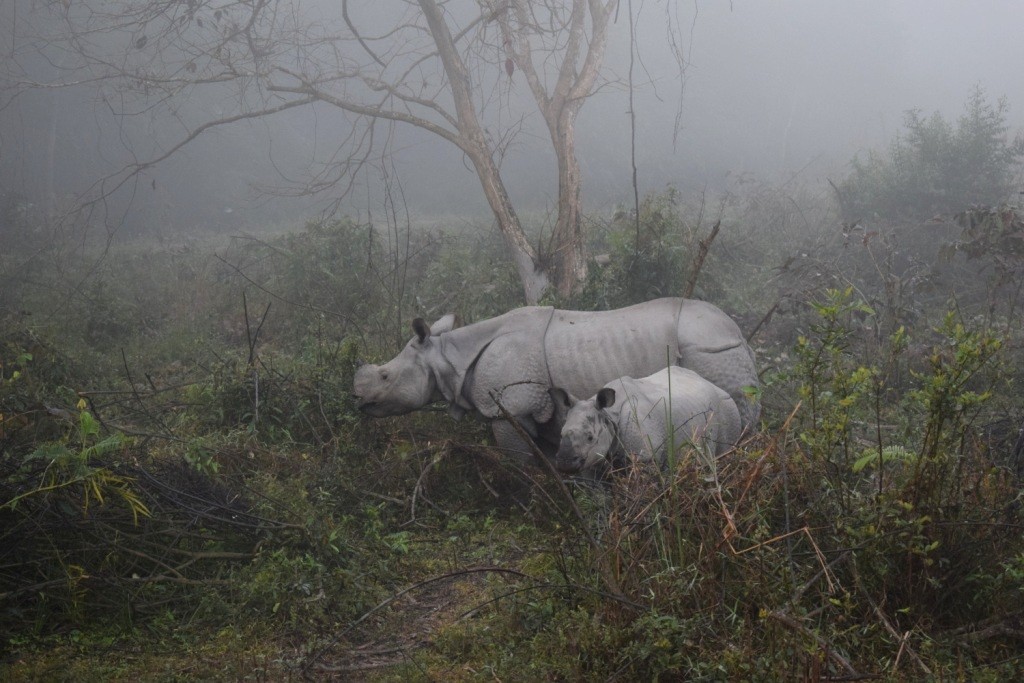
A safari through Kaziranga National Park, a UNESCO World Heritage Site, is like driving through a surreal planet
- Facts about Kaziranga National Park & Tiger Reserve
- More Attractions
- Where to Stay in Kaziranga National Park
- How to reach Kaziranga National Park
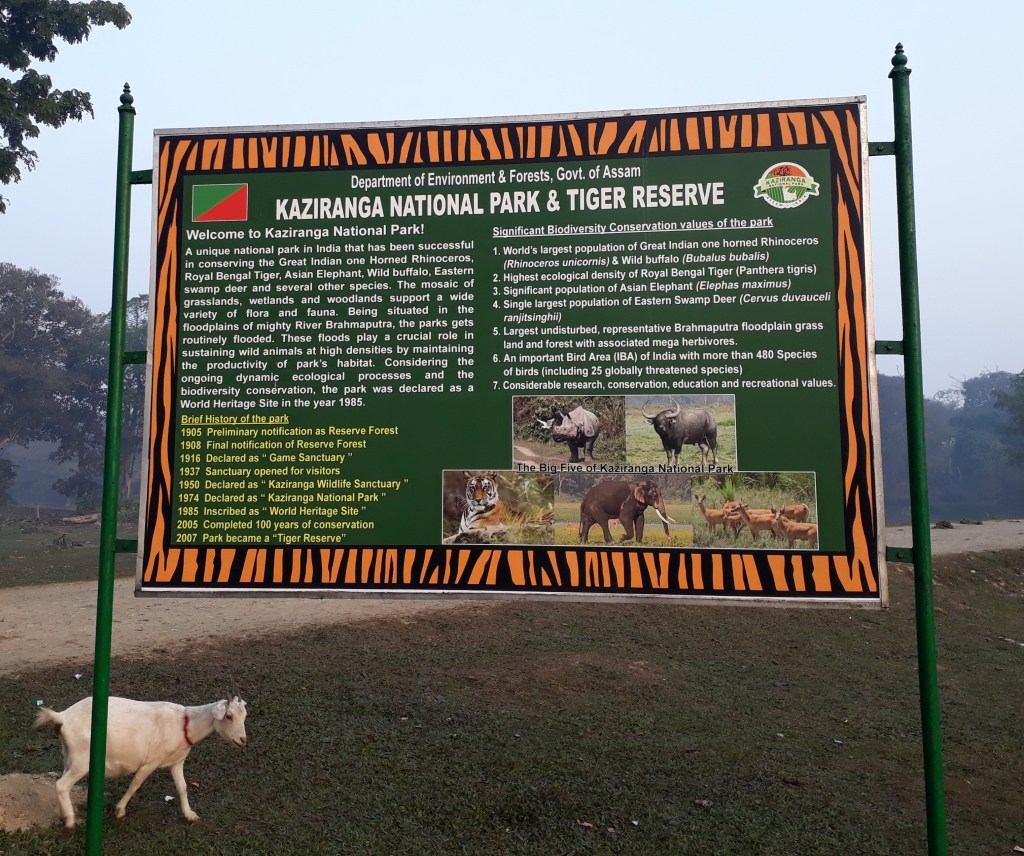
The green road and blue sky from Guwahati to Kaziranga National Park is among the best road trips that I have undertaken. Home to the one-horned rhino, Kaziranga National Park is a favourite among wildlife lovers and I was no exception. Surrounded by tea gardens and small villages, the natural world touches hearts and is the centre of life here.
Driving past signboards requesting us to let animals live in peace in their abode, I felt a childlike pleasure on sighting the one-horned rhinoceros from the highway. It isn’t normal for a concrete dweller to see magnificent creatures eating grass on man-made roadsides.
Unfortunately, I wasn’t a photography person in those days. But I understood why this majestic herbivore has been called India’s very own unicorn.
World Rhino Day is celebrated on September 22nd.
Home to two-thirds of the world’s one-horned rhinos (around 2,200), it is also home to many species of birds, more herbivores and carnivores such as the elusive Bengal tiger. The park hosts vultures and hornbills, turtles, fishes and snakes such as the python.
The village rooster did greet us enroute the park entrance. While, I feel sad on missing a plethora of birds as I wasn’t looking out on the trees for them. I did see the large fauna in the dewy morning. The Asiatic wild water buffaloes, Asian elephants and swamp deers watched us invade their space, but went about their business fearlessly—grazing on their breakfast. Such a harmonious melody of co-existence of the species.
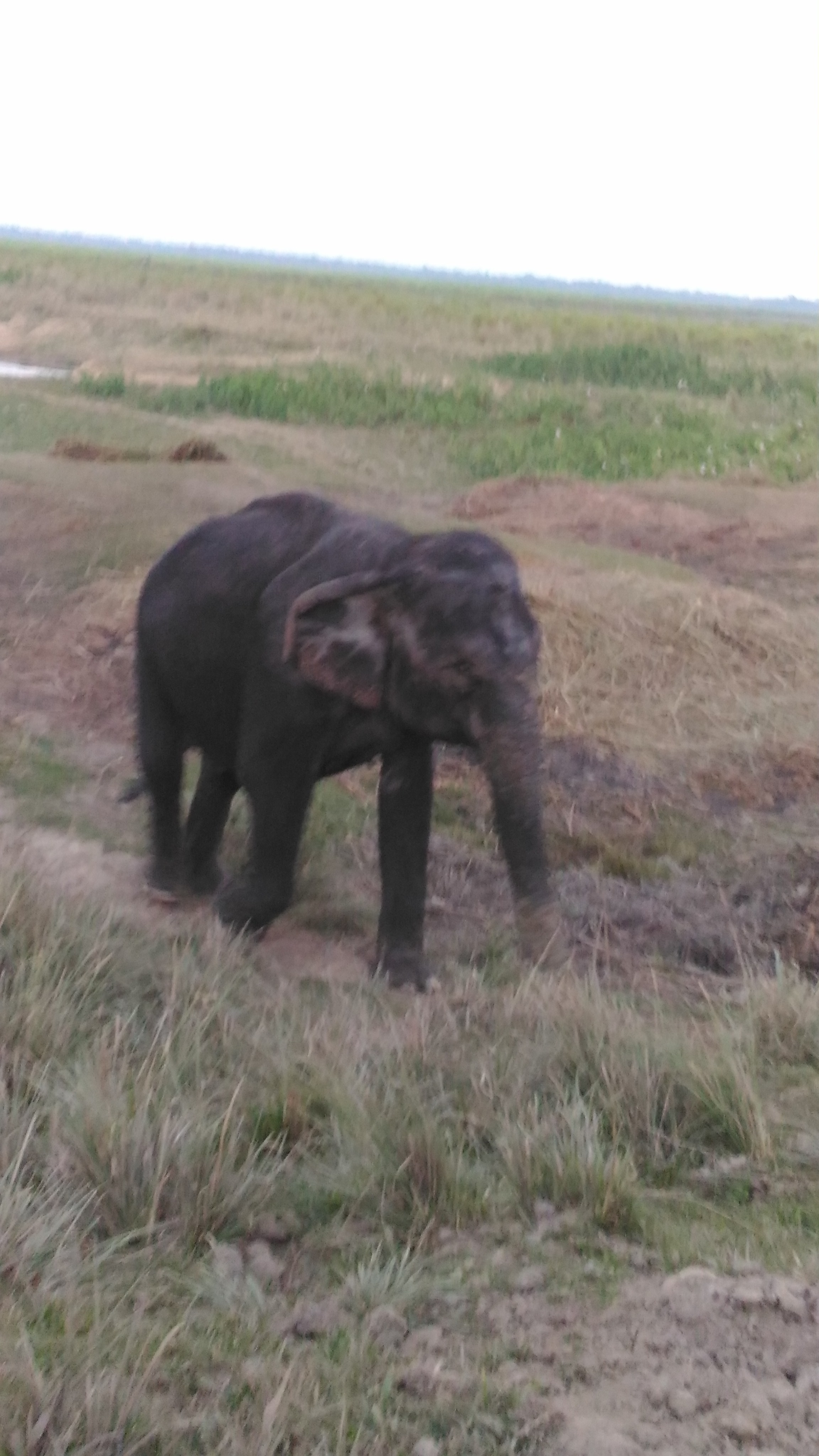
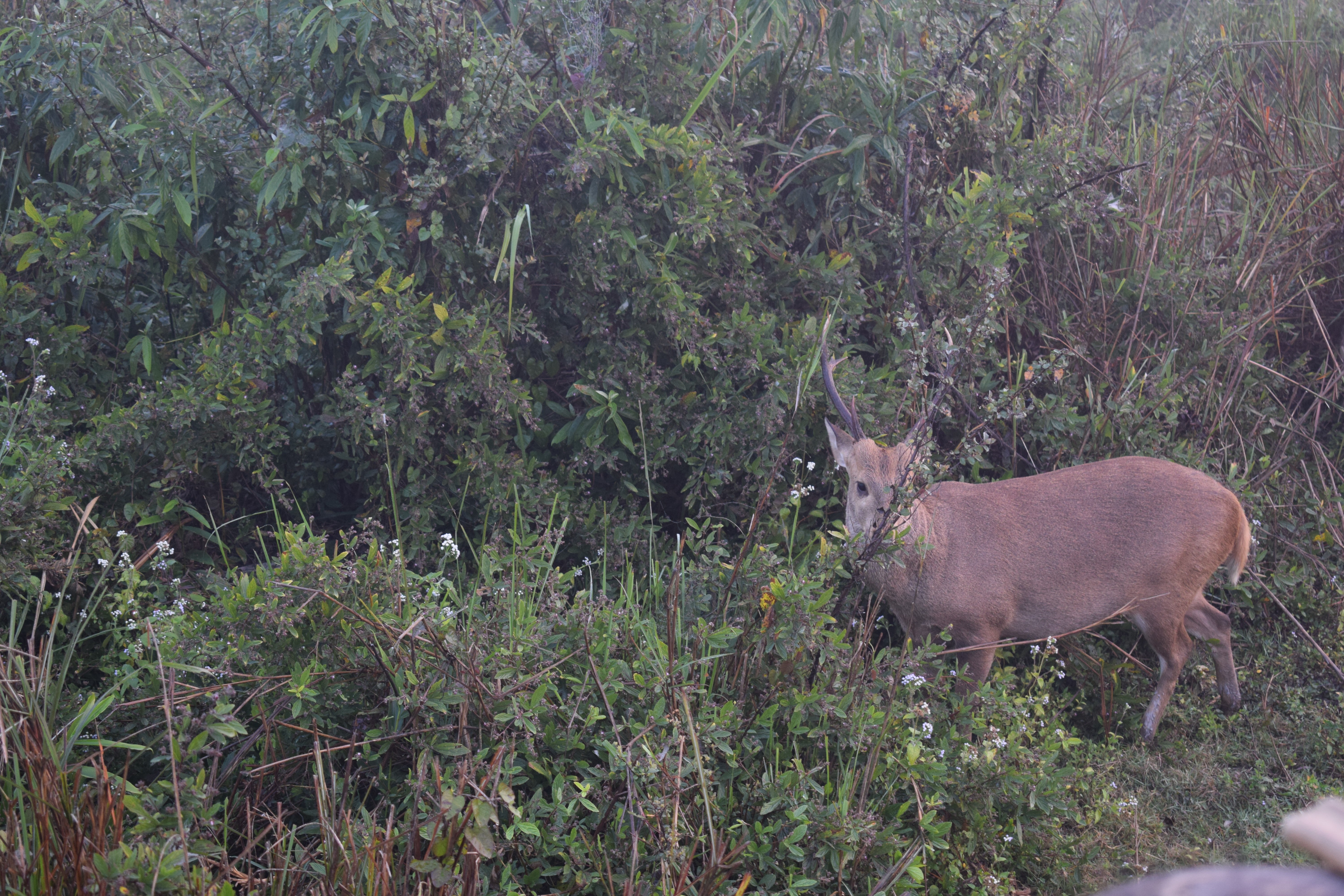

The great rhinos chomped off the grass, while nervous swamp deers did keep their eye on us. The big-horned wild water buffaloes turned their backs and walked into the thickets.
But one hour in the jungle wasn’t enough, so we went for another safari in the afternoon. The Bengal tiger, of course, remains elusive. But birds near the waterbodies, turtles sunning themselves and butterflies fluttering past were stunning enough. The sunset vista created a magical spell.
With dusk approaching, the tame elephants swung their way back to the shelters. All too soon, I had to bid adieu to rhinoland.

But one can never have enough of the jungle, so maybe another day, another trip. And this time, more like a natural world lover than a tourist.
Facts about Kaziranga National Park & Tiger Reserve
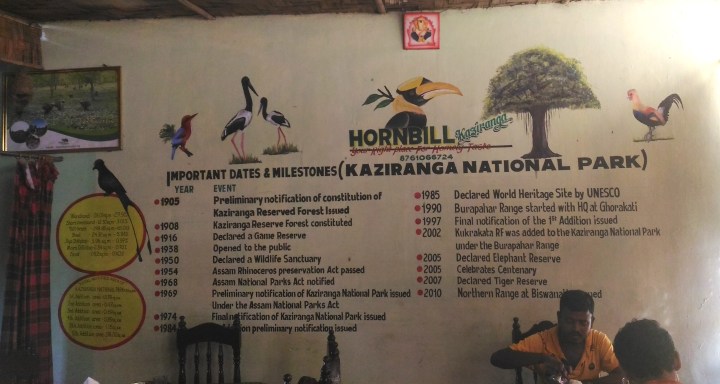
Formed in 1908 on Mary Curzon’s recommendation, the wife of the Viceroy of India – Lord Curzon of Kedleston, to preserve the precious one-horned rhinoceros.
Located in Golaghat and Nagaon districts of Assam, it covers an area of 430 square kilometres.
Comprises elephant-grass meadows, swampy lagoons, and dense forests.
It was declared World Heritage Site by UNESCO in 1985.
Declared a Tiger Reserve in 2006.
Also sighted here are Hoolock Gibbon, Leopard, Sloth Bear.
Recognized as an important bird habitat by BirdLife International. Migratory birds such as the lesser white-fronted goose, ferruginous duck, Baer’s pochard duck and lesser adjutant, greater adjutant, black-necked stork, and Asian Openbill stork come from Central Asia during the winter.
Kumbhi, Indian gooseberry, the cotton tree, and elephant Apple are the famous trees here.
Best Time to Visit
It is a ticketed park with a varied fee structure for Indians and foreigners. There is a fee for guides and safaris. A typical safari would be for one hour.
The park remains closed from May to October as it is prone to floods. November to April is the best time to plan your visit.
There are four zones: Mihimukh in Central Range at Kohora, Bagori in Western Range at Bagori, Agaratoli in Eastern Range at Agaratoli, Ghorakati in Burapahar Range at Ghorakhati
There are elephant and Gypsy safaris. I avoid the elephant safaris on grounds of cruelty to animals.
Morning Jeep Safari: 7.30 am-10 am; Afternoon Jeep Safari: 1.30 pm to 4pm.
It is best to book safaris in advance.
More Attractions
Kaziranga Orchid Park, India’s largest orchid park with a variety of indigenous orchid species.
Kakochang Waterfall
Kaziranga Elephant Festival
Visit tea plantations in Hathkhuli, Borchapori, and other locations.
You can also visit Manas National Park, a UNESCO World Heritage Site
Where to Stay in Kaziranga National Park
Resort Borgos, Kaziranga. There are state-run forest guest houses as well.
How to reach Kaziranga National Park
By Air: Jorhat Airport (96 km) is the closest. Tezpur Airport is 59.9 km away.
By Rail: Furkating Junction railway station is just a two-hour drive from Kaziranga National Park.
By Road: There are cabs from Jorhat and Guwahati (240 km).
This post is a part of Blogchatter Half Marathon 2024. Read more:

 Queen of Treasures
A detailed post as usual. I’d love to visit places like this. But I wonder whether they will belie my expectations as the Corbett did a few years ago.
LikeLiked by 1 person
I think for wildlife, you need to be there for sometime, safaris are too short to give an experience. So, I also plan to stay longer near forests, walk and breathe in the future. And be with the forest to let it speak to you!
LikeLike
Thanks for the details. I missed visiting Kaziranga during my last trip to Guwahati few years back. Will try sometimes. THis year I went to Jim Corbett hoping to see tigers, but could not see….
LikeLiked by 1 person
Tigers are elusive and reclusive! Only natives get to see them often. But I like spending time in the wild, near the wild. I suggest you go for a longer span, for a safari is too short a time to experience the wild.
LikeLiked by 1 person
yes, next time I should plan it better for a long duration.
LikeLike
Being close to nature is something that I always preferred and loved doing. I still remember when I was a Kid once my father took me to Nandankanan Zoological Park (Orissa) during summer vacation and 2 wildlife creatures sparked curiosity in me… one was this Rhino and the other one was Bengal Tiger. Tiger scared me with its grawl but the Rhino peeped at me in a calm and cool way…. and I asked baba ” Gandar ta ato mota jacket pore ache or garam lagche na” ( Why the Rhino is wearing a jacket, isnt it feeling hot?) . To me the sin layers looked like jacket and I asked this stupid question which made him laugh and later he explained me. :)
LikeLiked by 1 person
So sweet! I would like to experience that childhood innocence again.
But time trains us no.. till then we enjoy the many wonders of this world
LikeLike
I haven’t been to Kaziranga. Did go to Corbett though.
LikeLiked by 1 person
I hope you do visit it.
LikeLiked by 1 person