
I am not a master storyteller, but it’s work in progress. I have attended masterclasses, including those by Blogchatter, and read about the short story writing process across the web. I have also written a handful of short stories, so here’s my learning from all these efforts on honing my storytelling and writing skills.
- My Process & Training
- Do Your homework
- Hook Your Readers
- Elements of a Short Story
- Additional Tips
- Short Stories that you would like to read
A short story is a great starting point to becoming an author. It is a great way to express yourself creatively. However, unlike novels or novellas, short stories have a limited word count. Therefore, it’s important to make every word count. A good short story would be between 1,500-5,000 words.
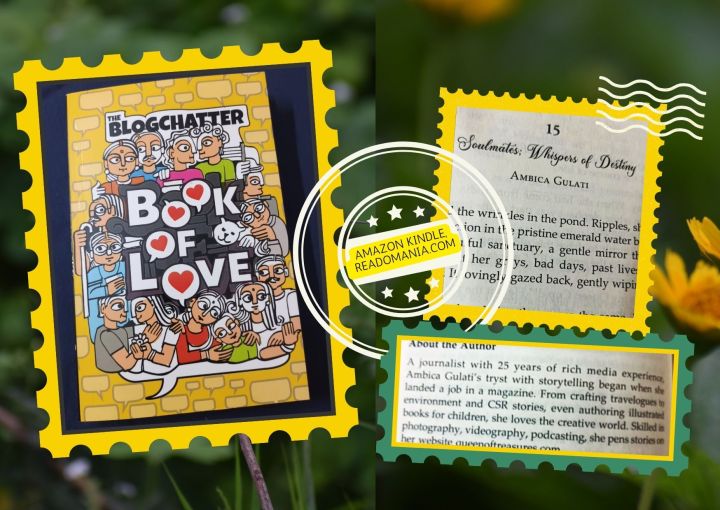
My short story, Soulmates: Whispers of Destiny, has been published in The Blogchatter Book of Love (Chapter 15, page 171). Perhaps you would like to read that, both Amazon Kindle Unlimited version or paperback from the publisher, Readomania, are available. I also invite you to explore my journey into traditional publishing. Read here.
My Process & Training
Most short stories capture a moment in time, but some can travel across time as well. Before beginning your story, it would be good to make an outline: how you want your story to pan out, where would you like to position it, who is important, what is important and why should your story be read by millions.
Now, let your idea drift out from your head onto pen and paper. I know most of us are adept at writing on notepads on the phone or computers, but I prefer the traditional route. It just brings more clarity to the concept. I find it easier to refer to my notes and go back and forth, rather than scrolling up and down and losing the thread. Somehow, horizontal works better than vertical for me in the writing process.
I jot down the idea and then develop it in points. I add a location, a scene, characters, plot, beginning and end.
Once I have the clarity on what I want to say, then comes how I want to say it. Structure is as important in a short story as in any other writing such as features, interviews, novels, even reports. Skilful weaving is an art that I learned during my initial days as a cub journo in 1999. Magazine articles in those days were short stories in themselves, stretching between 3,000-5,000 words. Analysis and point of view along with interviews and background, everything mattered.
The process remains the same, just the story goes from fact to fiction, but there are still facts. Let me decipher this for you in a simpler manner.
Do Your homework
Good research never failed. Whatever your idea, work on it and get the facts correct. If your story is set in a specific time period or place, do some research to make sure your details are accurate. If you are inspired by someone in real life, then observe them carefully, note down the points, their mannerisms and habits, and then develop your characters.
Developing your characters is an art. Well-developed characters make your story engaging. Understand your characters. What are their motivations? What are their flaws?
Hook Your Readers
Your story needs to get under the reader’s skin. For that, you need to start with a strong premise. Before penning your story, ask yourself why would the reader like to read this till the end? Make it interesting.
You won’t have to go into long paragraphs, but your prose should be captivating. You need not describe your character’s height in exact terms, but tall and lanky, or narrow hunched shoulders add value to the description.
In the classical era, authors wrote long sentences, but with changing centuries and preferences and times, overly complex sentences or jargon leave the reader confused. Be clear and concise.
Your story needs to be exciting; every sentence is a precious work of art. Pace your story; the reader needs to be curious enough to read it, keep guessing and wanting more.
Start writing and keep writing. Don’t focus on the style, just write the first draft. Then, leave it for a few days. Don’t worry about writing the perfect first line. You can always come back and revise it later.
Now, after a few days, with a refreshed mind, open your story. Read it objectively and now, make the revisions. This is the time to edit your story, refine it till it shines.
Elements of a Short Story
Description: Use description sparingly and only when it is necessary to reveal something about a character, place, or situation.
Dialogue: Dialogue should sound natural and realistic. Read your dialogue aloud to make sure it sounds right.
Pacing: Your story should have a good pace. You don’t want to rush through the story, but you also don’t want to bog your reader down with too much detail.
Endings: The reader needs a closure; the reader must feel satisfied when the story ends. When you are a master, then open endings can be a resolution as well, but it really needs expertise to leave an open end in a short story.
Additional Tips
Read extensively. Read short stories by other authors to see how they are crafted. Read a variety of genres.
Find your voice. What makes your writing unique?
Write daily. Don’t be afraid to experiment. The best way to improve your writing is to keep practicing.
I hope these short tips are helpful and you can also craft your own story shortly.
Short Stories that you would like to read
The 25 Greatest Short Stories of All Time
Short and sweet: the best stories to read right now
Meeting Prakriti: Nature’s Muse or Mysterious Enigma?
My Eerie Bookshelf’s Secrets: Haunting Conversations with Talking Books
My Hilarious Misadventures in the Blogosphere
This blog post is part of ‘Blogaberry Dazzle’ hosted by Cindy D’Silva and Noor Anand Chawla and supported by Ivorystation, a new-age luxury website.

 Queen of Treasures
This is such a helpful guide for anyone wanting to write short stories! I loved how you emphasized the importance of clarity and pacing, it really makes a difference. Your process of starting with pen and paper resonates with me; there’s something so grounding about it.
LikeLiked by 1 person
It’s also scientifically proven that physical objects and their sensory power moves the brain cells in a better manner.
LikeLike
Thank you for sharing the tips and your experiences. I have read that writing a short story is the most difficult of things. Because the canvas is small, and one has to be economical with words to be effective. Moreover, there should be twists and turns incorporated to keep the reader engaged and preferably at sting at the tail.
LikeLiked by 1 person
This is it… I was looking for a long time and thanks a tom Ambica for sharing this magical and effective tips which can actually help me in shaping my work in a more refined way. I believe in experimenting with various genres when I write but Children Literature is attracting me a lot for last few years time when it comes to my writing. I want to target the more innocent readers who should start loving literature when they find something useful and informative be it moral related story or something in similar line. You are observing my work for quite a long period of time… what’s your take on my taste or choice of writing or work … please enlighten me.
LikeLiked by 1 person
you write very sweet and loving stories, I feel you should get a professional publisher and take this forward.
LikeLike
I’ve been writing short stories for over a decade now and have grown better only with personal experience. I wish I’d explored some resources like these, because this is super helpful, Ambica. Whatever I may not already be following in my writing, I’m sure to do those from your tips and suggestions from now on. Thanks for sharing these :)
LikeLiked by 1 person
that’s true of all art, the more you spend time on it, the better you become! consistency matters, as I have also realised since the last one year of experimenting with stories.
LikeLiked by 1 person
Thanks for sharing such helpful tips. I have just started writing stories for my blog. And just as you said. I first write the draft in my diary and find it to be helpful
LikeLiked by 1 person
Congratulations Ambica ,on getting another story published!
It is nice of you to share your trade secrets with wannabe short story writers, these are gems that would really help someone who has the itch for creative writing.
LikeLiked by 1 person
It’s wonderful that you’re focusing on honing your short story writing! Your process of blending traditional and modern methods is inspiring. I agree that research and understanding characters deeply are crucial. Hooking the reader early and crafting a satisfying ending make a world of difference in storytelling.
LikeLiked by 1 person
In my present state of mind, short stories are my go-to reading and writing option. I love how clearly you have set down the process of writing a short story. I’m sure this can happen only through valuable experience of writing in this format. I absolutely loved your tips. Thank you for sharing them.
LikeLiked by 1 person
what a detailed guide that would help budding writers to pursue their dreams of writing short stories. It was very clear and crisp
LikeLiked by 1 person
Love the tips you shared and it is useful for anyone who aspires to write short stories!
LikeLiked by 1 person
I have always loved your storytelling Ambica! Given the writing prowess you have, we are blessed to have all these tips from you!
LikeLike
Interesting and very detailed. I haven’t read the Blogchatter Anthology yet, but I’ve wonderful reviews about it. Storytelling is an art that can give life to even a simple event. And as writers, we need to master it, if not at least do justice to it.
LikeLike
Excellent and practical tips. I remember when i first started, i was told, READ! read extensively, read everything, read everyone. without prejudice or opinion, be open to how different writers right!
LikeLiked by 1 person
It was such a neat piece. It would help a new writer as well as provide an established writer a refresher course of sorts. Thank you for writing this and sharing with us
LikeLike
I also write short stories but unlike my very prolific non-fiction writing, I’m so anxious about how my fiction will be received that I agonise over every small detail!
LikeLiked by 1 person
Yes, I would also do that. But now that I have taken the plunge, I am working hard on it. It needs so much more creativity and work than journos work, which is pretty straightforward. Or maybe I just have done it for too long! 😊
LikeLiked by 2 people
Of course it requires a lot more creativity! Hence, the anxiety is soooo much greater! I actually took a creative writing course at the British Council, and the hope is to one day write a novel. Fingers crossed!
LikeLiked by 1 person