
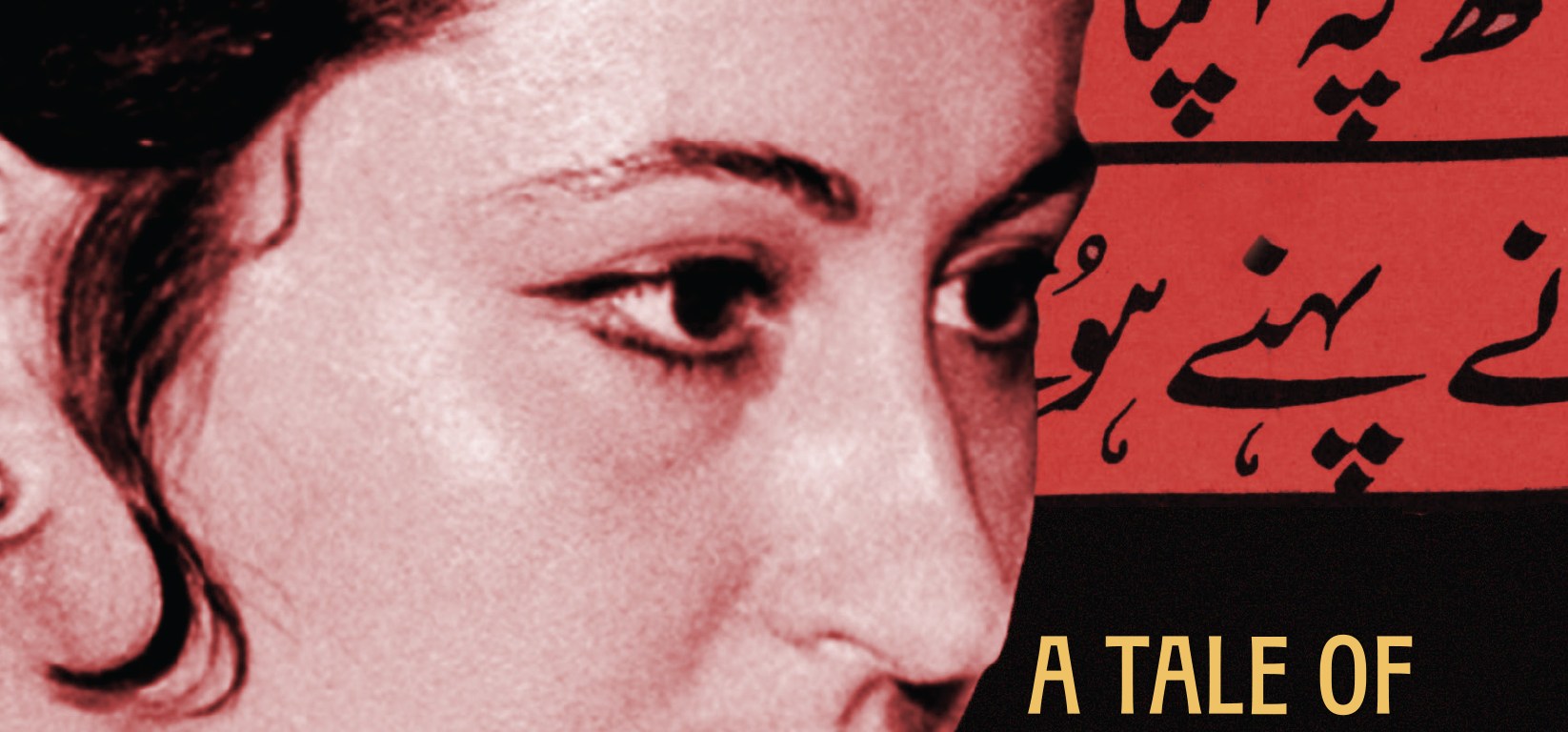
A saga of obsession, betrayal, glamour, and intrigue, this true crime story delves into the unresolved murder of a poet and his unrequited, forbidden love.
In October 1970, a mysterious death came to light in Karachi. Poet and former civil services officer, Mustafa Zaidi was found dead in his home. Shahnaz Gul, a minor socialite, was found drugged and unconscious in the same home.
Initially termed as suicide, the shock didn’t die its natural death. Media and family unrelenting, the clandestine affair got tangled in a web of suspicion and scandal. Under the dark clouds and press screaming for blood, Shahnaz Gul was tried for murder.
Fifty years later, journalists Saba Imtiaz & Tooba Masood-Khan dive into the historical records in search of truth. Five years of research and the result is Society Girl: A Tale of Sex, Lies and Scandal. The two authors also launched a podcast, Notes on a Scandal, in 2022.
Murders are movie material. But true crime reminds us of the frailty of human existence. It shows the shortcomings and failings of evolution. The name Mustafa Zaidi might not resonate with most people today. However, according to the authors’ viewpoints, Zaidi was a prominent figure in Karachi’s intellectual circle during the 1960-70s. Zaidi was a talented poet and a native of Allahabad (undivided India). His first book of poems was published at the age of 17.
The authors have captured the persona of both, Zaidi and Gul, well. Zaidi, a dramatic, arty youth, always found a way to get what he wanted by threatening to commit suicide. In fact, he even attempted it on an occasion. Uprooted from India, he took time to adjust to Lahore, eventually wearing the coat of a bureaucrat. Known for his forthrightness and literary pursuits, he married a German lady, Vera.
Shahnaz, on the other hand, was brought up in veil, in a small town in Gujranwala. Her roots lay in Afghanistan, traceable to a royal clan. The beautiful young girl was married off at the age of 17 to a man 30 years her senior.
Fate intervened, and Mustafa and Shahnaz met. Both were respectably married with two children each, a prerequisite in that era.
According to the narrative, Mustafa chased Shahnaz, who was a minor socialite then, partying in Karachi’s fair-weather circles. She wasn’t an intellectual, in fact one of her friends called her ‘paindu’, a local village girl.
Fate wasn’t kind. Mustafa was dismissed from the civil services without any plausible reason, along with other officers, due to regime change. He lost all semblance of balance, as his passport was confiscated. His sent his wife and children to Germany to prevent the wrath of the regime.
Amid the hue and cry of Zaidi’s death, nude photos of Shahnaz were found in Mustafa’s home in Karachi. The crime didn’t have a motive, except a man’s failed attempt to get the woman he was obsessed with. However, notions of smuggling and overseas gangster connections led to Shahnaz’s arrest. From an innocent victim to an alleged murderer, the societal views changed her life.
The case moved amid the twists and turns. Later, Shahnaz was acquitted. The damage had been done by then. Shahnaz, the beautiful damsel, was now a tainted lady. She survived the whispers and stares to make her way back into society. Most acquaintances didn’t feel she was capable of murder.
The curious death highlights many more important issues in its wake. There was the stigma of mental health, a visible impact on Shahnaz’s life, lack of diligence during investigation (Zaidi’s body was exhumed after burial), the media’s focus on Shahnaz rather than highlighting critical political developments.
The authors have traced the political, social and cultural milieu of the 1950s-70s extensively. The colonial hangover prevailed in customs, cuisine, lifestyles. We get a peek into elite clubs, special parties, raging discotheques. Women dressed to the hilt, wearing stylish saris with skimpy blouses and drove cars.
Staying behind a respectable mask, liquor mixed coca cola was a norm at parties. Beach picnics and parties with friends and family were common. Women did manage to travel abroad alone as well, despite the conservative outlook. The intellectuals were revered, their art treasured.
During the research, Gul’s family refused to share their experience. Mustafa Zaidi’s death, termed as suicide, is the death of a man who lost the game of life. The book is worth a read for anyone interested in true crime, history, or the human condition.
About the authors
Saba Imtiaz is a freelance writer and researcher. She is the author of the novel Karachi, You’re Killing Me!, which was adapted into the Indian film Noor (2017), starring Sonakshi Sinha. Saba writes about culture, food, religion, and urban life, and has reported features from Pakistan, Afghanistan, Jordan, and Lebanon.
Tooba Masood is a communications specialist and freelance journalist based in Karachi, Pakistan. She has worked at news media organizations in Pakistan for over thirteen years. Her reporting has been featured on the BBC, fiftytwo, NPR, Dawn, HuffPost India, and Samaa.
Book Details
PUBLISHER Roli Books
FORMAT Paperback
GENRE General Non-Fiction Crime
PRICE INR 595
BUY CMYK BOOKSTORE
This blog post is part of ‘Blogaberry Dazzle’ hosted by Cindy D’Silva and Noor Anand Chawla.

 Queen of Treasures
Seems like a scandalous affair like what one reads in Judith Krantz or Judith Gould books. I think it’s sad that people’s lives were affected by the intense scrutiny and media trial.
LikeLiked by 1 person
Very very interesting plot …. it has every element in the story which can attract a reader like me who always looks for in murder mystery. You Kicked my interest in this book and I am surely going to read it.
LikeLike
I am always interested to read about life in Pakistan, specially Karachi. Your review makes the story enticing and worth reading.
LikeLike
I do like to devour crime stories but I am more into human psychology and the deductions of whodunnit.I think this real life crime story must have raised a lot of curiosity just like the Tandoor murder or the Indrani Mukerjea scandal in India.Knowing the people involved even if only through social media does make the crime feel closer to home.
LikeLiked by 1 person
Truth is really stranger than fiction. This kind of scandal reveals the dark, naked truth of people hiding under masks. Real-life crime stories are quite hard-hitting.
LikeLike
Scandalous affairs, old lovers reunite, betrayal, separation, societal pressures. Uff, is this a fiction or a true story? Sounds intriuging. Amidst all this, the emotion that comes to me from your review is sadness, for both him and her! Nice review.
LikeLiked by 1 person
Wow! I can imagine how the book would be just by reading the review. Quite a story! Thanks for the recommendation.
LikeLiked by 1 person
The book seems like a fascinating dive into history and true crime, paired with sharp societal observations. A must-read for mystery lovers!
LikeLiked by 1 person
what an interesting book you have found. true crime is indeed disturbing and one thing i wish the world did not have!
LikeLiked by 1 person
Extremely interesting plot. Sounds riveting indeed. Sad for the tainted girl/ woman
LikeLiked by 1 person
Big fan of reading deception and drama, not so much in real life haha. This book looks intriguing. Putting this on my TBR.
LikeLike
reading about a real life crime is truly interesting . Will check out the book. Thanks for the wonderful review
LikeLike
This book seems to be a great read full of mystery, betrayals and twists to follow. I am curious to read this book after reading your review.
LikeLiked by 1 person
Ooh this book sounds so interesting!
LikeLiked by 1 person