
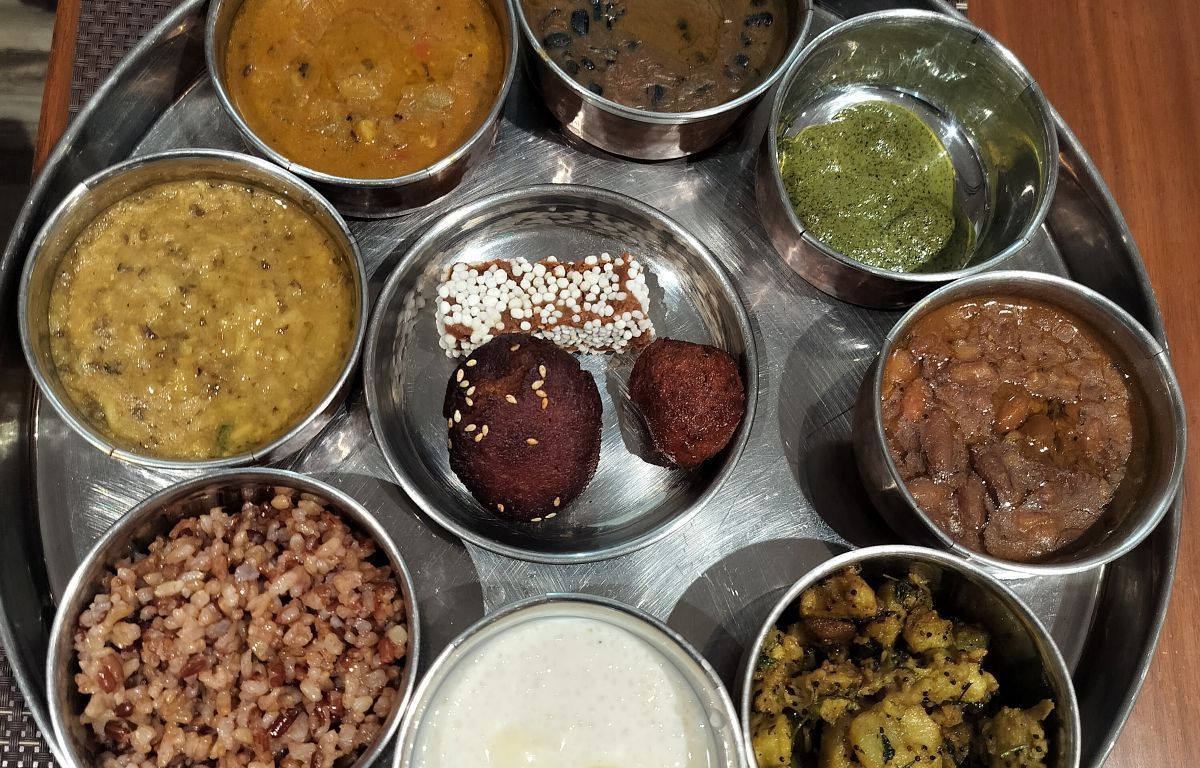
Kauthig, celebratory moments with Chef Mukesh Panwar, Commis 1, at Hilton Garden Inn, Saket, New Delhi, was a delightful culinary journey into the heart of Uttarakhand.

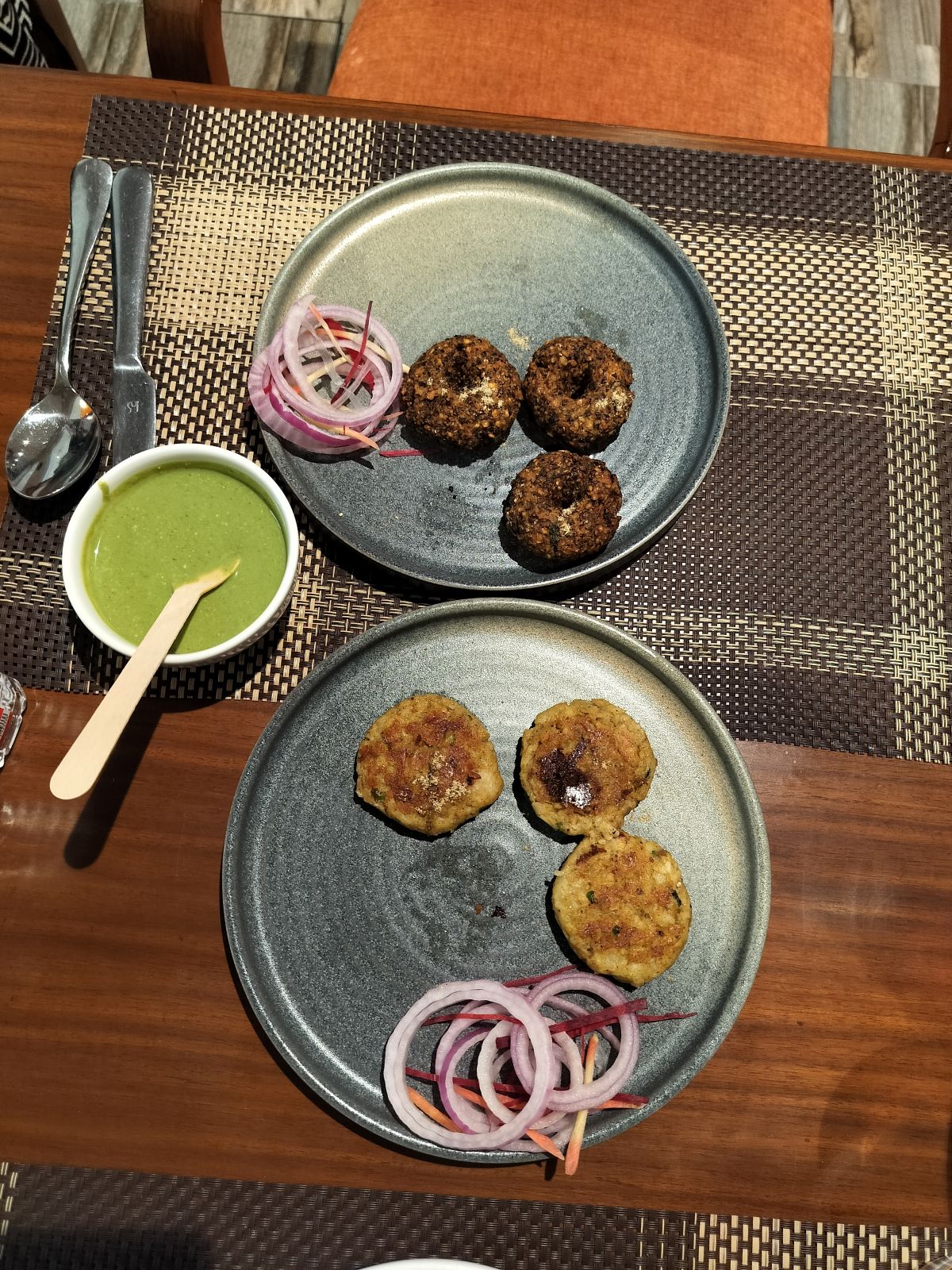

Kauthig translates to festive occasions in the local dialect. And we were treated to the feast cooked on these special occasions at India Grill, Hilton Garden Inn. This feast, comprising vegetarian and non-vegetarian dishes, showcased the authentic flavours of Uttarakhand. We opted for the vegetarian spread along with the Buransh ka sharbat (drink made from Rhododendron flowers).

Beyond preparing the dishes, Chef Mukesh Panwar, a native of Rudraprayag, gave us insights into the traditional cooking techniques of his region.
In the interiors of Uttarakhand, spices and vegetables are crushed by hand using traditional tools like okhli (mortar and pestle), emphasizing the importance of preserving age-old culinary practices.
The feast began with Aloo Pindaloo ki Tikki and Dal Pakori.
Pindaloo, a variety of Colocasia, is organically grown in the hills, offering a unique and sweet flavour.
The traditional black dal for the pakori, soaked overnight, was ground by hand on a silbatta, a traditional stone grinder, resulting in a richer and more flavourful dish.
We then indulged in Bhatt ki Churkhani, Aloo-Mooli Thechwani, Khichdi with Pahadi Ghee and Curd, Chimi ki Subzi, Himalayan Red Rice, and Mandue ki Roti.
The Thechwani, a preparation of crushed radish and potatoes, exemplifies the region’s emphasis on traditional cooking methods.
Even the flour for the millet rotis is ground at home by women using hand mills.
All the dishes were cooked in pure, sweet ghee, infused with the aroma of mountain spices, and transported me to my travels to the villages surrounding Jim Corbett and Champawat.
The addition of Jakhiya seeds, small mustard-like seeds, added a unique nutty crunch to the dishes.
Pahadi Rajma, extracted from mountain beans, offered a distinctly sweet flavour compared to the Rajma typically found in Jammu and Kashmir or Delhi.
The desserts were equally delightful, prepared with jaggery and ghee instead of refined sugar.
We savoured Jhangora ki Kheer (a millet plant, also known as barnyard millet), Arse (a sweet made with ground red rice and jaggery), Gulgule (deep-fried sweet balls made of flour and jaggery), and the famous Bal Mithai.

The hotel kitchen sourced all ingredients, including organic spices, lentils, grains, and vegetables, directly from Uttarakhand. While we didn’t eat the non-vegetarian platter, the fish was cooked in juices of malta (huge oranges), pomegranate.
The healthy, superfood platter, prepared exactly as Chef Panwar had experienced back home, transported us to the Himalayan region, showcasing the perfect blend of healthy cooking practices and heartwarming hospitality.

 Queen of Treasures
I love North Indian cuisine. I miss it now. Using traditional methods like mortar and pestle is unheard of in my place now.
LikeLiked by 1 person
ah, as in most places! everyone is in a hurry, but some good old fashioned healthy cooking is awesome.
LikeLike