

The digital age has ushered in unprecedented opportunities for content creation, but it has also sparked complex debates about freedom of speech, ethical boundaries, and legal responsibilities. These debates have recently been amplified by high-profile controversies, such as the one involving Ranveer Allahbadia.
- The Controversy: What Happened?
- Public Sentiment
- Understanding the Impact on mental health
- Interview with Supreme Court Advocate-on-Record Ms Taruna Ardhendumauli Prasad
- Actionable Advice for Content Creators
- References
The Controversy: What Happened?
The recent controversy surrounding Ranveer Allahbadia’s content highlights the urgent need for a nuanced understanding of social media’s evolving landscape.
On February 10, 2025, a video clip of podcaster and YouTuber Ranveer Allahbadia passing comments about parents’ intimate moments went viral. This clipping was part of the stand-up comedy show, ‘India’s Got Latent’, founded by comedian Samay Raina. The format of this subscription-based show (now deleted) entailed dark humour with obscene roasting by a panel of judges. Both the audience and participants were young.
The 31-year-old Allahbadia is the 2024 recipient of the Disruptor of the Year, National Creators Award. He had garnered a massive following since his social media debut in 2015 and is known for his podcast on spirituality, fame, finance.
Allahbadia copied the comment from an Australian YouTube channel called The OG Crew, where the same joke was cracked two weeks before Raina’s show. Amid public outrage, FIRs against all connected with the ‘India’s Got Latent’ show were filed. (FIR stands for First Information Report. It is a written document filed with the police when someone reports a cognizable offense. The police use the FIR to begin their investigation.)
The filing of these FIRs triggered a wave of public discourse and legal scrutiny. The policymakers have taken action to create a new legal framework regulating both social media and OTT.
Public Sentiment
Celebrities, media, men and women in power have taken a unified stance to prevent such profane remarks on social media platforms. There is a call for brands to curtail sponsorship for such shows. There is also a call to hold the social media platforms accountable.
India TV founder and editor-in-chief Rajat Sharma opined that brands and sponsors sideline smaller creators with good content.
Allahbadia has rendered a public apology since then and has been granted interim protection from arrest by the Supreme Court. When asked about this, Sadhguru said that he doesn’t believe in punishing people but in transforming people.
The global platform Reddit reflects a mixed point of view. One user says that ‘India’s Got Latent’ had it coming. Another says that the OG crew has shared YouTube Shorts with hashtag #beerbiceps, captioning it as ‘the question that’s trending in India’.
The complexity of this situation makes us think about how digital content is influencing perception, behaviour and mental well-being. The world is united digitally, yet societal norms vary in each nation.
Understanding the Impact on mental health
How does this content impact our mindset? YouTuber Dhruv Rathee says that we are all a product of our environment. He has cited the ripple effect of how dark humour turned the lives of many peace-loving people upside down. Labelling, judging and passing thoughtless comments change public perception. He touches upon an important aspect: rage baiting, that is shock value, to attract attention and gain popularity.
This ‘rage baiting’ and overexposure to provocative content can contribute to brain rot, a growing concern in the digital age.
Brain Rot
Source: Oxford University Press
Oxford Word of the Year 2024
‘Brain rot’ is defined as “the supposed deterioration of a person’s mental or intellectual state, especially viewed as the result of overconsumption of material (now particularly online content) considered to be trivial or unchallenging. Also: something characterized as likely to lead to such deterioration”.
…also gaining momentum is a broader, more serious conversation about the potential negative impact that excessively consuming this content might have on mental health, particularly in children and young people. Earlier this year, a mental health centre in the US even published advice online about how to recognize and avoid ‘brain rot’.
Interview with Supreme Court Advocate-on-Record Ms Taruna Ardhendumauli Prasad
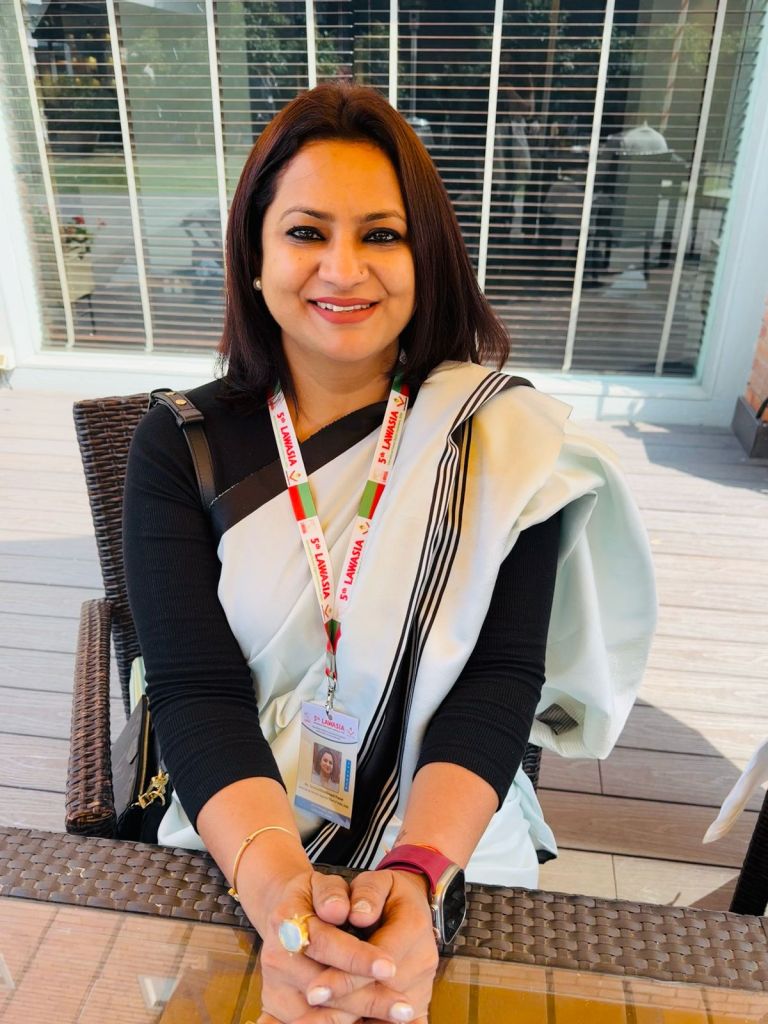
To gain clarity on the evolving social media landscape, I spoke with Taruna Ardhendumauli Prasad, an Advocate at the Supreme Court of India. Here are key insights from our discussion:
Q: As a lawyer, citizen, and parent, how do you view social media?
A: The increase in social media content, especially following the COVID-19 pandemic, has significantly reflected our values and the world we are creating for future generations.
As a lawyer, citizen, and parent, I believe it is essential to critically evaluate the profound effects of social media on young minds, including their mental health, perceptions, and behaviours. Instead of getting swept away by the appeal of digital popularity, we must stay aware of how this is constantly changing medium influences our thoughts, behaviours, and societal norms.
Q: With cuss words and explicit humour becoming mainstream, what is the way forward?
A: Words hold significant power and can lead to serious consequences. We shouldn’t blindly imitate what we see and hear; exercising discretion is crucial. In my youth, the use of the F*** word was considered unacceptable. However, over the decades, we’ve heard it so often that we tend to overlook its use by young people, including children.
Deep down, we know this is not a good practice. Cursing and offensive language should never be normalized in any language. While using such language might bring short-term benefits, it can also lead to long-term repercussions, both legally and ethically.
Q: Are there any upcoming legal changes that will affect content creators?
A: The legal framework evolves with evolving societal norms. Earlier, the print media was regulated. Then, laws for TV were formulated. The rise of OTT and social media has made it necessary to introduce new regulations. This needs more scrutiny and diligence, as these platforms are global and have a wider audience.
There is a proposed bill in the Parliament: Broadcasting Services (Regulation) Bill, 2023, to cater to the evolving needs of the Broadcasting sector. This will replace the Cable Television Networks (Regulation) Act 1995. The new bill brings within its ambit, online social media intermediaries and OTT platforms, which were previously largely functioning in consonance with the general penal and regulatory guidelines. While this has been met with criticism, the Bill is a step in the right direction.
Q. Content creators normally work in isolated pods. Most work from home, and are primarily one-man shows, until they rise to stardom. What protocols should they follow?
A: The Information Technology (IT) Act 2000 is the primary legislation in India addressing cybercrime and electronic commerce. Related regulations include the Intermediary Guidelines Rules 2011 and the Information Technology (Intermediary Guidelines and Digital Media Ethics Code) Rules, 2021, both of which are publicly accessible.
Creators should familiarize themselves with these laws as they begin their journey. If they encounter any difficulties, seeking assistance from a legal professional is advisable. For teams of creators, hiring a legal counsel can be very beneficial, guiding on various legal matters.
Delivering quality language and content will always attract an audience. Creators should avoid rushing to achieve popularity. Instead, focusing on hard work, commitment, and discipline will yield long-term success. Independent content creators must also ensure that their growth is proportional to accountability and responsibility to publish content diligently due to the consequent increase in their audience.
Q: The Supreme Court bench has given interim protection to Ranveer Allahbadia, but there are conditions in place. Would you please decode the legalities of the case?
A: Two FIRs have been filed against Ranveer Allahbadia. These are in Thane (Maharashtra) and Guwahati (Assam). These FIRs have been registered under various sections of the Bharatiya Nyaya Sanhita (BNS) 2023.
These sections are part of criminal laws with potential penalties and time behind bars. In criminal cases, the intent plays a major role. The Hon’ble Supreme Court bench comprising Justice Surya Kant and Justice N Kotiswar Singh said that his vulgar remarks showed his “perverted” mind and the entire society felt ashamed.
| SECTION | CHARGES | PUNISHMENT |
| BHARTIYA NYAYA SANHITA, 2023 | ||
| 79 | Word, gesture or act intended to insult modesty of a women. | Simple imprisonment for a term which may extend to three years, and also with fine. |
| 95 | Hiring, employing or engaging a child to commit an offence. | Imprisonment of either description which shall not be less than three years, but which may extend to ten years, and with fine. Further, if the offence be committed shall also be punished with the punishment provided for that offence as if the offence has been committed by such person himself. |
| 196 | Promoting enmity between different groups on grounds of religion, race, place of birth, residence, language, etc., and doing acts prejudicial to maintenance of harmony. | Imprisonment which may extend to three years, or with fine, or with both. If an offence is committed as specified in Section 196(1) BNS, in any place of worship or in any assembly engaged in the performance of religious worship or religious ceremonies, shall be punished with imprisonment which may extend to five years and also be liable to fine. |
| 294 | Sale, etc., of obscene books, etc. | On first conviction, with imprisonment of either description for a term which may extend to two years, and with fine which may extend to five thousand rupees. In the event of second or subsequent conviction, with imprisonment which may extend to five years, and also with fine which may extend to ten thousand rupees. |
| 296 | Obscene acts and songs. | Imprisonment which may extend to three months, or with fine which may extend to one thousand rupees, or with both. |
| 299 | Deliberate and malicious acts, intended to outrage religious feelings of any class by insulting its religion or religious beliefs. | Imprisonment which may extend to three years, or with fine, or with both. |
| THE INFORMATION TECHNOLOGY ACT, 2000 | ||
| 67 | Punishment for publishing or transmitting obscene material in electronic form. | On first conviction, with imprisonment which may extend to three years and a fine which may extend to five lakh rupees. In the event of second or subsequent conviction, imprisonment which may extend to five years and also fine which may extend to ten lakh rupees. |
| THE CINEMATOGRAPH ACT, 1952 | ||
| 4 | Examination of films. | – |
| 7 | Penalties for contraventions of this Part. | Imprisonment which may extend to three years, or with fine which may extend to one lakh rupees, or with both. In case of continuing offence, further fine which may extend to twenty thousand rupees for each day the offence continues. For exhibition of video film in contravention of sub-clause (i) of clause (a), imprisonment for minimum of three months which may extend to three years, and fine which shall not be less than twenty thousand rupees but may extend to one lakh rupees. In case of continuing offence, additional fine may extend to twenty thousand rupees for each day the offence continues. Further, court may impose lesser sentence than three months, or fine of less than twenty thousand rupees for adequate and special reasons. Upon conviction, court may order the forfeiture of the film to the Government. |
| THE INDECENT REPRESENTATION OF WOMEN (PROHIBITION) ACT, 1986 | ||
| 4 | Prohibition of advertisements containing indecent representation of women. | Prescribed under section 6 of the Act. |
| 6 | Penalty. | On first conviction, with imprisonment which may extend to two years, and with fine which may extend to two thousand rupees. In event of second or subsequent conviction, imprisonment which shall not be less than six months and may extend to five years, and also fine minimum of ten thousand rupees which may extend to one lakh rupees. |
- The Supreme Court has given him interim protection from arrest. This means that he won’t be arrested in this matter until further orders.
- No further FIR shall be registered against him based on the ‘India’s Got Latent’ show.
- As he has cited fear of death threats, he can approach the local police of Maharashtra and Assam for protection of life and liberty in case of any threat impeding him from joining the investigation.
- If any other FIR is registered in Jaipur, the arrest shall remain stayed in that FIR as well.
This interim protection is subject to certain conditions:
- Ranveer Allahbadia will not be accompanied by any counsel inside the police station during the course of the investigation.
- He has been asked to deposit his passport with the Thane police. He cannot leave the country without the permission of the Supreme Court.
- Allahbadia and his associates, including Samay Raina and Apoorva Makhija, will not air any show on YouTube or any other audio/video visual mode of communication until further notice.
Q: What’s the next step in Allahbadia’s case?
A: The Hon’ble Supreme Court has imposed restrictions, but legal proceedings will continue. The Court is a fair place. It gives all parties a chance to express their grievances. Long-term results are weighed before any judgment is passed. The matter is now listed for hearing on 03.03.2025, we shall witness what follows.
(The Supreme Court bench has granted Ranveer Allahbadia the permission to air new episodes of his show, The Ranveer Show, keeping in mind the decency.)
Q: Concerns have also been raised about the curtailment of ‘freedom of speech’ and expression.
A: The State must look after the welfare of the people. The regulation does not curtail freedom of speech, rather it protects the people from profanity.
I remember the case of a song from the movie Khuddar (1994). The lyrics were “Sexy, sexy mujhe log bole.” But there was public backlash, and it was changed to “Baby, baby, mujhe log bole.”
While social media is a platform for creators to express themselves, they must remind themselves that it is after all a public platform which requires some level of moderation as per the ideals of the society. The increasing dependence and accessibility on social media platforms warrant such responsibility.
On March 3, the Honorable Supreme Court directed the Solicitor General of India to invite public opinions when working on the new bill. The Honorable Court expressed that people should be open-minded and come forward with suggestions to ensure that freedom of expression is not curtailed, while also protecting our culture.
Q: Our country has very talented and creative people. However, social media content creation doesn’t have any checks and balances. What can be done to streamline this career opportunity in an organized manner?
A: Government-certified training by experts such as mass communication experts, policymakers and legal luminaries can aid in streamlining this. This certification will give it credibility. It will help build more knowledge-oriented authentic content. The idea is to build a conscience or ethical guidelines, that content creators must bear in mind in view of their ability to influence their audience.
While this process takes its course, the youth should remain focused on their talent and creativity. There is no alternative to commitment, dedication, and discipline. Slow and steady is the best way to reach your goals.
Before crafting a reel or writing a post or conducting interviews, think of the impact it would have on young minds and viewers. There will always be challenges on the path, but there is also inspiration all around you.
Role models should be individuals who have maintained their momentum over the years. A prime example is the legendary actor Amitabh Bachchan. He has inherited the cultural narrative of his father, Harivansh Rai Bachchan, which is characterized by impeccable language and diction. Amitabh’s journey as a public figure serves as a valuable case study. This dedication to excellence can also be observed in his son, Abhishek Bachchan. By observing these individuals, we see a positive example of gradual self-improvement while respectfully honouring our culture through their etiquette and manners.
Digital Revolution: Tulsi Village in Central India
Source: BBC Future: How a tiny village became India’s YouTube capital
While the Allahbadia controversy highlights the pitfalls of unchecked content, the story of Tulsi village demonstrates the transformative power of social media when used responsibly.
Tulsi, a small village near Raipur, Chhattisgarh, is labelled as the YouTube capital of India. In 2018, a local youth picked up his camera to start a YouTube channel, Being Chhattisgarhiya, showcasing his village’s culture. It had a ripple effect. More youngsters joined hands, with elders willingly extending their supporting in all ways. Now, most of the 4,000 inhabitants are involved in this video revolution. Many youngsters have brought their dream careers to life, boosting the economy as well.
As the digital landscape continues to evolve, content creators, legal experts, and policymakers must engage in constructive dialogue. Social media is a powerful tool—it can either shape a positive narrative or fuel controversy. The choice is yours.
Actionable Advice for Content Creators
- Avoid legal pitfalls: Understand the IT Act 2000, Intermediary Guidelines, and ethical boundaries.
- Balance creativity with responsibility: Avoid shock-value tactics that may have legal consequences.
- Stay updated: Keep track of evolving digital laws to ensure compliance.
- Think Long-Term: Success is built on consistency and credibility, not controversy.
- Seek Legal Help: If in doubt, consult a lawyer specializing in digital content laws.
- Respect Your Audience: Language and ethics matter. Your content influences young minds—use that power responsibly.
References
Indian Express: Who is Ranveer Allahbadia and why is he receiving flak from all corners?
Indian Express: Ranveer Allahbadia row: IT Ministry to brief House panel on legal changes to bring social media under legal scrutiny
India Today: Court’s dos and don’ts for Ranveer Allahbadia: No shows, can’t leave country
India Today: ‘Perverted mind, dirty’: Supreme Court talks tough on Ranveer Allahbadia case
Wikipedia: India’s Got Latent
This blog post is part of ‘Blogaberry Dazzle’ hosted by Cindy D’Silva and Noor Anand Chawla.

 Queen of Treasures
Ambica, this is very useful information for creators and even general public accounts.It will help them tread carefully and not attract legal action.
Though sadly most of the terms are broad terms and open to interpretation in this fast changing world where political affinities give you a free pass to create lot of negative content to create shock, rage and disharmony.
LikeLiked by 1 person
This is why legal counsel is needed. The sector is so disorganised. We can’t be random in our approach because we don’t know where it is reaching. But am glad you read the whole post! 😀
LikeLike
Even I don’t use the F word, so no way am I letting my kids use it or any other cuss words for that matter despite the exposure that we cannot stop (some content creators are a joke). We parents need to be vigilant, strict and not be afraid to guide our kids the right way. That’s the first step.
LikeLiked by 1 person
Agreed, all checks begin from home and even as adults, we have to school ourselves to be polite and controlled. Until, it becomes a habit.
LikeLike
As someone who creates and shares content, I found your breakdown of the legal aspects of social media super helpful. It’s so easy to overlook these things until a problem arises, but your post made me realize how important it is to stay informed. I especially liked the clarity with which you explained the do’s and don’ts—it didn’t feel overwhelming, just practical and actionable.
LikeLiked by 2 people
Very happy to know that you found this useful.
LikeLiked by 1 person
Such an insightful post! Thank you for providing authentic information and shedding light on the controversy. The interview with a Supreme Court advocate offered valuable perspectives on the ever-evolving digital forum.
LikeLike
Interesting to note, you didnt share your point of view about the Ranveer=Latent Show drama. But I have vehement views about it. Our judicial system is skewed totally. In one Pune Porsche case, the boy who mowed down lives got out by just writing a 300 word essay. On the other hand, Ranveer made a comment that didnt know what he was talking about is treating like a criminal. It is dark humour and we as adults have a choice to watch it or abstain. its not as if it was aired on prime-time national televison. Kapil Sharma makes such derogatory comments and gets away with it. I follow standup comedy and it is my way of letting off stress and guffaw a lot. I could go on and on about the topic. Sorry!
LikeLiked by 1 person
This is a valuable information for every content creator. However, my concerns are also around TV shows that show Dayan, Nagin and what not, shown on prime times. I wonder how people silently watch, enjoy and never talk about the superstitious beliefs been spread across. (Given we still find cases of witch killing and burning in different parts of the country)
LikeLiked by 1 person
A lot of this is contestible, however the new bill is under review. From what I saw today, it’s going to be in public domain for suggestions. Let’s see where it leads.
LikeLike
All I can say again is that this trend of making weird jokes or non veg joke or comments didnt happen for the first time on social media and television. The trend started from the so called comedy serials many of us who enjoyed and found it entertaining. Such vulgur jokes encuraged the younger generations to get influenced and the reflection is the recent incident. In house atmosphere also need to be checked so is the rest series on various channels.
LikeLiked by 1 person
This is such an informative read! It’s so important for creators to know the legal side of social media, and you’ve explained it so well. Loved the expert insights, definitely bookmarking this for future reference!
LikeLiked by 1 person
Creator of a vary famous Marathi satirical TV show “घडलंय बिघडलंय” Mr. Shrirang Godbole said in one of his interview followed after this incident that “Person who is making up that joke always knows if it’s a good joke or a bad joke.’ He/she can’t deny the knowledge of it. It is that person’s choice at that moment to crack that joke.”
I strongly agree with this point of view. You made it a point to crack that joke, the director/producor of the show decided not to edit and cut that part. So, all people related to the show were aware of the content they were putting out and were ok with it.
LikeLiked by 1 person
Words have power and consequences. We have been taught to use them wisely since our childhood. Good language and manners never hurt anyone at any stage. Bad language is also a habit. Better India did a story on a man who has been working on eliminating foul language, he would charge a fine of Rs 500 for ever cuss word from his village people.
LikeLiked by 1 person
I saw little bit of Ranvir’s case and you gave the full details. Some you tubers and content creator creating so ugly and cheap content and worst part that goes viral. Glad to know the Indian law regarding this digital media. Thank you for this interview. It puts light on most topics and clear almost all doubts. Fact checkers are something there on instagram which always follow you only when you share something illogical and funny things. And then that law comes to haunt you.
LikeLiked by 1 person
Thank you, specifically for asking these questions,
Content creators normally work in isolated pods. Most work from home, and are primarily one-man shows, until they rise to stardom. What protocols should they follow?, and
Our country has very talented and creative people. However, social media content creation doesn’t have any checks and balances. What can be done to streamline this career opportunity in an organized manner?
These are going to be very helpful for me and all content creators reading this piece. Also, I wasn’t aware about the Tulsi Village story. How sweet and inspiring is that! I love social media and content creation for such powers of change and growth
LikeLiked by 1 person
This blog post really opened my eyes to the complexities of social media content and its impact, not just on public perception, but on mental health as well. The insights shared, especially around the concept of ‘brain rot’ and the importance of responsible content creation, are incredibly thought-provoking. As a content creator myself, it’s refreshing to be reminded of the power of words and the responsibility we hold. I found the advice to avoid rushing for popularity and to focus on delivering quality content really uplifting. It’s a great reminder to stay grounded and mindful of the impact we have on others.
LikeLike
This blog post really opened my eyes to the complexities of social media content and its impact, not just on public perception, but on mental health as well. The insights shared, especially around the concept of ‘brain rot’ and the importance of responsible content creation, are incredibly thought-provoking. As a content creator myself, it’s refreshing to be reminded of the power of words and the responsibility we hold. I found the advice to avoid rushing for popularity and to focus on delivering quality content really uplifting. It’s a great reminder to stay grounded and mindful of the impact we have on others.
LikeLiked by 1 person
This blog post really opened my eyes to the complexities of social media content and its impact, not just on public perception, but on mental health as well. The insights shared, especially around the concept of ‘brain rot’ and the importance of responsible content creation, are incredibly thought-provoking. As a content creator myself, it’s refreshing to be reminded of the power of words and the responsibility we hold. I found the advice to avoid rushing for popularity and to focus on delivering quality content really uplifting. It’s a great reminder to stay grounded and mindful of the impact we have on others.
LikeLike
This is an excellent interview, Ambica, an eye-opener about the law regarding content creation. I thoroughly enjoyed reading what the eminent lawyer had to answer to your carefully crafted questions. This interview is worthy of being bookmarked for novices like me. Am grateful to you, truly.
LikeLiked by 1 person
Thank you for the appreciation. Am glad it was useful.
LikeLike
Such an eye-opener interview about the legal side of content creation—so many things creators don’t even realize can land them in trouble. Social media gives so much freedom, but stuff like this really shows how tricky it can get. The whole rage baiting thing is so real—people will say anything for attention, and it’s crazy how fast things spiral. This post is worth sharing with all.
LikeLiked by 1 person
Yes, this is how mob are pushed.
LikeLike
I have also been thinking a lot about this. I think if you are an influencer/celebrity, you must use your power wisely—to educate and not otherwise. Content creators with a large follower base should be mindful of what they write/post and inspire in the right direction. All said and done, what Ranvir has done is not acceptable. His comment was deplorable, to say the least. I may be old school, but I don’t want my son to be exposed to such content, for instance.
LikeLiked by 1 person
Bad language and thoughts have a faster ripple effect. It’s very important we rein ourselves in sensibly.
LikeLike
That was very comprehensive. Words have utmost power, so they need to be used carefully. We all should take a lesson from this entire controversy.
LikeLiked by 1 person
I wish people are aware of all these aspects. The interview with the legal side is the need of the hour. This is one complete article.
LikeLiked by 1 person
Quite informative. Good to know what is coming. Just hope it is sensible and does not curtail freedom of speech too much. Our country usually has disproportionate responses to things and events.
LikeLiked by 1 person
Wow! Your post came at the right time. I could be seen nodding throughout your post. I still cannot utter the F word, though it has become a norm, just saying it out there! Things have become more easy and casual with the rise of social media and the way we consume content. Each of us as content creators too should be aware of the impact of what we put out for the world to see.
LikeLiked by 1 person
Am glad we are nodding at the same things! I refrain from using the F word, though it is a temptation, but good language and sobriety never failed anyone.
LikeLike
More than creating quality content it’s the numbers that influence creators nowadays. This urges them to look for shock value rather than value addition to it’s audience at large. I hope Ranveer’s case acts as a wake up call for people to take their following and platform responsibly.
LikeLiked by 1 person
yes, public space shouldn’t be a slander zone.
LikeLike
this is the need of the hour and I’m glad that you posted this at the right Time.
thank you so much for sharing xpert opinion on this topic it’s helpful
LikeLiked by 1 person
A very comprehensive account of this controversy. Good interview too.
LikeLike