
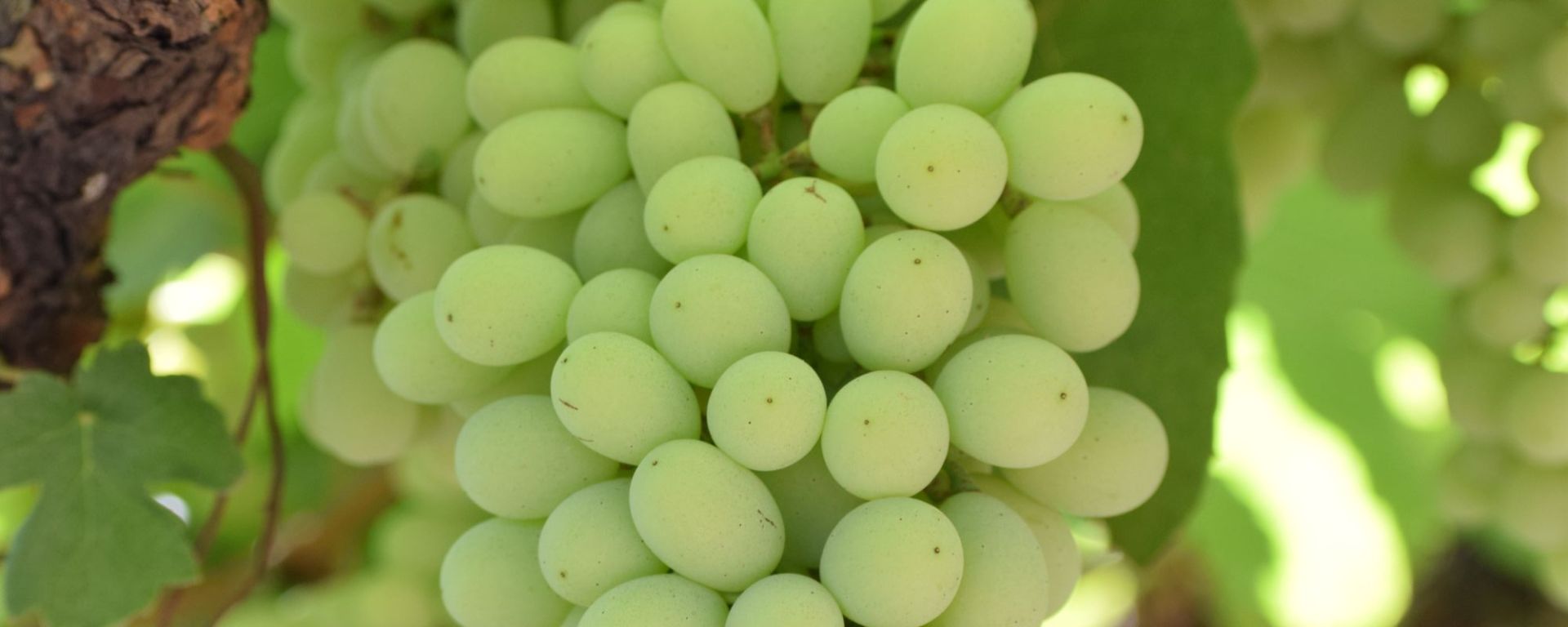
Have some fun exploring Nashik beyond the Mahakumbh. Discover Nashik, Maharashtra’s hidden gem, with this ultimate travel guide covering its vineyards, Warli art, local cuisine, Asia’s largest Artillery Museum, and a host of exhilarating outdoor adventures.
- Nashik’s Historical Footprint: From Trams to Independence
- Vocal for Local: Embracing Nashik’s Spirit
- Sula Vineyards: A Taste of India’s Wine Country
- Indigenous Flavours of Maharashtra: A Culinary Journey
- Warli Art Workshop: A Glimpse into Tribal Heritage
- Kumaramangalam Artillery Museum: A Chronicle of Military Might
- Fun Activities: Adding a Dash of Thrill
- Planning Your Nashik Adventure: Tips and Insights
- Getting to Nashik
An amalgam of life’s many shades, Nashik surprised me. The land of tomatoes, onions, grapes, Nashik is a verdant tapestry. Moving at a gentle pace, home to over 2.2 million souls, and a vital point in Maharashtra’s Golden Triangle alongside Pune and Mumbai, the city rests along the shores of the Godavari River, known as the Ganga of the South. It lies on the western edge of the Deccan Plateau, an ancient volcanic formation, and has been a crucible of revolutionary activities.
Nashik’s Historical Footprint: From Trams to Independence
Even though, I didn’t venture into the city, staying on the emerald outskirts, the cultural narrative brought it alive.
The British introduced the Nashik Tram around 1889, a pioneering venture that lasted nearly 44 years, covering 8-10 km and transporting villagers through dense jungle.
During the Independence Movement, Nashik became the hotbed of the Nasik Conspiracy Case (1910), leading to the lifetime imprisonment of freedom fighters Vinayak Damodar Savarkar and his elder brother Babarao Savarkar, who were deported to the infamous Cellular Jail at the Andaman Islands. The brothers had founded a secret society, Abhinav Bharat, camouflaged under the mask of ‘Mitra Mela’. On December 21, 1909, a member of the society, Anant Kanhere, assassinated Nashik’s then governor, A. M. T. Jackson, while he was watching a play.
In 1930, Dr. B. R. Ambedkar launched a satyagraha for the entry of Dalits into Kalaram Mandir, further cementing Nashik’s role in India’s social reform movements.
Beyond its human history, the region is home to leopards and other fauna, adding a wild touch to its serene landscapes. Today, Nashik thrives on agriculture and diverse industries, a blend of tradition and modernity.
Vocal for Local: Embracing Nashik’s Spirit
Our stay in the green tent city, created by Maharashtra Tourism for the Eco Glamping Festival at Gangapur Dam backwaters, was the perfect haven. Far from the city’s hustle and bustle, yet close enough for all the fun ‘Vocal for Local’ experiences that define Nashik.
Sula Vineyards: A Taste of India’s Wine Country
Dubbed the Napa Valley of India and the Wine Capital of India, Nashik houses almost 40 operational wineries. So, a winery tour is a must.
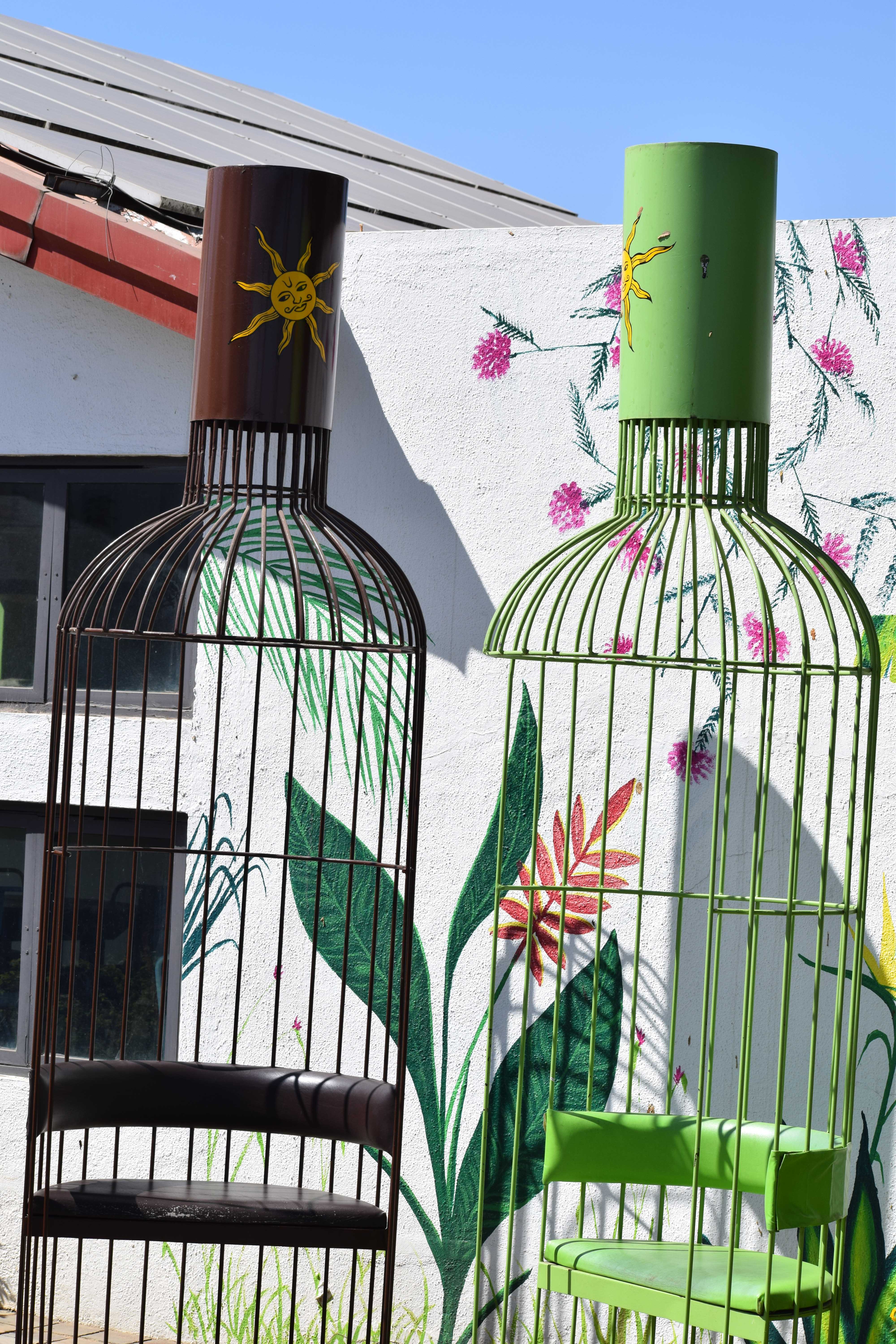
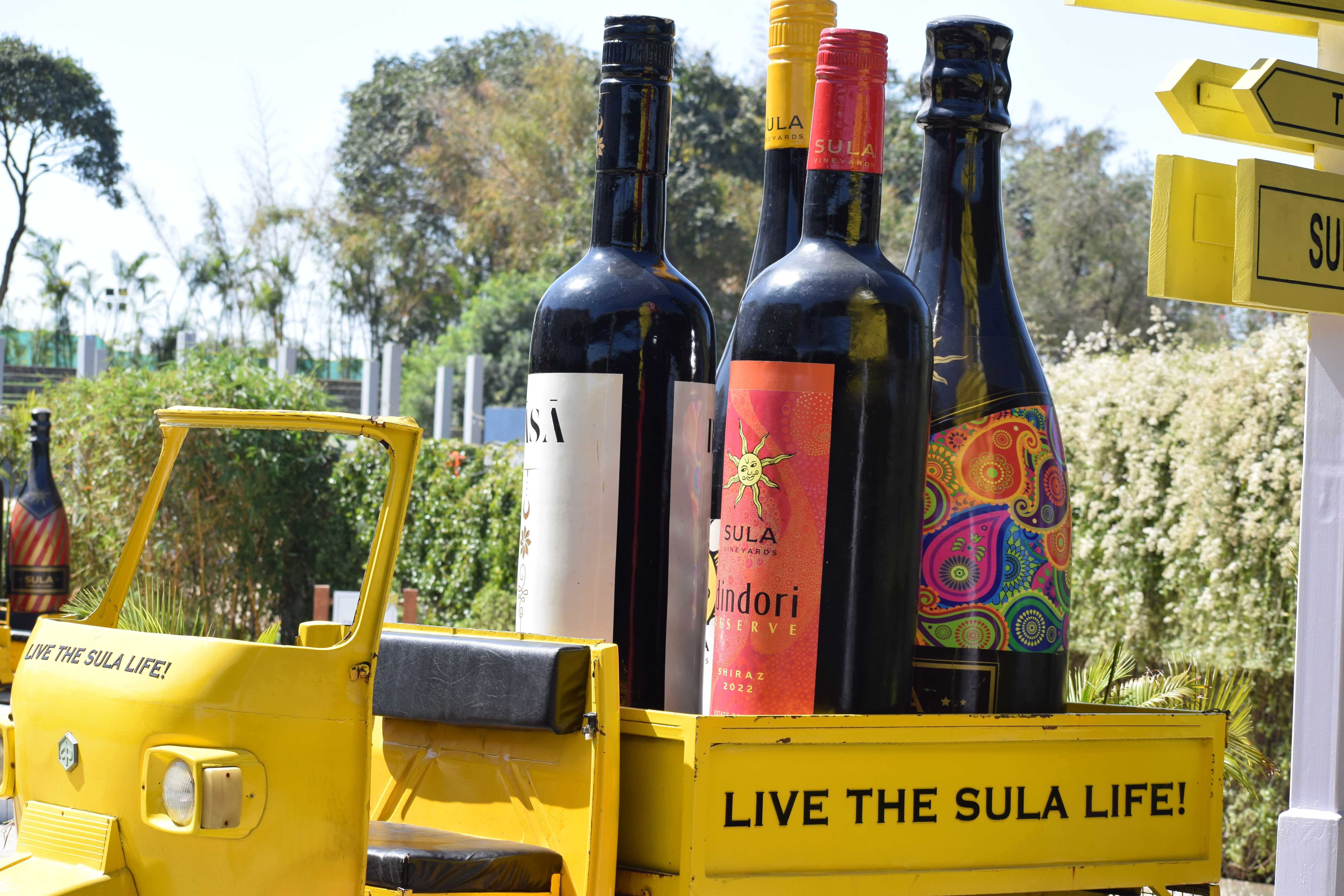

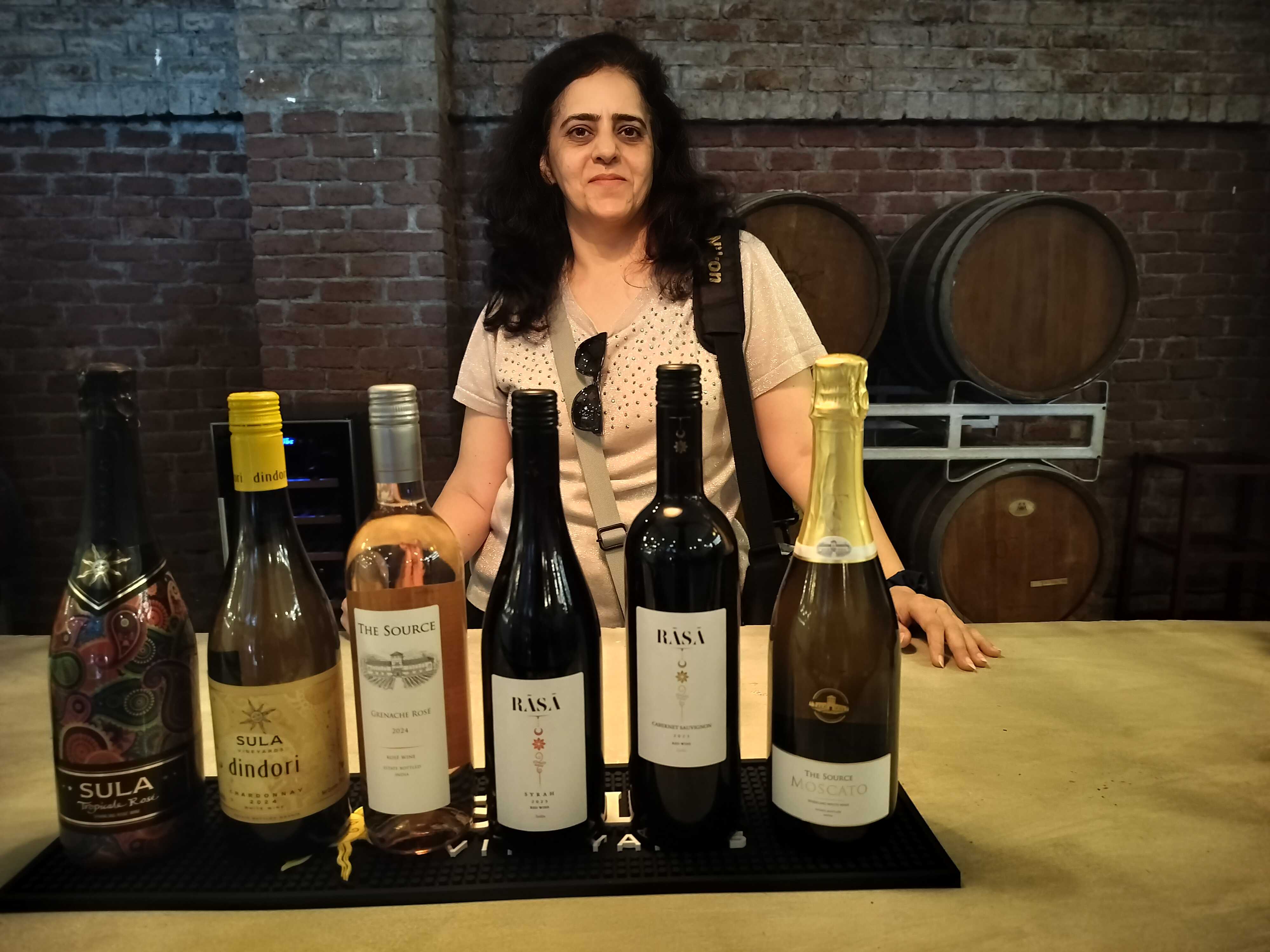
We headed to the famous Sula Vineyards. Founded by Rajeev Samant in 1996 and named after his mother, Sulabha, Sula is India’s oldest winery, a pioneer in producing wines with an Indian logo.
The winery is a photographer’s dream, with multiple spots for capturing the essence of the vineyards. Its grounds are adorned with indigenous flowers and colourful installations, creating some perfect Instaworthy spots.
The tour begins with a short video, followed by a session on the wine-making process, including a visit to the barrel room, and culminates in a wine tasting session. Sula also features a wine shop, souvenir shop, restaurant, and a boutique hotel.
There are many green practices in place here, such as turning old casks into furniture, rainwater harvesting, solar power installations.
The entry fee starts at INR 1,000 for a day visit. Best to book in advance to avoid the rush.
Indigenous Flavours of Maharashtra: A Culinary Journey
Among the many delightful dishes that Maharashtra offers, the origin of ‘misal’ is said to be somewhere along the boundary of Khandesh and Western Maharashtra, including present-day Nashik and Ahmednagar districts. While I didn’t eat misal pav on this trip, I did try my other favourites—poha, sabudana khichdi, and kokum sherbet.
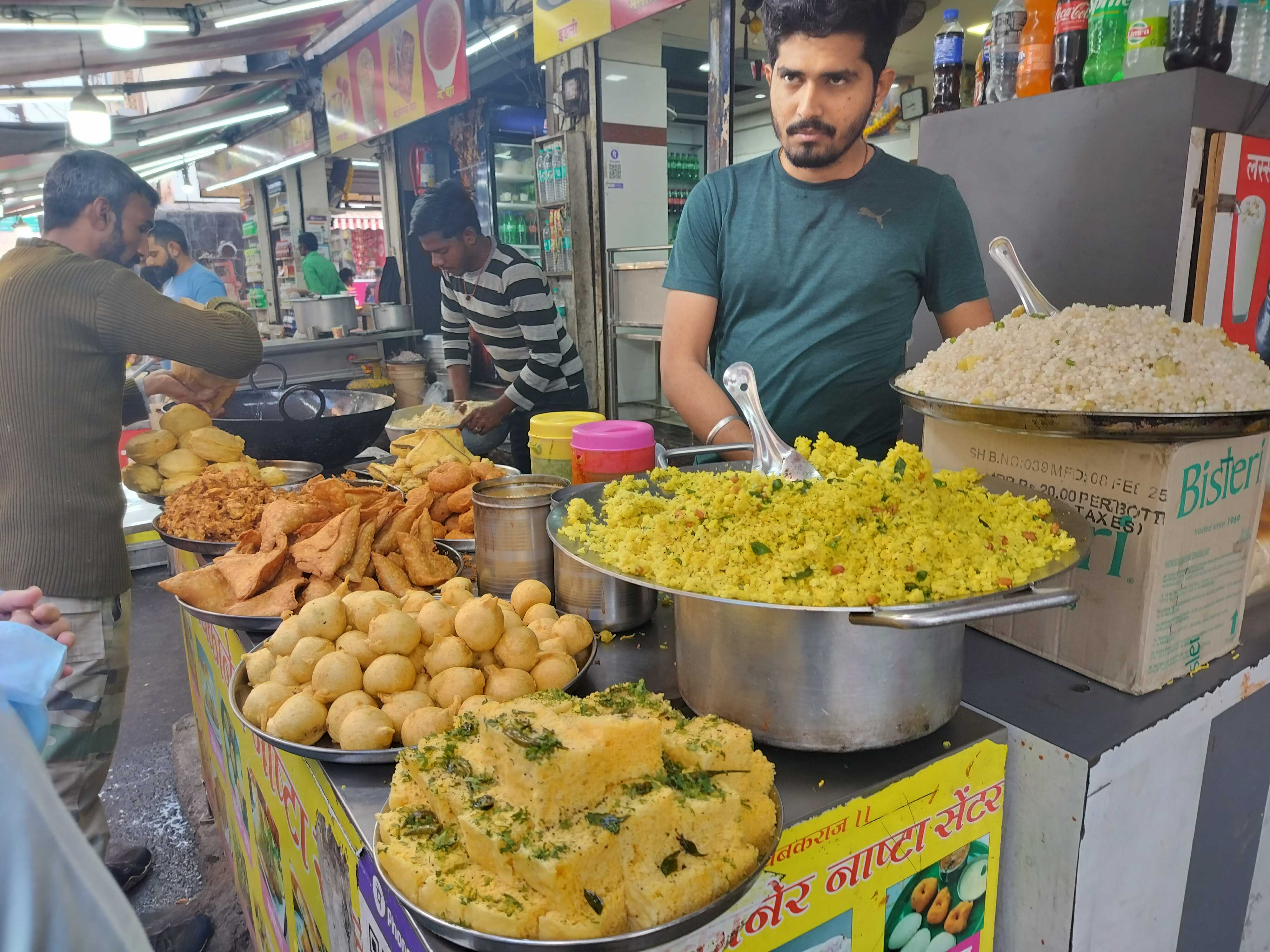
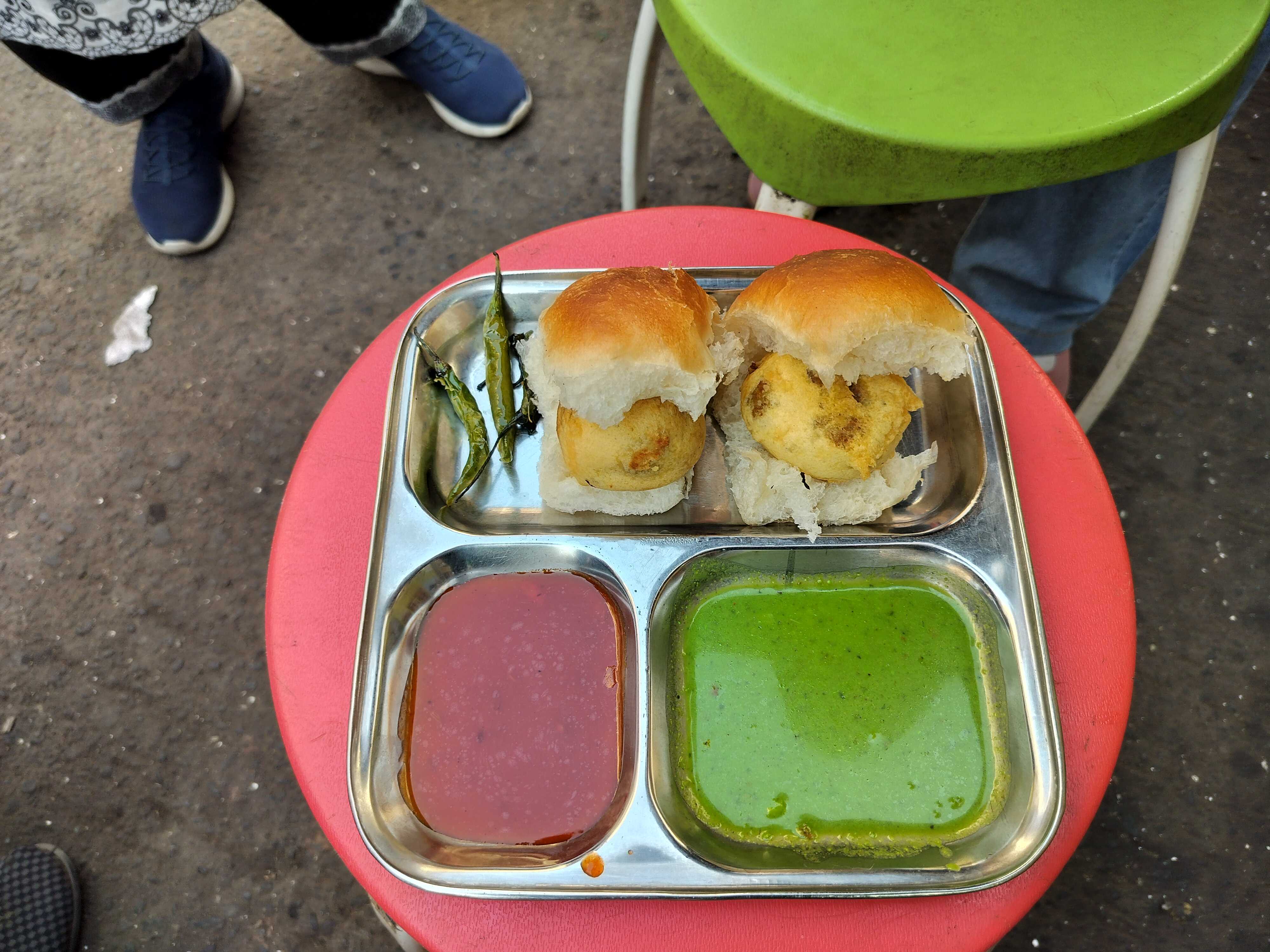
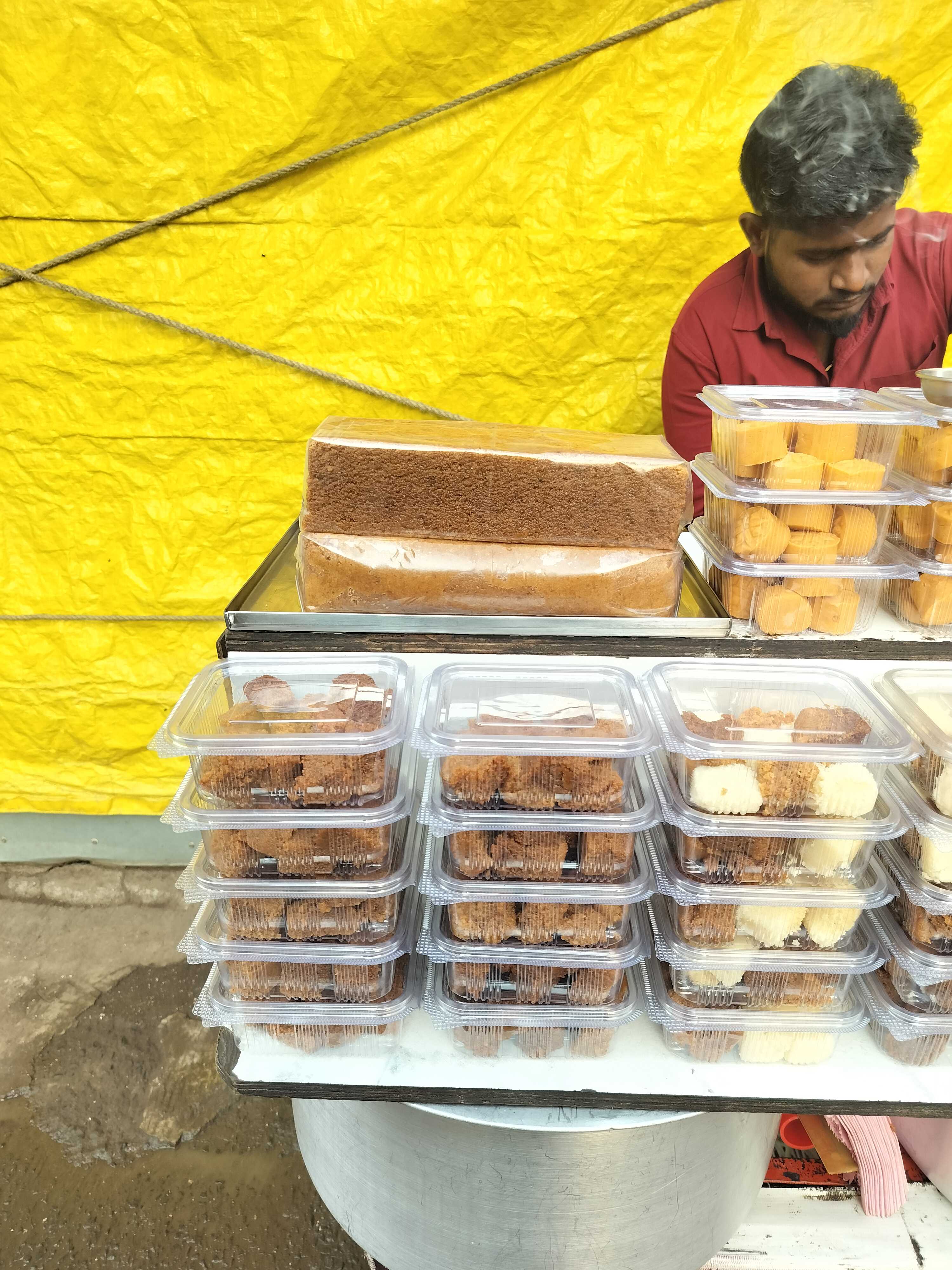
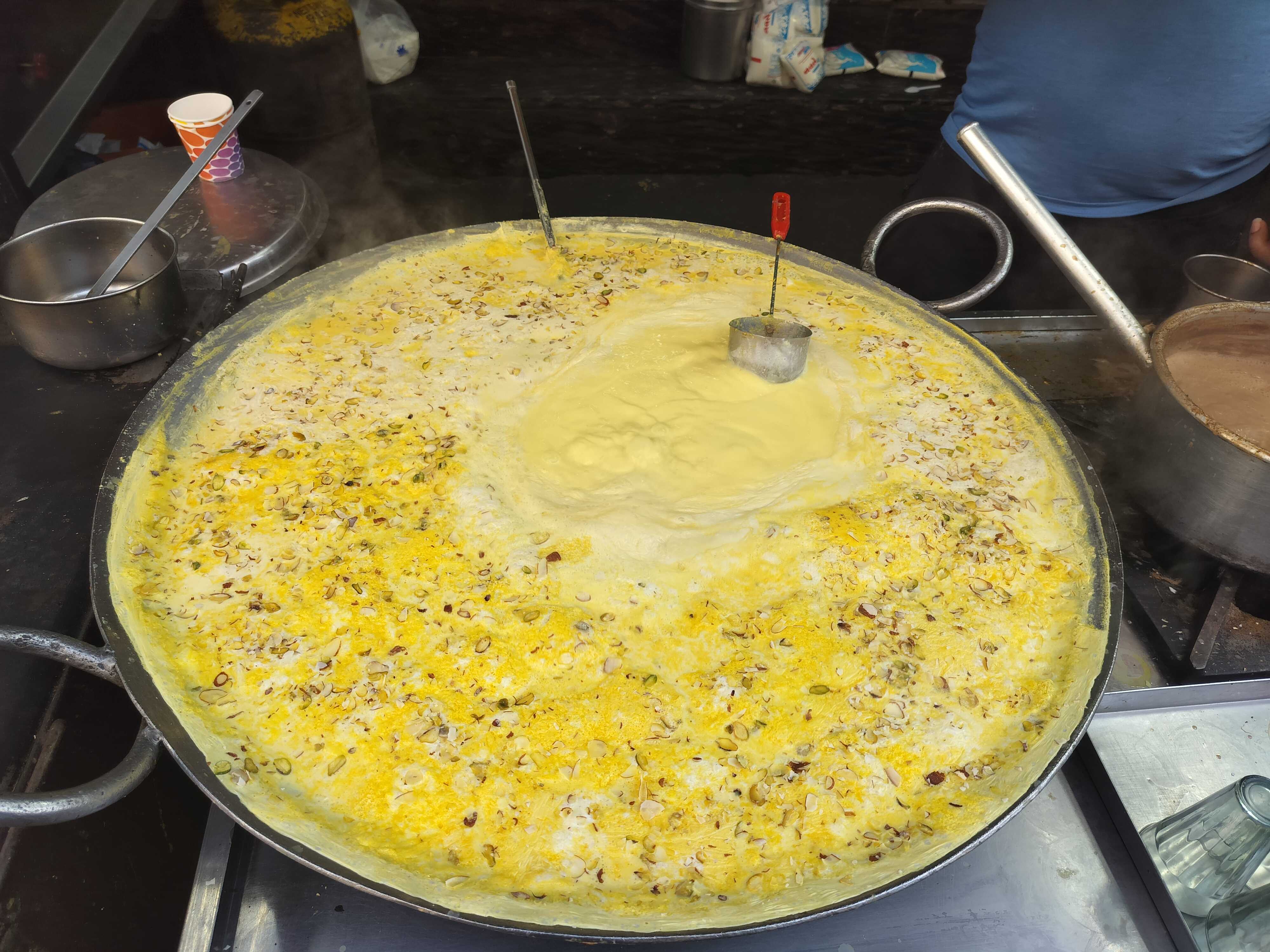
The road to Trimbakeshwar temple, the site of the 2027 Mahakumbh, was lined with vendors selling saffron milk, ginger tea, vada pav, poha, dosa, and Indian mithais. But that’s normal fare for a city dweller.
Imagine a picnic in the fields with a farmer, under a gigantic old tree, savouring home-cooked, finger-licking food, cooked by true blue natives. Well, we relished that at Dattavandan Agro Biotech farm in village Mungasare.
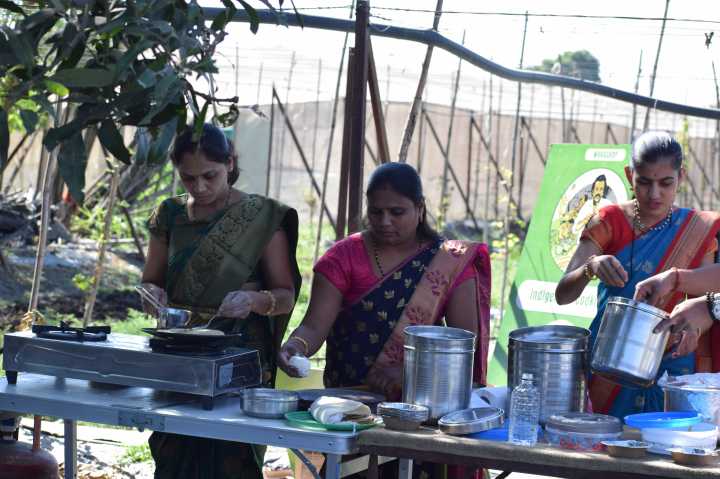
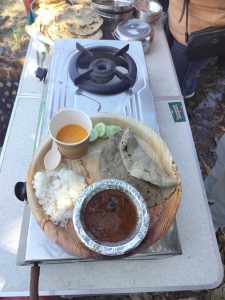
Surrounded by grapevines, fields of capsicums, cabbages, onions, and more, we were immersed in the famous Nashik ruralscape. I planted a light metal portable camping stool under a huge mango tree, right next to a deep well. Even the sun couldn’t penetrate the green cover of this old grandfather tree.
Then, I relished my meal of boiled Indrayani rice (native to Nashik) with a really spicy amti (lentil water laden with special Maharashtrian spices) and hot bhakris (bajra rotis). I ended it with ghee-laden fresh puranpolis (rotis stuffed with finely ground lentil) and yummy aamras (fresh and thick mango pulp). The natives preserve the mangoes during the season. There was chicken curry as well, but I am a vegetarian.
This meal ended with a Nashik siesta in my luxury tent.
Warli Art Workshop: A Glimpse into Tribal Heritage
Sitting in a makeshift thatched gazebo at the tent city, we time travelled to the tribal era, and the homes of the Warli tribe and their art.
At first glance, Warli paintings appeared to be simple white geometric figures against an earthen backdrop, adorned with nature-inspired motifs. However, a closer look revealed a complex world intricately woven with nature’s rhythms. What initially seemed like a straightforward art form proved to be a deeply thoughtful expression, a revelation I experienced during a workshop with an award-winning artist, Anil Vangad.
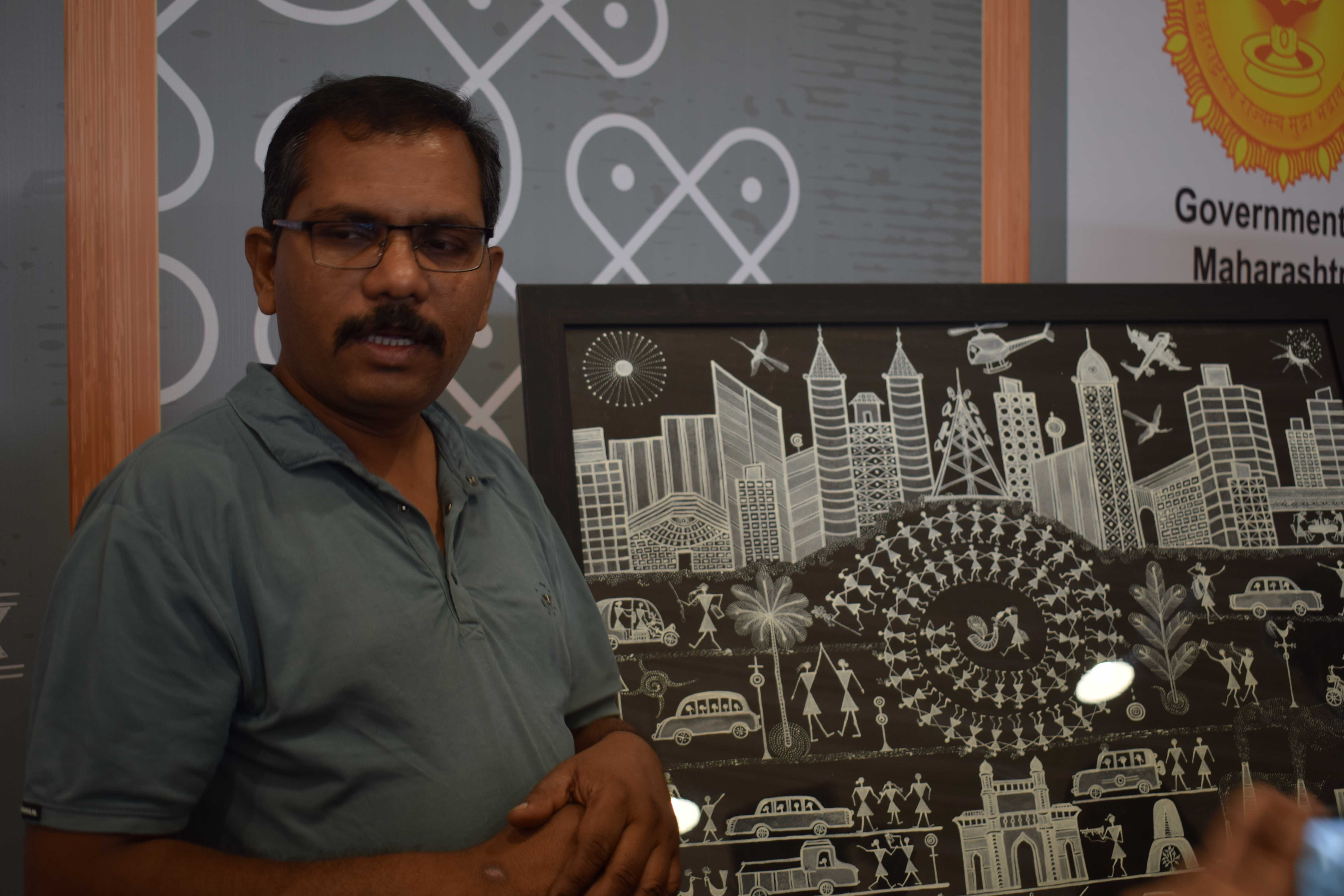
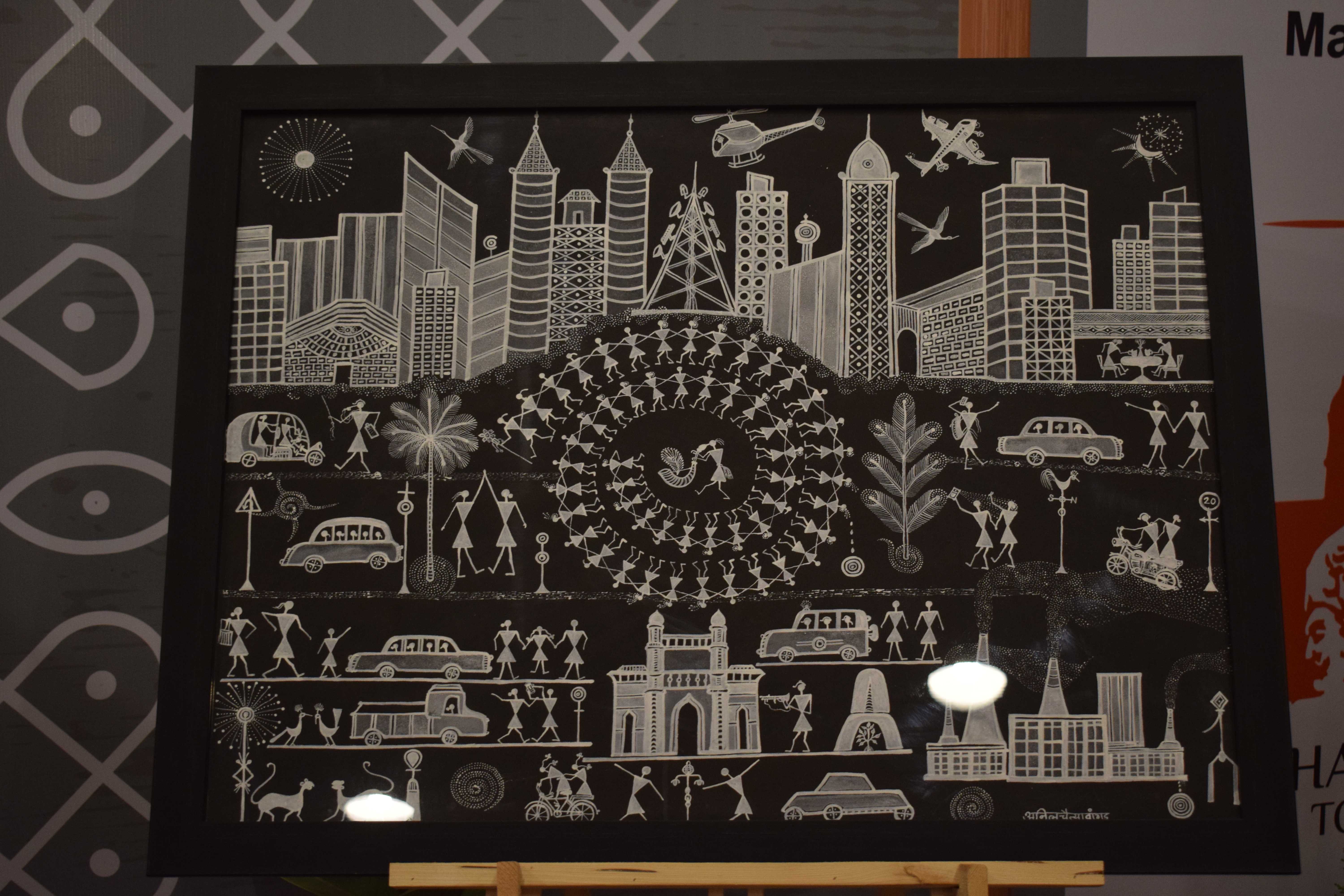
Hailing from Dahanu village in Palghar district, Vangad has dedicated over two decades to preserving and evolving this artistic legacy. Tracing his lineage to the Warli tribe, he inherited the art from his mother, an early mentor.
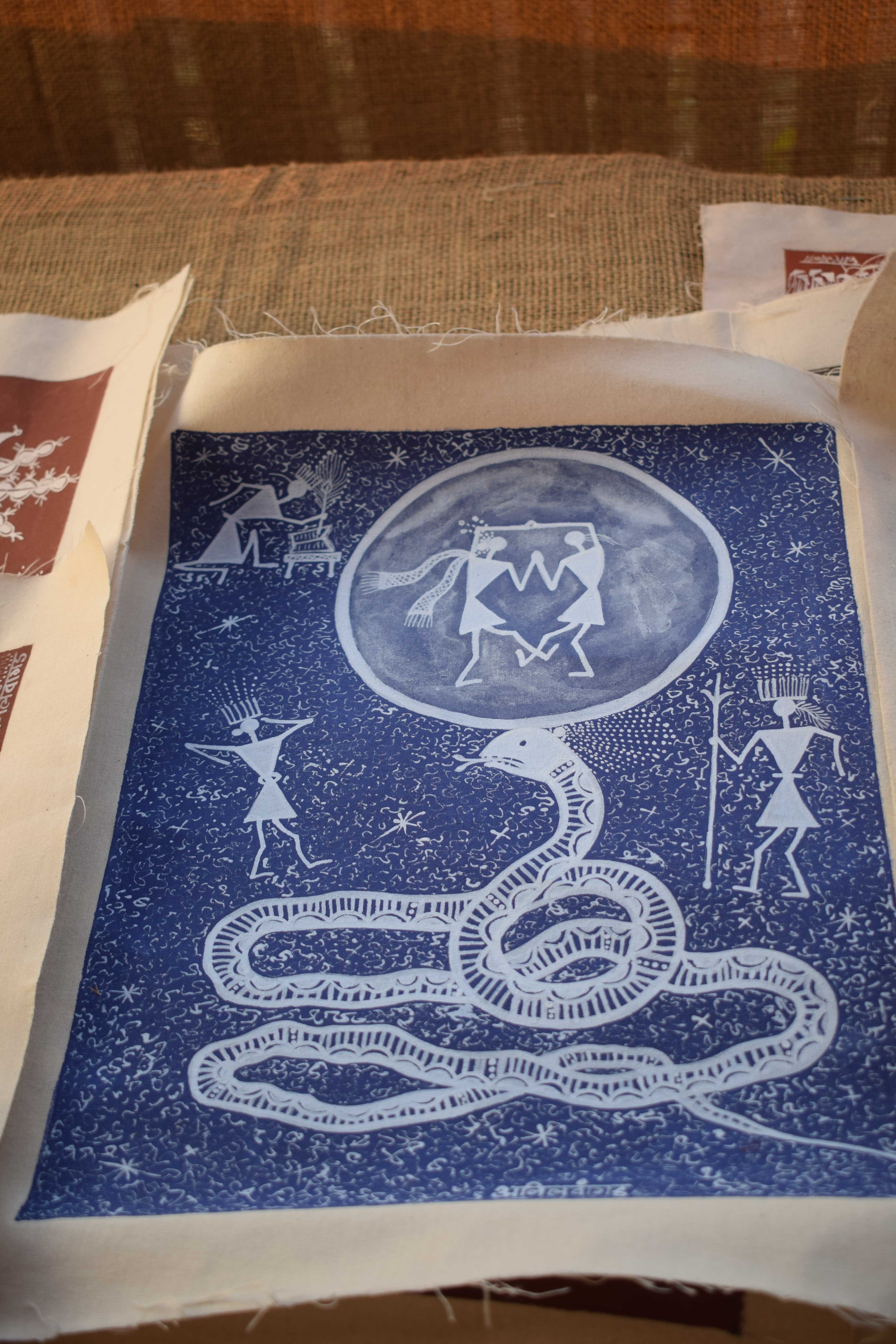
Warli paintings reflect the tribe’s profound connection with the natural world and their animistic beliefs. Using fundamental geometric shapes—triangles, circles, and squares—Warli artists traditionally depicted vibrant narratives of daily life: farming, festivals, hunting, and village scenes, all painted in white on the earthen walls of their homes.
Yet, Vangad has pushed the boundaries of tradition, showcasing the evolution of human existence from natural surroundings to urban landscapes. He has also expanded the medium, incorporating charcoal and indigo backgrounds, adding depth and contrast to his work. Through his dedication, this folk art, rooted in rural Maharashtra, has garnered international acclaim. His works have graced exhibitions in the USA, UK, France, Singapore, and Hong Kong, and were notably introduced to the Santa Fe Folk Art Market in New Mexico. In 2014, his contributions were recognized with the prestigious WCC Award of Excellence from UNESCO.
The Warli tribe, historically residing in the mountainous and coastal regions along the Maharashtra-Gujarat border, derives its name from “warla,” meaning “a piece of land.” Their dialect, “Varli,” is classified as a variant of Marathi. Warli painting is predominantly created by the indigenous people of the North Sahyadri Range in Maharashtra, flourishing in locales like Dahanu, Talasari, Jawhar, Palghar, Mokhada, and Vikramgad.
Traditionally, Warli paintings were the domain of married women, who used a rice-flour paste to create white designs against the backdrop of red mud or cow dung walls. This ancient form of interior decoration symbolized good fortune for newlyweds. However, as times changed, particularly around the 1970s, male artists began to adapt the art form, transferring it from hut walls to paper and canvas to supplement their farming income.
The beauty of Warli art lies in its minimalist aesthetic and the artist’s ability to convey complex narratives with simple strokes. Using a thin bamboo brush, white acrylic paint, red mud (gerue), and cotton cloth, artists create scenes without preliminary pencil sketches. The composition is conceived in the artist’s mind and directly expressed on the canvas.
Working with acrylic paints demands precision, as there is little room for error. Artists must have a clear vision of their composition, including the placement of figures and motifs, to effectively convey their intended message. Planning is crucial, as I learned firsthand during my workshop. The process requires fluid movements and a delicate touch.
Despite conducting workshops both in India and abroad, Vangad remains committed to traditional mediums. He prefers gerue, gobar, charcoal, and rice paste over synthetic dyes and paints, and encourages his family and students to do the same. He also calls Warli ‘a lipi’, that is a form of language, symbolic narrative in this case. His passion extends beyond painting to farming, the Warli tribe’s traditional occupation.
In 2014, Warli art received the Geographical Indication (GI) tag from the Government of India, recognizing its unique cultural heritage and its association with the Maharashtra-Gujarat border region. The Adivasi Yuva Seva Sangh (AYUSH) played a crucial role in securing this recognition, ensuring the preservation of this invaluable cultural treasure.
Kumaramangalam Artillery Museum: A Chronicle of Military Might
Through the picturesque foothills of the Sahyadri Mountains, we drove to Deolali Gaon to see Asia’s largest artillery museum—the Kumaramangalam Artillery Museum. Amid the serene enclosure of the military cantonment, the museum occupies a portion of a former British-Indian military centre from World War II.
Tracing the evolution of artillery, wars, and commemorating the courageous actions of bravehearts, the foundation stone for this museum was laid on November 16, 1968 by General Paramasiva Prabhakar Kumaramangalam.
Established by the Regiment of Artillery Association, the museum underwent renovation in the last few years. It was renamed and inaugurated on July 1, 2024. The dedication to General P.P. Kumaramangalam underlines the significance of the bravery and valour of one of the largest armed forces in the world.
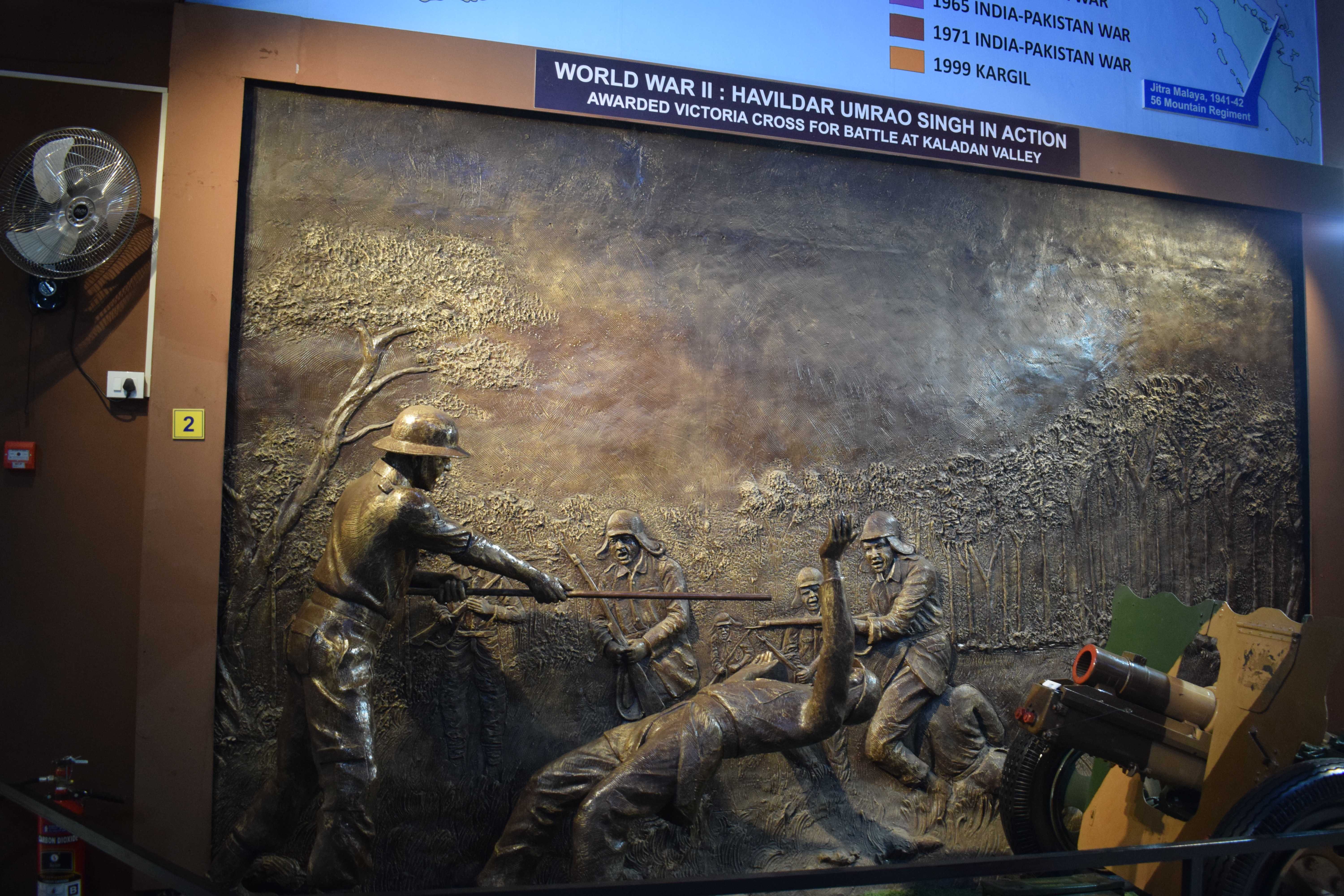
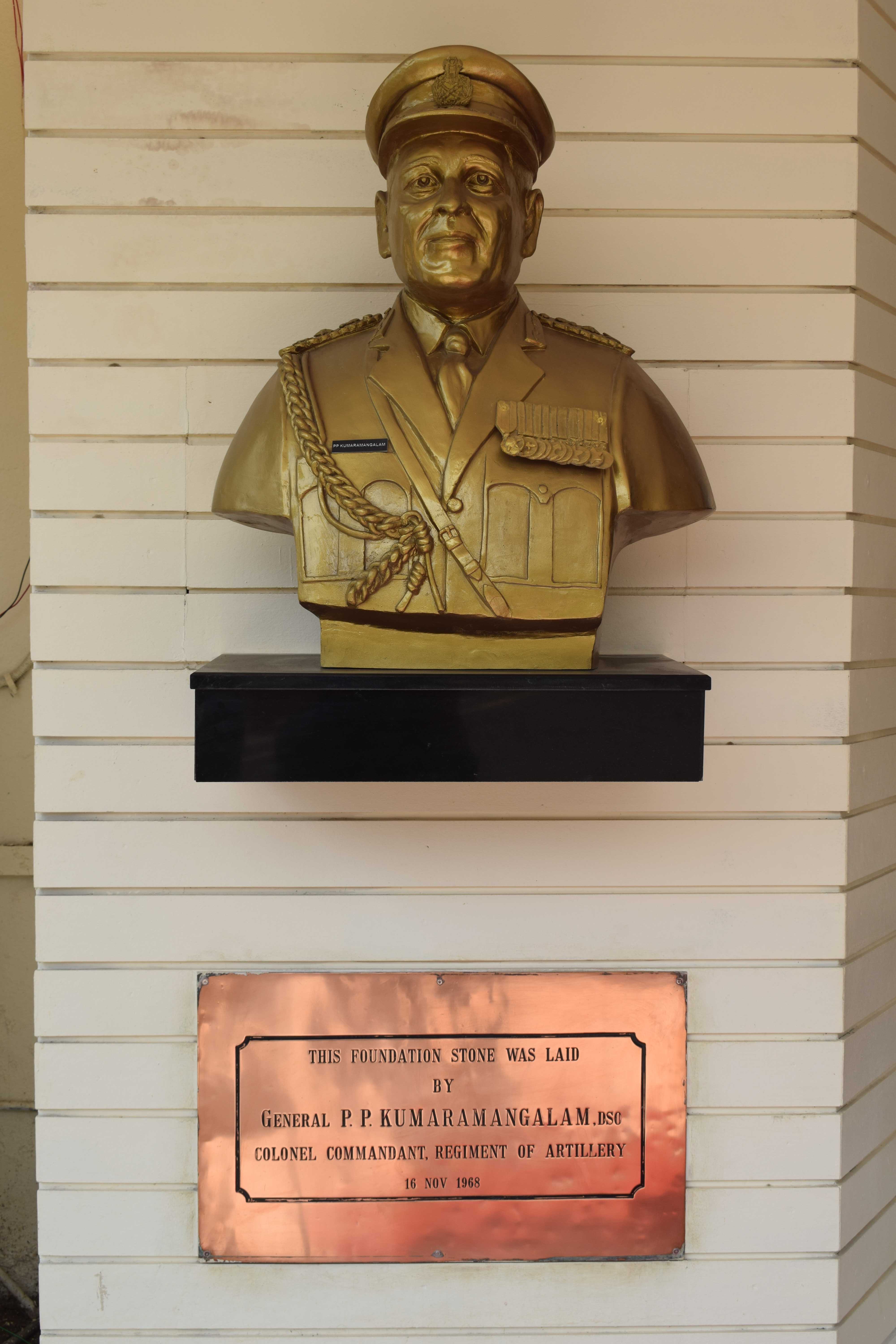
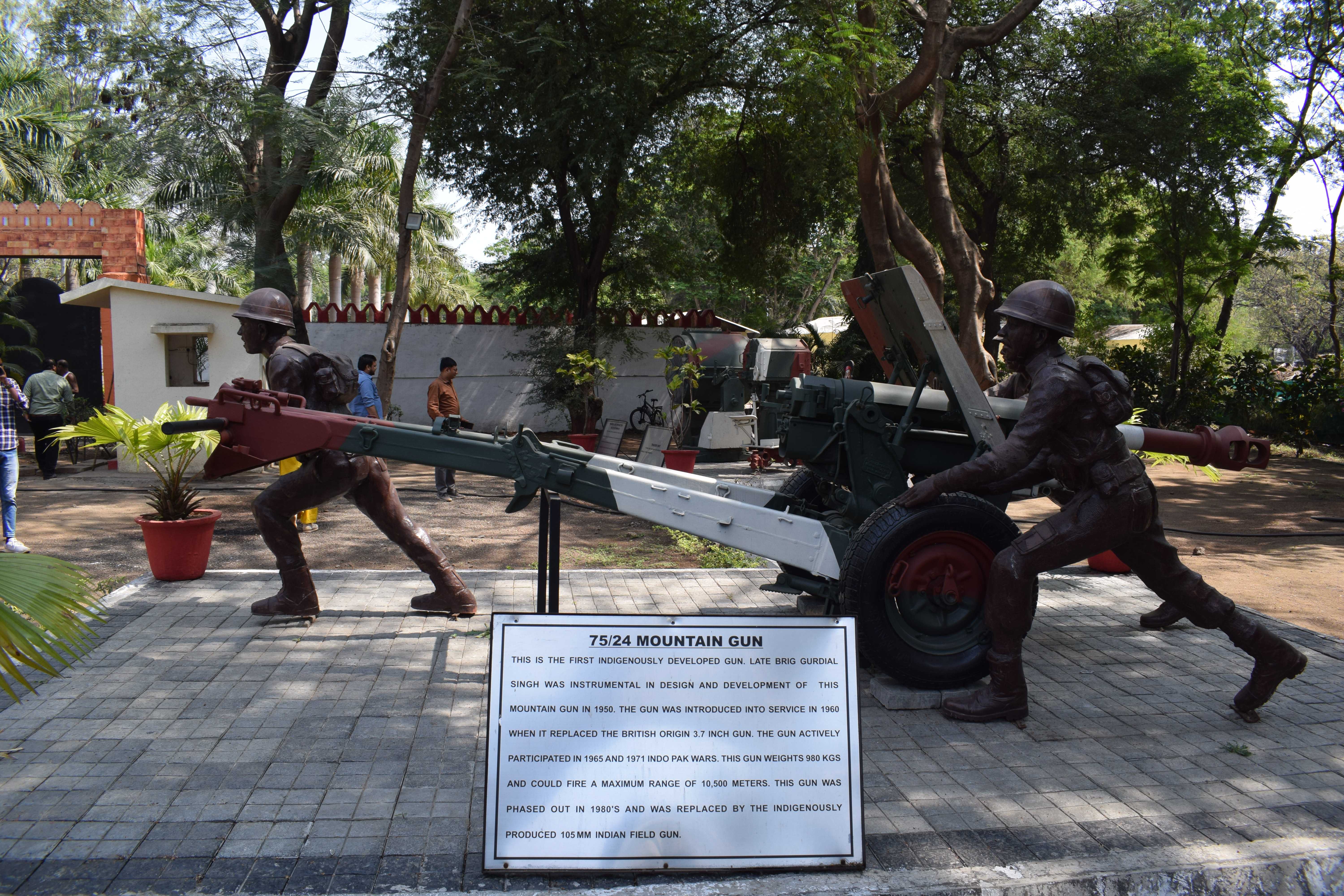
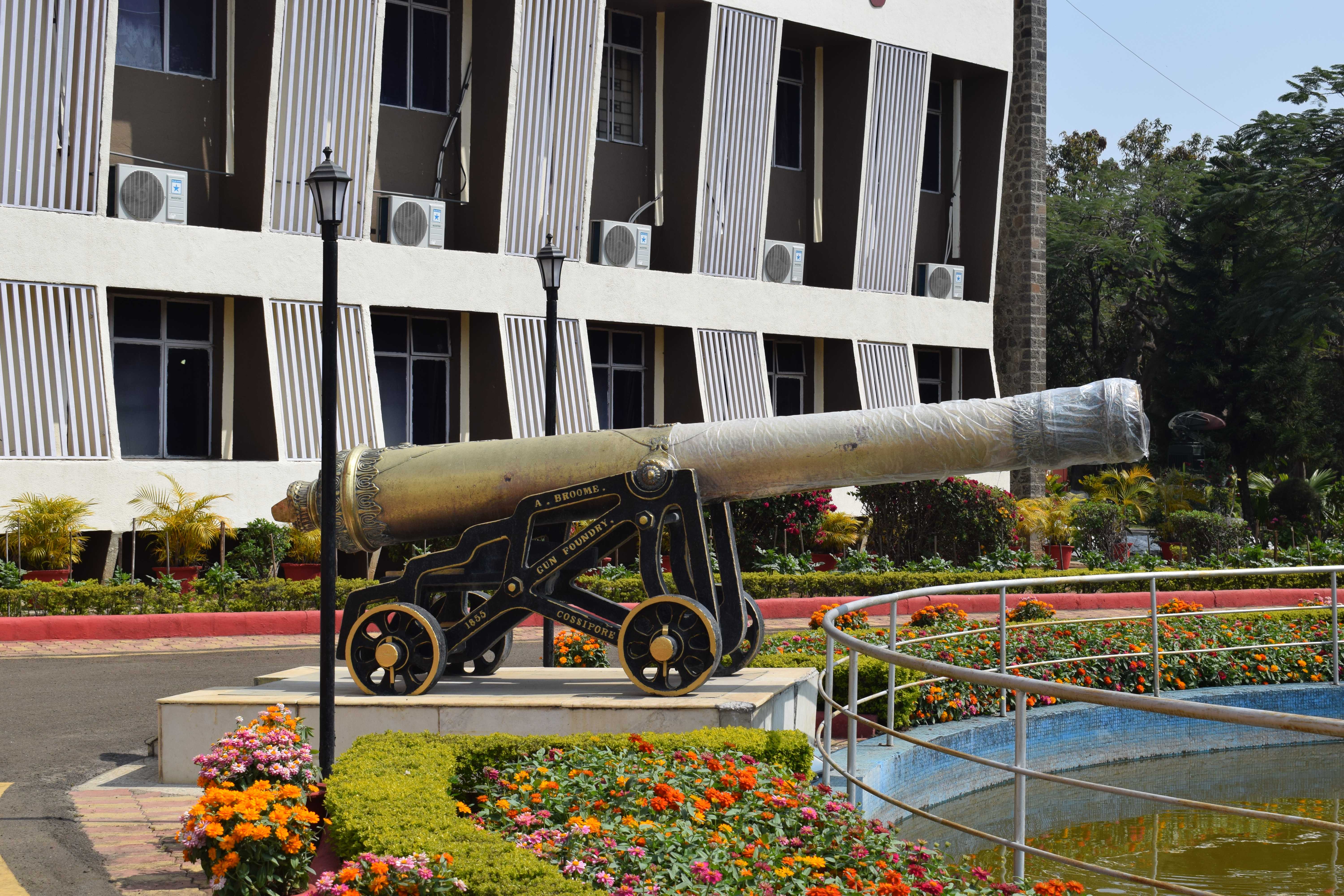
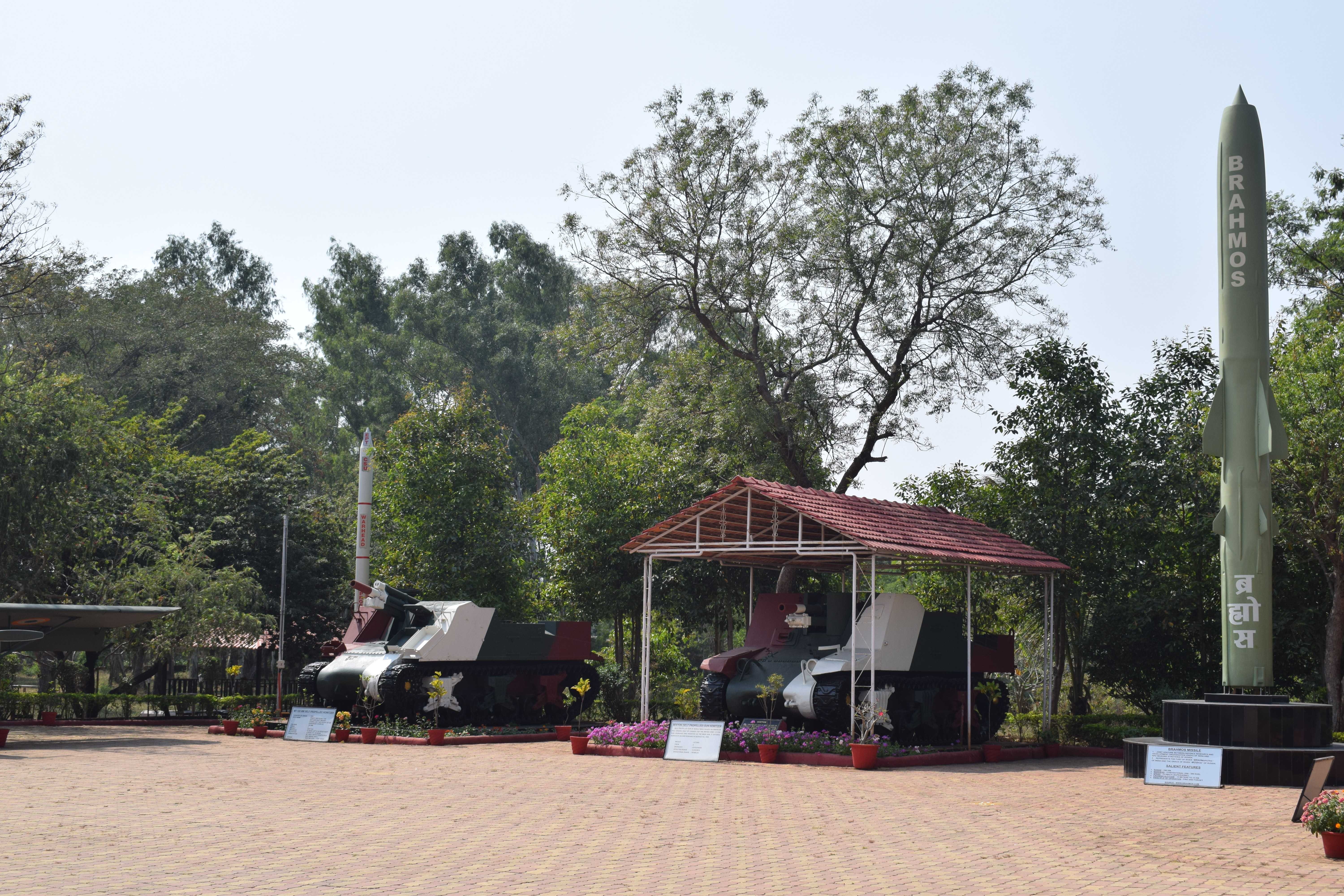
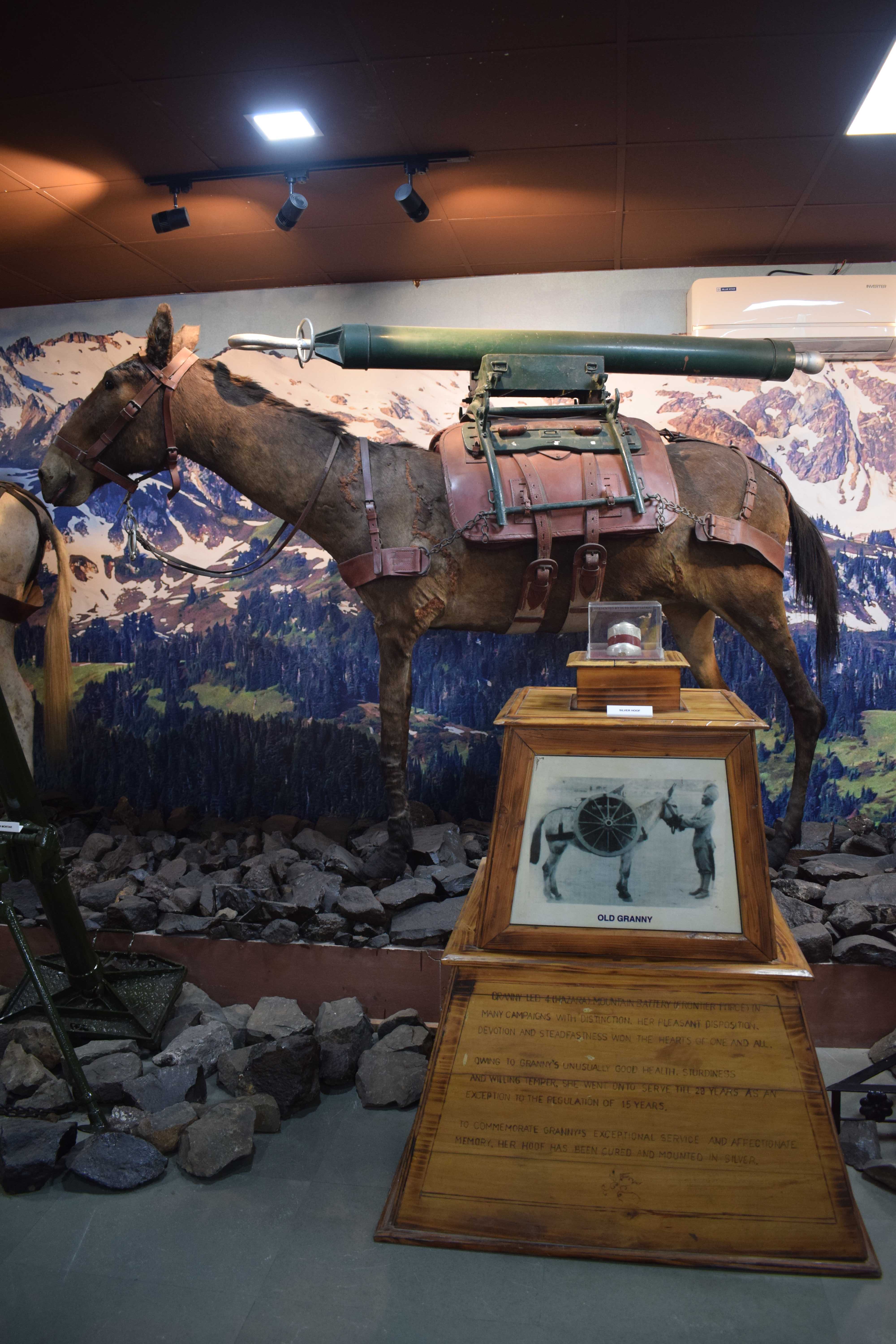
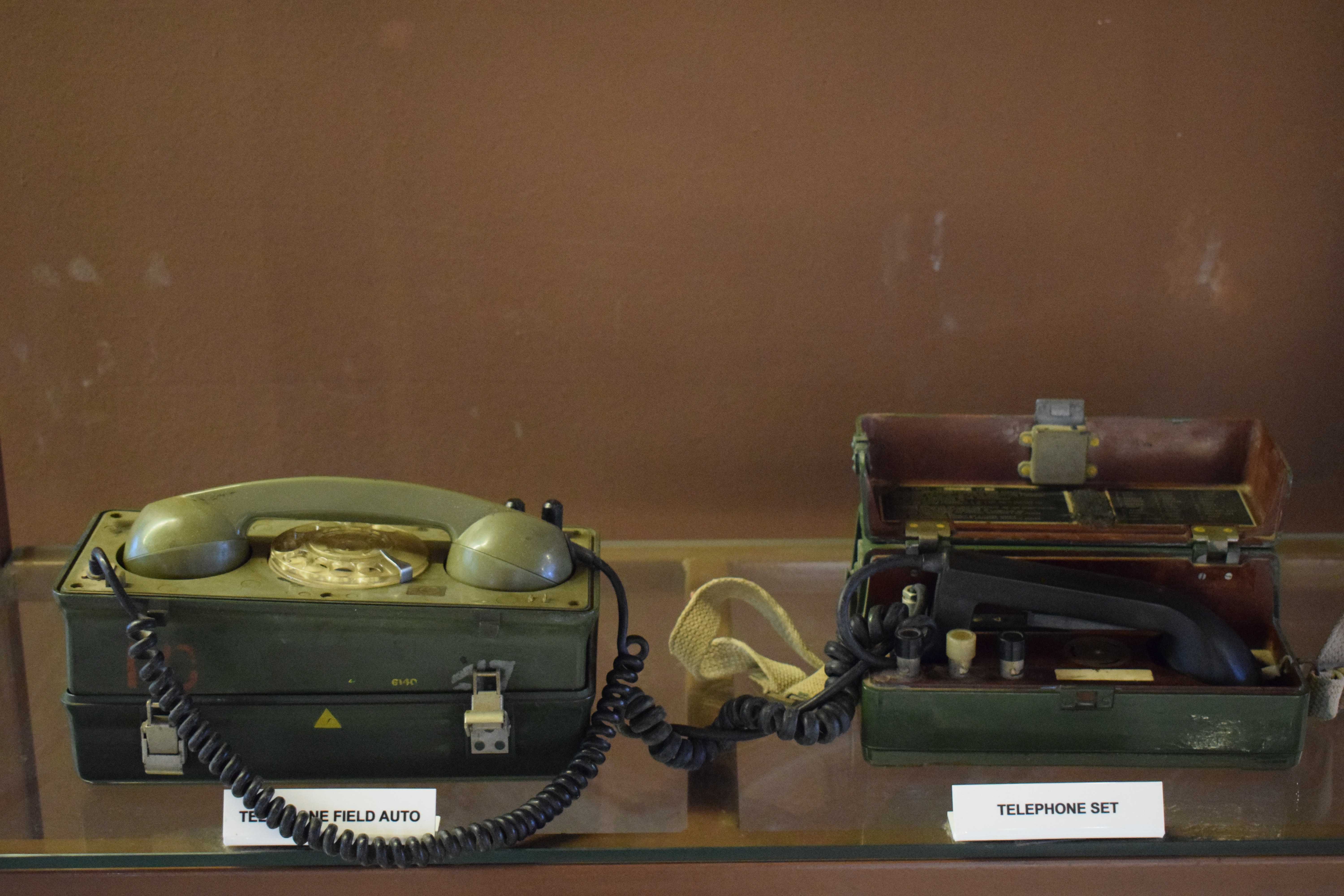
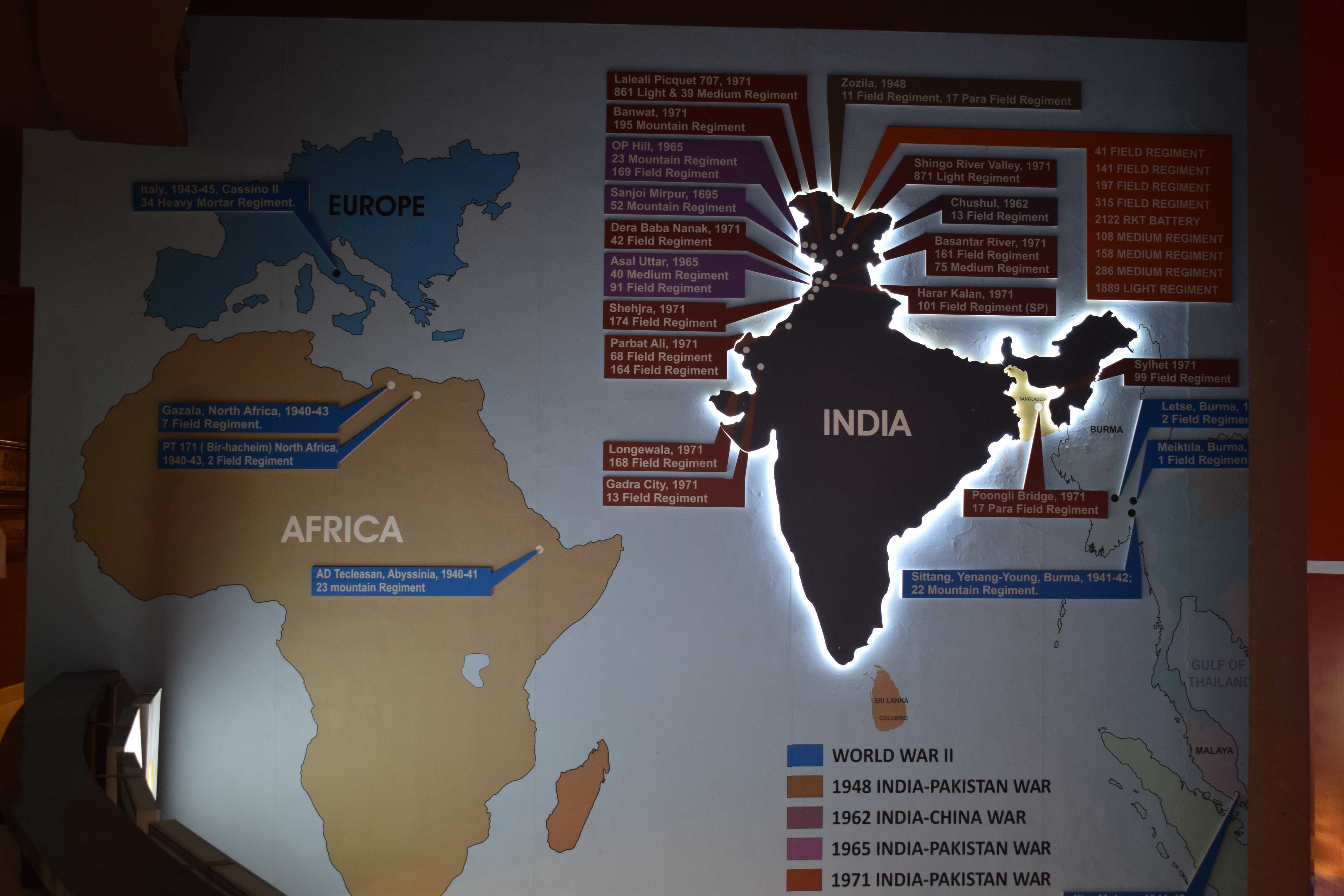
General Paramasiva Prabhakar Kumaramangalam, referred to as General P.P. Kumaramangalam, served as the 6th Chief of Army Staff of the Indian Army from 1966 to 1969. In along and illustrious military career, he participated in World War II. Hereceived several honours, including the Distinguished Service Order (DSO), Member of the Most Excellent Order of the British Empire (MBE), and Fellow of the Royal Historical Society (FRHS).
There is a mindboggling display of vintage and modern weaponry, from ancient catapults to contemporary tanks and aircraft. Walking through the outdoor exhibits amid thick trees and blooming flowers, it’s difficult to imagine what wars in real life look like. A light and sound lights up this space during the weekends.
The main foyer displays stories of valour, including Umrao Singh’s Victoria Cross and the Tangail airdrop. Spread over two floors with multiple galleries, the spacious museum houses a rich array of artillery pieces, including a brass cannon used by Babur in the First Battle of Panipat (1526 CE), Tipu Sultan’s 102-barrel Rattanban, and Maratha artillery.
Modern exhibits include the T-59 tank from the 1971 Indo-Pak War, the Sexton self-propelled gun from World War II, and various howitzers and mountain guns, each with a story to tell.
The museum’s highlights include the AOP aircraft and MIG-23UM, alongside a captivating 3D movie on the Kargil War. The Evolution Gallery traces artillery’s development from 400 BC to modern rockets and missiles, while separate galleries honour the bravery of soldiers in conflicts from World War I to the Kargil War and counter-insurgency operations.
The museum also features a Roll of Honour, commemorating the sacrifices of Gunners, and exhibits on their contributions in sports and Siachen Glacier operations.
Address: Artillery Centre, Gandhi Nagar Airport Area, Deolali Gaon, Nashik, Maharashtra – 422101
Visiting Time: 10:00 am – 1pm, 5 pm- 7 pm (Closed on Thursday and public holidays).
Entry Fee: Adults: INR 25; Students (Indian nationals): INR 10
Fun Activities: Adding a Dash of Thrill
If you don’t feel like moving out of the tent city, then find your mojo right there. The Eco Glamping Festival is on till March 31.
There is a separate play area for children.
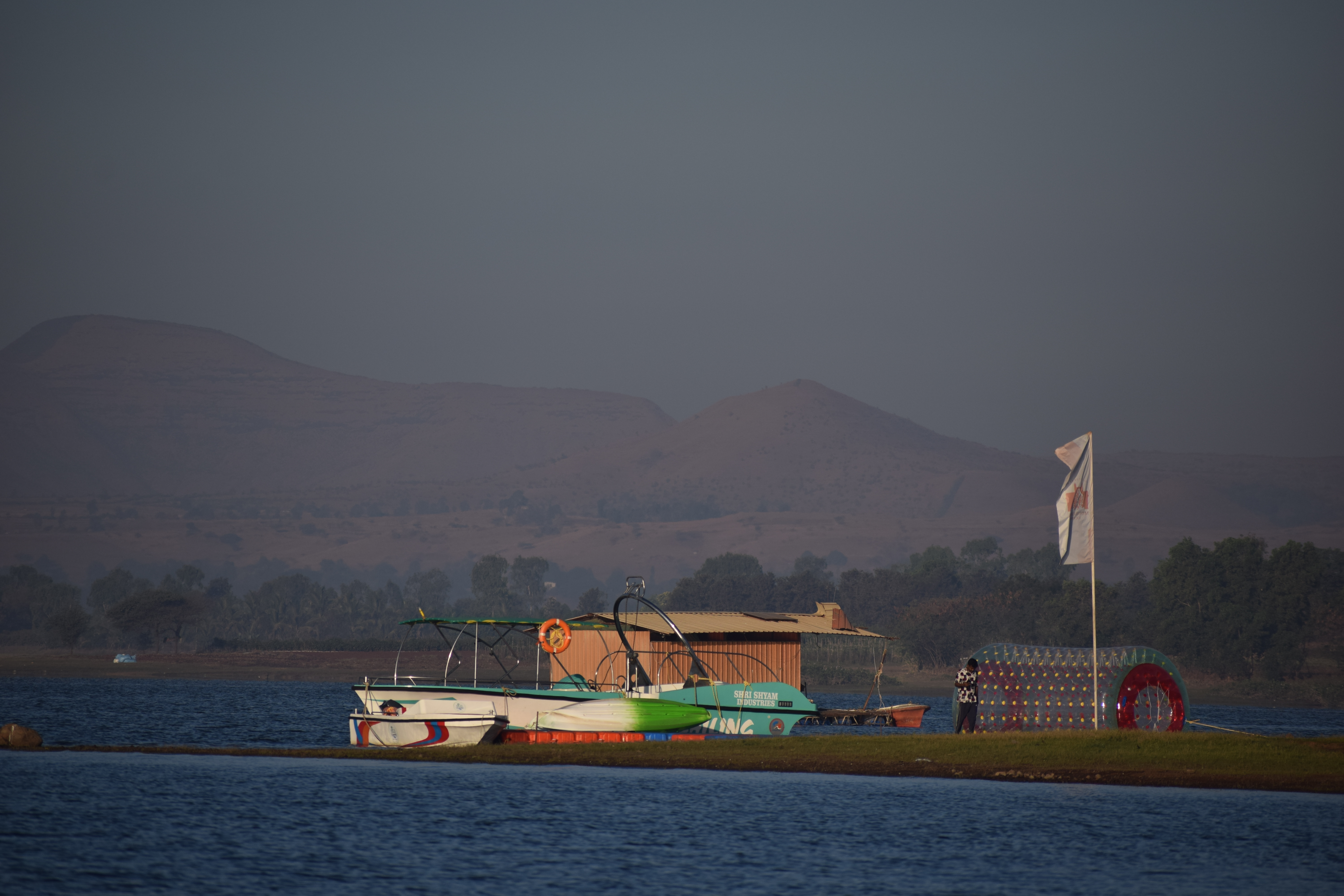
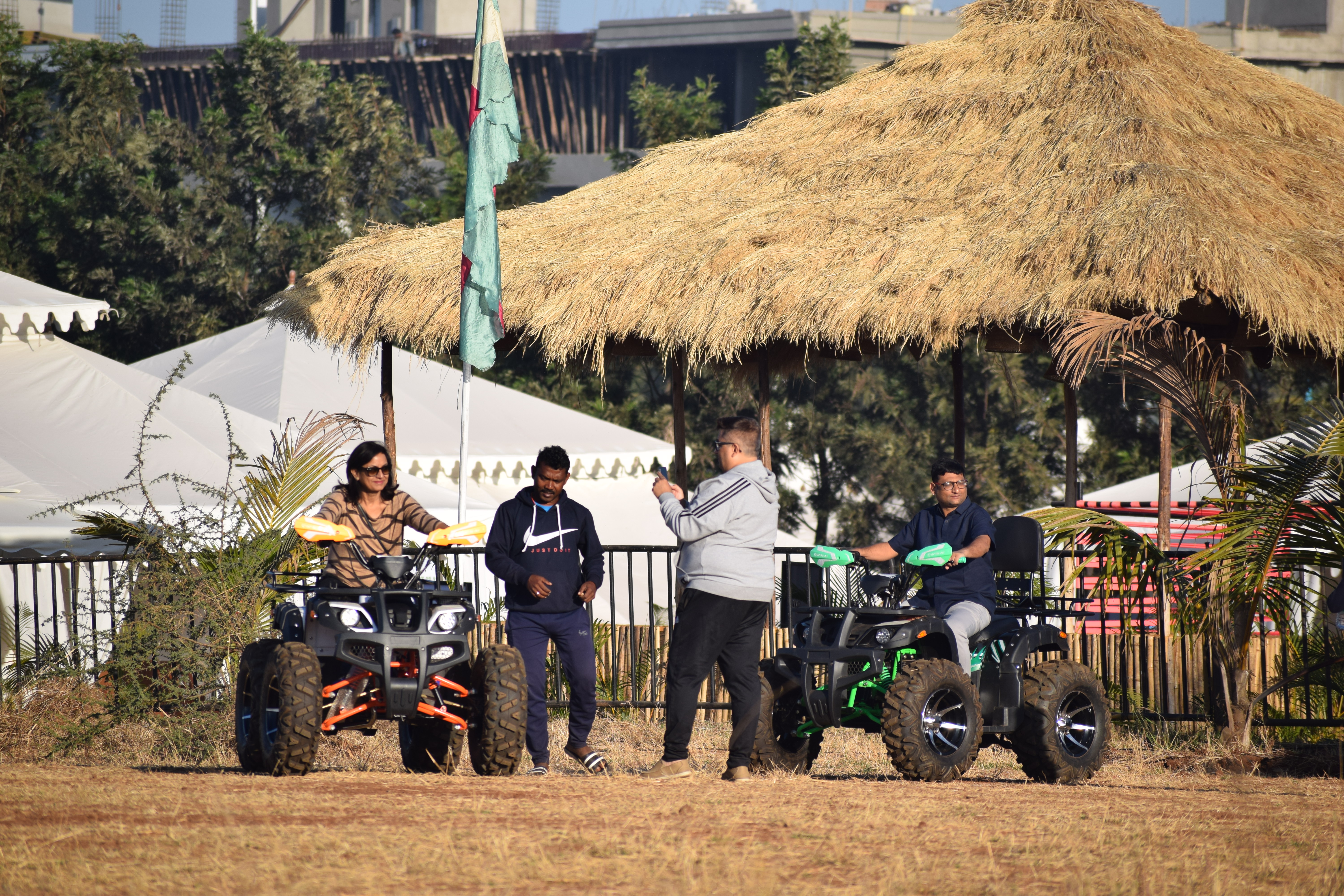
Or you could head to the Gangapur Dam waterside and take an ATV ride. You might like to try paramotoring or parasailing or simply take a boat cruise at sunset with a glass of wine.
Planning Your Nashik Adventure: Tips and Insights
To make the most of your Nashik trip, consider visiting between October and March when the weather is pleasant. Ideal stay is 4 days.
Pack light, comfortable clothing, and sturdy walking shoes, especially if you plan to explore the vineyards and historical sites.
Don’t forget your camera to capture the scenic beauty and cultural richness of Nashik.
For wine enthusiasts, try exploring the many wineries in the region for a diverse tasting experience.
Food lovers will find many Maharashtrian dishes at the dining space within the tent city or they could go for a temple and city tour.
Remember to respect local customs and traditions and support local artisans and businesses.
Getting to Nashik
Nashik is well-connected by road, rail, and air. The nearest airport is Ojhar Nashik International Airport, and the Nashik Road Railway Station is a major rail hub. By road, Nashik is easily accessible from Mumbai and Pune.
This post was created for the Blogaberry Creative (Monthly) Challenge with theme word ‘Fun’.
This blog post is part of ‘Blogaberry Dazzle’ hosted by Cindy D’Silva and Noor Anand Chawla.

 Queen of Treasures
Informative post.
LikeLike
This was such a detaied post about the history and importance of the city of Nashik. Nashik had trams too! Wow.
LikeLiked by 1 person
I was surprised too…trams sounds so classic.
LikeLike
Your vivid descriptions of the vineyards, especially Sula, make me want to sip on some local wine right away. I had no idea Nashik was dubbed the Napa Valley of India—how cool is that? The Warli art workshops you mentioned sound like such a unique experience; I’ve always been fascinated by tribal art forms. And who would’ve thought there’s an Artillery Museum in Nashik? Combining history with adventure activities like ATV rides and parasailing seems like the perfect mix for an unforgettable trip. Your insights into the local cuisine have my mouth watering; I can almost taste the flavors through your words. Thanks for sharing such a comprehensive and engaging guide
LikeLike
Nashik has so much more to offer beyond its famous vineyards! Loved how you have covered everything from history and Warli art to adventure and local cuisine in this guide. The Warli workshop and farm-to-table experience sound especially unique, definitely adding these to my must-do list for Nashik!
LikeLiked by 1 person
i hope you have a good trip!
LikeLike
These are many to explore, I would love to explore the wine yard! I have never been to one and try some fun activities too
LikeLike
Vineyards are fun for sure.
LikeLike
I could give my right arm to have the glam camping experience in Nashik and the Maharashtrian food is just making me drool.All my favourites are here – Aamras, Poha, Vada ,Bhakri, Puranpoli… yumm.
The Kumaramangalam Artillery Museum also looks so fascinating with its rich repertoire on display.
I just feel like packing my bags and leaving!
LikeLiked by 1 person
I feel like that with every travel story 😄
LikeLike
Having lived in Nashik for two years I can vouch for its beauty. This post brought back memories of my visits to Sula, the tour was so much fun with the wine tasting at the end. There’s so much to see there and I’m glad you had such an amazing time.
LikeLiked by 1 person
I am so glad that my hometown gave you such a joyful experience! You have packed almost everything Nashik has to offer. One thing you missed is a fantastic street food “misal pav” which Nashik has masterd and offer a unique taste.
LikeLiked by 1 person
Yeah. I realised that later as it originated in the region.
LikeLiked by 1 person
No worries, you should keep something for the next trip!
LikeLiked by 1 person
What an amazing travel guide! 🍷🎨🏛️
I’ve been to Sula twice and had a great time in both instances. In fact the first time I went there to attend the Sula fest with my girl gang and what a blast we had ! Kailash Kher was the leading performer and oh man hearing him live was a total delight. If you do visit Nashik and vineyard hopping is in on your agenda, I’d recommend York Winery & Tasting Room. It is much more rustic and picturesque, not to mention less crowded/commercial than Sula. I’ll share some photos with you on WhatsApp if you’d like. uff, thanks for this trip down memory lane. I liked your experience and post cuz its a blend of food, art, and history. Your post makes me want to explore Nashik someday again soon, in a new light based on your recommendations and experiences.
LikeLiked by 1 person
Your vivid descriptions made it feel like a virtual journey! The itinerary is truly power-packed, blending the beauty of Sula Vineyards, local culinary delights, art & history, and a spectacular display of military might. Such an enriching experience of flavors, culture, and grandeur!
LikeLiked by 1 person
Wow, wow! Now I know where I am travelling to this winter! I am bookmarking this post, Ambica.Thanks for sharing such a detailed blog of your trip to Nashik, the tent city, Sula winery and more. I enjoyed riding the ATV and paramotoring in Kutch and would love to do it again.
LikeLiked by 1 person
have a good trip.
LikeLike
Another glamping trip of yours that I thoroughly enjoyed. Such an immersive write-up, it was. I couldnt decide which was my favourite, the talk about the food, the artillery museum, the “picnic,” your portable seat (I must get one), and so much more. Wonderful! Glamping is something I’ve put into my travel list. Hope to do one soon. Will connect with you for help and more info,
LikeLiked by 1 person
I’ve been to Nashik too, and reading your guide brought back so many memories. Nashik really is such a hidden gem, with its mix of history, nature, and culture. Your guide perfectly captured the essence of the place. Thanks for sharing.
LikeLiked by 1 person
I could really go for a longer green trip.
LikeLike
An informative post. I have visited Nashik and eaten Misal. Your post made my mouth drool! Did you by any chance visit Gargoti..a beautiful Mineral Museum. It is awesome
LikeLiked by 1 person
That’s another addition to my list. should I manage to go to Nashik again. I would love to check the mineral museum.
LikeLike
Nashik ….you give out so detailed information that anyone will carve to visit this place. Summer vacation is nearby and with this scorching heat we would like to visit. Sula vineyards is on my travel list since long time. Hope this year I can fulfill my wishlist.
LikeLiked by 1 person
Happy holidays 🥳
LikeLike
This guide to Nashik has me excited to explore beyond the Mahakumbh! I love how you highlighted the mix of history, local flavors, and wine culture. The culinary journey, especially the Maharashtrian meals, sounds absolutely delicious and authentic!
LikeLiked by 1 person
Your post made me want to go to Nashik – and I am thinking about suggesting it to my sister who lives in Bombay. Next visit we can carve some time out and spend some days in Nashik. And btw – those grapes in your pics – made my mouth water! as did the description of the meal!
LikeLiked by 1 person
Ha ha..Grapes do that to me as well! So juicy and yummy. Green Nashik is another world.
LikeLike
I love how this guide uncovers Nashik beyond the usual! From vineyards to Warli art and a dash of adventure, it’s a refreshing take on a city packed with surprises.
LikeLike
I love how this guide uncovers Nashik beyond the usual! From vineyards to Warli art and a dash of adventure, it’s a refreshing take on a city packed with surprises.
LikeLike
I love how this guide uncovers Nashik beyond the usual! From vineyards to Warli art and a dash of adventure, it’s a refreshing take on a city packed with surprises.
LikeLike
I love how this guide uncovers Nashik beyond the usual! From vineyards to Warli art and a dash of adventure, it’s a refreshing take on a city packed with surprises.
LikeLike
I love how this guide uncovers Nashik beyond the usual! From vineyards to Warli art and a dash of adventure, it’s a refreshing take on a city packed with surprises.
LikeLike
thank you for sharing this guide on Nasik. I’d love to visit the Sula Vineyard and Warli workshop if i get a chance.
LikeLike
That was such a comprehensive guide to Nashik! I am have wanted to visit Sula Vineyards for long. This place is packed with gems for tourists!
LikeLiked by 1 person
Happy holidays, should you finally go for it.
LikeLike
nevee knew Nashik had much more than wineries. Will check your post when I plan to go there
LikeLiked by 1 person
It’s been such a long time since my last visit to Nashik. I wonder how much has changed! I remember last visiting for the Infant Jesus Shrine Feast but its been so so many years. I bet there are so many new things to explore now, especially with all those vineyards I’ve been hearing about!
LikeLike
What a detailed post. We did the winery tour of Sula when we visited Nashik a few years ago.
LikeLiked by 1 person
Nashik has so much to offer. I was pleasantly surprised by it.
LikeLiked by 1 person