

May these observations of Noida’s urban wildlife inspire a deeper appreciation for the delicate balance of nature and a commitment to its preservation.
April colours grace the roads of the sprawling town of Noida. Every season brings with it a new dimension of biodiversity to the forefront. The town has been my gateway to learning in all ways, including the natural ecosystems and biodiversity that thrives in urban landscapes.
I wake up to the velvet silhouette of the blooming red Gulmohar. I see the soothing lavender of Jacaranda in another corner of the road. The Common Yellow butterflies flit around the yellow flowers of the Golden Shower tree (Cassia fistula).
My most mesmerising hour isn’t the golden hour; it’s pre-dawn. For an avid observer of Noida’s urban wildlife, the pre-dawn hours are far more captivating than the golden hour when most of the world is still asleep, except for the Indian White Eye which starts singing around 4.30 am. The Fruit Bats aka Indian Flying Foxes fly around, hunting. The ‘eeww’ House Lizard is stuck to the walls, waiting to scamper away when I raise the broom. I hit out at the mosquitoes and moths buzzing over my head.
This is my moment of silence, a time to breathe in the freshness that unfolds at dawn. I watch the early walkers, the municipality sweepers busy cleaning the roads, Indie dogs fighting for their territory. The newspaper man will arrive soon. Then I settle down for breathwork.
The mesmerising purple and pink rays herald another day. The dawn chorus comes in bursts and spurts, as the vehicles drown the little chirps. Once in a while, the shrieking watchguard, Red-Wattled Lapwing is loud and clear. I watch the last bat fly around before it settles, upside down, for the day on some tree. The vermillion flowers of the Gulmohar perform their ballet against the dawn skyline.
Morning Walk
It’s time to head for my morning breather. The neighbourhood Noida Biodiversity Park serves as my personal nature educator and healer, a vital green space within the city. It welcomes me with sweet fragrances. The cool breeze tingles my nose as the fragrance of blooming jasmine shrubs mingles with that of Rangoon creeper, my favourite madhumalti.
I hear the sweet song of the Asian Koel as Laughing Doves gently coo along. The Eurasian Doves rest in pairs on the branches. This year the Koel started singing started after Holi, around mid-March, much to my surprise and joy.

The Red-Vented Bulbuls play on the treetops while the White-Throated Kingfisher sits on the lamp post. An occasional Red-Whiskered Bulbul comes along with its friends. Itd melody filling my ears and heart.
The path between swaying Eucalyptus trees is my favourite, there’s a magical feel to this, like walking into a secret space. The ubiquitous Black Kites live here, majestic as they perch on the tree, watching out for food, soaring away. They deftly build their nest amid two fragile branches. It is here the majestic Peacock goes to sleep, conversing with the brethren. I discovered the Brown Headed Barbet also here.
A Glimpse into the Noida Biodiversity Park’s Wildlife
I chance upon Honey Bees many-a-time, busy gathering nectar from the Indian Laurel tree. There are shrubs of West Indian Lantana (which ecologists moan as an invasive species) and beds of Marigold and Periwinkles.
In the evenings, I see the Red Naped Ibis flying over the eucalyptus, perhaps they have a home here too. But I have yet to discover that. The Cattle Egrets, Rufous Treepie, all hang around close to this area as it has more cover, more insects. I once watched the egret fly and catch an insect mid-air, leaving me gasping at its marvellous skills.


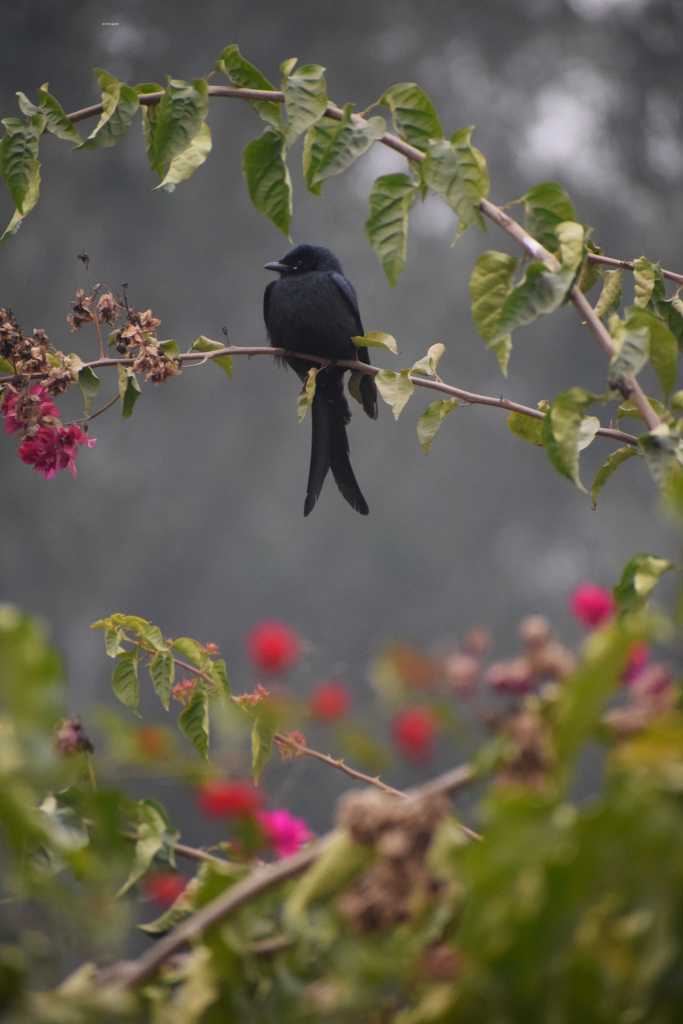
The Black Drongo also likes this side of the park, though I often see it in the most unlikely of spots, unafraid of me. They spend a lot of their time mimicking or playing with each other.
The noisy Rose-Ringed Parakeets are possessive about their space, flying in numbers, eating their seeds zealously. They scooted out a pair of Grey Hornbills once. I’ve learned to recognise the Purple Sunbirds with their sweet chirps and fluttering wings, always flocking by the flowering shrubs.
I marvel at the tenacity of the little birds–Indian White Eyes, House Sparrows, Ashy Prinias, Asian Green Bee-eaters, Pied Bushchats, Indian Robins, Oriental Magpie Robins, Common Tailorbirds, as they clutch at the branches in the strong breeze.
The Spotted Owlets have moved out from the Neem tree. I can no longer find them as a concrete wall has been built there, removing the ages old stone wall, which attracted more birds. Maybe I need to peer in every trunk of the numerous trees that have grown in the last four years here.
It’s in the park I’ve discovered Neem with its flowering glory and the golden Amaltas flowers hanging from the branches. The many colours of Bougainvillea climb over all the fences.
Only the orange Plain Tiger butterfly remains unfazed, crossing my path often; its orange wings shining against the verdant Verbena shrub. I stop to meditate on a leaf and discover an Orb Spider clinging to its fragile web home.
The Common Hawk Cuckoo, the Shikra hide among the thick trees, as I try to move stealthily to capture them in my camera.
Even the Indian Thick Knee is a fast runner, hopping away to safety as I approach.
Human Scarecrows
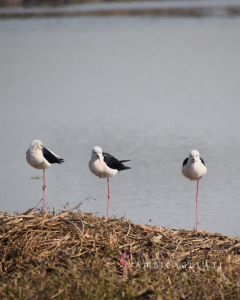
My least favourite spot is the man-made ghat and the food court, the areas which drive away avian friends and disturb the ecosystem. I’ve often seen Black-winged Stilts, Sandpipers, White-Browed Wagtails, Pipits, Brown Rockchats in this part of the park. The ghat is supposed to be a waterbody, but it remains a dirty place most of the times, especially during religious festivals as people leave their dead flowers and incense here.
The birds disappear when loud Zumba classes are held in the open amphitheatre or people are eating and talking loudly, sometimes playing loud music.
The House Crows do like the picnickers though. The Black-billed Crow remains with the Black Kites on the eucalyptus trees.
Impact of Habitat Change on Noida’s Birdlife
Somewhere in the middle of the park was a belt with wild grasses and a water patch. It had become home to sandpipers, waterhens, spotted bill ducks, gray headed swamphen, but the authorities let the water dry out and they disappeared. I once saw the Blue Throat and Indian Roller also here.
The Silver Munias, Scaly Breasted Munias and Red Avadavats lived in the grasses that were cut down. The Gray Francolins have less space to hide now, making them more vulnerable.
The Jungle Babblers are always loud and clear though, their antics heartwarming as they thrive in groups.
During winter, I discovered the Red Breasted Flycatcher, Tiagra Flycatcher, Yellow Wagtails. Once I even saw a Barn Owl resting in broad daylight. The Egyptian Vulture stays atop on the electrical wires. Somewhere in the shrubs the White Throated Flycatcher had hidden. I heard Hume’s Warbler and Green Warbler, but didn’t see them.
I felt sad when the person-in-charge of the park drove out the Neelgai, both male and female, gentle creatures who just hang around to eat the leaves.
There are sunflowers, petunias in bloom too, as new flower beds were dug up. At every stop, the Five Striped Grey Squirrel is my companion, its squeak filling the air.
Walking barefoot on the wet green grass, near the grand Peepal, past the Hollyhocks, towards intoxicating Frangipani trees, I am in awe of this surreal, intricately woven web of life.
I hope we all realise that we are surrounded by beauty, all for free, we just need to let it remain beautiful and thriving. We need to let the wheel of Nature spin without interrupting the natural processes or depleting it.
I’m participating in #BlogchatterA2Z
You may like to read
India Environmental Movements: Voices for the Earth
A Guide to Ecological Restoration
Enhancing Biodiversity: Why We Need More Butterflies
The Green Lungs of Delhi-NCR
Free Online Resources & Tools for Nature Lovers
Dive into the Animal Kingdom: Books That Make You Fall in Love with Wildlife

 Queen of Treasures
What a mesmerizing post! There was poetry in every line, in every expression. It made me realize that beauty truly surrounds us—we just need to pause and notice it. I never imagined that something as simple as a morning walk could reveal such breathtaking beauty and a delightful variety of birds. Perhaps that’s the secret: to be present, to slow down, and to immerse ourselves in the moment. Sometimes, all it takes is a quiet moment to reconnect with the world and rediscover the magic in the everyday.
LikeLiked by 1 person
Everything around us is abundant! We have to let it be… and then we will see how it helps us.
LikeLiked by 1 person
your post reminded me of the small garden we have made near our house and have so many winged visitors and they are so rare and the cutting of trees has got many monkeys in our apartment. I personally saw a bird in our garden which was just beak and tail. her body was so tiny. she made a nest in the garden. nature sometimes really bedazzles me.
LikeLiked by 1 person
Wow. That sounds awesome to me. Wonder if you got a pic to share .
LikeLiked by 1 person