
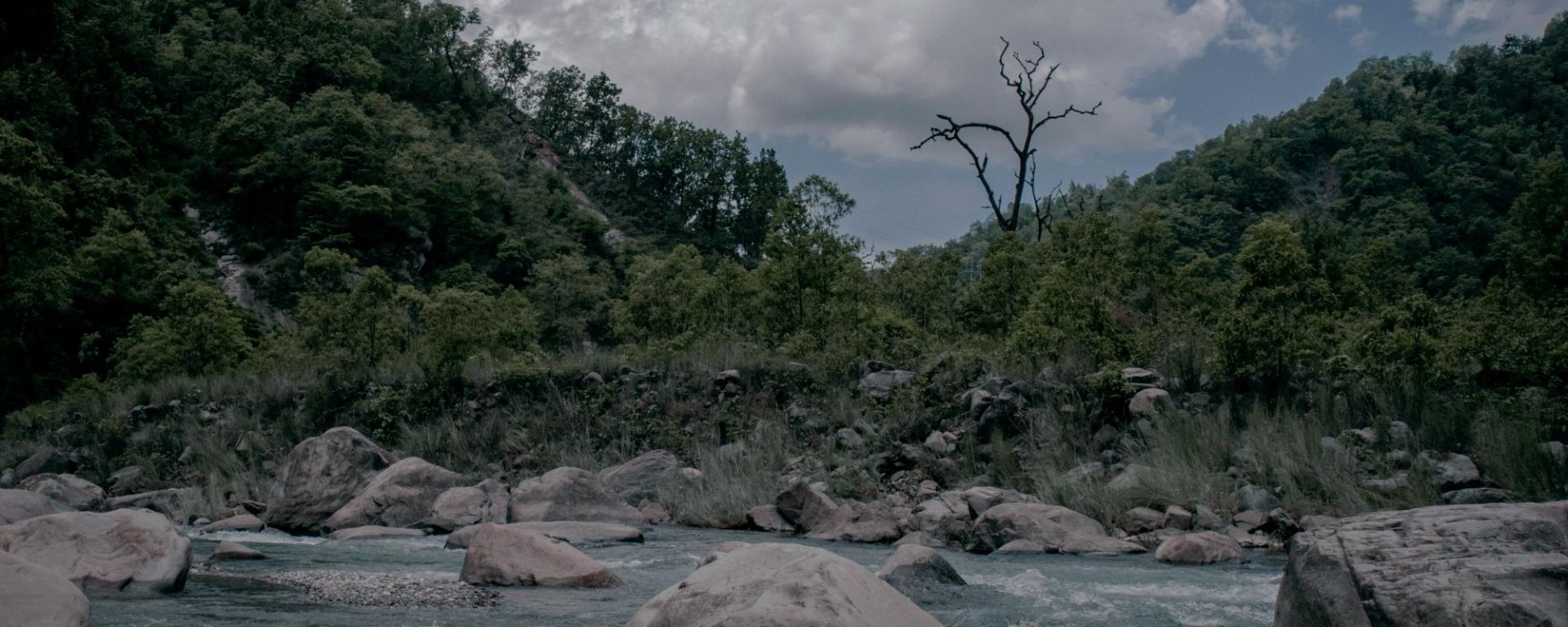
Nestled in the lap of the Himalayas, Uttarkashi is a town that carries the whispers of sages, the roar of the Bhagirathi, and the divinity of ancient temples. A place where mythology intertwines with nature’s grandeur, Uttarkashi offers an experience that is both spiritual and adventurous.
My journey to Uttarkashi began as an impromptu decision while travelling for work with a group of NRIs. It was April of 2001 and the trip started from Delhi. I was to disembark at Rishikesh, but I got carried away with cool company: author Shakti M. Gupta, whose book Plant Myths and Traditions in India had just released then, and a German couple teaching yoga. I continued the journey up the winding green mountains.
Luckily, it was a stay in luxury camps and I was well accommodated. The scenic drive from Rishikesh unfolded like a beautiful story—winding roads, towering mountains, and the shimmering Tehri Dam. The company was wholesome, and the German couple’s fitness quotient was unforgettable. The lady also introduced me to chamomile tea, something I’ve loved since. I often wonder whether they too remember me—the naïve reporter from Life Positive.

Land of Legends
As we approached the town, the first landmark that caught my attention was the Nehru Institute of Mountaineering (NIM)—a prestigious institution where India’s first female Everest summiteer, Bachendri Pal, trained. But beyond mountaineering, Uttarkashi is a place of temples and myths, where every turn has a legend to tell.
Vishwanath Temple and the Legend of Bhagirathi
Literally translated as North Kashi, referring to Varanasi, this region finds mention in the Rig Veda. One of the most significant landmarks here is the Vishwanath Temple, dedicated to Lord Shiva. As I entered, I was drawn to the towering 26-feet-high brass trident, an object of deep reverence. The inscriptions spoke of the Naga dynasty, while the locals shared tales of King Bhagirath’s relentless penance that brought Ganga to Earth. It is in Uttarkashi that the sacred river is known as Bhagirathi, before merging with Alaknanda to become the Ganga.
The story of Ganga’s descent is one of devotion and perseverance. The legend goes that King Sagara’s sons had called Sage Kapila a thief. They had set their horse loose as they were doing an ashwamedha yagna and the horse disappeared. The angry sage had called upon the lord of fire and burnt all the 60,000 sons. Only the pure waters of the Ganga could give them moksha.
So, the seventh king of the dynasty, Bhagirathi did penance for years. A pleased Lord Brahma promised to send Ganga on earth. However, fearing her mighty force, Lord Shiva caught the cascading river in his locks, controlling her descent and allowing her to flow gently to Earth.
Finally, the holy waters washed the pain of the troubled souls and the tradition of moksha through Ganga started.
A Journey to Gangotri
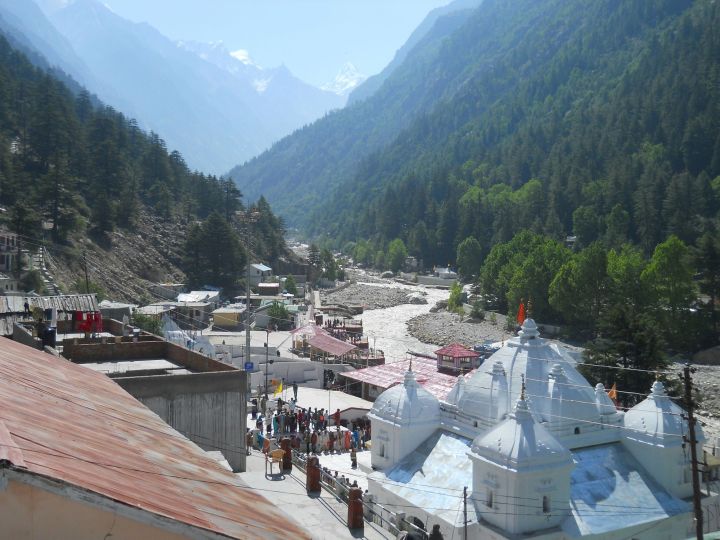
No visit to Uttarkashi is complete without venturing towards Gangotri, one of the Chota Char Dham pilgrimage sites. The temple, nestled at an altitude of 3,100 meters, marks the origin of the Ganga at the Gomukh Glacier, about a 19-km trek further up.
Although I couldn’t join the German couple on the trek due to inadequate gear, the sight of the temple, freshly opened for the season, was mesmerizing. The idol of Ganga had been carried across villages before being placed in the temple for worship. As the prayers reached a crescendo, I looked up wondering if the gods were actually there. And sighted the famous pair of white pigeons who lived there. I wonder if they are still there with all the natural disasters, climate change and melting glaciers.
I also learned about the famous Magh Mela, held around January 14, when devotees gather to seek blessings. It is believed that a dip in the Bhagirathi’s icy waters cleanses the soul and grants peace to one’s ancestors at that time.
Walking along the pristine shores of the Bhagirathi, I observed families offering prayers for their ancestors’ peaceful stay in heaven. I also discovered a spot where the Bhagirathi was roaring, as it fell deep into the earth, coming out through some underground path into the mountains and reaching the plains.
The Sound of Serenity
On my way back, I stopped by a sign that led to hot springs and Maharishi Parashar’s Ashram. It is said that Maharishi Parashar, the author of Parashar Hora Shastra, the revered treatise on astrology, was blessed by Lord Ganesha himself.
Back at the camp, as I sat by the river that evening, listening to its gentle flow over rocks, I realized how Uttarkashi is more than just a destination—it is an experience of the soul.
More to Explore
- Bhavishya Badri Temple – Dedicated to Narasimha, an avatar of Vishnu.
- Ujeli (Constellation of Sages) – Home to numerous ashrams.
- Tiloth Power Plant & Maneri Dam – Witness hydroelectric marvels.
- Nachiketa Tal – A serene lake with mystical tales.
How to Reach Uttarkashi
- By Air: The nearest airport is Jolly Grant Airport, Dehradun.
- By Train: The nearest railway station is at Rishikesh.
- By Road: Buses and taxis are available from Rishikesh, covering a scenic yet challenging route.
I’m participating in #BlogchatterA2Z
You may like to read
Rishikesh: My First Meeting With Shiva & Ganga
Meeting Robbers & Ruskin Bond in Dehradun
A Sunday at Mindrolling Monastery, Dehradun
Quintessential India: My Travel Photography Collection
Nashik Travel Guide: Wine, Food, Art & Artillery Museum
Nashik’s Sacred Sites: Trimbakeshwar, Panchavati & Ganga Aarti
Hiking in Kali Tiger Reserve: An Enchanted Jungle Soujourn
Junnar’s Eco-Heritage: Buddhist Caves, Countryside Retreats, Rich History
The Jim Corbett National Park Explorer’s Guide: Spotting Wildlife, History & Must-Sees
Fairytale Destinations for Slow Holidays
This blog post is part of ‘Blogaberry Dazzle’ hosted by Cindy D’Silva and Noor Anand Chawla.

 Queen of Treasures
A truly mesmerizing post! I loved how beautifully you intertwined nature and mythology to reveal their true essence. The line, “As the prayers reached a crescendo, I looked up wondering if the gods were actually there,” gave me goosebumps!
LikeLiked by 2 people
Your vivid descriptions transported me straight to the banks of the Bhagirathi, feeling the crisp mountain air and hearing the gentle rush of the river. I loved how you highlighted Uttarkashi’s spiritual significance—not just as a gateway to the Char Dham, but as a place where the Ganga’s sacred journey begins. Your personal anecdotes added such a warm, relatable touch, especially your reflections on the town’s serene atmosphere and the deep sense of devotion that permeates the air. The way you intertwined nature, spirituality, and personal experience made this more than just a travelogue—it felt like an invitation to connect with the soul of Uttarkashi.
LikeLiked by 1 person
I have not been to Uttarkashi so I enjoyed visiting it through your post. I guess there is a lot to experience in Uttarkashi going by the list here. I would have loved a few pictures of the river but then that was 2001 so I think it wasn’t as easy as it is nowadays.
LikeLiked by 1 person
Pics were easy in 2001 as well, I wasn’t camera friendly though😃 didn’t even think about camera then, only words .. it’s a lovely region , though going by the way tourism is killing it all, I wonder what’s it like now.
LikeLike
Your vivid journey through Uttarkashi transported me right beside the Ganga’s source. I loved how you wove together mythology, local rituals, and the breathtaking Himalayan scenery like a pilgrimage in prose. A beautifully post!
LikeLiked by 1 person
I have not been to Uttarkashi or any of the places in the Himalayas, except Kashmir. There must be something divine up there in those pristine mountains and air. Your memories of the place even after so many years, is so vivid.
LikeLiked by 1 person
It’s the air in the mountains .. something so dreamy about it.. never leaves the body 😊 you should try taking a trip in winter, right now it’s too wet
LikeLike
Beautiful post, Ambica. Your words and pictures took me through a spiritual journey.
LikeLike
Beautiful post, Ambica. Your words and pictures took me through a spiritual journey.
LikeLike
Beautiful post, Ambica. Your words and pictures took me through a spiritual journey.
LikeLike
Beautiful post, Ambica. Your words and pictures took me on a spiritual journey.
LikeLike
Beautiful post, Ambica. Your words and pictures took me on a spiritual journey.
LikeLike
Beautiful post, Ambica. Your words and pictures took me on a spiritual journey.
LikeLike
Beautiful post, Ambica. Your words and pictures took me on a spiritual journey.
LikeLike
Beautiful post, Ambica. Your write up and pictures took me on a spiritual journey.
LikeLike
Beautiful post, Ambica. Your write up and pictures took me on a spiritual journey.
LikeLiked by 1 person
This post really brings Uttarkashi to life. The mix of nature, mythology, and personal stories makes it feel like more than just a place, it’s a journey you can almost hear and feel. What I loved most was how the story of Bhagirath and the Ganga’s journey made the place feel alive, not just a spot on the map.
LikeLiked by 1 person
It’s all energy, so the cleaner and the rolling river is a sight to behold.
LikeLike
I remember reading about the story of Ganga’s descent in Amar Chitra Katha. It was great to read it once again. I am so drawn to visit the place specially Gangotri after reading this
LikeLiked by 1 person
It used to be beautiful, now with over population and landslides, I don’t know. But you should visit it once for sure.
LikeLike
The blend of spiritual depth, Himalayan scenery, and the gentle roar of the river makes your piece feel like an invitation to experience Uttarkashi with all senses. Great storytelling, Ambica.
LikeLiked by 1 person
Such a beautifully written travelogue! I’ve been to Uttarkashi as a kid but reading this makes me want to plan a trip again. I loved how you wove in the legends with your experiences, it felt like I was right there with you.
LikeLike
Lovely description, Ambica. I felt I was transported to Uttarkashi and listening to mighty Ganga descend from the Gangotri. I hope I get a chance to visit this place.
LikeLiked by 1 person
Uttarkashi reads like the prologue to the River Ganga’s divine story where myths breathe through every bend of the Bhagirathi and ancient temples whisper sagas to the mountains.
It’s beautifully impossible to separate spirituality from scenery here.
LikeLiked by 1 person
After reading your in-depth vivid descriptions I remembered my family trip to Himachal in 2010. Your writing transported me to a peaceful serene location. Thank you for sharing your experience!
LikeLiked by 1 person
I’d really love to visit Uttarkashi someday! Places running along Ganga is always a favourite!
LikeLiked by 1 person
When you travel from rishikesh the scenery is so beautiful and breathtaking. I haven’t been to Uttarkashi but travelled to different other hill stations from Rishikesh and I could imagine how your experience would have been in the lap of nature.
LikeLiked by 1 person
Beautiful post. Been there but your words brought it alive. Been to Adi Kailash recently and that too was a dream
LikeLiked by 1 person
Ah, would love to know your Adi Kailash experience.
LikeLike
Thanks fir taking us to Uttarkashi with you. I wasn’t aware that there’s a Narsimha temple in Uttarkashi as well. I have heard that there a very few of them scattered across the country.
LikeLiked by 1 person
I’ve been to Rishikesh as a child and don’t remember much from the trip. The beautiful nature and the temples in Uttar Kashi are on my wishlist. Hope I can visit soon!
LikeLiked by 1 person
Your post transported me to Uttarkashi’s serene banks—where Ganga awakens and devotion echoes in every ripple. Thank you for honoring that sacred origin with warmth, depth, and graceful reverence.
LikeLiked by 1 person
loved reading your posts on expedition and this one was different as it combined travel and a place of mythological importance
LikeLiked by 1 person
What a fascinating story! I’m yet to visit Uttarkashi… Hope to some day!
LikeLike
you should after the monsoons, seeing the plight of Uttarakhand, you never know when the mountains change their topography.
LikeLiked by 1 person