
Migration: The Pollinator of Ideas
In today’s world of short attention spans and scrolling feeds, The Shortest History of Migration by Ian Goldin—himself born in South Africa, educated in the UK, and a migrant across continents—reminds us that humans were never meant to be armchair settlers.
Goldin hails migration as the “pollinator of ideas”—the force behind evolution, creativity, and progress. From prehistoric wanderings to modern-day global nomads, migration has always been about the search for better food, land, safety, and opportunity.
A Journey Through Human History
Unlike dense academic textbooks, Goldin’s work is a sweeping yet concise journey. He blends ancient records with up-to-date genetic research to show how migration shaped civilizations, cultures, and identities.
The book traces humanity’s path:
- From the first footsteps out of Africa
- To coastal passages, settlements, and risks taken
- Through eras of trade, exploration, slavery, and servitude
- And into today’s digital migration and global diaspora communities
The Light and Shadow of Migration
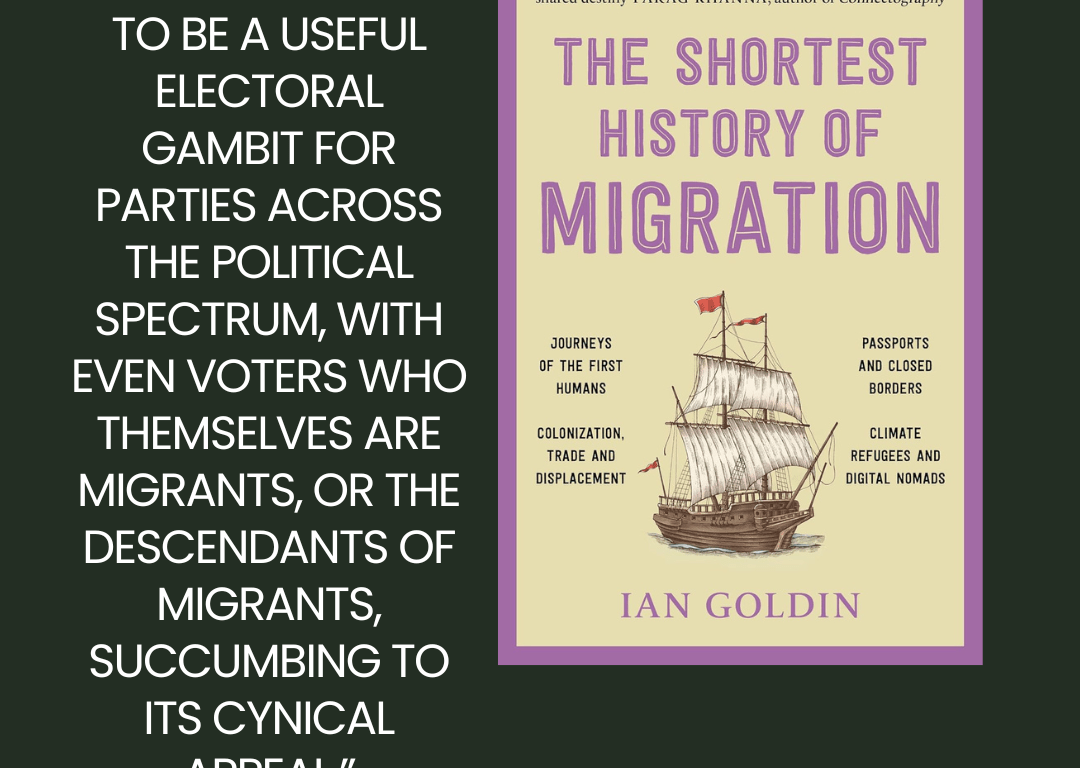
Giving a balanced view, Goldin doesn’t shy away from the darker side of migration. He writes about slavery, the Holocaust, genocides, and the harsh living conditions of undocumented migrants. He also shows how mistrust and borders changed the movement across the globe—World War I, the advent of passports, and more recently, Trump’s “big, beautiful wall.”
At the same time, migration has built nations, fuelled economies, and added cultural richness. Goldin reminds us that ageing populations in many countries need migrant caregivers and workers.
Key Takeaways and Insights
One of the most surprising insights is what Goldin calls the “3% rule”: “Throughout history, about 3% of people migrate … This percentage has been remarkably consistent.”
Other highlights include:
- Diaspora communities sending remittances and aid back home
- Migrants as risk-takers, innovators, and cultural bridge-builders
- Icons like Former UK Prime Minister Rishi Sunak and Google CEO Sundar Pichai as living proof of migration’s benefits
Personal Reflections
What stood out most for me were the historical nuggets—the first books on travel and records created by ancient travellers, ancient maps, early passports, convict experiences, artworks, and international organizations supporting migrants. These small details make the book more than just history; they make it alive.
And the USP is Ian Goldin’s personal experience of living in different countries and serving as Advisor to President Nelson Mandela.
Why You Should Read This Book
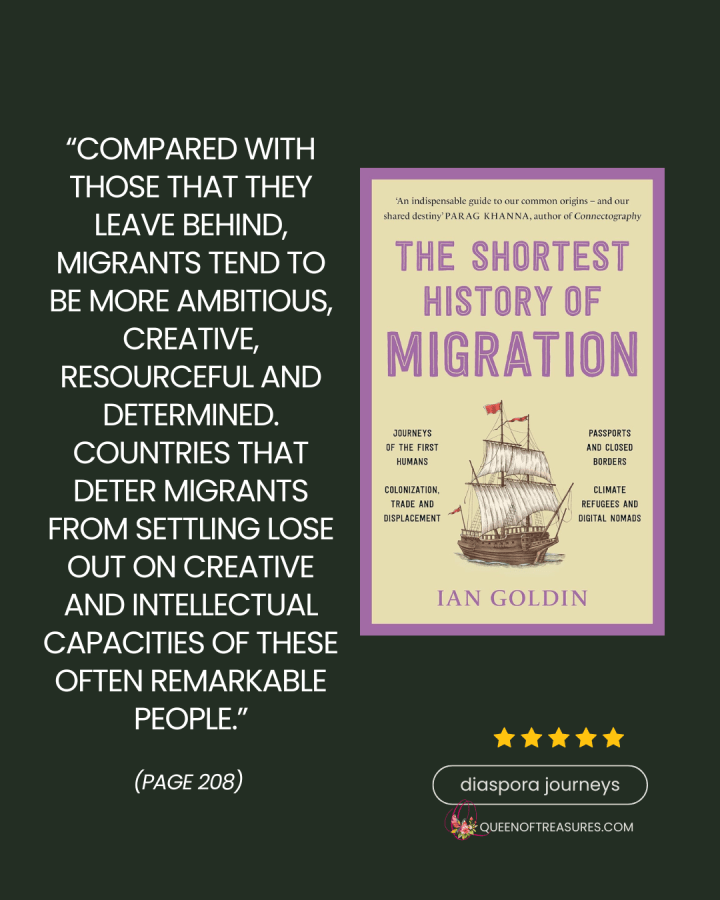
The Shortest History of Migration is not only a history of human migration—it is a mirror to today’s debates on borders, refugees, and global movement. It challenges the narrative that migrants are a burden, showing instead how they enrich societies with courage, creativity, and resilience.
For anyone interested in history, culture, or the politics of migration, this book is a thought-provoking yet accessible primer, as migration is a constant phenomenon with climate crisis compelling more people to move to safer lands.
Book Details
Publisher: Picador India (Pan Macmillan India)
Language: English
Pages: 330
Price: INR 418
Buy here
You May Like to Read
Book Review: The Shortest History of Japan by Lesley Downer
Book Review: The Shortest History of Economics by Andrew Leigh
BOOK REVIEW: THE SHORTEST HISTORY OF ISRAEL AND PALESTINE BY MICHAEL SCOTT-BAUMANN
Book Review: Missions, Mantras, Migrants & Microchips by Leonard A. Gordon
Book Review: Perestroika by João Cerqueira

 Queen of Treasures
2 thoughts on “Book Review: The Shortest History of Migration by Ian Goldin”