
“Air is unbreathable. Water is undrinkable. Food is adulterated. Infrastructure is crumbling. What’s the point of becoming the 4th largest economy if people can’t even live with dignity?”
—Sabeer Bhatia, Co-founder of Hotmail.com, tweeted on November 13
- A Nation in Breathlessness
- The Constitutional Promise
- Why Delhi-NCR Suffocates
- Fight for Aravallis
- Comprehensive Measures on the Table
- The Digital Pulse: Community & Resources
- The Breath of Article 21
Air, the very oxygen needed for all life forms, is now a health hazard. Keeping the doors and windows shut during the day is claustrophobic and the air is full of toxins. It’s difficult to decide how to combat this toxicity. Air purifiers can’t be a permanent solution nor can sitting inside all the time. Experts call this a health emergency, as toxic air leads to multiple health issues, primary ones are related to the respiratory organs.
A Nation in Breathlessness
I couldn’t even walk to the neighbourhood market without a mask, a bare 5-minutes away. I was gripped by breathlessness and headache, a daily reminder of the toxic reality of life in Delhi-NCR.
It’s not me alone, the internet is abuzz with AQI charts and hashtags. Media houses like Newslaundry and Peek TV are running campaigns—#FightToBreathe, #SwachhHawaAbhiyan. WhatsApp groups buzz with discussions on air purifiers, breathing hacks, and survival strategies.
Coinciding with Brazil COP30, Delhi was not just choking—it rose. Environmentalists, activists, and citizens braved this man-made hazard and demanded what should never have been negotiable: clean air, green spaces, and dignity.
COP30, known as the “Amazon COP,” centered on the Belém Package, which mandated ambitious new national climate targets (NDCs 3.0) to keep the 1.5°C goal within reach. It also marked a historic shift toward nature-based solutions by launching the Tropical Forests Forever Facility and securing commitments to triple adaptation finance for vulnerable nations.
Delhi Police detained about 100 protesters who were fighting for clean air, including children and the elderly. But the citizens were undeterred, families, elders, students, children, persisted with their demands. Then, came the fight for saving the Aravallis, as the Supreme Court’s definition of the hills put more pressure on the crumbling environment. These demands are not radical; they are constitutional.
The Constitutional Promise
India’s Constitution guarantees the right to fresh air, clean water, and green spaces through judicial interpretation of Article 21 (Right to Life). The Supreme Court has expanded this to include the right to a healthy environment and protection from climate change.
- Article 51-A(g): A fundamental duty of citizens to protect and improve the environment.
- Article 48-A: A duty of the State to safeguard forests and wildlife.
Right to live is a fundamental right under Article 21 of the Constitution of India, and it includes the right of enjoyment of pollution-free water and air for full enjoyment of life. If anything endangers or impairs that quality of life in derogation of laws, a citizen has the right to have recourse to Article 32 of the Constitution for removing the pollution of water or air which may be detrimental to the quality of life.”
(Source: Article 21 of Constitution of India)
These protest are acts of constitutional remembrance—citizens reminding leaders of their duty.
The severity of the crisis is undeniable. For seven consecutive years, Delhi has ranked as the most polluted capital city in the world (IQAir, World Air Quality Report 2024). India is the fifth most polluted country, with an average AQI of 50.6 μg/m³, ten times higher than WHO’s safe guideline of 5 μg/m³.
Why Delhi-NCR Suffocates
- Vehicular Emissions: constitute nearly 40%. High population density means constant traffic, releasing nitrogen oxides (NOx), carbon monoxide (CO), and fine particulate matter (PM2.5).
- Industrial & Construction Dust: Fossil fuel burning by industries and construction dust worsens the smog.
- Crop Stubble Burning: Farmers burn paddy stubble in Punjab, Haryana, and UP, which has a massive seasonal impact during the onset of winter. Though <6% of PM2.5, its seasonal impact coincides with stagnant weather.
- Geography & Weather Trap: Delhi sits in the Indo-Gangetic Plain, a basin where post-monsoon inversions lock smog into a persistent “pollution bowl.”
Fight for Aravallis
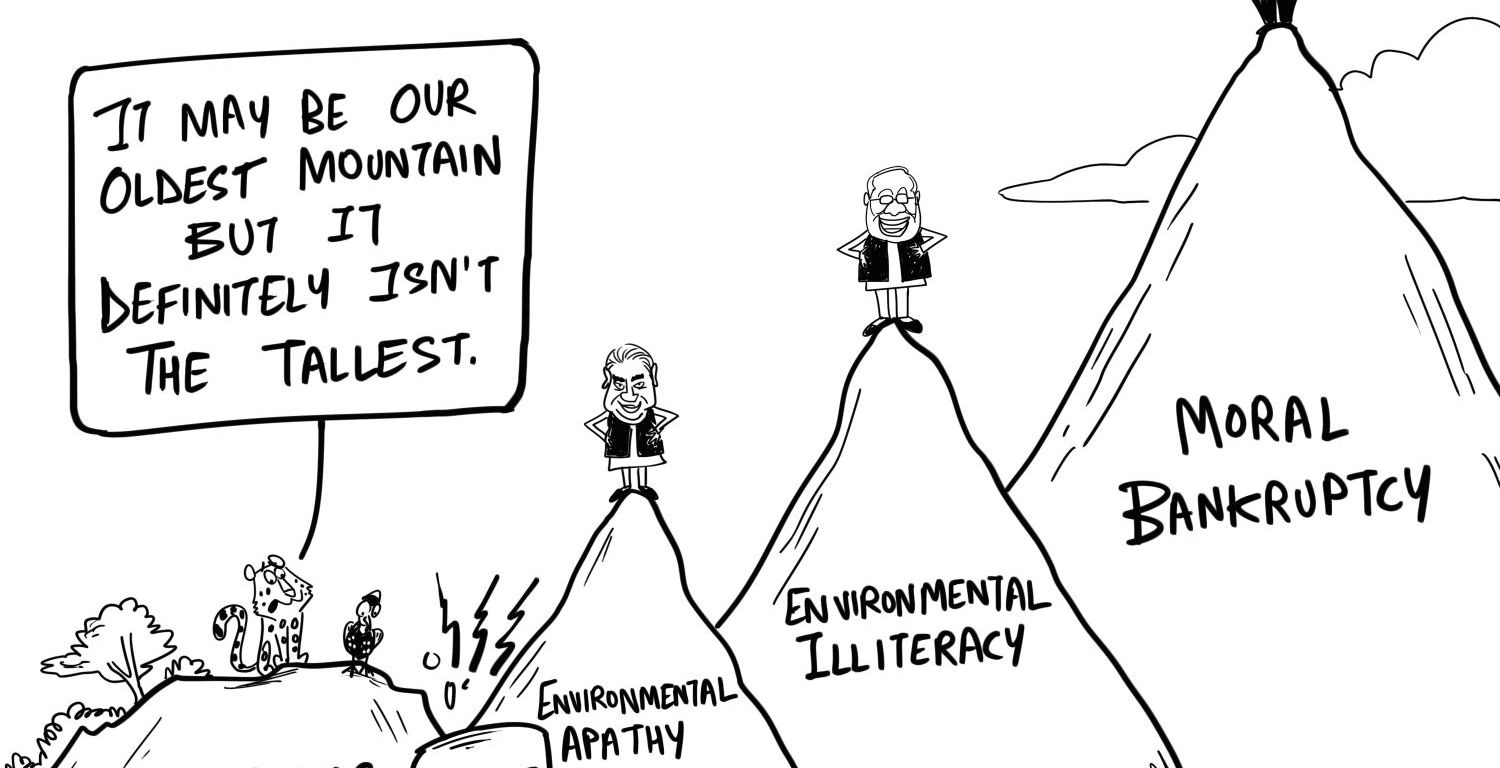
Added to these environmental hazards is the Supreme Court (SC) order on India’s oldest mountain range, the Aravallis. The SC accepted a new definition: only hills 100m or more above local relief count as Aravallis.
The Impact: Environmental experts warn this excludes over 90% of the range, potentially removing protection from low-lying hills crucial for checking the Thar Desert’s advance and preserving Delhi-NCR’s air quality.
The Aravalli Range is among the world’s oldest geological features, dating back to Proterozoic era, making it 2.5 billion years old. It stretches approximately 692 km across 4 states – Gujarat, Rajasthan, Haryana, and Delhi. Intertwined with cultural and ecological roots, itis home to rare flora and fauna, giving livelihood to millions in NCR. Experts say over 400 native plant species, 200 bird species and mammals such as leopards, jackals, hyenas live here. Besides, there are sacred sites, rock art paintings, old natural formations, and lots of oxygen.
The Aravallis are vital for: Water Security, Groundwater Recharge. They act as the natural barrier, preventing the Thar Desert expansion into fertile agricultural lands. The mountain range is the natural climate regulator, influencing the monsoon system, reducing air pollution in NCR. They provide livelihood for millions of people.
The Aravallis already face threats from illegal mining and urbanisation.
After multiple citizen protests, the Supreme Court has put a ban on new mining leases until a comprehensive Sustainable Mining Plan (MPSM) is ready and laid down strict prohibition of mining in core/inviolate areas. But citizens and environmentalists demand a whole new plan that safeguards the range and the biodiversity that thrives there.
We must ensure the entire, ecologically continuous Aravalli system is protected, not just the isolated peaks!
Comprehensive Measures on the Table
Based on Supreme Court proceedings and CAQM (Commission for Air Quality Management) proposals, the fight requires immediate, short-term, and long-term action:
| Category | Key Actions |
| Immediate (GRAP III & IV) (Graded Response Action Plan) | Advance restrictions: work-from-home, 50% office attendance, and exempting polluting BS-III vehicles from coercive bans. |
| Short-Term (GRAP I & II) (Graded Response Action Plan) | Introduce staggered office timings; boost public transport with differential rates; ban/regulate school sports events in peak pollution months. |
| Long-Term Policy | Review EV policies; impose higher charges on luxury diesel SUVs; ban new coal plants within 300 km of Delhi; improve waste management and road infrastructure. |
| Judicial & Administrative | Fill vacancies in pollution control boards; provide subsistence allowances to labourers affected by restrictions; mandate regular Supreme Court monitoring. |
The Digital Pulse: Community & Resources
While protesting is an important way of bringing to light this critical issue and compelling the government to take action, we, the citizens, too can bring their own community-led revolution through simple efforts at home and in the community around us.
For citizens seeking to act locally on waste and pollution, a number of community voices are driving change on social media:
| Focus Area | Instagram Handle | Key Action |
| Zero Waste & Minimalism | @zerowasteadda | Tips for sustainable living, zero-waste hacks, and conscious community building. |
| Composting & Urban Farming | @wormrani | Practical, simple guidance on composting kitchen scraps and urban waste management. |
| Plogging (Fitness + Litter) | @plogmanofindia | Promotes combining jogging with picking up litter to tackle plastic pollution. |
| Environmental Education | @ecofreaky | Engaging content on sustainability, recycling, and eco-friendly choices. |
| Environmental Awareness | @kanpurploggers | Community-led clean-up drives, recycling plastic, planting trees, |
| Environmental Action | @beachpleaseindia | Focuses on large-scale cleanup drives and community action for a cleaner environment. |
The Breath of Article 21
The right to a healthy environment is not a privilege, it is a fundamental right. Governments must recognize peaceful protests as democratic accountability, not disorder. Together, the citizens and government can breathe life into Article 21.
Not just humans, pollution harms all of Nature. Air pollution compromises the entire ecosystem by causing direct respiratory and neurological damage to wildlife, pets, and animals, while indirectly disrupting the food chain and habitat health by stunting the growth and reducing the reproductive capacity of plants and trees through processes like acidification and ground-level ozone exposure.
You may also like to read
Zero Waste Movement: India’s Best Practices and Worldwide Initiatives
Navigating Eco-Anxiety & the Mental Impact of Environmental Loss
Grandma’s Secrets for a Sustainable Lifestyle: Ditching the Disposables
Urban Pigeon Menace: Health Risks & Feeding Issues
Easy Eco-Friendly Hacks for a Greener Lifestyle
A Guide to Ecological Restoration

 Queen of Treasures
3 thoughts on “COP30, Delhi-NCR Pollution, Aravallis, Article 21: India’s Fight for Green Life”