

Discover how handwriting reveals emotional patterns, personality traits, and energy flow—insights from my interview with graphologist and healer Samata Dey Bose.
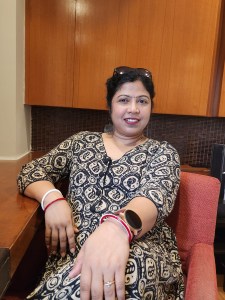
Samata Dey Bose is a digital comrade, whom I’ve never met in person but have connected with through blogging forums and challenges. For the last few years, I’ve enjoyed reading her posts on India Café 24, especially those centred around young children. Her writing rekindles the innocence of childhood and the comfort of learning under a mother’s gentle warmth.
Beyond being a blogger, Samata is an Astrologer, Wrist Watch Healer, Face Reader, and Graphologist. Her forte lies in helping people navigate health, wealth, and relationship challenges through her healing modalities under the umbrella of Heal Vibes Haven.
I encountered her work through her Wrist Watch Analysis masterclass, a fascinating introduction to how the wristwatch can influence and shape our energy.
As a thoughtful gesture, Samata offered me a combined graphology and signature analysis reading. Her observations about my emotional patterns and underlying health issues took me by surprise. During our conversation, I discovered that she has over 15 years of experience in the world of healing.
Here are excerpts from our conversation on graphology:
How did you first become interested in graphology?
I started my journey in the occult world with Astrology. After a couple of years, giving readings to clients, something began to nudge me. I have always been fascinated by the human mind. If Astrology can help us decode our life path, then how can we take its support to understand our mind. Why do people behave the way they do? Why some succeed effortlessly while others struggle despite similar talent, as reflected in their birth chart?
When I discovered graphology, it felt like a doorway to understanding the subconscious through something as simple and natural as handwriting. Thanks to my Guru, there was a transformation in my thought process with the power of Graphology.
The deeper I went, the more I realized that handwriting is a direct reflection of inner patterns, emotional blocks, and strengths. That curiosity grew into passion, and eventually, into a branch of my services in the occult profession.
What is the core philosophy behind handwriting analysis?
The belief is simple: your handwriting is your brain writing on paper. Every curve, stroke, pressure point, spacing, and rhythm is guided by neuromuscular signals from the subconscious mind. When the mind shifts, handwriting shifts, and when handwriting is consciously altered, the mind follows. It is a two-way bridge between psychology and behaviour.
Can handwriting reveal temporary moods versus long-term traits?
Yes, very clearly. When we compare the handwriting for a period of time, the differences are clearly revealed.
- Temporary moods show up in pressure, baseline fluctuations, sudden spacing changes, or tremors.
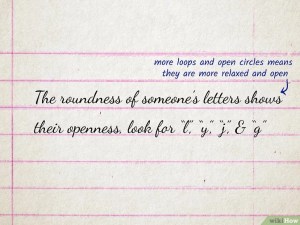
- Long-term traits appear in letters that remain consistent—like how someone forms t, y, g, margins, or overall slant.
It’s similar to weather vs. climate: one is momentary, one is habitual.
What are the most important elements you look at in handwriting (slant, pressure, spacing)?
I focus on multiple elements together because no single sign or letter in your handwriting is ever interpreted alone. The key factors include:
- Slant: emotional expression, trust, relationships
- Pressure: emotional intensity, vitality, stress levels
- Baseline: stability, discipline, mental balance
- Spacing (between letters/words/lines): boundaries, clarity of thought, social behaviour
- Margins: attitude toward past, present, future
- Size of letters: confidence, self-value, worldview
- Letter formations: inner fears, creativity, decision-making, leadership
Each element forms part of a larger psychological map.
How do you differentiate between cultural influences on handwriting and individual psychology?
Culture influences the script (cursive/print, certain letter shapes), but psychology influences how the script is executed. For example, two people from the same culture may learn the same way of writing T, but:
- one presses too hard
- one writes it too tall
- one makes it sharp
- one makes it rounded
These differences come from the mind, not culture.
Have you ever seen handwriting reveal something surprising about a person?
Many times. I’ve met people with an extremely confident exterior, but their handwriting showed deep self-doubt. I have witnessed suppressed anger in extremely neat writing. I observed childhood wounds hiding behind beautiful penmanship.
In my handwriting, I discovered that I take unnecessary responsibility of others which affects my life.
One of the most surprising things is that handwriting reveals patterns the writer is not consciously aware of, yet instantly resonates with them when I discuss with them.
In what contexts is graphology most useful today (career counselling, therapy, forensics)?
Graphology is most powerful in:
- Career counselling: identifying strengths, leadership style, creativity, risk-taking ability
- Therapy & emotional healing: finding hidden traumas, fears, trust issues, emotional blocks
- Relationship compatibility: understanding emotional expression and behavioural patterns
- Forensic investigations: signature verification, fraud detection
- Personal growth: improving confidence, clarity, communication
It is a tool that blends insight with transformation. - Criminology: whether there is any tendency of aggression, cruelty or raw instinct
Do organizations or individuals use graphology in decision-making?
Yes. Graphology adds a deeper layer of insight beyond what resumes or conversations reveal. Though quietly, many companies worldwide use graphology for:
- hiring
- leadership assessment
- conflict resolution
- understanding team dynamics
Individuals use it for: - career planning
- improving relationships
- personal healing
What kind of evidence or case studies support its validity?
There are documented cases in hiring, criminal investigations, and therapy where handwriting analysis provided accurate psychological insights. Case studies show:
- changes in handwriting can reduce anxiety, improve concentration, and increase confidence
- personality traits consistently match handwriting patterns
- graphotherapy (corrective strokes) impacts emotional and behavioural habits
Graphology is often called a pseudoscience. How do you respond to SKEPTICS? Do you see graphology as science, art, or a blend of both?
Skepticism is healthy. Graphology is neither pure science nor pure art. It is a behavioural science blended with psychological interpretation. Even psychology was once seen as pseudoscience until research validated it. Graphology is evolving similarly.
My answer to skeptics is simple: Try changing your handwriting for 21–45 days and observe the shift in your emotions and behaviour.
Experience is the best evidence. I personally witnessed many changes after changing the formation of alphabets and signature.
Do you think graphology should be used alongside psychology, or independently?
It works best alongside psychology, not in isolation. In fact, it’s an important segment of psychology. Graphology reveals what people may hesitate to say, while psychology helps process and transform it. Together, they create a holistic picture of the individual.
Do you see handwriting as a personal art form?
Absolutely. Handwriting is the most raw, unfiltered form of self-expression. Just like an artist’s brush strokes reveal emotion, our handwriting reflects our inner rhythm, thinking pattern, and energy.
What has studying handwriting taught you about human nature?
That every human being carries unseen stories. People appear strong but hold vulnerabilities. People seem quiet but contain storms.
Handwriting has taught me compassion because behind every stroke, there is a heart trying to express itself. I have handled multiple cases where the root cause of the problem showed deep wounds. As I put forth my handwriting analysis, it made the people burst out in pain, as the underlying hidden fears, wounds unravelled.
Do you believe handwriting carries spiritual symbolism?
Yes. Letters are symbols, and symbols are energy. Your strokes reflect the flow of your prana, your chakras, and the patterns you carry from your subconscious. Many formations correspond with energy blockages, grounding issues, heart openness, and throat expression.
How Are letters connected to our chakras?
Every letter formation corresponds to a different energy centre:
- Root: base strokes, pressure
- Sacral: curves, creativity strokes
- Solar Plexus: size, confidence strokes
- Heart: slant, openness of loops
- Throat: clarity of forms, spacing
- Third Eye: alignment, intuition strokes
- Crown: upward strokes, spiritual letters
Handwriting becomes a map of how energy flows through the body.
What is the best result you have seen after analysis? Are the changes emotional, physical or on the mental level?
Changes happen first in the mind, then emotions stabilize, and finally the effects show up in behaviour and physical well-being. Clients have experienced:
- emotional relief and inner calm
- improved confidence
- better decision-making
- reduced self-doubt
- healthier relationships
How do you think digital typing and loss of handwriting culture affect personality expression?
Typing disconnects us from the organic mind–hand–heart connection. Handwriting slows us down, brings mindfulness, and reveals inner states. When we stop writing, we lose:
- emotional release
- personal rhythm
- subconscious expression
Digital typing is useful, but handwriting is therapeutic.
Click here to attend Samata’s free webinar on Wrist Watch Analysis and Healing.
You may like to read
Healing POWER OF An Urban Forest Bath
Healing Your Shadow: A Guide to Better Mental Health and Well-being
A Sound Bath Healed My Heart
Divination Tools: Fortune Telling or Path to Self-Growth?
Free Guide: 7-Day Shadow Writing Challenge
7 Ways Kindness Heals You from Within
The Art of Attracting Luck: Simple Rituals for Fortune
This blog post is part of ‘Blogaberry Dazzle’ hosted by Cindy D’Silva and Noor Anand Chawla.

 Queen of Treasures
I have a basic knowledge of Graphology but was not aware of its therapeutic use for healing and guidance. Also the connections with different Chakras is very interesting. I have met Samata Dey personally at our book launch but did not get to talk to her about Astrology and Graphology.
LikeLiked by 2 people
She knows her healing stuff. You should attend her wrist watch analysis class.
LikeLike
I have always been fascinated by how much our handwriting can actually say about us, so reading about Samata’s approach to graphology was really interesting. It is amazing that she uses it not just to check personality traits but also as a healing tool, which is a connection I hadn’t really thought about before. I am actually quite curious now to know what my own scribbles would reveal about my mindset! It seems like such a unique way to understand ourselves compared to the usual methods we see everywhere.
#BlogaberryDazzle
LikeLiked by 2 people
She has the touch. You should speak with her.
LikeLike
Samata is a multifaceted, person.Thanks for enlightening us Ambica. I always knew that Graphology gives insights about one’s personality but I did not know the details. But it is sad that gradually writing will become redundant as typing is taking over.
LikeLiked by 2 people
I don’t think writing will ever become redundant, as there is a lot of research going on. Writing is recommended by neuroscientists and doctors, as it helps heal and boosts mental health. It is a vital skill which governs your brain and thinking ability, so it’s not going to die.
LikeLike
I have been reading her blog for so long, and yet I was not aware of her other endeavours. Wristwatch Analysis and healing is a completely new concept for me.
LikeLiked by 2 people
She is pretty good at this.
LikeLike
This is the 1st time I have heard of ‘Wrist Watch Analysis’. I am very curious about Handwriting Analysis though and Samata seems to be exemplary at it. Very interesting read, Ambica.
LikeLiked by 2 people
Fascinating read… decoding handwriting, personality and healing: this feels like a bridge between mystique and modern insight. Thanks for sharing
LikeLiked by 2 people
Thank you Dear Ambica for this feature. Much love to you
LikeLiked by 2 people
I never thought handwriting could offer such insight into our inner world and emotional patterns. Now I’m curious what my own handwriting might “say” about me. Lol !
LikeLiked by 2 people
you know the expert now!
LikeLike
I know Samata as a blogger friend who is always very encouraging, and her comments have always been so wholesome. But I did not know her this side as well. So much talent for sure. I have no idea about graphology, but I heard handwriting can define a person’s whole character. Would love to read more about her topic to know her energy alignment. Lovely read.
LikeLiked by 2 people
I knew Samata was a graphologist, but Wristwatch healing is pretty new to me. And by the time I read this post, the workshop was already over. Nevertheless, you have brought in a lot about the art of discovering personalities through handwriting, much of which is very interesting. I wonder what my handwriting reveals about me!
LikeLiked by 2 people
She keeps having the workshop, you can message her.
LikeLike
Wrist watch healing is such a new concept to me. I have never heard of it . This educative post covered so much about graphology and so true that we are losing our penmanship
LikeLiked by 2 people
This was so deep and I have been writing slanting style and this blog brings so much information. I would love to learn more about the same!
LikeLiked by 2 people
Now you know the person 😅
LikeLike
this side of samata came as a surprise to me. It’s interesting how handwriting can tell you so much about a person..
LikeLiked by 2 people
Your interview with Samata Dey Bose offered such a fascinating and warm perspective on how handwriting reveals our inner world, and your clear storytelling made complex insights into personality and healing feel deeply inspiring and relatable. queenoftreasures.com
LikeLiked by 2 people
Reading this felt like sitting in on a quiet, thoughtful conversation rather than an interview. I loved how organically your personal connection with Samata flows into her work, making the subject feel intimate instead of abstract. The way graphology is explained, especially the “weather vs climate” analogy, makes it accessible and deeply intriguing.
LikeLiked by 2 people
Lovely interview – especially since we all know Samata! I’m very intrigued by this wrist watch workshop.
LikeLiked by 2 people
You should attend it, she holds it free regularly, link as given at the end of the post.
LikeLiked by 2 people