
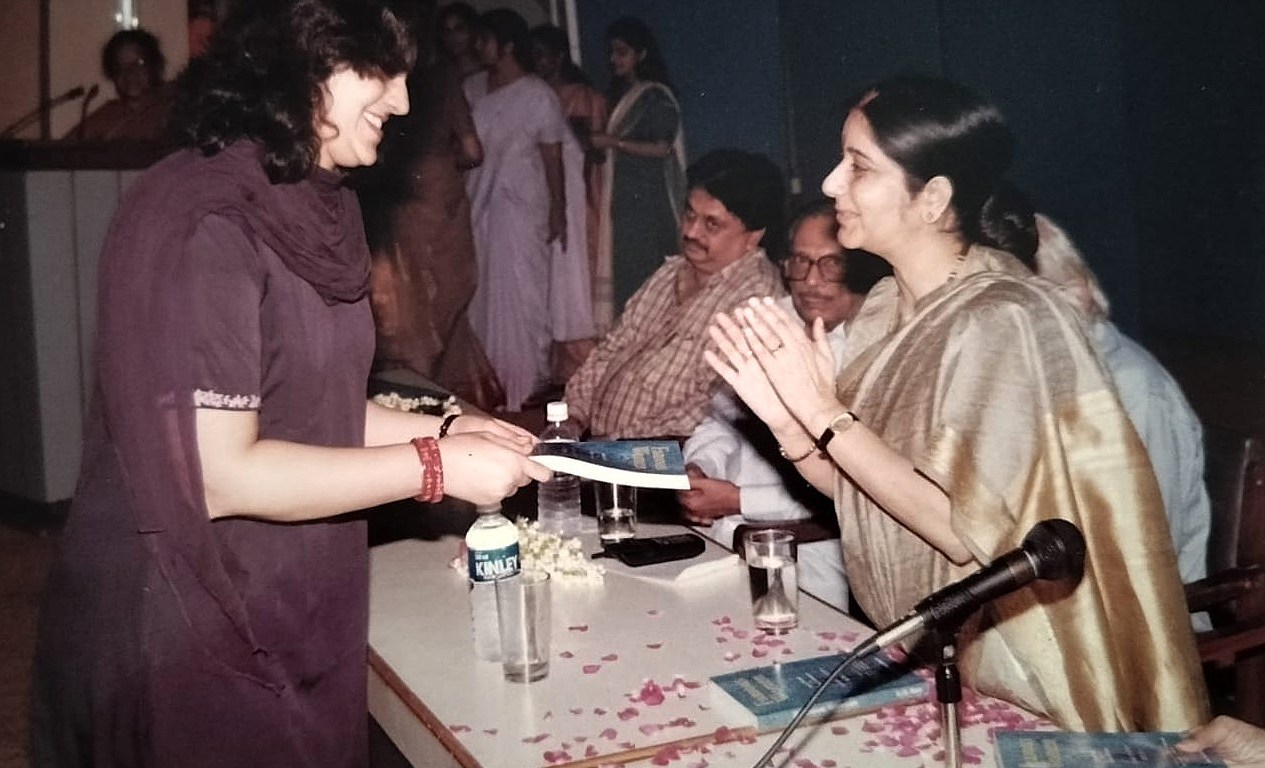
Power, progress and pushback worldwide. In 2001, I wrote an epilogue for Famous Women by K.N. Rao, documenting a pivotal moment when women were first “breaking the grounds.” Twenty-five years later, we stand at a new vantage point. The struggle has not ended, but the landscape has fundamentally shifted. Below is the refined and updated version of that journey.
Today, globally, women have shattered the age-old shackles of male chauvinism and fully occupied the workplace—a domain once considered a male preserve. Over the last quarter-century, they have mastered the art of balancing the home, the office, and the family. Unlike many of their counterparts who are still adapting to this radical societal shift, women have integrated these roles with resilience.
In Asia, we see women as seasoned politicians, high-ranking police officers, and spiritual leaders. It has been an uphill task, but they have reached the heights of a once male-dominated world while retaining their identity and strength in the process.
The Political Horizon
Women command important positions, but only after “walking on thorns.” In the Western world, while inspirational figures abound, the struggle to establish worth remains. The 1995 UN Beijing Platform for Action set a target of 30% female representation by 2005. Today, that target is no longer the ceiling, but the floor.
While countries like Sweden, Finland, and South Africa reached that 30% goal decades ago, the global average has now climbed to 27.5% in 2026. In India, the passage of the Women’s Reservation Bill (Nari Shakti Vandan Adhiniyam) marks a historic victory, legally mandating 33% seats in the Lok Sabha.
The UK has moved from 18% in 2001 to over 40% today. Even the “last bastions” of total male political power—Bahrain, Oman, Saudi Arabia, the UAE, Qatar, and Kuwait—have granted women the right to vote and stand for parliament. In fact, the UAE now boasts 50% female representation in its Federal National Council.
In Finland, women have held the offices of Prime Minister, Defence Minister, Finance Minister and Foreign Secretary. Sweden has repeatedly formed cabinets where women constitute nearly half or more of ministers. Madeleine Albright, the first female US Secretary of State, remains a landmark figure in American diplomacy.
However, all is not won.
According to Inter-Parliamentary Union data on women in national parliaments, representation drops sharply outside these regions. Even in established democracies, women remain underrepresented in economic, defence and national security portfolios.
Conflict Zones: When Women Bear the Heaviest Weight
Nowhere is the fragility of progress clearer than in conflict zones.
In Afghanistan, the Taliban’s return has produced one of the most sweeping rollbacks of women’s rights in modern history. Girls are barred from secondary and higher education, women are excluded from most employment, and public presence is heavily restricted. Afghan women activists, many now in exile, continue to testify internationally that these policies are instruments of political control rather than religious mandate.
Under the shadow of regional volatility, as conflict persists across the broader Middle East, women remain the primary navigators of survival. In the face of modern warfare and economic blockades, the burden of maintaining the “social fabric”—healthcare, education, and household stability—falls disproportionately on them.
The paradox is clear: while one part of the Gulf is building a futuristic skyline led by female architects and ministers, another part is grappling with the ancient, heavy toll of displacement. It serves as a reminder that “Empowerment” cannot exist in a vacuum; it requires a foundation of regional peace to truly take root.
In Ukraine, women have emerged as soldiers, medics, journalists and community organisers since Russia’s full-scale invasion. Women now serve in combat and command roles within Ukraine’s armed forces, while also carrying the disproportionate burden of displacement, caregiving and survival under siege.
In Russia, the war has intensified restrictions on civil society, with women activists, journalists and anti-war voices facing arrest, exile or censorship. Feminist groups opposing militarisation have been labelled “foreign agents,” illustrating how authoritarian states often police women’s dissent first.
In Israel and the occupied Palestinian territories, women operate on the frontlines as doctors, journalists, aid workers and peace advocates amid prolonged conflict. Israeli and Palestinian women’s organisations have repeatedly called attention to how militarisation deepens gendered violence and social fragmentation on both sides.
Defence, Power and the Question of Belonging
If we look into the defence sector, women walk into the minefield with as much bravery as men. We remember the Rani of Jhansi or Joan of Arc, but today’s reality is professional and institutionalized.
In 2000, NATO debated whether women should serve on submarines. Today, the United States, United Kingdom, and many others have fully integrated women into submarine service and all frontline combat roles. The German military, which once limited women to being medics or musicians, now sees women in every combat unit.
Women now fly fighter jets in the British Royal Air Force and the United States Air Force, and serve in NATO peacekeeping and operational roles. The debate is no longer about capability, but whether military institutions are willing to reform cultures built around exclusion.
Faith, Education and the Quiet Revolutions
Unlike explosive revolutions, quieter awakenings emerge through education. Across South Asia, Muslim women have challenged restrictive interpretations of religion through classrooms, courts and community organising. In India, female enrolment among Muslim students in higher education has risen steadily over the past two decades, particularly in medicine, science and professional studies.
This revolution, sparked by the social upheavals of the 1990s and the economic pressure to contribute to family income, has moved into the spiritual and legal realms. Muslim women are now offering namaz inside mosques, defying unwritten laws. Organizations like the Muslim Women’s Council continue to demand an end to the misuse of unilateral divorce and are fighting for property rights within the joint family system.
Media, Beauty and the Politics of Visibility
Women continue to dominate headlines as victims rather than narrators of power. According to the Global Media Monitoring Project, women are far more likely to appear as victims of crime, war and disaster than as experts or decision-makers. Despite this, beauty pageants and celebrity culture receive disproportionate coverage, positioning women as symbols of aspiration while structural inequities remain underreported.
Beauty pageants continue to launch women into the limelight as aspirational icons. While feminists argue these contests objectify women and Hindu traditionalists argue they are “un-Indian,” the contestants view these platforms as a vehicle for growth in a post-globalization economy. The titles have evolved from Miss India 1, 2, and 3 to Universe and World, reflecting India’s integration into the global consumer market.
Bodies, Belief and Health Inequality
Religion reflects similar contradictions. Women now serve as priests and bishops in several Christian denominations worldwide, following decades of resistance. Yet doctrine continues to be selectively used elsewhere to justify control over women’s bodies and choices.
Health remains one of the starkest measures of inequality. According to the World Health Organization, maternal mortality rates remain dramatically higher in developing regions despite global declines. Education consistently emerges as one of the strongest predictors of maternal health, fertility choices and economic participation. Yet millions of women still lack access to prenatal care or skilled birth assistance.
Law, Property and the Question of Personhood
Women have repeatedly had to assert a fundamental truth: that they are human beings, not property. Legal battles over inheritance and land rights continue across Africa and parts of Asia. While countries such as Tanzania have enacted laws granting women inheritance rights, enforcement gaps and customary practices continue to undermine these gains.
India: Progress, Power and Persistent Contradictions
In India, women’s political visibility has expanded through grassroots leadership, self-help movements and recent legislation reserving seats for women in Parliament. At the same time, labour force participation among women remains low, and gendered violence continues to challenge claims of empowerment. India’s story reflects the global paradox: progress in law, unevenness in life.
Not a Straight Line
On this one small planet, power remains deeply contested. Gains are made, defended and sometimes reversed. Women’s rights do not advance in a straight line. They curve, stall, fracture and return — shaped by war, religion, economics and politics. Across continents, women continue to assert not privilege, but personhood. The struggle continues, shaping not only women’s lives, but the moral direction of societies worldwide.
Editor’s Note
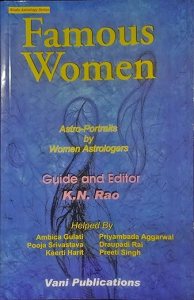
Famous Women is a seminal work by K.N. Rao, whose scholarship reshaped modern astrological thought by placing women’s lives, destinies, and historical agency at the centre of analysis. In this anthology, I contributed an astro-portrait of Kiran Bedi, India’s most renowned police officer.
Written at a time when astrological discourse rarely examined women beyond domestic archetypes, Famous Women broke new ground. It explored how power, resistance, public visibility, and personal fate intersect in the lives of women across cultures and epochs, using astrology not as prediction but as a reflective lens on history, circumstance, and choice.
From the archives
If you enjoyed reading this reflective piece on the changing role of women in a globalised era, you may like to continue the journey:
- Jungle On Foot—6 days of Tiger Census 2018
- Review: Madam Commissioner: The Extraordinary Life of an Indian Police Chief by Meeran Chadha Borwankar
- The Sherpa Trail: Stories from Darjeeling and Beyond by Nandini Purandare and Deepa Balsavar: A Review
This blog post is part of ‘Blogaberry Dazzle’ hosted by Cindy D’Silva and Noor Anand Chawla.

 Queen of Treasures
womens right as you said , though in all fields , we also have much awareness now , we still need to go a long way
LikeLiked by 1 person
So well written, Ambica. I used to admire SushmaJi a lot. It’s wonderful that you met her. I may not see a much-needed change in women’s rights in my lifetime. However, I am glad that I will get to see the seeds sown by women before me sprout. Articles like this one help spread awareness.
LikeLiked by 1 person
Women struggle eve now, it isn’t easy for them. See the condition in Iran right now, it’s sad.
LikeLike
True that.. it is not a linear line and while the general direction has been progressive, there have been many setbacks on the way. And much needs to be done going forward.
LikeLiked by 1 person
You look great in the picture, Ambica. I used to admire Sushma ji. Women’s progress is slow and steady. Maybe in the next 50 years we will be equal.It is sad what is happrning in the middle east, though. They have gone back a few centuries. The fanatic men do not want their women to be educated or aware. So much so, the US has not had a female President till date. There should be a uniform civil code for women in the UN, only then can change come.
LikeLiked by 1 person
US is the pits at the moment. I wonder if they will finally wake up to the terror that they have created.
LikeLike
First of all the picture is amazing. This is a very well-put article about the real challenges that women’s rights across the globe faces still today. It hurts to see some women still struggling for basic rights.
LikeLiked by 1 person
Great article, Ambica! It’s sad that women have been abused more than not. And interestingly, our epics and puranas have stories of powerful women as well as women who were victimised. For example, there was Draupadi, who was mocked by a few for having five husbands, and yet her name is on the list of pativratas.
Like you rightly say, women empowerment is not linear. It is meandering and slow and painful, and everything else in between. The unilateral divorce ban is a small but good change. We will keep raising our voices and will not stop until everyone is the world is made awareness of the importance of this critical topic.
LikeLiked by 1 person
I so agree, however, the physical strength does sometimes become a hindrance for women to surge in more fields and for a longer span. I enjoy your mythical tales from India, such pearls of wisdom coming from the seers.
LikeLike
It’s true that women’s rights do not advance in a straight line, and to get to that curve, women have to struggle, suffer, and sacrifice. We may think we are sufficiently empowered, but if we go towards rural India, the truth emerges starkly. We have a very long way to go.
LikeLiked by 1 person
With every big political or national event often some big change happens that shapes it’s future. Women rights too have been greatly influenced by such times, sometimes for good and sometimes worse. Quite a thought-provoking and extensive post this is, Ambica. Have travelled miles and many more miles to go.
LikeLiked by 1 person
Progress truly comes with both steps forward and setbacks but we must trudge on right? Because as your piece says women’s rights are never a straight, linear journey, serving as a reminder that the conversation and effort must continue from all of us
LikeLiked by 1 person
I too admire Sushmaji. Glad you met her. Well-penned and such an educative one at that
LikeLiked by 1 person
Such a meaningful piece, Ambica, and you looking great in this photo. The admiration for Sushma Swaraj truly shows. We’ve come a long way with awareness, but there’s still so much ground to cover. Progress isn’t always steady, yet every voice like this keeps the hope alive.
LikeLiked by 1 person
I have always been a fan of Shushma Ji. That’s such a priceless picture!
This was a very powerful write up Ambica!
LikeLiked by 1 person
Women Rights is a debatable topics in my eyes. Somewhere I see women standing against women and somewhere men against women. If this is the scenario even after so many decades I really don’t know where are we going. Regarding you in the picture with Sushma Ji… I have one thing to say… Itna talent kaha chupa ka rakhte ho Ambica Mam… KN Rao Ji is the base creator for every astrologer of the era. and you wrote a epilogue in his book… Mam I want to explore your talented brain and get inspired.
LikeLiked by 1 person
ha ha.. Not my brain, as a healer you know, its just time, we all come into it once in our lives. Then, we find people who shape us, change us. And then life carries on.
LikeLike