
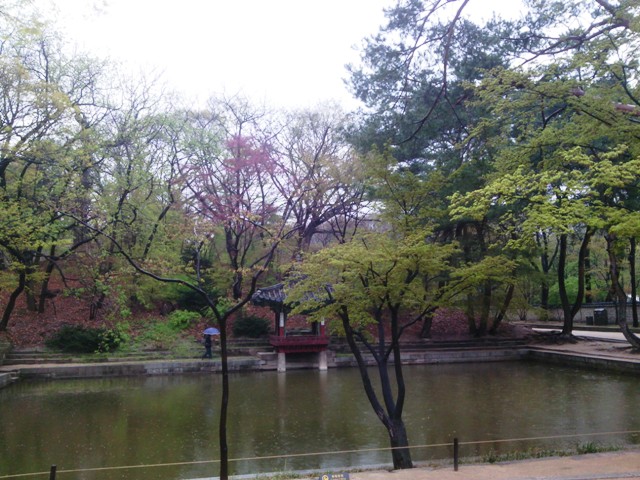
From the “Miracle on the Han” to the AI-driven “Sanctuary” of the future.
Published 2015 · Updated March 2026
Journalist’s Notebook
- Visit: World Journalists Conference 2015
- Host: Journalists Association of Korea
- Cities covered: Seoul • Daegu • Busan
Spring had just arrived in South Korea when I landed in Seoul. Cherry blossoms floated across palace courtyards and city streets as our group of journalists travelled through the bustling cities of Seoul, Daegu and Busan.
I had come to the Republic of Korea for the World Journalists Conference 2015, organised by the Journalists Association of Korea, marking the 70th anniversary of national division and discussions around the possibility of unification on the Korean peninsula.
Before the trip, my impressions of Korea had largely been shaped by events and exhibitions at the Korean Cultural Centre in Delhi. Those encounters had introduced me to Korean cultural diplomacy and the youth-driven musical wave of K-Pop. I expected a week of seminars and policy discussions.
There were indeed dialogues and conferences, but the visit turned out to be far more than that. It became an introduction to a country that blends ancient heritage, technological ambition and cultural pride with remarkable ease.
The Korean peninsula has been inhabited since the Paleolithic age. In modern times, however, the country’s history has been turbulent. Korea gained freedom from Japanese rule in 1945, only to face the devastating Korean War between 1950 and 1953, which resulted in the division between North and South Korea.
Our guide, Ok Sun Park — whose name translates to “as beautiful as jade” — told us how the nation rebuilt itself after the war. At one point the government had to borrow from the International Monetary Fund to stabilise the economy, and citizens contributed their gold jewellery to help the country repay the debt. Today, South Korea stands as one of the world’s major economic powers.
Landing at Seoul’s Incheon International Airport, I began to understand why the capital region is often associated with the “Miracle on the Han River.” The transformation from the devastation of war to one of the world’s most advanced economies is extraordinary.
The drive in the Limousine Airport Bus was a treat drive into the city itself hinted at that success. On a sunny Sunday afternoon we passed a riverside camping area bustling with activity. Cyclists rode along dedicated tracks, families prepared meals outdoors, and speedboats dotted the water. Leisure and order seemed to coexist effortlessly.
Seoul is a delight for art lovers and an intriguing study for architects. Despite its dense population, the city feels spacious. The roads are wide, the skyline is modern, and yet the urban design feels carefully planned rather than chaotic. This sense of order and aesthetics was visible not only in Seoul but also in Daegu and Busan.
Koreans display a strong sense of national pride. Visitors quickly notice the discipline and courtesy that shape everyday life. Incidents of tourists being cheated or harassed are rare, and punctuality is treated almost like a civic virtue. Business, discipline and aesthetics blend in well. I call them timekeepers of the world, as even the delay of seconds is frowned upon.
Food, however, was an adventure of its own. Our search for lunch soon introduced me to the vast world of Korean seafood: octopus, crabs, whelks, king prawns, lobsters and eels.
Language can be an issue with some natives. We didn’t understand the dish that we ordered at a small eatery, turned out to be an octopus curry.
As someone who is not a heavy meat eater, navigating Korean cuisine took some adjustment. Beef and pork dominate many dishes, but vegetarians can still find options such as pancakes, pizzas and rice-based meals. Fresh fruits and juices are abundant, and vendors prepare them right in front of you.
Coffee culture is everywhere. Every second shop seems to be a café. Yet what I enjoyed most was ginseng tea, available in red and white varieties. Ice cream, too, comes in generous portions — often large enough for two people. I remember wishing someone would help me finish one of those towering cones.
Soju, a popular Korean spirit, and beer are commonly served with meals. Koreans traditionally eat using steel chopsticks and a spoon. Handling steel chopsticks proved to be quite a challenge at first; the food had a habit of slipping away. By the end of the week, however, I had finally learned to win that small but satisfying battle.
One dish that accompanies almost every meal is kimchi, a spicy fermented cabbage preparation that has become synonymous with Korean cuisine.
Technology is another defining feature of Korean life. Smartphones are everywhere, and fast Wi-Fi is available across the country — even on the streets.
High-speed transport also shapes daily life. In Daegu we experienced the city’s monorail, while the journey from Busan to Seoul on the KTX bullet train showcased the speed and efficiency of Korean infrastructure.
Across the cities we visited, convention centres, cultural complexes and business hubs reflected the country’s global ambitions.
During the week, several things about the Republic of Korea particularly caught my attention.
1. Public Art Everywhere

Across Seoul, Daegu and Busan, sculptures appear at unexpected corners and intersections. These public artworks are modern yet subtle, blending naturally into the urban landscape rather than dominating it.
Outside Busan’s International Cinema Centre stands a striking sculpture of a ladybird — which is actually designed to represent a seagull, the symbolic bird of Busan. The city itself is widely recognised as the country’s film-making hub.
2. A Culture of Beauty and Nature
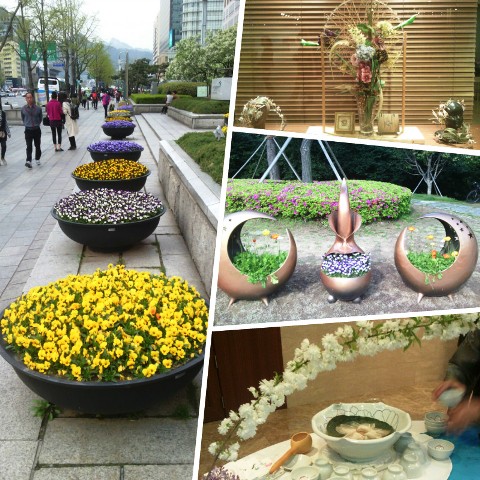
South Korea is deeply invested in urban greenery. Streets are lined with trees and seasonal flowers, and during my visit the cherry blossoms were in full bloom.
My first close encounter with these delicate blossoms was at Changdeokgung Palace, a UNESCO World Heritage Site in Seoul.
Built in 1405 during the Chosun Dynasty, the palace’s name means “prospering virtue.” It was constructed after the earlier Gyeongbokgung Palace and later suffered destruction during the Japanese invasions before being rebuilt in 1609.
Behind the palace lies the famed Secret Garden, a landscape that feels almost like a fairy-tale film set. Quiet ponds, winding paths and ancient trees create a space that feels removed from the city’s modern rhythm.
3. Speed as a Way of Life

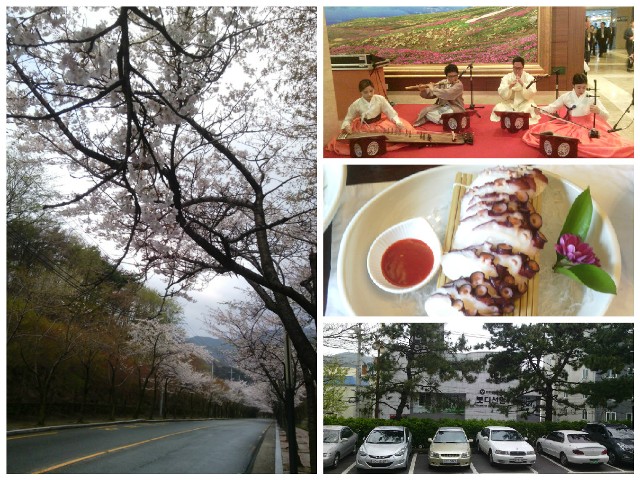
Transport in Korea reflects efficiency and innovation. While highways and buses are excellent, the monorail in Daegu offers a futuristic urban transit experience.
Long-distance travel becomes remarkably convenient with the KTX bullet train. The journey from Busan to Seoul, which takes around five hours by road, takes only about two and a half hours by train.
Hyundai vehicles dominate the roads, although European cars are also visible.
4. Tourist-Friendly Signage

One of the most impressive aspects of Korean urban planning is its signage.
Road signs and directions are clear, visually appealing and bilingual, written in both Korean and English. Many signs also indicate distances between destinations, making navigation easy for visitors.
Even if you lose your way, a subway station nearby usually has a detailed map to guide you.
5. The Buddhist Calm of Donghwasa Temple
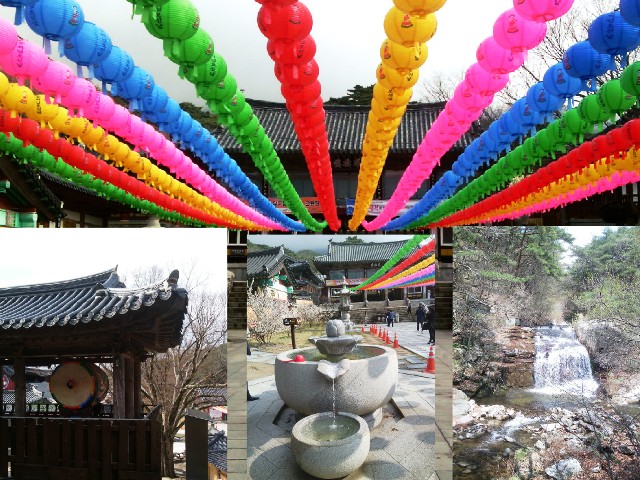
Religion in South Korea presents an interesting mix. Nearly half the population identifies as non-religious, while the rest are largely divided between Buddhism and Christianity.
In Daegu we visited Donghwasa Temple, belonging to the Jogye Order of Korean Buddhism. Located on the slopes of Mount Palgongsan, the temple’s name translates to “Temple of Paulownia Blossoms.”

The site offers a peaceful retreat from urban life, with a natural spring flowing nearby and forested mountains surrounding the complex.
The first temple was built by monk Geuk-Dal in the 15th year of the Silla King SoJi’s reign (493) and named Yugasa (Yuga-Temple). Donghwasa was applied after its reconstruction under King HeungDeok during the Unified Silla period in 832.
A monk named Hye Min guided us through the temple and offered a simple yet profound reflection: nothing in life is permanent, so we must learn to live in peace and harmony.
He referred to one of the temple’s statues as the Buddha of Unification, a symbolic reminder of Korea’s divided past.
Our visit also included a traditional tea ceremony, where we learned the etiquette of greeting, preparing and serving tea. The ritual emphasises mindfulness, concentration and calm. Unfortunately, the wooden coaster memento no longer survives.
6. Busan: City of Sea and Cinema
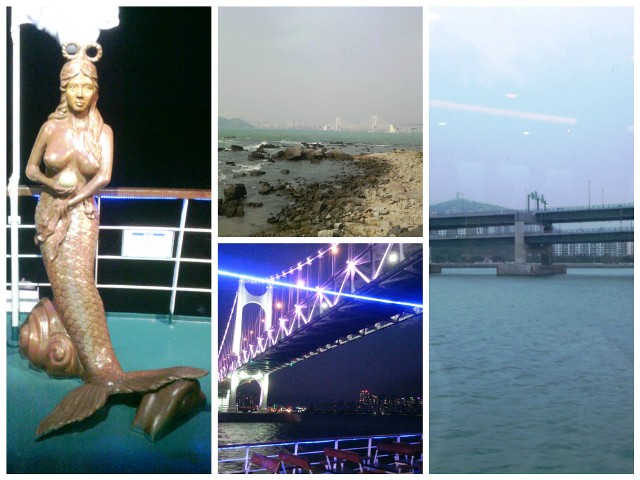
Busan, Korea’s major port city, carries both historical and cultural significance. During the Korean War, many people sought refuge here.
Today, Busan is known for hosting international events such as the 2002 Asian Games, APEC 2005, and matches during the 2002 FIFA World Cup.
Staying at the Haeundae Grand Hotel gave us easy access to the famous Haeundae Beach. Walking along the shore at night, we watched ships blinking softly in the distance.
Our visit also included the Nurimaru APEC House, the BEXCO convention centre and the spectacular Busan Cinema Centre, which even features an outdoor theatre for film screenings.
That evening ended with a cruise, where we watched the illuminated bridges and skyline while dining on local delicacies.
7. Gamcheon Culture Village

Often called the “Santorini of Korea” or the “Machu Picchu of Busan,” Gamcheon Culture Village is one of the country’s most visually striking neighbourhoods.
Originally established as a refuge for people displaced during the Korean War, the village consisted of tightly packed hillside houses.
In 1958, around 4,000 followers of the Taegeukdo religion settled here. Their philosophy, inspired by the yin-yang symbol on the Korean flag, emphasised harmony and balance.
The houses were built in tiers so that no home blocked the view of the one behind it — a symbolic reflection of the belief that everyone should prosper together.
In recent years, artists and residents transformed the once modest neighbourhood into a vibrant cultural hub. Colourful murals, narrow alleyways and small craft shops now draw visitors from around the world.
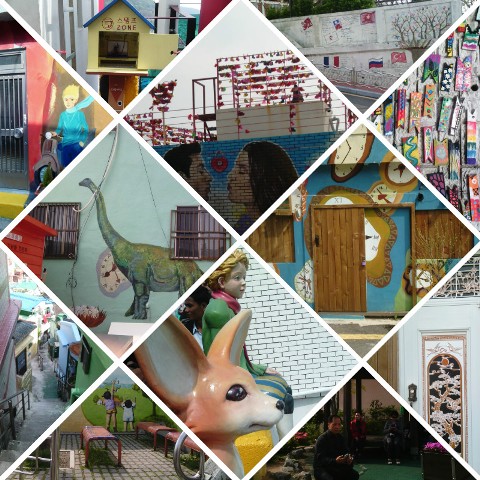
There is a museum and you can take guided tours, or buy a map for Won 2,000 and see it all by yourself. Exploring Gamcheon on foot reveals its layered history and creative spirit.
A Country Between Memory and Modernity
Travelling through South Korea revealed a nation that moves confidently between past and future.
Ancient palaces stand beside bullet trains. Quiet tea ceremonies coexist with some of the fastest internet speeds in the world.
Perhaps this balance explains the quiet confidence visible across Seoul, Daegu and Busan. A country that rebuilt itself after war now looks outward with discipline, creativity and unmistakable national pride.
Planning a Visit to South Korea
• Best season: Spring for cherry blossoms
• Must visit: Seoul, Busan, Jeju
• Try: Ginseng tea, kimchi
Ambica Gulati is a journalist and editor whose work explores global affairs, travel, environment, and the intuitive arts. From short stories to wellness mantras, she focuses on meaningful experiences in a complex world.
As a journalist, I have also covered South Korea for Deccan Chronicle and The Patriot, writing about the country’s culture, diplomacy and transformation.
From the Archives
If you enjoyed this view of South Korea, you may like to continue the journey:

 Queen of Treasures
8 thoughts on “7 Fascinating Things I Discovered in South Korea | Seoul, Daegu & Busan”