
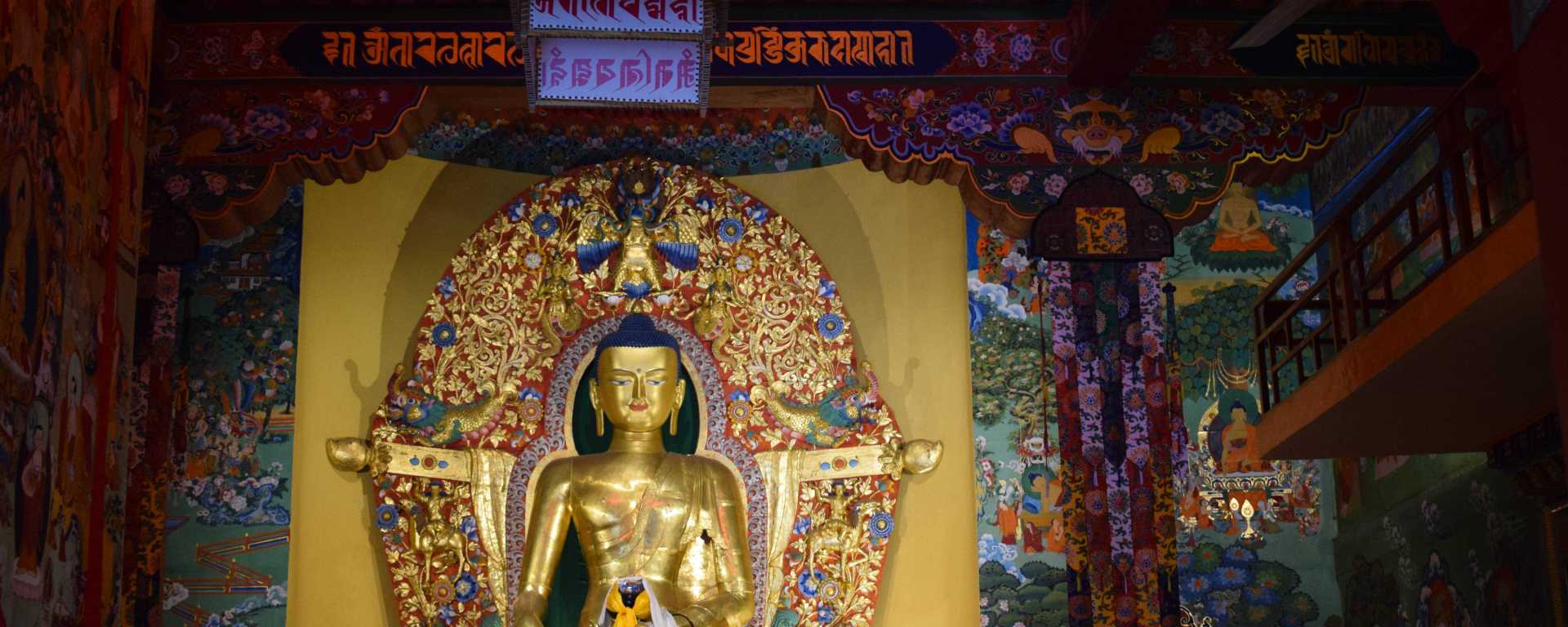
After his exile from Tibet in 1959, the 14th Dalai Lama established his home in the beautiful mountain town of Dharamshala, Himachal Pradesh, India. Keeping the spiritual and peaceful country alive in India, the Tibetan community offers arts and culture courses at the serene Norbulingka Institute of Tibetan Culture
I recently watched the movie Seven Years in Tibet, starring Brad Pitt. And Tibet became more than a contentious piece of land. A peaceful regime under the Dalai Lamas, nestled in the beautiful Himalayas, it seemed like a country that dreams are made of. For most of us, Tibet is a land lost in time. Most of the first-generation people from the exiled land have passed away. But they have left their imprints in the harmonious and gentle environs of the many monasteries that dot the mountains of India. I have visited some and I also visited the Norbulingka Institute of Tibetan Culture in Dharamshala many years back.
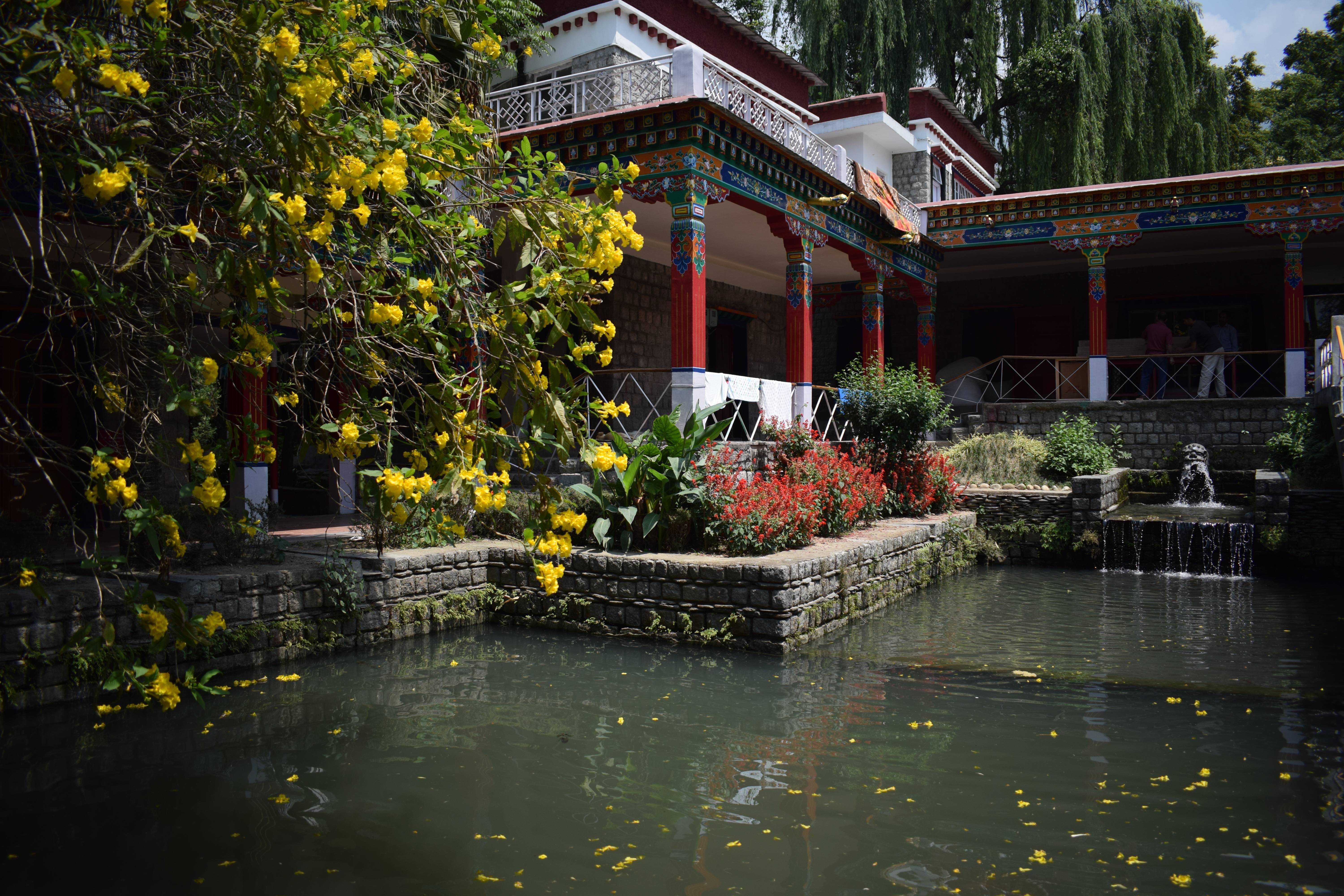
Main building, with water bodies, Norbulingka Institute of Tibetan Culture, Dharamshala, Himachal Pradesh, India, 
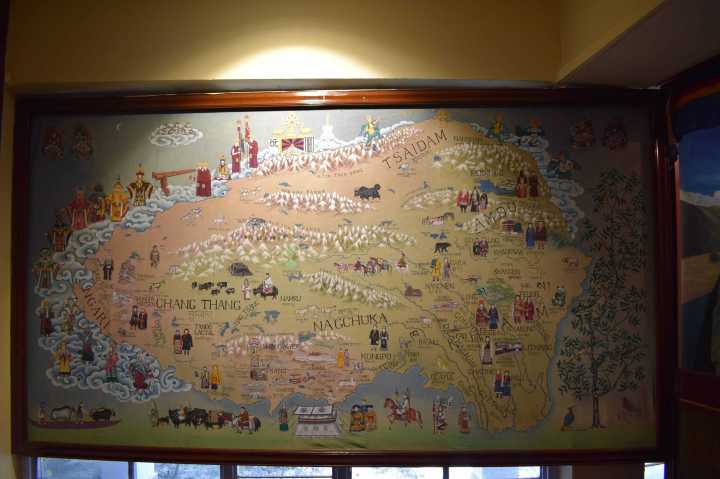
Museum inside serene Norbulingka Institute of Tibetan Culture, Dharamshala, Himachal Pradesh, India 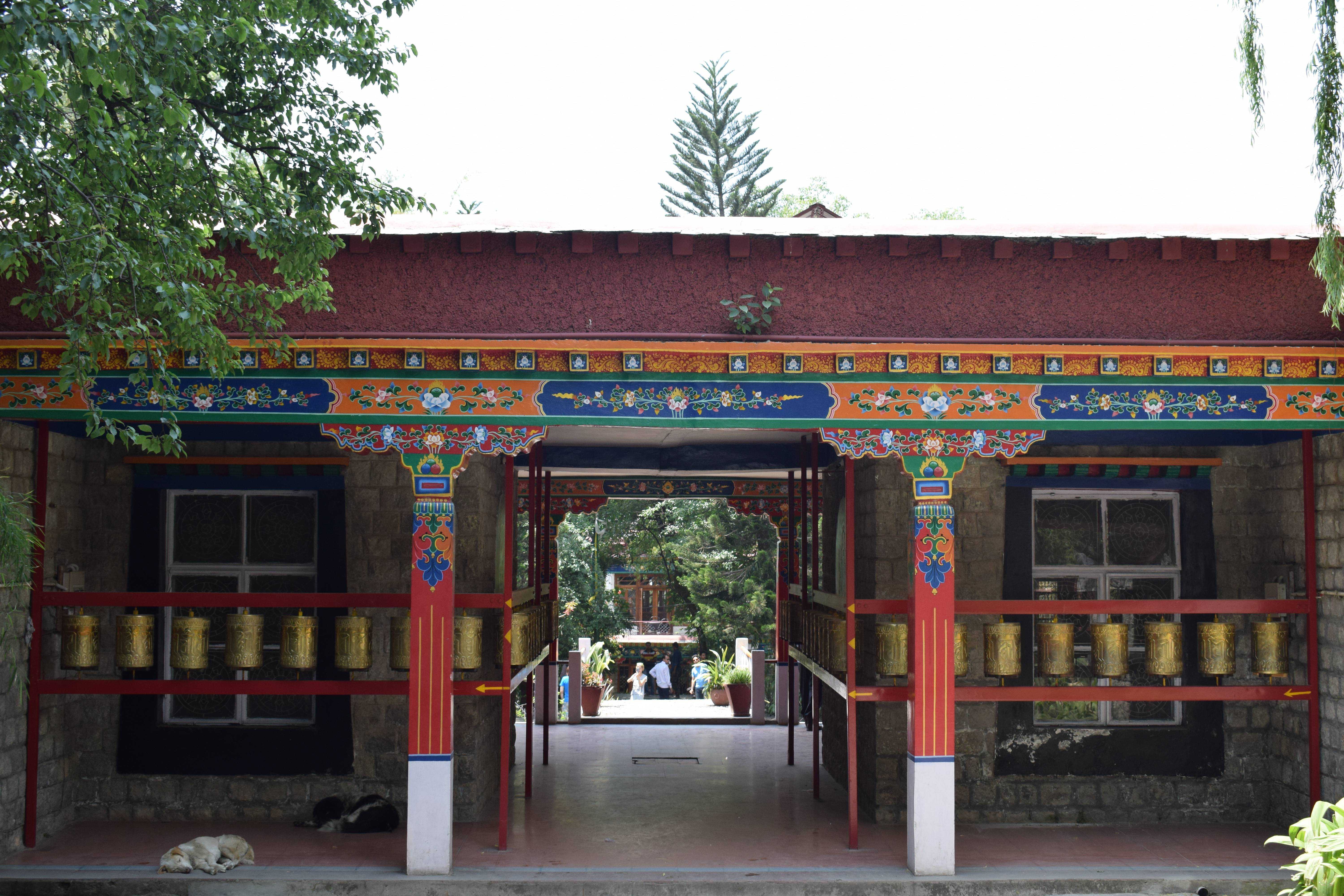
View from the temple courtyard, Norbulingka Institute of Tibetan Culture, Dharamshala, Himachal Pradesh, India
The movie made me dig out my photograph dump. While browsing through the pictures, I realised how beautifully the community had recreated the serene environs of their native land in a few acres in the mountains of India. I could now relate the region with the institute in India and also understood the sentiments behind this initiative.
Norbulingka means Treasure Garden or Jewelled Park. The institute is named after Norbulingka in Lhasa, Tibet. Built in 1755, it was the summer palace of all the Dalai Lamas until the 14th Dalai Lama’s exile. Serving as the religious and administrative centre, it is one of the finest examples of Tibetan palace architecture. It is now a UNESCO World Heritage Site in Tibet.
Coming back to my visit, I didn’t know much about Norbulingka and my first impression on entering through the huge gate was of serenity and harmony. Young people sitting in the room by the main gate were playing catchy music. A narrow path lined with bamboo and shimmering rays took me to an altar. Buddhist prayer flags and cloth symbols fluttered in the breeze. The breeze played a gentle song, rustling through the bamboo leaves and somewhere I could hear the tinkle of water.

Nestled amid the lush mountain terrain, Norbulingka offers courses in Tibetan arts and academics for enthusiasts. Artists from all over the world come to learn thangka painting, statue making, thangka applique, woodcarving, applique, wood painting, tailoring, weaving, and screen printing. There is a research section and college for those interested in Tibetan scholastics.
It has good accommodation, a clinic, museum and shop. Even holidaygoers in search of a green retreat can book their stay as there are three different kinds of places to stay.
The institute came into being in the 1980s. Kelsang Yeshi, then Minister of the Department of Religion and Culture, and his wife Kim Yeshi, dreamt of a place which would be a cradle for the revival of Tibetan art, and haven for artists.
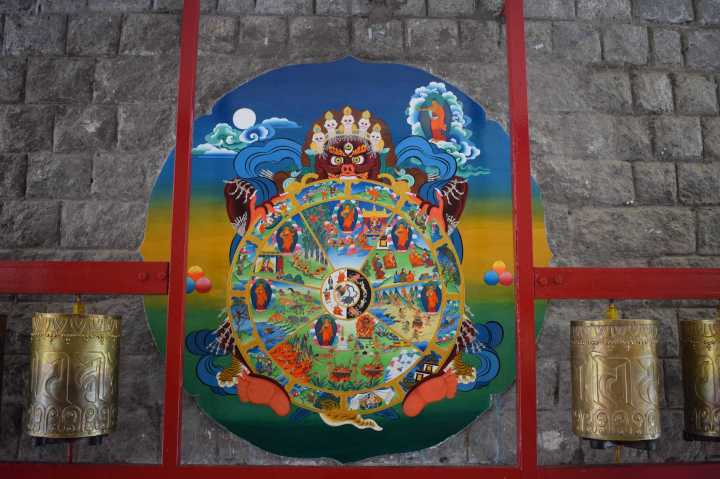
Tibetan artists were employed to give us a visual treat with this traditional Tibetan architectural style complex. The ground plan follows the proportions of Avalokitesvara, the deity of compassion. The workshops and offices are his thousand arms, the temple his head, in the middle is a water spring which represents his kind heart.
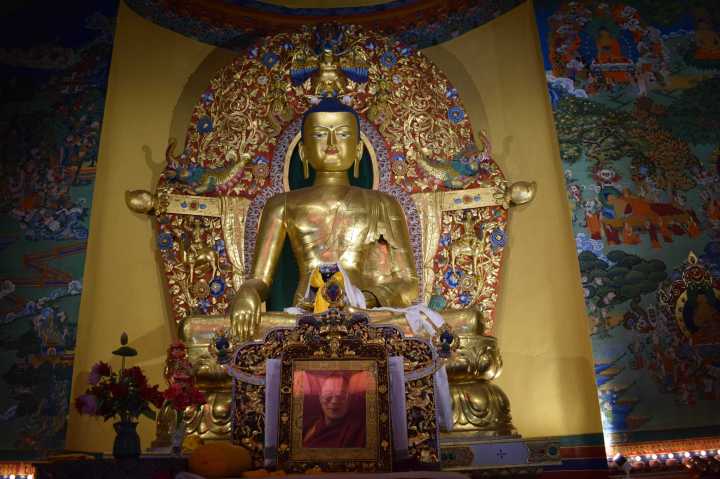
Woodcarvers and carpenters helped to erect the buildings, and thangka painters completed the frescoes on the walls of the temple. The statue-makers crafted the 14-feet gilded Buddha,from hand-hammered copper sheets. And the final result is a stunning temple that makes you feel you have walked into paradise. The institute was inaugurated in 1995 by His Holiness the Dalai Lama.

Norbulingka provides employment to Tibetan refugees and maintains a community where Tibetan values flourish. It offers day-care and kindergarten free of cost to all children of Norbulingka staff. The children are also provided with education on Tibetan culture and taught Tibetan language.

Adapting to Montessori methods of teaching, the children trace the traditional Tibetan letters with their fingers on sandpaper. Thus, they learn the letters as real and tangible things and not merely as symbols. There are Tibetan prayer sessions, dance performances in traditional costumes and songs.
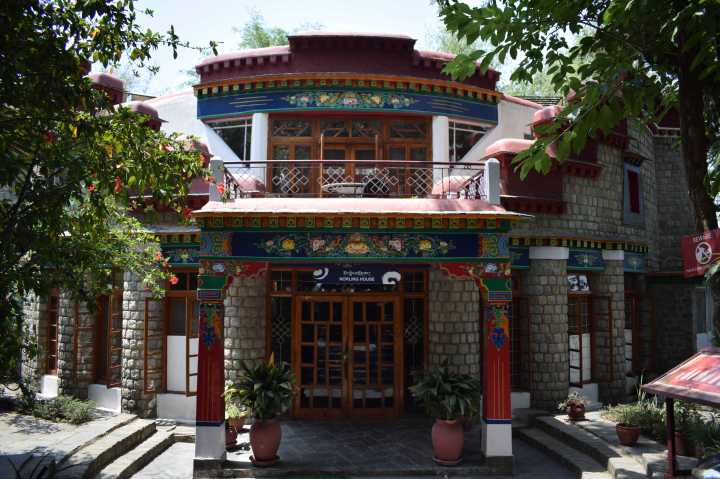
Norbulingka reminds me that we can always bring our dreams to life, it doesn’t matter where we are.
How to reach Norbulingka Institute of Tibetan Culture, Dharamshala

As we were staying in Palampur, we hired a taxi to take us there.
If you are staying in Dharamshala, you can take a bus for Palampur from the bus stand. Get off midway near Sacred Heart school in Sidhpur. It is a 1km walk from there.
Alternatively, you could hire a taxi for the day and see more places in McLeodganj and Dharamshala.

This blog post is part of #BlogchatterA2Z 2023 challenge.
Read previous posts A, B, C, D, E, F, G, H, I. J, K, L, M
This blog post is part of the blog challenge ‘Blogaberry Dazzle’ hosted by Cindy D’Silva and Noor Anand Chawla in collaboration with Zariya Healings.

 Queen of Treasures
64 thoughts on “Discovering Tibet at Norbulingka Institute, Dharamshala”