

Started in 1952, National Wildlife Week, running from October 2-8, is celebrated annually to coincide with the birth anniversary of Mahatma Gandhi, following his principles of ahimsa and compassion for all living beings. The aim is to spread awareness and enhance protection of endangered animal species.
- The Jungle Book by Rudyard Kipling
- From the Indian subcontinent
- The Wind in the Willows by Kenneth Grahame
- Little Red Riding Hood
- Books on my bucket list
- How books on wildlife connect us deeply to our planet
The Jungle Book by Rudyard Kipling

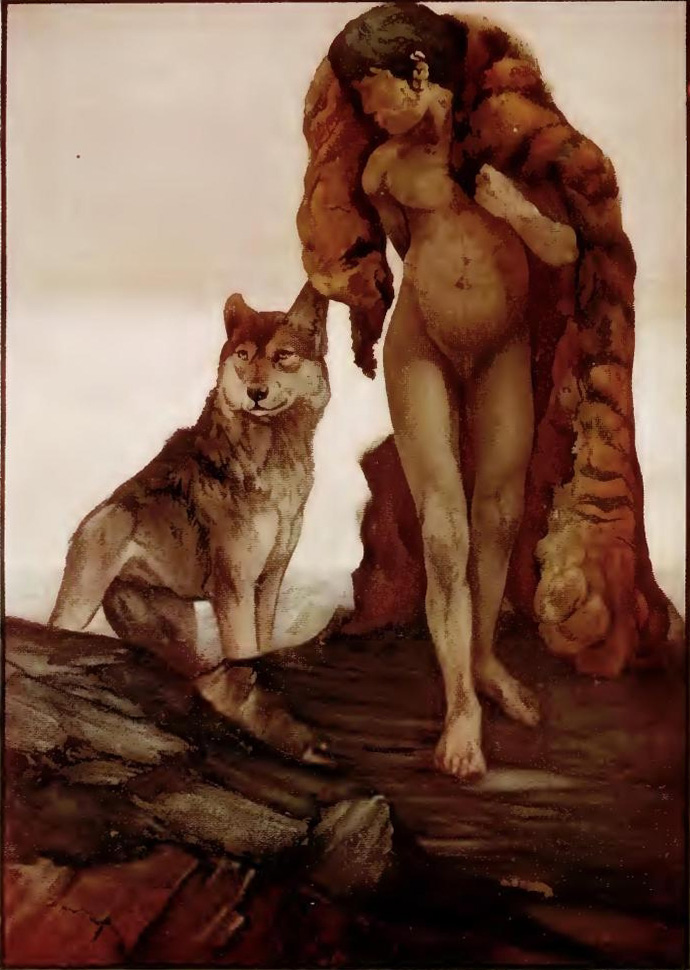
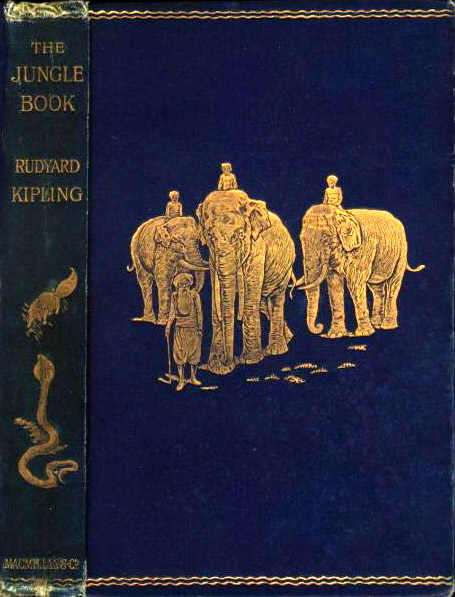
Jungle, jungle baat chali hai, pata chala hai
Chaddi pehan ke phool khila hai, phool khila hai
All of us living in India remember a little boy in a lion cloth running through the wild and popping out of our television screens in the 1990s. Mowgli, the man cub, stepped out of British author Rudyard Kipling’s book, and wooed us all. The Jungle Book was written by Kipling between 1893-94, based on his experiences of living in India. It was first published in parts in magazines with original illustrations by his father John Lockwood Kipling.
Apparently, Kipling compiled the stories in a book for his daughter Josephine, who died from pneumonia in 1899, aged 6. The first edition of this book, with a handwritten note by Kipling to his daughter, was discovered in 2010 at the National Trust’s Wimpole Hall in Cambridgeshire, England.
Born in India, Kipling spent the first six years of his childhood here. Then, he was sent to England where he lived for 10 years. He came back to India for about six and a half years to work.
Mowgli’s life is about abandonment and fostering by the wolves. The book also highlights the themes of brotherhood, motherhood, friendship, respect for law and order and shows the irresponsible side of mankind such as environment degradation and man-animal conflict.
The book can be read for free on The Project Gutenberg website.I have yet to read it, though I have watched the Walt Disney movies, Mowgli: The Legend of the Jungle and The Jungle Book, many times.
The book has appeared in over 500 print editions and 100 audiobooks. It has been translated into 36 languages.
Wikipedia
From the Indian subcontinent


When talking about wisdom from the wild, lessons from elephants, tigers, lions, monkeys, crocodiles and more, the rich stories of Panchatantra, Hitopadesha and Jataka Tales were a part of my childhood. Then I rediscovered them last year. You can read all about them here, in a post I wrote earlier.
The Wind in the Willows by Kenneth Grahame

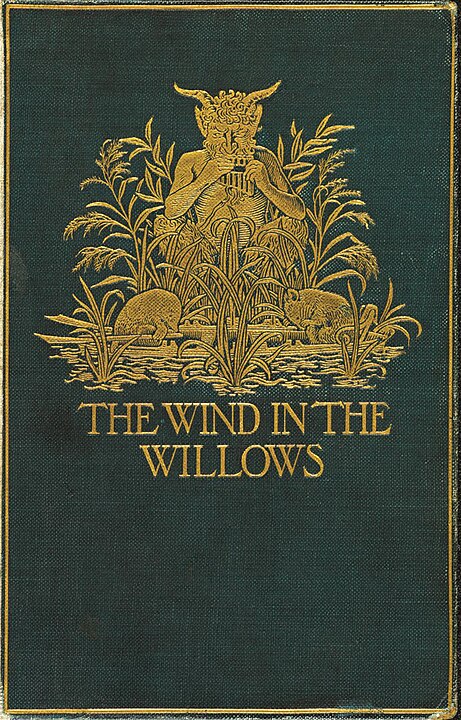
Kipling isn’t the only author to write books for his child. The Wind in the Willows written by British novelist Kenneth Grahame is another example. This is a bedtime story that Grahame made up for his only son, Alastair, nicknamed mouse. The child was born premature, blind in one eye, and plagued by health issues. Grahame also wrote stories about Toad, Mole, Ratty and Badger in letters to Alastair from his boating trips.
The book wasn’t a success when it was first published in 1908, but now, it’s a classic. I read it recently on Kindle and fell in love with the nutty Toad, the friendly Badger and the travels and travails of Mole and Ratty. This is a more modern tale with cars, palatial homes, touching upon the themes of luxury, brotherhood, unity, exploration, foolishness and accepting diversity and habits in all ways.
Little Red Riding Hood
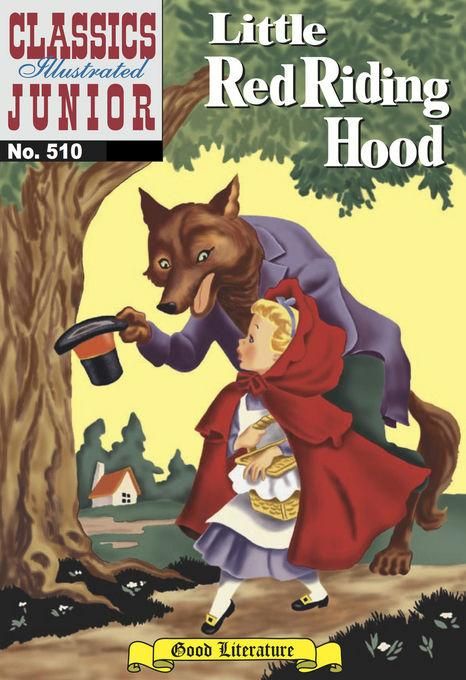

Well, I am sure that you all know the story of Little Red Riding Hood. Dated to pre-17th century, this European fairy tale is about a young girl and a sly wolf. The two most well-known versions of the folk tale were written by Charles Perrault and the Brothers Grimm.
This story highlights the need for listening to the advice given by well-wishers and parents, be on the lookout when approached by strangers and also remain alert when sensing danger. Many versions have come out in the form of books, movies, TV series and there is also a Broadway musical.
Books on my bucket list
There are many inspirational books that help us fall in love with wildlife:
1. Winnie-the-Pooh (Winnie-the-Pooh #1) by A.A. Milne
2. Animal Farm by George Orwell
3. Alice in Wonderland Down the Rabbit Hole by Lewis Carroll
4. Born Free: A Lioness of Two Worlds (Story of Elsa, #1) by Joy Adamson
5. The Zookeeper’s Wife by Diane Ackerman
6. A Lion Called Christian: The True Story of the Remarkable Bond Between Two Friends and a Lion by Anthony Bourke
7. Homer’s Odyssey by Gwen Cooper
8. When Elephants Weep: The Emotional Lives of Animals by Jeffrey Moussaieff Masson
How books on wildlife connect us deeply to our planet
My love for the wild is fairly new. I don’t know how it began, but I recall how I began to respect animals and their silent lives away from noisy human habitats and habits.
In 2016, I embarked on a trip to the Kaziranga National Park, Assam, and did an elephant safari to see the one-horned rhino. I saw the painful wounds on the elephant’s back and head, the cry of a baby being tamed, the gentle nod of their heads when I called their names and even tears in the eyes of one elephant. I was moved, but not touched to the heart. Like all freaks, I shared the safari pictures on social media and I got so much backlash that I deleted the posts.
Then, it hit me that other life forms have as much right to be on the planet as humans. After all, they have inhabited the planet far longer than humans.
Since then, I have refused to do elephant safaris in Jim Corbett National Park and camel safari in Jaisalmer.
As a journalist, I did do stories on people who have been involved with animals in some ways: a retired Colonel working in Kamdhenu Gaushala, Gurugram, with stray and sick cows; animal activist Belinda Wright and famous wildlife documentary makers, the Bedi brothers—Naresh and Rajesh. But that was more of a people perspective and their work, not on the animal side of it.
The trolling for elephant safari video set me rolling and I started to think about wildlife in a serious manner. Books and documentaries written by experts and observers are the best educational tools we have. When we learn about animals through creative ways, we begin to understand their world and, hopefully, help in putting a stop to the rampant plundering and destruction.
Among the most common problems related to wildlife are poaching for economic reasons and killing for meat by villagers living close to the forest.
Wildlife books make us mindful of our surroundings They help us think about things we would not normally think of.
Books show us the importance of habitat conservation.
They highlight the role played by animals in maintaining the ecological balance, their contribution to the environment, the unique position they occupy in the ecosystem.
Do you like reading books related to animals? Do share your thoughts with us in the comments section.
This post is part of the Bookish League blog hop hosted by Bohemian Bibliophile

 Queen of Treasures
Love your bucket list. Winnie the Pooh never ceases to fascinate me.
LikeLiked by 1 person
And I haven’t read it, have to begin now!
LikeLike
Thanks for sharing this listicle of wildlife books, Ambika. The Wind in the Willows written by Kenneth Grahame is one that I find interesting. Animal Farm lies on my bookshelf somewhere, so this is a reminder for me to pick it up sometime soon. This book “When Elephants Weep: The Emotional Lives of Animals” appeals to me, I am noting it down for my TBR list.
LikeLiked by 1 person
The Wind in the Willows is a delightful read. I hope you enjoy it and it’s easy reading as well.
LikeLike
You made me nostalgic with the mention of Panchtantra *sigh*
LikeLike
I think books on wildlife and animal’s imaginary lives making them stories for children is a very nice way to teach the next generation about mother earth and how to nurture and protect mother earth instead of showing cruelty. I also learned this way by watching cartoons on TV.
LikeLiked by 1 person
Oh, gosh. What a unique topic to speak about! I love this post! Gosh, it reminds me of the times school when we read all these books and the train trips that are often filled with Twinkle and Panchatantra that was often sold in stalls in the station.
LikeLiked by 1 person
I remember watching an animated version of “The Wind In the Willow” on Doordarshan and being enthralled by it.
Apart from the Jungle book, Rudyard Kipling’s “Riki Tiki Tavi” used to be a favourite while growing up
LikeLiked by 1 person
There was an animated one for wind in the Willows..wow! Let me search for that one on YouTube
LikeLiked by 1 person
I remember reading Winnie the Pooh, Animal Farm and Alice in Wonderland years ago. I should reread them to refresh my memories. Reading books about the animals in the wild helps us know the conflict between the wild and humans and how to resolve it.
LikeLike
An informative post written in time for the National Wildlife Week. Your mention of The Jungle Book takes me back to my days in Class eight in an ICSE convent. We studied a chapter about Akela the lone wolf.
Animal Farm is more of a political allegory than a book about animals and it’s not one of my favourites. I would add The Horse Whisperer by Nicholas Evans to this list. I read the book in the early 2000s. Maybe even add ‘Charlotte’s Web’ although I have not read it.
LikeLiked by 1 person
good recommendations, adding those to my list.
LikeLike
Absolutely thrilled to read this post. Thanks for sharing the beautiful book covers too. I’m on a diet of books for children and am saving some from your list.
LikeLiked by 1 person
Interesting post. Frankly, I don’t read animal kingdom kinds of books anymore. So I haven’t read any of these. I used to read Champak as a kid. Not sure which copy you have but I bought an illustrated hardcover of Panchtantra for my son, and I really disliked those stories. I thought they were mean and violent, totally unsuitable for children. :(
LikeLike
Dear Ambica, The books that you mentioned here as listicle are the one which I read in my childhood days and enjoyed every bit of it. I used to dream about these stories and Little Red riding hood is one of my favorite. How can one forget Mowgli… this little boy holds a special place in my heart and I just love him. Used to read and watch the cartoons of Mowgli with so much interest in my childhood. Panchatrantra used to be part of our English text books section and so I remained close to animal kingdom through books since childhood. I wish my son too develop same interest as mine with the animal kingdom books.
LikeLiked by 1 person
Maybe he will read once he sees the series and movies 😊
LikeLike
Ambica, your post grew on me. I loved looking at the cover illustrations/arts and reading about the back stories. Found your list very interesting including some book suggestions in the comments.
You said it “Books and documentaries written by experts and observers are the best educational tools we have. When we learn about animals through creative ways, we begin to understand their world and, hopefully, help in putting a stop to the rampant plundering and destruction.“
Thank you for bringing awareness towards animal rights and wildlife preservation.
LikeLiked by 1 person
Beautiful post, Ambica! Jakarta and Panchatantra already did the job. I didn’t have to read any more books on animals. Good buscket list you have there though!
LikeLiked by 1 person
So many of these books are childhood favourites. Most of them offer deep wisdom which is as pertinent for adults as it is for children. I have never specifically sought out books on wildlife but perhaps I should.
LikeLiked by 1 person
This post has brought back so many nostalgic memories for me! I loved The Jungle Book and series like the Panchtantra. I also fondly remember this book called ‘Kunnu the Cub’ about a tiger cub, kind of like Black Beauty but with a tiger. I love reading books about wildlife and animals, although I haven’t read one in a while now. Thanks for the recommendations!
LikeLiked by 1 person
I haven’t read Kunnu the cub but adding that to my wish list now!
LikeLiked by 1 person
This is such a nostalgic post, the first part on The Jungle Book brings back so many memories. Surely, Mowgli was a staple for all of us growing around in the 90s!
I have not read When Elephants Weep, so taking note of that! This was indeed an amazing post!
LikeLiked by 1 person
I enjoyed reading your post. I’m not an animal person, but yes, I do agree that we must live and let live. I have read a couple of books you mentioned. Some from your bucket list I have to pick up. Thanks for the recommendation.
LikeLiked by 1 person
I’ve been a lot of Tinkle off late (a LOT of it!). And I’ve grown up reading a lot of Panchatantra. But this post is such an eye opener even otherwise. Loved your compilation on such an interesting and oft-neglected topic.
LikeLiked by 1 person
I remember Tinkle too, though I read very little of that.
LikeLike
Wonderful compilation, stories around animals and wildlife is not a genre we come across often.
LikeLike
aesop fables was the first book I read set in the animal kingdom, and my my the book is relevant till date. I have read many books from your list and it is fun.
LikeLiked by 1 person
How could I forget that one? Have to do a separate post for Aesop’s Fables.now.
LikeLike
Learnt something new today – I never knew about National Wildlife Week! You’ve rounded up a good selection of books. I too have been on that elephant safari in Kaziranga and it was quite an eye-opener. Reading is the best kind of learning.
LikeLiked by 1 person
Oh, I love them all. These are some of my favourite books :)
Ever since I came to know of Jim Corbett and the National Park(I used to live in Uttarakhand. So, his name is synonymous to every leopard or tiger story), I began searching actively for wildlife books. I picked up a couple written by Jim Corbett and they are quite fascinating. I own a coffee table book on tigers too.
LikeLiked by 2 people
I remember reading years back the reason why Rudyard Kipling wrote his book. Broke my heart then too. These reccs are great for my nieces and nephews
LikeLiked by 1 person
I too grew up on a healthy diet of Panchatantra and Jataka Tales. I recall reading Wind in the Willows too. Time for a revisit. Loved your compilation and I am going to borrow your bucket list (I have read a few though).
Thank you so much for participating in the blog hop, Ambica.
LikeLiked by 1 person