

Discover the literary and artistic legacy of Mughal Emperor Humayun through a visit to his magnificent tomb museum in Delhi. Explore the treasures of his personal library and learn about his passion for books and knowledge.
I’ve never followed the footsteps of those who lived before us but I do enjoy going to museums to see the artefacts and the beauty of civilizations revealed through archaeology and history. My visit to ‘India’s first sunken museum’ Humayun’s Tomb World Heritage Museum brought to light the artistic world of Mughals. And a bibliophile’s soul came alive.
Of course, the Mughals were master architects and lovers of arts, nature, cuisine and culture. Their monuments in India stand testimony to this.
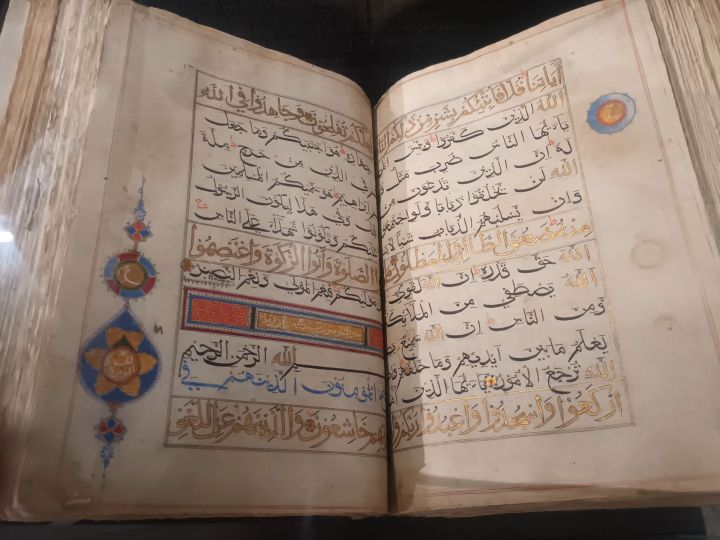
I was amazed to find something in common with the great Mughal Emperor Humayun or should I refer by his full name, Mirza Nasir-ud-Din Muhammad Humayun. IT WAS THE LOVE FOR BOOKS, TRAVEL AND TRAVELLING WITH BOOKS. HIS ENTOURAGE, EVEN DURING WAR, COMPRISED A KITABKHANA AKA LIBRARY AND A LIBRARIAN.
After my visit, I did some research on the bookworm Emperor. And the discovery amazed me.
He inherited this love for books, arts and science from his father, Babur, the founder of the Mughal Empire. His father gifted him a collection of books from Baloch mercenary, Gazi Khan’s library. Humayun’s love for books was evident throughout his reign, even during periods of exile.
Quick facts about Humayun
IN HIS SHORT LIFE OF 47 YEARS, MUGHAL EMPEROR HUMAYUN TRAVELLED 34,000 KM, FROM BORDERS OF EAST BANGLADESH, THROUGH INDIA, PAKISTAN, AFGHANISTAN, PERSIA, TO BORDERS OF EUROPE TRAVERSING 122 CITIES.
- The second ruler of the Mughal Empire, Humayun reigned over Afghanistan, Pakistan, and the northeastern part of India from 1530 to 1540 and 1555 to 1556.
- In 1530, he succeeded his father, Babur, as king of India, with the lands of Kabul and Lahore going to his half-brother Kamran Mirza. Humayun had two main competitors: Sultan Bahadur of the East and Sher Shah Suri.
- Six months after his succession, Humayun laid siege to the fort of Kalinjar in Bundelkhand, was victorious over the Afghans at Dahua, and defeated Sultan Mahmud Lodhi from Jaunpur and Bahadur Shah. However, this victory was short-lived.
- In 1555, the year before his death, he took refuge with Persia’s Safavid monarch, who aided him in reclaiming Delhi.
In 1530, the 13-year-old warrior carried a library with him during the expeditions to Bengal and Gujarat. After being defeated by Sher Shah, he camped at Cambay and had several books and a librarian in the entourage. Nizam, father of Lala Beg or Baz Bahadur was the king’s librarian. On a fateful night, a group of Koli tribesmen attacked the camp and the emperor lost many of his rare books, including the History of Tamerlaine or Timur-Nama, translated by Mulla Sultan All and illustrated by Ustad Bihzad.
He lamented the loss of books during the many battles he was part of. In fact, Kavita Singh, professor of art history at the School of Arts and Aesthetics, Jawaharlal Nehru University, notes in an article in Scroll, “On an expedition in Gujarat his camp was plundered by Bhils and some eminent nobles were killed. While mourning them, Humayun also rued the loss of a number of books, naming the most precious manuscripts one by one.
“Later, in a fierce battle with his brother Kamran, Humayun was severely wounded but most painful was the loss of his entire library that had been stored in leather boxes that the enemy had seized. A few days later in another skirmish Humayun emerged victorious – and recovered the entire library that he had lost. There was feasting in his camp that night.
“On another occasion when his camp was looted, Humayun anxiously asked after his library. When he was told it was unharmed, he said: “God be praised that things that cannot be replaced are safe! As for other things, they are a small matter.”
During his exile in Persia, the monarch was influenced by the literary and artistic activities of Shah Tahmaspa’s court. According to historians, “he wrote a few volumes on the nature of elements and loved to study geography and astronomy”. Literature and poetry were among his favourite subjects too.
Persian historian Ferishta wrote that the emperor built seven halls, naming them after the seven planets. In the Saturn and Jupiter halls, he would receive men of letters such as Khwandamlr, the historian and ex-librarian of Hirat; Jauhar, the reputed author; Admiral Sidi Ali Bais, the Turkish scholar, poet and astronomer.
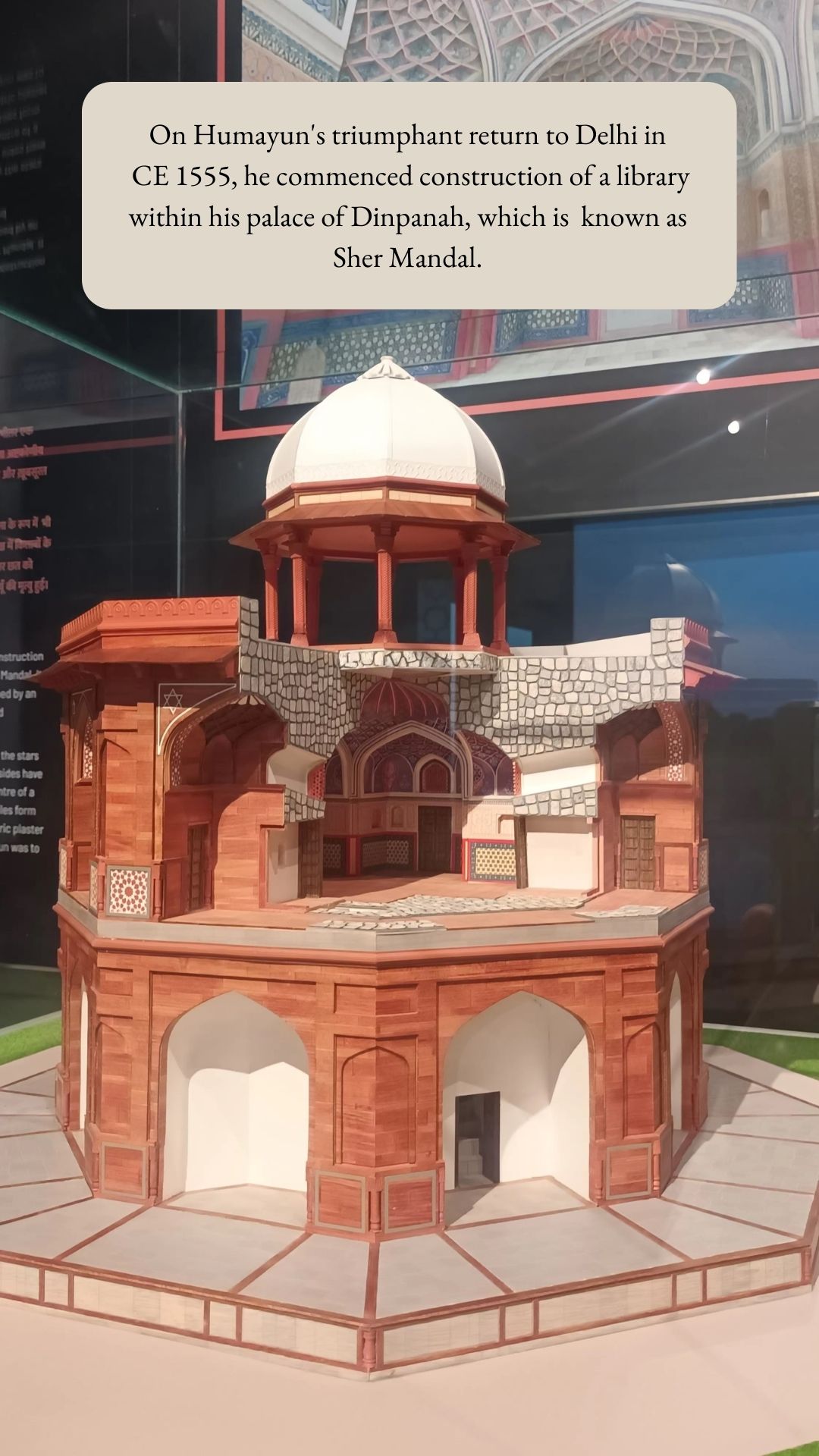
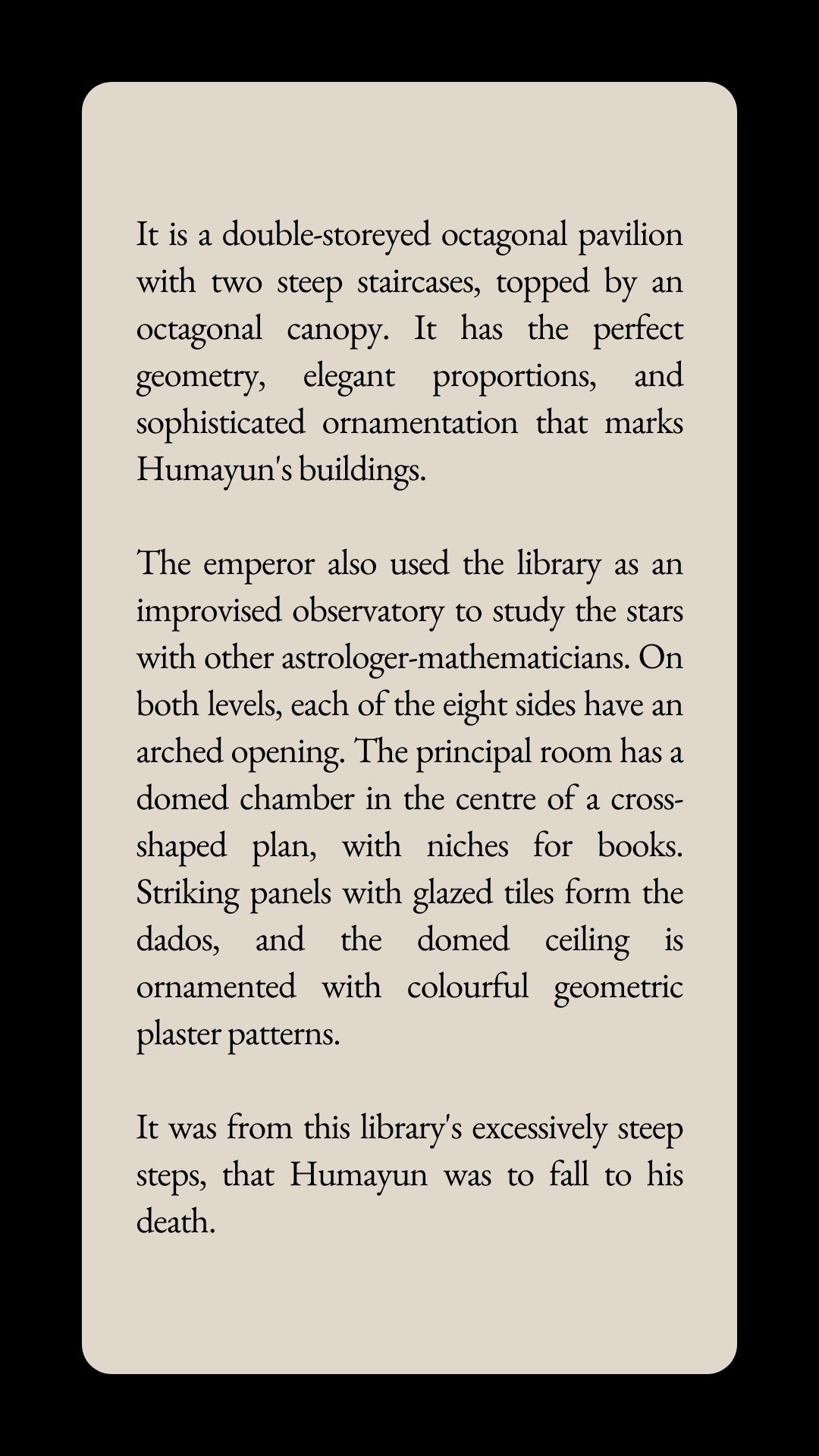
Humayun reclaimed the throne of Delhi after getting military aid from the Shah of Persia. Arriving in Delhi, his love for libraries so strong, he converted the pleasure palace in Purana Qila or Old Fort into a library in 1555. Named Sher Mandal, this two-storied octagonal granite and red sandstone building was built by Sher Shah in 1541. What seemed to be fated, it is from the steep steps of this library that the emperor fell to his death at the age of 47. He passed away at sunset on January 26, 1556.
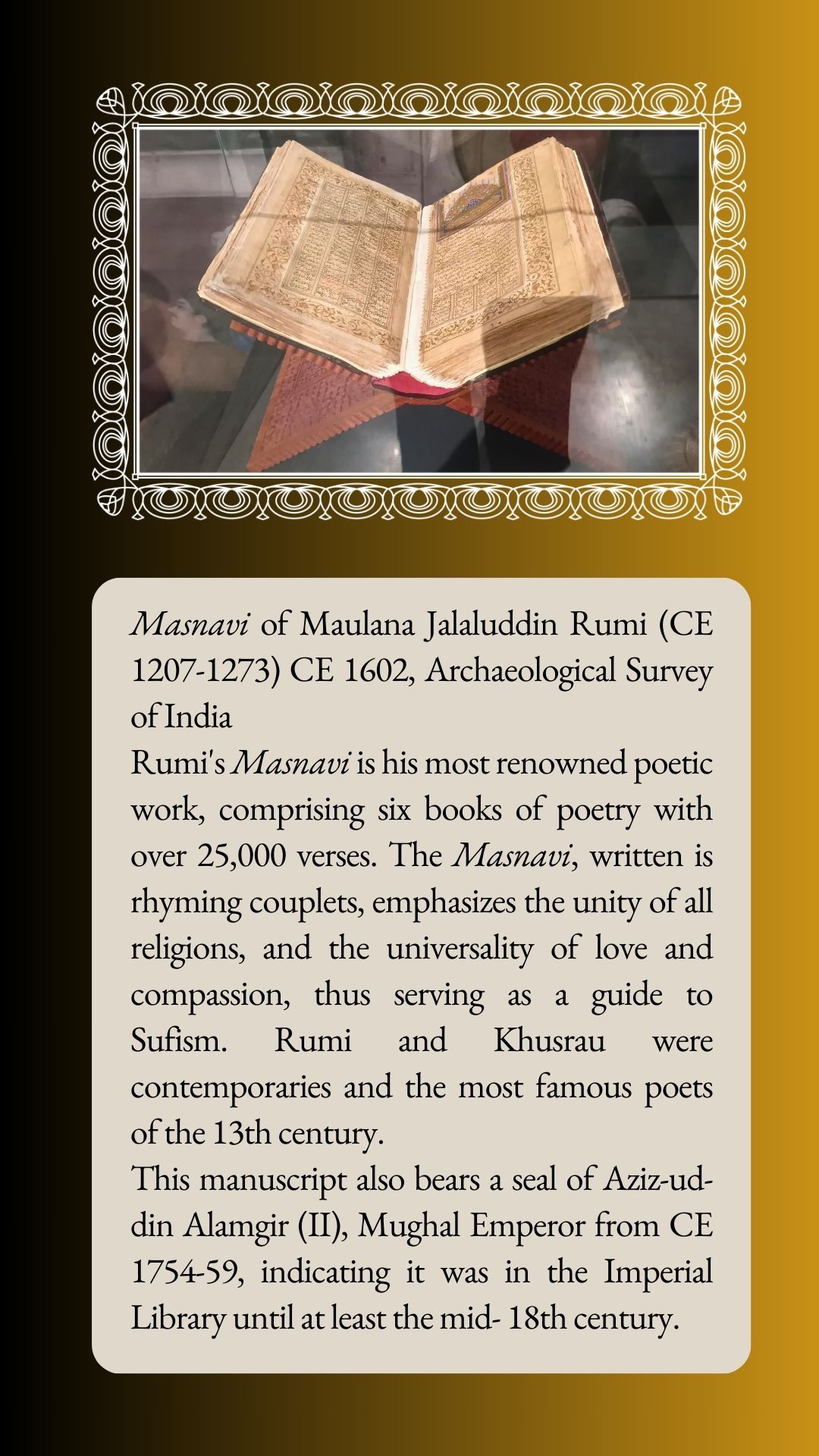
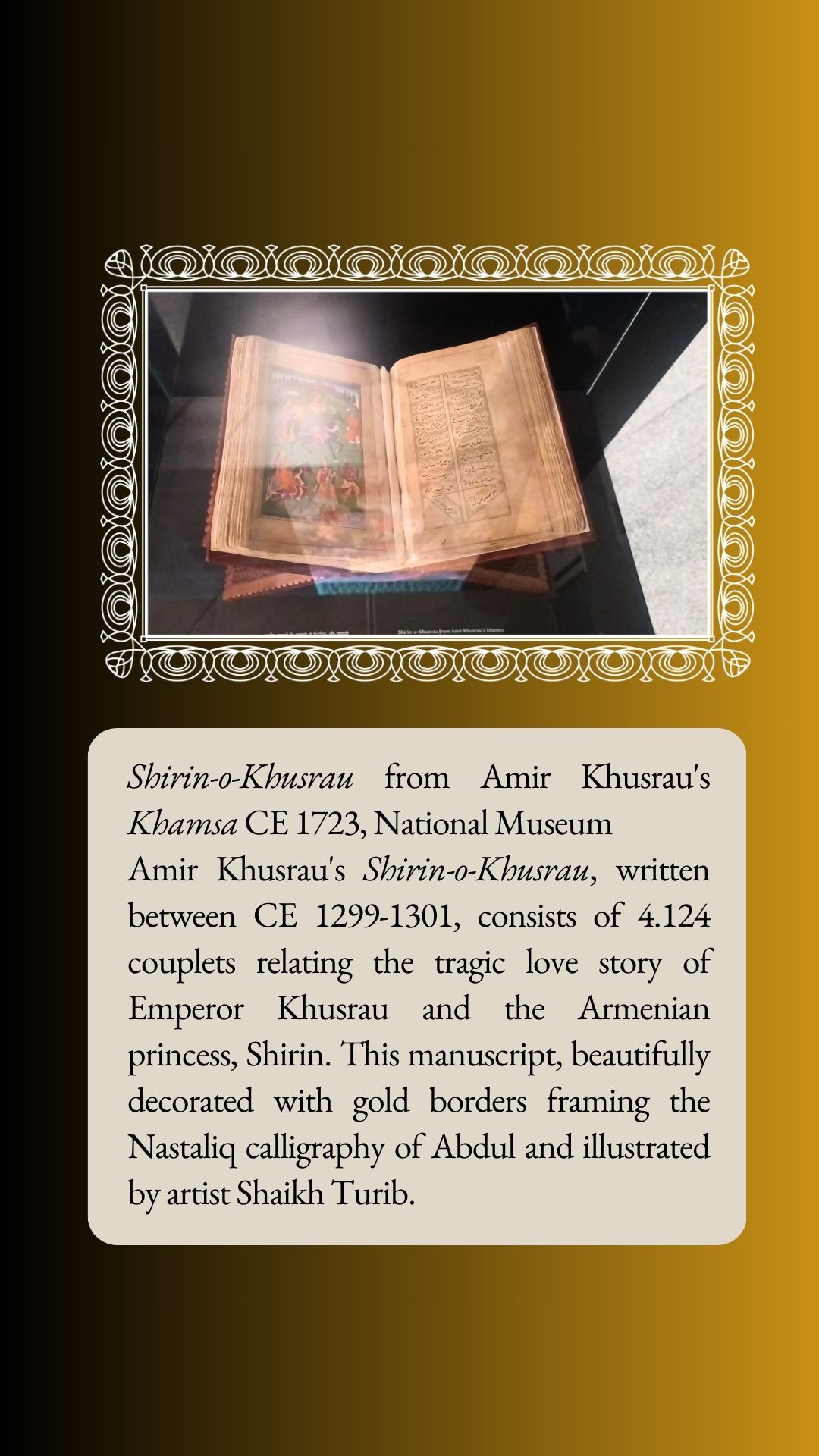
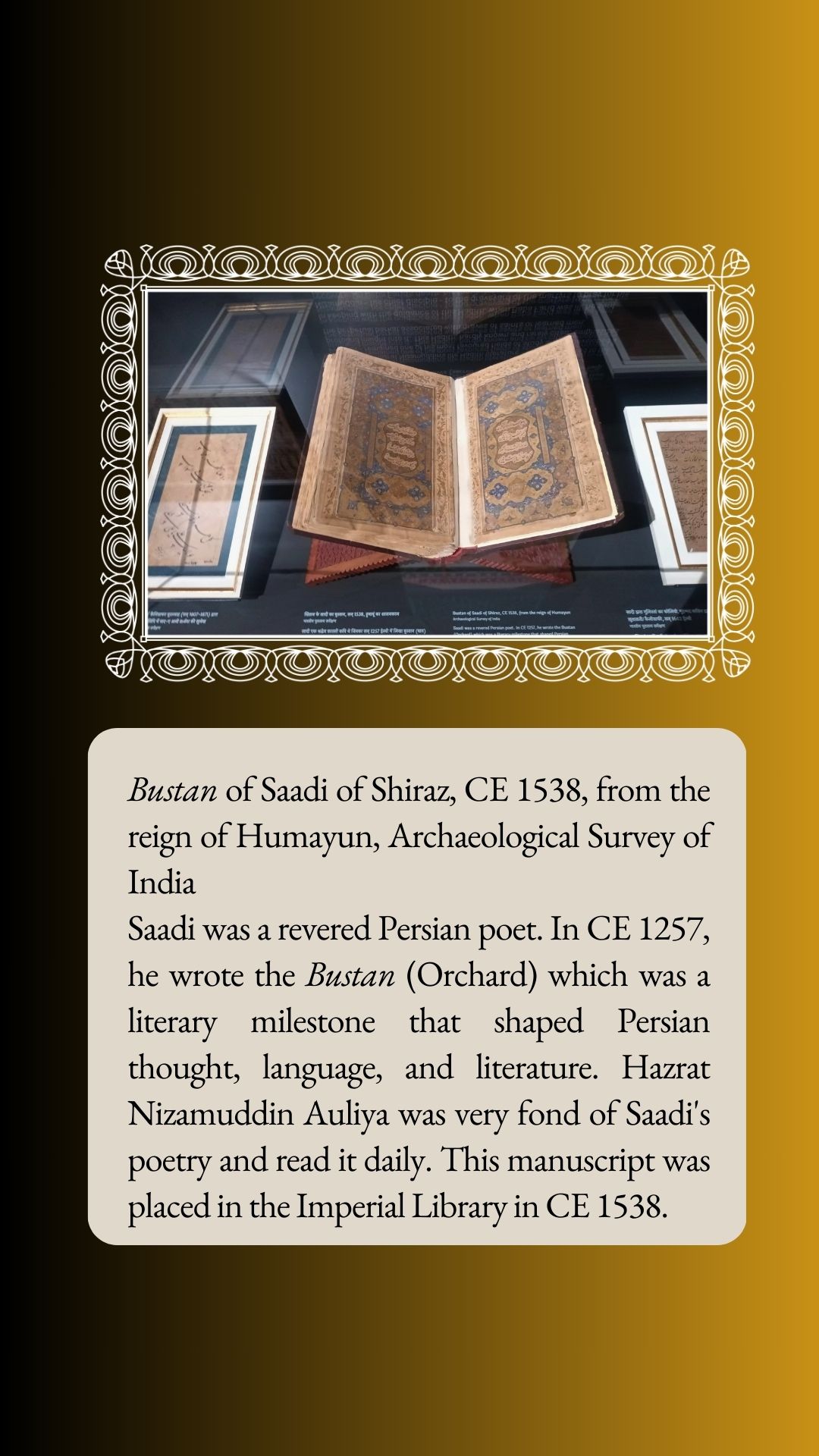
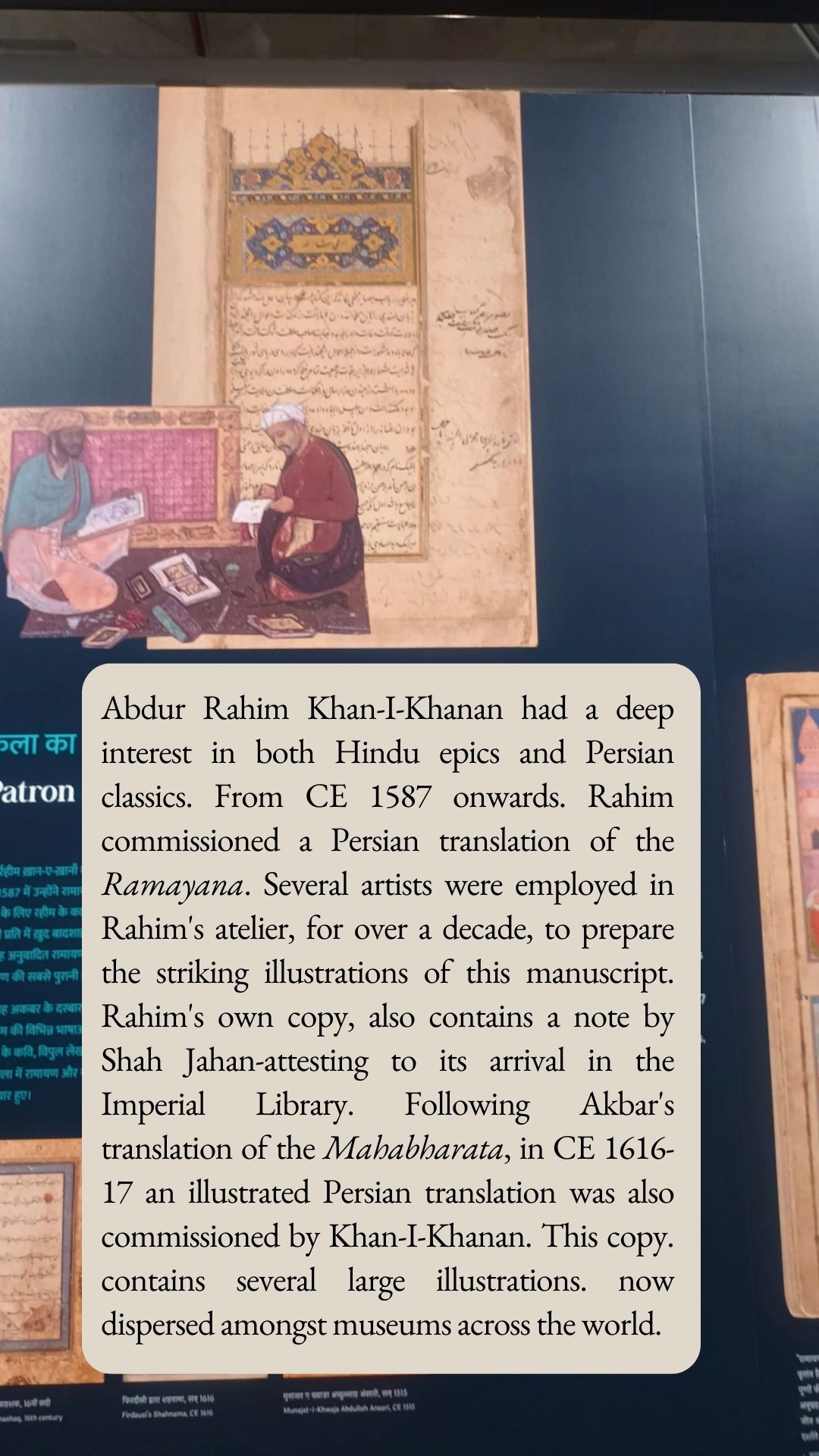
There are couplets and works of famous Persian poets such as Rumi, Khusrau, Saadi and Rahim as well, along with armours and other artefacts also in the gallery dedicated to Mughal era. The beautifully illustrated books were part of the Mughal Imperial Library. Magnificent works of art, books during the Mughal era were probably precursors to the magazines of the 21st century.
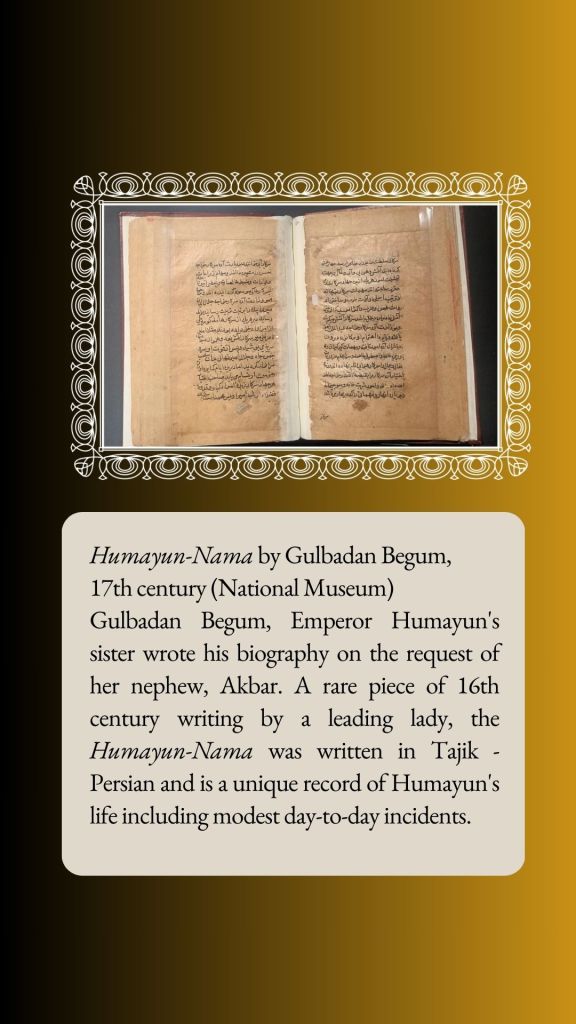
Among the many books of poetry, farmans and letters in the museum, one book that caught my eye was Humayun-Nama by Gulbadan Begum, Humayun’s sister. She wrote his biography at the request of her nephew, Akbar. A rare piece of 16th century writing by a leading lady, the Humayun-Nama was written in Tajik-Persian and is a unique record of Humayun’s life including modest day-to-day incidents. To see a book written by a woman from that era, it was a fantastic feeling.
Humayun’s Khana-i-Tilism in Agra also housed a library in the upper room. It had a prayer carpet (jai nimag), books, gilded pen cases (qalamdan), portfolios (Juzdan), picture books and 19 beautiful specimens of calligraphy.
While I have been to both the Old Fort and Agra, I really need to go again to experience the monuments from this perspective. Writing and painting were deeply appreciated by the Mughal emperors. The books beautifully painted and designed took me to the times where colour and words melted into each other. It struck me how magazines and modern illustrative works have been inspired by these artists and authors, who wrote painstakingly with inks and preciously sourced paper in those days. Each book, a precious piece of art, a treasure that has given us an insight into Mughal times.
The era of court scribes and book records makes me realise the larger vision of the Mughal emperors. They kept their heritage alive, much like the Egyptian pharaohs.
I look forward to knowing your thoughts on legacies and books that make us think.
Facts about Humayun’s Tomb Museum
Turning a tunnel into a museum, the Aga Khan Trust for Culture in association with Archaeological Survey of India has created a magnificent landmark in Delhi.
With 2D and 3D viewing experiences of Nizamuddin’s iconic landmarks such as Humayun’s Tomb and its adjacent heritage buildings, this is a museum for Gen Z!
Colorful panels and easy to understand infographics make history fun.
An avid star gazer, Humayun encouraged astronomy and astrology, as you will see from the orbs and the brass sculptures where the emperor is shown wearing clothes to match the colour of the day defined by the planet ruling the day.
He believed in the power of the great spirit and welcomed sufi saints and faqirs.
The museum has replicas of the famous monuments in the Nizamuddin vicinity, including the Dargah of revered saint Nizamuddin Auliya.
You even get an overview of ancient Iran, Persian arts and more from the region.
museum is open from Tuesday to Sunday, 11am to 4pm, ticket: INR 50 for Indians, INR 200 for foreigners.
The underground museum is connected to Sunder Nursery, but you need to buy the tickets for the nursery separately at the ticket counter.
Videos aren’t allowed, still photographs without flash are allowed.
You can watch the reels as well.
This post is a part of Blogchatter Half Marathon 2024. Read more:
- Aspiring Writer’s Guide: Mastering the Art of Content Creation
- Kaziranga: A One-Horned Rhino Sanctuary in Assam
- Khajuraho’s Temples: The Erotic & The Divine
This post is part of #TBRChallenge by Blogchatter (August, Bookish Trivia)

 Queen of Treasures
I admire your passion to explore the unknown. Like Robert Frost, you tread the road less travelled. Humayun’s Tomb Museum seems like a must visit.I never knew Babur and Humayun were book readers. Thanks for enlightening me. However their love for books and music on one side, the plunder and destruction of our ancient temples and scriptures was on the flip side. Humayun feasting on the books being saved is an irony when thousands were killed on the battlefield.
LikeLike
Harjeet, Humayun loved books and valued learning. In fact, all Indian scriptures were translated into Persian, meticulously illustrated during the Mughal era. And Akbar was among the most inclusive kings. If dig deep into our constitution, in fact,the caste system has been a bane of so called poor/Lower caste people. They are ill treated even today within the same religion. And that’s why Dr Ambedkar designed a constitution with equality for all and multiple checks and balances.
LikeLike
The records and libraries were destroyed by the British as every invader needs a power hand! History shows that human life is more about spread rather than preserve..
LikeLike