
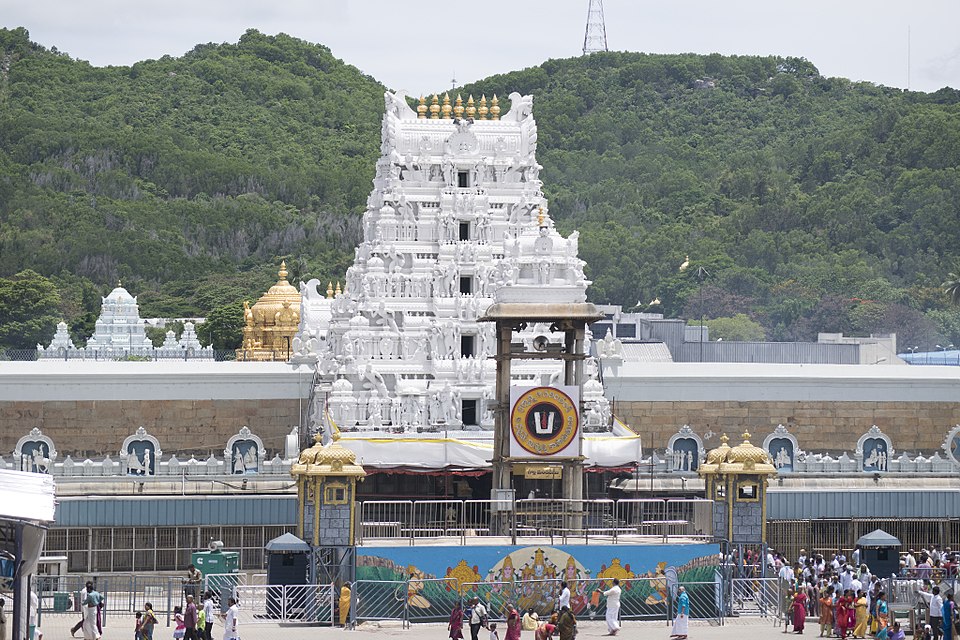
From the fervent crowds of Tirupati, steeped in ancient legends and the aroma of the iconic laddu, to the serene, wind-whispering corridors of Srikalahasti, a short journey unveils two distinct yet spiritual experiences.
- History Etched in Stone: The Tirupati Temple Laddu Prasadam
- The Enduring Legend of Tirupati
- The Sacred Tirumala Hills: A Symbolic Landscape
- Journeying to the Mystical Srikalahasti
- Inside the Ancient Walls
- The Heartwarming Legend of Srikalahasti
- Moments Missed, Yet Cherished
- Fascinating Facts About Srikalahasti Temple:
- Plan Your Visit: Best Time and How to Reach
Long before the 2024 headlines surrounding the Tirupati laddu, my connection to this iconic prasad dates back to 2001, a time when its sanctity was unquestioned. The controversy was sparked by Andhra Pradesh Chief Minister Chandrababu Naidu on September 18, 2024. His allegations of substandard ingredients and even animal fat being used in the sacred laddu by his predecessor, YS Jagan Mohan Reddy, led to public outrage. These allegations were substantiated by a National Dairy Development Board lab report, and cast a shadow over this beloved offering. The arrest of four individuals in connection with this further amplified the concern.
My first pilgrimage to Tirupati occurred nearly 24 years ago, during a brief work stint in Chennai. Driven by a naive belief in a “magic remedy” to absolve ancestral sins, my siblings and I hired a taxi for an early morning journey. Our itinerary included both the famed Tirupati temple and the Srikalahasti temple, a mere hour’s drive away.
Armed with nothing but hearsay, we three novices embarked on this pilgrimage, seeking freedom from karmic debts and patterns. Little did we know then that the true understanding of karma and its repercussions would unfold over the decades that followed. As I’ve come to realize, prayers don’t always deliver the answers we seek, but rather the insights the divine intends for us to interpret.
Upon reaching the bustling temple premises, we were immediately confronted by serpentine queues. A nearby ticket window offered a solution: tiered pricing for faster entry. For INR 1,500, my siblings and I secured a quicker passage to the shrine, reaching the inner sanctum within an hour. However, as is often the case with renowned temples, our time inside was fleeting. We were swept along with the throng, barely afforded a moment to truly absorb the architecture or offer a prolonged prayer. The much-anticipated reward were three of the legendary Tirupati laddus, each so generously sized that a single one could easily serve a family of five.
We explored the temple grounds, witnessing the poignant practice of devotees donating their hair. Exhausted from the early start and rutted roads, we found a spot on the floor and succumbed to sleep, for another significant pilgrimage awaited us.
My second visit to the sacred hills occurred in 2018, this time under the guise of a hotel review. In retrospect, my focus was less on the spiritual and more on the professional. The imposing queues and the sheer volume of the crowd led me to offer a respectful bow from the periphery, enjoy a quick meal, and promptly depart.
History Etched in Stone: The Tirupati Temple Laddu Prasadam
Given these brief and somewhat inattentive visits, a report from The Hindu detailing ancient inscriptions on the walls of the Lord Venkateswara temple regarding the making of the laddu prasadam made me feel a pang of regret. I had missed an opportunity to connect with history. The temples of Tirumala and Tirupati house approximately 1,150 inscriptions, with 700 adorning the walls of the Lord Venkateswara temple alone.
These ancient writings, dating from the 8th to the 18th centuries, are etched in Sanskrit, Tamil, Telugu, and Kannada. They meticulously detail the measures taken to ensure the proper packaging, transportation, and handling of ghee, a vital ingredient for the laddu and other temple rituals. One inscription, dating back to 1019 CE, specifically mentions King Rajendra Chola I’s efforts to maintain the purity of ghee used in temple rituals and lamps.
The tradition of offering laddus at the Tirumala temple officially began on August 2, 1715. The laddu evolved from an earlier sweet called ‘Manoharam’ and is now prepared in the temple’s dedicated kitchen, Laddu Potu, under the auspices of the Tirumala Tirupati Devasthanams (TTD).
The Enduring Legend of Tirupati
Sri Venkateswara Swamy, an avatar of Lord Vishnu, reigns supreme in Tirumala, Tirupati. A central legend narrates Lord Vishnu’s borrowing of wealth from Lord Kubera to finance his marriage to Goddess Lakshmi. Devotees believe that their generous donations contribute to repaying this divine debt, a practice expected to continue until the end of Kaliyuga.
The Sacred Tirumala Hills: A Symbolic Landscape
- Tirumala’s seven peaks are believed to represent the seven heads of Adisesha, hence the name Seshachalam.
- These seven peaks are Seshadri, Neeladri, Garudadri, Anjanadri, Vrushabhadri, Narayanadri, and Venkatadri, with the temple situated on Venkatadri, the seventh peak.
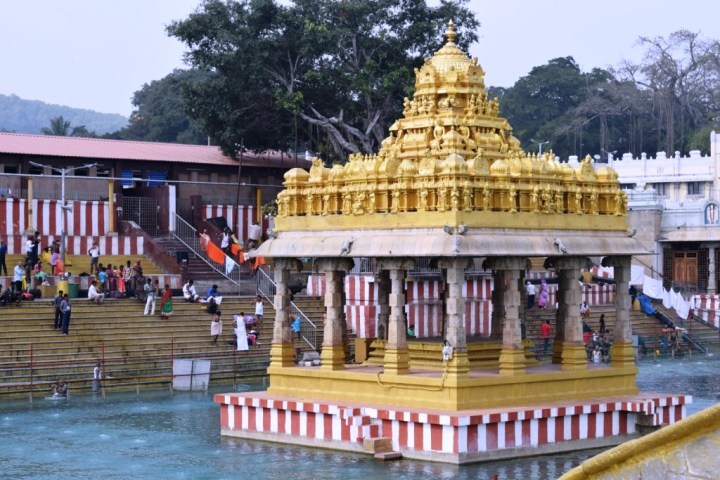
- The temple graces the southern banks of Sri Swami Pushkarini, a sacred water tank.
- The temple complex encompasses the traditional temple building along with accommodations for pilgrims.
Journeying to the Mystical Srikalahasti
A short, approximately one-hour drive from the bustling spiritual hub of Tirupati lies the serene Srikalahasti Temple, dedicated to Lord Shiva. The sacred white shivalinga in the sanctum sanctorum is believed to be Swayambhu, self-manifested. Revered as Bholenath, Lord Shiva is believed to possess the power to forgive even the most grievous transgressions.
Astrologers often recommend performing special pujas here to pacify the planetary alignment known as Kalsarpa Yoga, where all planets are positioned between Rahu and Ketu. However, as noted astrologer K.N. Rao points out in his book, Kaal Sarpa Yoga: Why Such Fright? Hindu Astrology Series (2011), this specific yoga finds no mention in ancient astrological texts.
My own motivation for visiting Srikalahasti leaned less towards seeking redemption and more towards a sense of curiosity. Parvati, worshipped here as Gnana Prasunambika Devi, shares my name – a coincidence that sparked a personal intrigue. Yet, as many believers attest, temple visits often feel like a calling from the divine itself.

Inside the Ancient Walls
The Vayulinga, symbolizing the element of wind, is a distinctive feature of this temple. Uniquely, it remains untouched even by the chief priest. A truly mesmerizing sight awaited us within the inner sanctum: the lamps flickered continuously despite the absence of any discernible air movement.
The temple walls themselves serve as historical records, bearing inscriptions that narrate the contributions of the Pallava and Chola kings to its construction. As we walked through the complex, these ancient scripts offered glimpses into the temple’s rich past. Despite a language barrier, the legends shared by the priest in his broken English proved captivating.
The Heartwarming Legend of Srikalahasti
The origins of this temple are traced back to the devotion of three unlikely creatures: Sri (a spider), Kala (a snake), and Hasti (an elephant). Each, in their own way, unknowingly worshipped the linga: the spider spun its web to protect it, the elephant cleansed it with water, and the snake adorned it with its precious gem. Pleased by their unwavering devotion, Lord Shiva granted them salvation, and thus, the temple of Srikalahasti was born.
Moments Missed, Yet Cherished
I had hoped to witness the abhishek ceremony, a sacred ritual where the utsava murti is bathed in a mixture of water, milk, camphor, and panchamrita before being adorned with fragrant sandalwood paste and vibrant flowers. Unfortunately, the constraints of time prevented this experience.
Fascinating Facts About Srikalahasti Temple:
- The entire temple is ingeniously carved out of a massive stone hill.
- It is widely believed to possess the power to alleviate even the most challenging life curses.
- Even Goddess Parvati is said to have attained wisdom and redemption within these sacred grounds.
- The temple commemorates the unwavering devotion of Kannappa, who was willing to offer his own eyes to Lord Shiva, only to have his vision miraculously restored.
- The imposing Gopuram, the main entrance tower, stands at an impressive 120 feet and was constructed by Krishnadevaraya in 1516.
- The temple actively runs a free meal programme, providing sustenance to approximately 200 devotees on a daily basis.
With our spirits feeling somewhat elevated, if not entirely absolved of ancestral burdens, we commenced our return journey to Chennai, our minds already anticipating the train ride back to Delhi.
Plan Your Visit: Best Time and How to Reach
Best Time to Visit:
- The most pleasant time to visit Tirupati and Srikalahasti is between September and March, characterized by cooler and more comfortable weather.
- Brahmotsavam, the grand annual festival in Tirupati, typically occurs in September or October, drawing massive crowds of devotees.
- It is advisable to avoid the peak summer months (April to June) due to the intense and potentially uncomfortable heat, especially when navigating long queues and temple visits.
How to Reach Tirupati:
- By Air: Tirupati Airport (TIR) offers good connectivity to major Indian cities such as Chennai, Hyderabad, and Bangalore.
- By Train: Tirupati Railway Station is a significant railway junction with frequent trains arriving from Delhi, Mumbai, Chennai, and Bangalore.
- By Road: Tirupati enjoys excellent road connectivity and can be easily reached via buses and taxis from nearby major cities like Chennai (133 km), Bangalore (250 km), and Hyderabad (558 km).
How to Reach Srikalahasti:
- By Road: Srikalahasti is conveniently located just 36 km from Tirupati, with frequent bus and taxi services available.
- By Train: Srikalahasti has its own railway station with connections to major South Indian cities.
- By Air: The closest airport is Tirupati Airport, situated approximately 25 km away.
I’m participating in #BlogchatterA2Z
You may like to read
A Morning in Kashi
Day Trip to Lumbini, Nepal
A Luxury Train To The 5 Sikh Takhts
6 Spiritual Experiences in Vrindavan
Nashik’s Sacred Sites: Trimbakeshwar, Panchavati & Ganga Aarti
A visit to Golden Temple and Jalianwala Bagh, Amritsar
Rishikesh: My First Meeting With Shiva & Ganga
A First Timer’s Guide to Varanasi
7 Shades of Pushkar & Ajmer
Drive from Delhi to Salasar in Micra
The Cultural Odyssey: Ganesha Chaturthi Trail from Pune to Ratnagiri

 Queen of Treasures
Your vivid descriptions of both temples brought back memories of my own visits. The bustling energy of Tirupati, with its sea of devotees and the sacred laddus, contrasted beautifully with the serene and mystical ambiance of Srikalahasti. I particularly appreciated how you highlighted the unique aspects of each pilgrimage, making me realize how each temple offers a distinct spiritual experience. Your writing style is engaging, and the way you intertwined personal anecdotes with historical insights made the post both informative and relatable. It’s evident that you have a deep appreciation for these sacred places, and your passion shines through. Thank you for sharing this beautiful narrative; it truly enriched my understanding of these revered sites.
LikeLiked by 1 person
Oh, it’s nice to know you have been to both the temples. Then you can visualise the places as well.
LikeLiked by 1 person