
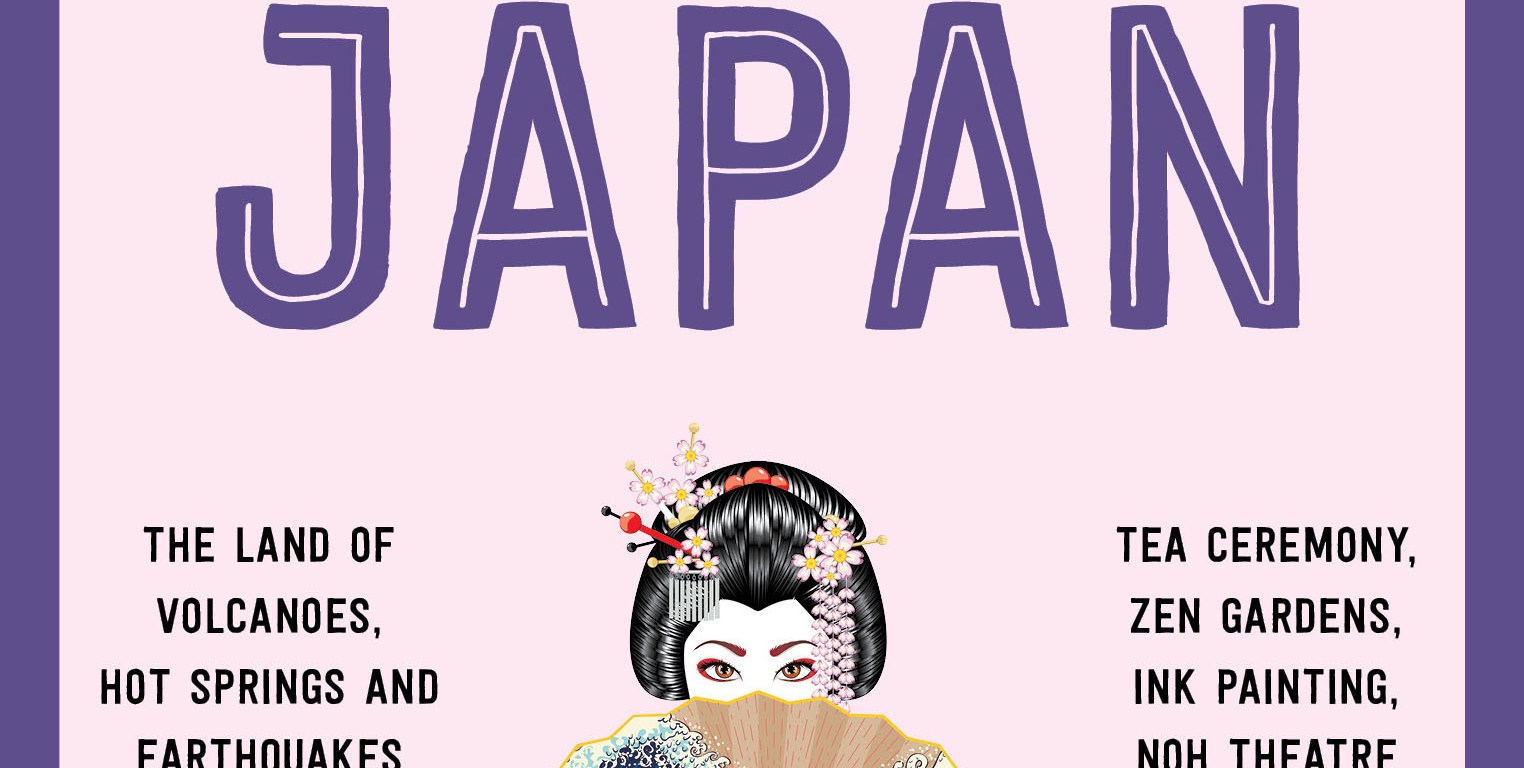
In an era when encyclopaedias are no longer on bookshelves, and clickbait headlines are floating around, ‘The Shortest History’ series by Pan Macmillan are treasures. These series give life to history, taking away the slow, boring narrative of yesteryears.
The Shortest History of Japan is a fast-paced read and likely to appeal to all readers. Japan is a trendsetting, cool nation, giving us Super Mario, manga, Doremon, Samurai, Shoguns, Zen, haikus, sushi, Ikigai, and more. The emperor remains a living link with its origins, rooted in scholarship and learning.
Like all of Earth, Japan’s history is rife with wars and multiple changes in social structure. But it has always found brave and foresighted leaders who have never given up and rebuilt it again and again, despite the turbulent passage of time.
For long, the land of the rising sun remained closed to the onslaught of the Western world. Japan’s roots lie in the Ice Age, when nature separated it from China. Though cut off from the rest of the world till the arrival of the Portuguese, Japan has been highly influenced by its neighbours China, Korea, and Russia.
The archipelago, guarded by the ocean from all sides, has fiercely protected its culture and yet remains one of the most successful nations in the world. It is a country where the oldest people live in good health, their quality of life desired by many across the globe.
Author Lesley Downer, who has spent over 40 years in and around Japan, has brought out the highs and lows of this ancient civilization, its emperors, traditions, wars, changes, shifts, and constant march with panache. It leaves us with a deep desire to catch the plane and find our way around this ancient land.
There are many interesting facts, such as the art of writing that developed from its Chinese counterpart. The love for poems is palpable; the entire nation wrote poems on just about everything. There’s always a haiku about everything.
Tracing the different eras right from creation, the social structure ladder involved emperors, samurais, shoguns, monasteries, and religion. Primarily nature worshippers, they later adopted Buddhism as the main religion.
As with everything, there is a dark side as well. The child emperors, the fighting concubines, the power-hungry shoguns, and the warrior samurais – only the rich and the famous had it all. The farmers and common people remained poor. A lot of the wealth was spent on building embellished and ornate temples, catering to the pleasures of those in power.
History has never been kind to the common man, who often doesn’t get a mention anywhere. From centuries of evolution, only a few are remembered, and the same goes for many of Japan’s emperors, shoguns, samurais, and daimyos. What is interesting, though, is that among the early rulers is a shamaness named Himika.
The book also sheds light on the more challenging aspects of Japan’s past, including the pervasive role of pleasure houses, which involved not just women but also young boys and children, highlighting a darker facet of societal life.
Alongside, the arts – including ink art, puppet theatre (Noh), poetry, literature, music, and silk clothing – flourished.
All the technological changes entered the nation when the Portuguese, the Dutch, the French, and finally the mighty British entered the country. It all began with trading and eventually became a part of their daily life.
Japan has faced natural calamities such as earthquakes and tsunamis, as much as man-made catastrophes, yet it has thrived.
Interspersed with pictures and boxes, the book paves the way to understand Japan, all in the span of 24 hours.
To sum it up in the author’s words, “…Japan’s extraordinary culture has survived the vicissitudes of the centuries. Yoshimitsu’s Golden Pavilion gleams in Kyoto, despite having being burnt down by a mad monk. Hōryūji, the world’s oldest wooden building, still stands in Nara, and Tōdaiji still houses Emperor Shōmu’s Great Buddha. Amaterasu’s shrine at Ise is still rebuilt every twenty year and visitors arrive in their thousands to pay their respects an and ask her protection…”
Book Details
Language: English
Pages: 258 pages
Price: INR 599
Buy here


Japan is a country I’d love to visit. Such a unique culture. So much history lying in land and water. Hope to read this book before I can manage the visit.
LikeLiked by 1 person
Yeah. It’s a good way to know the country.
LikeLike
A short guidebook to Japanese history and culture surely is good way to get introduced to it. Does it have any pictures?
LikeLiked by 1 person
Oh yes, black and white, but decent enough.
LikeLike
How enthralling! Well, I am limited to Ikigai and Ishiguru when it comes to literature on Japan. So, this is fascinating and you say with pictures, surely a keeper!
LikeLiked by 1 person
The only thing I love about Japan is their sushi. Haha! Here I see that there is a lot more to explore. Manga seems to have entered my house 2 years ago and people have been watching samurai movies for ages. The best thing is that they are blessed to have good leaders who rebuilt the country again and again. Something some people from our country should takes notes for.
LikeLiked by 1 person
You’ve really captured how Lesley Downer weaves everything from samurai and emperors to sushi, anime, and Ikigai into a fast, vivid read, into your review, Ambica. Thanks for bringing this book to my notice
LikeLiked by 1 person
Ooo that would be fun to read! Especially if this is a series and covers other countries!
LikeLiked by 1 person
I’ve read books on Japan and watched documentries that highlight single aspects of the country. This one sounds like a comprehensive read, worth a pickup.
LikeLiked by 1 person
I love how it captures Japan’s rich culture and turbulent history in such an engaging way. The review really makes me want to explore Japan’s unique blend of tradition and modernity, especially the deep-rooted love for poetry and the resilience shown through its many historical challenges. It feels like a quick yet thorough trip through Japan’s fascinating past.
LikeLiked by 2 people