
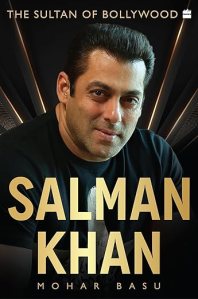
Salman Khan: The Sultan of Bollywood by Mohar Basu is a balanced portrait of superstardom, cinema, controversies, and the cultural phenomenon of Salman Khan.
- The Shot That Started It All
- Rewatching a Spy, Frame by Frame
- The Book and the Balance
- My First Salman Khan Memory
- From Prem to Phenomenon
- Stardom, Scrutiny, and Selective Amnesia
- The Leader: Saga of Firsts & Golden Heart
- Beyond the Screen
- About Mohar Basu
- From the Archives
The Shot That Started It All
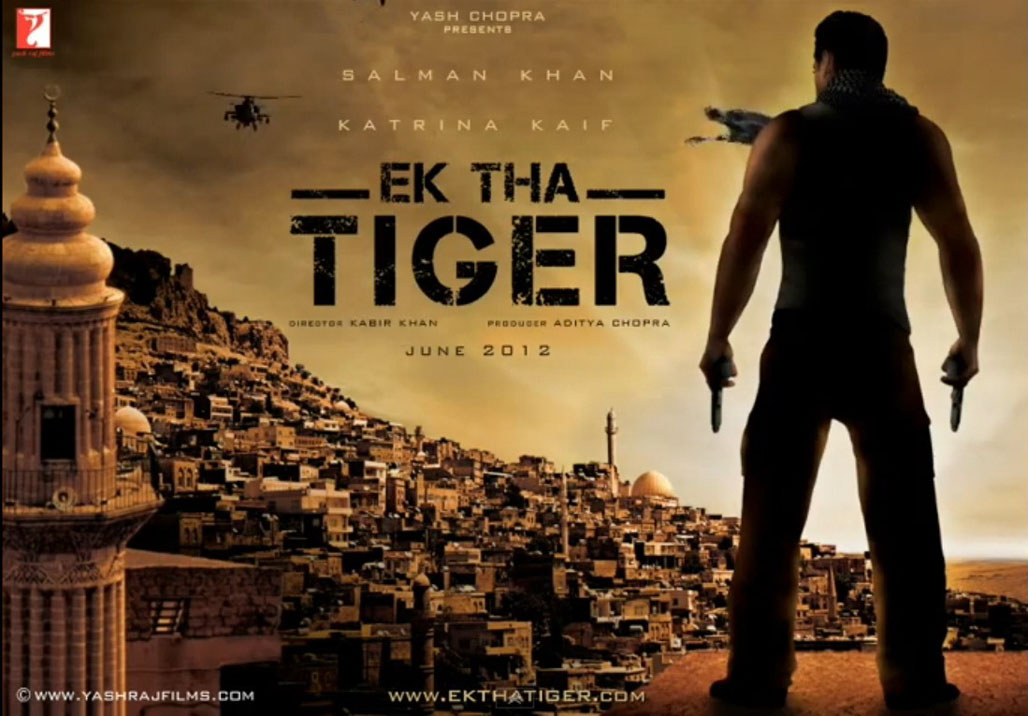
“…We wanted a location which looked fabulous and which had never been used by any other Hollywood action thriller. I read about this one location on the Turkey–Syria border (Mardin). I had seen its photographs and loved the look of these brown mud houses on a hill. Until we went, no one had ever shot there. It was really difficult to access. (During our recce) I saw the hill from a distance and realised that I’d love to see Tiger come in silhouette and stand there before my story starts. It went on to become an iconic shot.” (page 258–59)
The moment I read this, director Kabir Khan talking about Salman Khan’s iconic spy thriller Ek Tha Tiger, it triggered my travel creator instinct. I’d watched the film earlier but never through the lens of a cinematographer or an ardent filmgoer.
Rewatching a Spy, Frame by Frame
On December 27, as Salman Khan celebrated his 60th birthday, I spent that afternoon rewatching Ek Tha Tiger frame by frame, admiring the locations and camera angles, mentally ticking off the similarities with Hollywood thrillers.
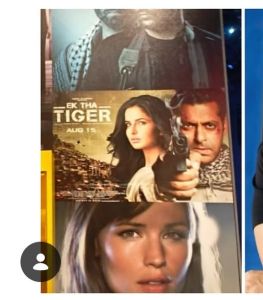
I paid attention to the cinematography, Salman and Katrina’s looks, and my feet tapped to the music and the heart-tugging song Saiyaara. After those intense three hours, I understood why Ek Tha Tiger is the only Indian spy thriller to be displayed on the Wall of Fame at the International Spy Museum in Washington, DC. I was so chuffed to read that it stands alongside my favourite Mission Impossible, legendary James Bond, and Men in Black franchises.
Salman Khan, the Tiger, is that one spy who has conquered billions of hearts with his starry, soft looks and films that focus on the goodness of the human spirit. He was ranked the 7th most handsome man in the world by People magazine (USA) in 2004.
The Book and the Balance
Going beyond the screen, journalist Mohar Basu’s book, Salman Khan: The Sultan of Bollywood, gives a balanced perspective on his superstardom. She introduces us to the ‘mass hero’, walking us through his entire 60 years, through the controversies, link-ups, downs, good parts, and loyal fandom. She highlights both the philanthropist and the box office gold through views shared by fans, journalists, theatre owners, and producers. What is missing, though, are conversations with his family and inner circle.
My First Salman Khan Memory
My introduction to Salman Khan was through a crazy fan. In 1989, Maine Pyar Kiya was wooing teens, and my hostel mate went every single day for the 3 pm show for an entire month! She didn’t even go home for the holidays, staying put in Delhi. Tickets were a difficult treasure in those days. She would buy the next day’s ticket after seeing one show and take an auto from South Ex-I to Paras Cinema, Nehru Place, the nearest one there. She would return swooning, till we had to put our hands over our ears. She put up his posters in the room, bought the music cassette, and played the songs on loop as she did her classwork. New cassettes were expensive then.
For me, that was one crazy girl. I’ve never been crazy about an actor enough to fight for first-day, first-show tickets. And like any other youngster from the 1970s, I primarily watched black-and-white films on Doordarshan, weekend delights only.
Sometimes, my mother took me to the theatre. Those were the days of single screens and the standard four shows: 12 pm, 3 pm, 6 pm, and 9 pm. I didn’t have any favourite actors; my mother liked Amitabh Bachchan.
From Prem to Phenomenon
I wonder how this hostel mate feels today about the legendary 60-year-old actor. Needless to say, after all that swooning, I had to go and see the film. There’s not much to say from a 19-year-old’s perspective. In the India of yore, where dating was frowned upon and familial consent was needed in all matters, Prem, the sanskari lover, was the dream boy. Friendship caps with “No Sorry, No Thank You” became a cult statement.
Basu was born two years after Maine Pyar Kiya was released but includes interviews with fans whose hearts throbbed for Prem. However, from a supporting hero in Biwi Ho Toh Aisi to becoming a leading man wasn’t a piece of cake, despite Salman’s father being the famed script writer, Salim Khan.
Salman wasn’t convinced that he wanted to star in a Sooraj Barjatya film, as Rajshri Productions was known for its “holier-than-thou” scripts. And when he was convinced, Barjatya wasn’t ready to sign him because he needed a fresh face.
Stardom, Scrutiny, and Selective Amnesia
For a casual filmgoer like me, the book is an engrossing read. From discovering cinema behind the scenes to the facets that make up the world of Salman Khan and his stardom, I’m genuinely amazed at how the ‘superstar’ thrives in this risky, frisky world, where characters are more reel than real.
People have questioned his brand of films and his ability to act, yet they adore him for who he is. As Indians, we frown when stories related to the blackbuck killing case, abuse allegations, and the hit-and-run accident where a pavement dweller lost his life surface, but we still defend him when he looks at us from the silver screen. Then, we only see a Bajrangi Bhaijaan, the good Samaritan.
We forget because Salman comes with little pretence. He has upset the paparazzi and media time and again. But even through this, his love for his family, his humble 1BHK home at Galaxy Apartments, Bandstand, Bandra West, Mumbai, and his goodness of heart have stood him in good stead. The man is human, like all of us, with many layers.
The Leader: Saga of Firsts & Golden Heart
The public spotlight can be both a boon and a bane, yet Salman Khan has navigated his life gracefully enough. He’s led with many firsts, such as being the actor with the most films in the INR 100 crore club, bringing Ed Hardy to India, inspiring young people to get fit, donating his plasma for cancer patients and more. Along the way, he’s explored genre after genre, from romance and comedy to action, socially conscious roles, and cameos.
I guess it’s the philosophy of selling dreams, resulting in goodness in some form or another, that has made him one of the most endearing stars in India. Not to miss the fact that he’s made inroads into China, Middle East and almost to all the locations worldwide where NRIs swoon over him.
What makes him even more endearing, besides being a bankable star, is what Govinda says: “The only time Salman is on time is when someone needs help.”
In Salman’s own words: “My dad is a Muslim, my mother is a Hindu, and I call myself insaan (human).” (page 293) This is the vision behind his NGO, Being Human, through which he continues his philanthropic work, helping people from the film industry and through collaborations with other NGOs.
What was noteworthy for me was that Salman Khan doesn’t feel threatened by sharing screen space with other stars, whether Sanjay Dutt in Saajan or Shah Rukh Khan in Karan Arjun, or by doing socially conscious films such as Phir Milenge, where he played a small role as a man living with HIV, or backing children-centric films like Chillar Party.
I also enjoyed the selection of photographs in the book, all taken by Pradeep Bandekar.
Personally, besides the Tiger franchises, I’ve voted for Salman Khan in Tere Naam. I cried for a long time for the man institutionalised at the end, losing everything. For me, that was his best performance ever. For Salman, it was a message that youth shouldn’t indulge in obsessive acts, as the repercussions could be irreversible.
Beyond the Screen
I’ve always looked at Bollywood as comfort entertainment because it is Hindi cinema, my native language. But this book has given me a deeper insight into what makes cinema tick: the good, the bad, the ugly, the lost, the forgotten, the dream, the risks. Above all, it is art with the capacity to change people for the better.
Like Basu, I too wonder if socially responsible stars will reclaim their space on the silver screen in the coming times, as OTT demands swiftness, and heroes play alpha males and brutal villains, letting commercials rule their choices.
And I absolutely refuse to call one of the handsomest 60-year-olds on the planet bhai! As we wait for the Battle of Galwan to hit the screens, I hope you will pick up this book as a token of appreciation for the smiles Salman Khan has brought to the world.
About Mohar Basu
Mohar Basu is the chief correspondent (entertainment) at Mid-day. She has previously worked as a film critic at Koimoi.com, and later reviewed movies for The Times of India. In 2024, she was recognized by the Indian Achiever’s Club in their ’40 under 40′ list for her piece on the toxic nature of the Indian paparazzi and the rising tide of vitriol on social media. She has previously authored Shah Rukh Khan, published by HarperCollins India in 2024.
Book Details
Publisher: HarperCollins India
Language: English
Price: INR 599
—Ambica Gulati is a journalist and editor writing on travel, culture, world affairs and the unseen.
From the Archives
If you enjoyed this review, you may like to continue the journey
- Book Review: The Man Who Became Cinema: Dilip Kumar by Ashok Chopra
- Manoj Bajpayee: The Definitive Biography by Piyush Pandey
- Folklore Files: DESI Supernatural Thrillers
- See Gulzar’s 2 by 2: Modern Twist on Comedy of Errors
- Manav Kaul’s ‘Prem Kabootar’: Reliving Teenage Crushes

This review is powered by Blogchatter Book Review Program.
This blog post is part of ‘Blogaberry Dazzle’ hosted by Cindy D’Silva and Noor Anand Chawla.

 Queen of Treasures
What a wonderfully done review. I gave up being a Salman Khan fan a long time ago but you reminded me of the old me – the madness of Maine Pyar Kiya and Hum Aapke Hain Kaun. He has such a knack for comedy too. Unfortunately all of that has been overshadowed over the years by his off-screen antics.
LikeLiked by 1 person
Hahaha even I wouldn’t want to call him ‘bhai’. High five! Great review!
LikeLiked by 1 person
I’ve been a crazy Salman fan since my college days and have read this book too! It was surreal to read how global his reach is while he lives like a simple Mama’s boy at home. There’s a charm about him that hasn’t faded with age.
LikeLike
The global reach and his star power with young people stunned me also.
LikeLike
That bit about choosing the location for Ek Tha Tiger was so intriguing. Goes to show how much thought is put into each scene and sequence, right? I’m always divided on Salman who is one actor that comes to mind when we think of separating the art from the artist simply because of his off-screen controversies. Not much of a fan anymore but I do like him in his soft boy roles, like in his Prem era, or in films like Bajrangi Bhaijaan.
LikeLiked by 1 person
Again, Ambica, your book reviews make me want to read them. This is no exception, and it is despite the fact that I’m not a great fan of memoirs and biographies. I prefer fiction.
And yes, Salman Khan is an eclectic mix of all things human. I like him a lot, and I enjoyed many of his movies earlier. Now, at my age, I’ve outgrown him. But immense respect for his consistency and never-say-die attitude.
Enjoyable book review. But again, I don’t think I will pick it up.
LikeLiked by 1 person
I actually found a different version of him here. It was so good to know he has been a forerunner in changing the fitness movement.
LikeLike
He is not certainly my Bhai. I love him too much to tie a rakhi. Jokes apart, I was one of the those crazy fans of Salman’s Prem.
LikeLiked by 1 person
Wow. We all agree on one thing..no Bhai business with Salman Khan😃
LikeLike
I was never his fan though for the life of me unable to understand his popularity. Maybe the book will help me change my mind ..very comprehensive review
LikeLiked by 1 person
The Prem era mention brought back so many memories. That innocence feels very different from today’s films.
LikeLiked by 1 person
You’ve made me look at Ek Tha Tiger with a fresh perspective. Loved the way you connected cinema, location, and Salman’s screen presence so naturally.
LikeLiked by 1 person