
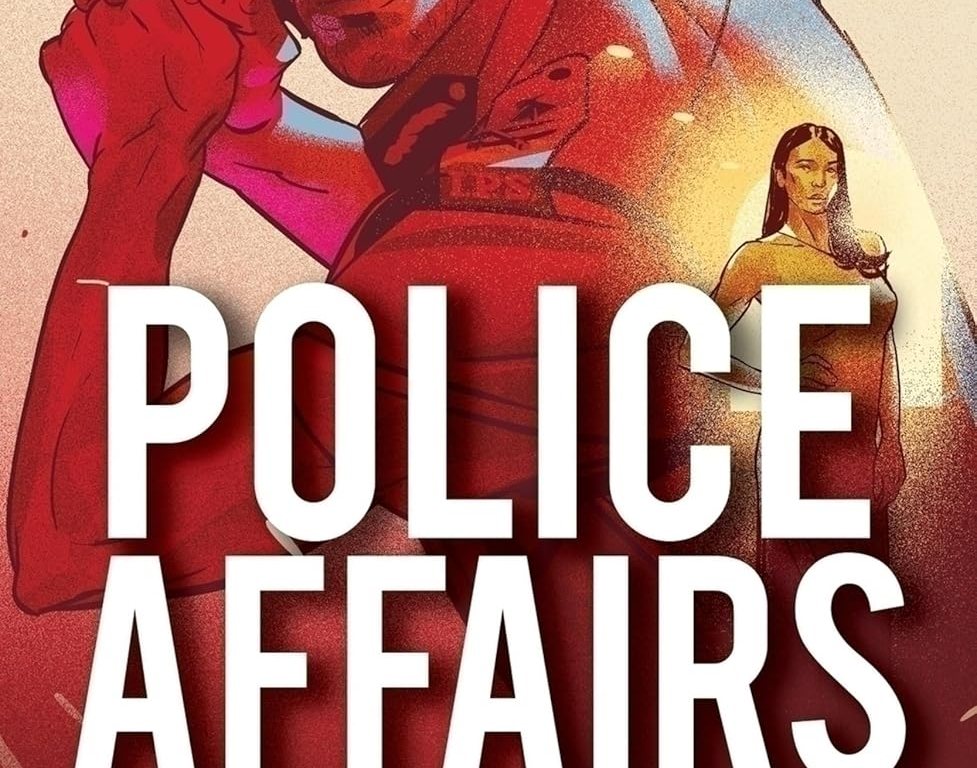
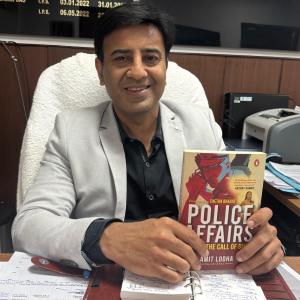
The Bihar cop who captured the state’s most dangerous criminal is back with a new fiction thriller, Police Affairs. Meet Amit Lodha, an alumnus of IIT Delhi and author of the bestselling Bihar Diaries: The True Story of How Bihar’s Most Dangerous Criminal Was Caught. That book inspired the blockbuster Netflix series Khakee: The Bihar Chapter, and now his latest work is generating adaptation buzz.
In Police Affairs, Lodha takes us into the life of Arjun Kumar, a meritorious police officer with a “perfect” life — a decorated career, two children, and a sweetheart for a wife, Charu. But fate intervenes when Kumar meets a young singer, Madhushree. It’s a fatal attraction, one that culminates in a flaming desire for a cosy night in a plush Delhi hotel, where he is on an official trip.
Leaving Madhushree in the hotel room, Kumar goes for his meeting with the higher-ups. On return, he discovers a deadly trap and ends up calling his sole confidante—the woman he would have betrayed: his wife. From there, it’s a high-stakes plunge into the world of secret burials, blackmail, and more.
Kumar’s world now swings like a pendulum, between an embarrassing confrontation with his wife, efforts to prove his innocence without damaging his career, and stopping an assassination plot on the Prime Minister. The high-octane drama is filled with blood-curdling terrorist encounters, sabotaging colleagues, a sharp sleuth for a wife, and friends who lead you astray. Given the easy, colloquial writing and events based on Lodha’s personal experiences and news events, the book is pacy and relatable for the Indian reader.
In a conversation with Amit Lodha, I discovered more about policing and his writing. Excerpts:
Khakee: The Bihar Chapter changed the way people look at Bihar police and gang encounters. How does it feel to see your life on screen? Were you involved with the scripting, shooting, or any decisions related to filming?
Director Neeraj Pandey and his team did a really good job. I didn’t have a role in the scripting or the making of the series. I saw it 15 days before the release. It felt odd to see my own life on screen, almost like being in another world. The series did trace my journey from joining the force to capturing the criminal, named Chandan Mahto in the series. However, that journey took me eight years, and Sheikhpura was my third district posting.
From penning non-fiction to fiction, how different are the two genres?
Penning my experiences was easy because it was personal. That was my reality. As a police officer, I have been privy to situations involving criminal conspiracies, terrorism, beefing up security for VIP visits, and walking the tightrope between familial relationships and dangerous people. All these experiences have shaped the fictionalised story of Police Affairs. I enjoyed writing it, giving it a shape, and it flowed seamlessly as it progressed.
Personally, I found a different approach to some things in Police Affairs. I found the wife, Charu, to be smarter than her police officer husband, Arjun. You’ve mentioned many weapons as well, going beyond the better-known AK-47, quite unlike many Indian crime stories.
I really didn’t think about all these things when penning the story. Weapons are the most important tools in a brush with law enforcement agencies and criminals, so it seemed natural to write about them.
On the character of Charu, as the daughter of an IPS officer and married to an IPS officer, crime was part and parcel of her daily life. Added to that was a woman’s intuition and her nose for sensing changes in her husband’s behaviour and activities. I felt a woman’s sharp instincts made the story more humane. Smart women are all around us.
On the plot, I have often seen how ageing changes perceptions, and one does fall into traps time and again. The story is focused on the intersection of public image, prestigious careers, and dangerous missions. A high-profile serving police officer has to be very careful, as the uniform demands discipline.
Police Affairs is less prose and more dialect. Do you feel the use of regional dialect and colloquial language makes a book more inviting?
I think local flavours add to the charm of reading. Regional dialect makes people relatable and rooted in culture at the same time.
Picking up on real-life scenarios, do police officers often get death threats?
I would say it’s a professional hazard.
On the back cover of Police Affairs, director Neeraj Pandey says, “Full-on screaming for an adaptation.” Is Police Affairs ready for OTT?
I’m not thinking about it but certainly the book is ideal for an adaptation.
It has been a long path from Bihar Diaries: The True Story of How Bihar’s Most Dangerous Criminal Was Caught to Police Affairs. How would you describe this journey?
Like every human being, I have had my share of good and difficult times. These experiences have shaped my perspective as a police officer and a human being. Through Police Affairs, I am showing these phases, but all’s well that ends well. That’s my message to the readers.
When you wrote Bihar Diaries, did you ever imagine it would become such a massive success?
For me, writing a book was a box I ticked off my bucket list. When it was warmly received, I wrote the second one Life in the Uniform: Adventures of an IPS Officer in Bihar, and the third one Police Affairs is taking that journey forward.
Are you inspired by any international crime fiction writers?
I am a fan of Tom Clancy and Frederick Forsyth. The Day of the Jackal is among my favourite reads. I like characters in action.
In contrast with Western counterparts, crime fiction writers in India are relatively new entrants to the genre. There are dedicated crime fiction festivals across Europe, especially in Scotland. Do you feel India should also have one?
We do have an annual Crime Literature Festival of India, held in Dehradun. I am sure this will grow as crime fiction gains popularity in India.
Reels have replaced reading. What are your thoughts on this?
I believe we will always make time for the things we are passionate about. I read a lot during flights and whenever I get free time. But I do have a presence on social media to keep abreast of current affairs. Reading keeps my writing instincts alive; social media offers a different perspective. Reading and writing are intertwined. The more you read, the better you become at writing.
Defining some characters in crime fiction, what are the differences between a detective, a police officer, and a secret service agent?
Even under the same umbrella, these three perform different roles. Secret service agents are very different from police officers. Secret services are the eyes and ears of all kinds of criminal activity, across and within borders. Their work involves due diligence, collecting information, analysing it, and passing it on to senior officials or other government agencies.
Police officers work on preventing crime within a certain jurisdiction, take action against offenders, and support the government and civil machinery.
While detective agencies are licensed in the West, it is not a very lucrative profession in India. Private detectives are primarily hired for background checks of prospective marriage partners and their families. This profession is yet to surge here, as it currently lacks resources and support.
Crime has evolved with technology. Have you thought about writing a cybercrime story?
I like field operations and action. I think I would prefer to keep writing about that. It comes more naturally to me.
Any advice for aspiring crime fiction writers?
Be true to yourself and your story. Remain natural and be thorough in your research. Everyone experiences life differently and writes in their own way. Do what feels right for you, where your strengths lie. Evolve with your style.
About Amit Lodha
Amit Lodha is an IPS officer currently serving as ADGP of Bihar Police. He has been awarded the prestigious Police Medal for Gallantry and the Internal Security Medal for his work, as well as the Utkrisht Seva Medal and the President’s Medal for meritorious service. He has previously authored Bihar Diaries: The True Story of How Bihar’s Most Dangerous Criminal Was Caught (2018) and Life in the Uniform: Adventures of an IPS Officer in Bihar (2022).
Book Details
Publisher: Ebury Press (Penguin Random House India)
Language: English
Paperback: 288 pages
Ambica Gulati is a journalist and editor whose work explores global affairs, travel, environment, and the intuitive arts. From short stories to wellness mantras, she focuses on meaningful experiences in a complex world.
From the archives
If you enjoyed reading this interview, you may like to continue the journey:
- The Best Crime Series to Binge Watch: My Top OTT Thriller Recommendations
- World’s Most Famous Heists
- Scam Protection: Phishing, Smishing, Quishing, Vishing
This blog post is part of ‘Blogaberry Dazzle’ hosted by Cindy D’Silva and Noor Anand Chawla in collaboration with Sameeksha Reads.

 Queen of Treasures
Really enjoyed this interview, it’s rare to get both the professional insight and the personal reflections behind someone in service. Your questions brought out Amit Lodha’s experience in a way that feels authentic and grounded. A great read for anyone curious about policing beyond headlines.
LikeLiked by 1 person
A wonderful plot and twist. I need to see Khakee. Glad to read the interview of Amit Lodha with interesting questions on crime, writing crime fiction, and social media.
LikeLiked by 1 person
I had really enjoyed Khakee and should probably read the book too. If this book is as good and you make it sound that way – then would be great to have its adaptation as well.
LikeLiked by 1 person
Amit Lodha is a real life hero! Thank you for introducing him to us. The story sounds ideal for an onscreen adaptation. Hope we see it happening.
LikeLiked by 1 person
oooh I loved the Netflix series..it would be interesting to read a crime thriller fiction from someone who wrote a crime non-fiction .. definitely checking out the book…
LikeLiked by 1 person
Nothing can exceed the excitement of reading a real life hero’s experiences from his own words. This is a must-read.
LikeLiked by 1 person
Real-life story of real life heros is something that hits different. Would really check out the book. You did really good job of bringing the interview to us.
LikeLiked by 1 person
This was an enlightening interview with the author and real life hero. At one time, I would have loved reading and watching such stories.But, I stopped after my life became a dramatic saga. I stick to my romances and comedies, in reading, watching or listening.
LikeLike
The way you wrote about Amit Lodha’s journey from real-life policing to fiction really shows the human side of being a cop…balancing danger, family, and personal choices. And the way you highlighted the mix of real events, local flavour, and OTT adaptation possibilities, made the whole story feel alive. Thanks for sharing it with us Ambica.
LikeLiked by 1 person
Glad you enjoyed reading about his journey.
LikeLike
I read quite a few real life crime thrillers during the lockdown and looks like I must do that again with Mr. Lodha’s books. I’ve quite intrigued about how a cop’s story will be adapted on screen. Will check out both. Thanks for introducing him to us through this good interview.
LikeLiked by 1 person
Nice to know you enjoyed this interview.
LikeLiked by 1 person
I dint know that khakee was inpired by his book. the interview is very interesting. looking forward to read his first book and the upcoming one
LikeLiked by 1 person
i absolutely loved watching khakee and I think i would enjoy reading the book too. It was good to know about his perceptions
LikeLiked by 1 person
Reading this interview gave such an insightful look into leadership, discipline, and the human side of policing. The reflections behind Khakee feel both inspiring and grounding. Stories like this help us understand real challenges while learning from each other’s journeys and growth.
LikeLiked by 1 person
This interview with Amit Lodha brought sharp insight into police work and leadership. The questions were focused and the answers felt grounded. A strong read for anyone curious about real-world challenges and service in khakee.
LikeLiked by 1 person
I am soooo tempted to impulse by Police Affairs right now after reading your interview with Amit Lodha, IPS.
LikeLiked by 1 person
If you like books that breeze through like an Indian masala series, you will like this one.
LikeLike
This interview is captivating… Amit Lodha’s journey from real-life policing to fiction is inspiring. The insights on leadership, danger, and family make Police Affairs feel alive and undeniably compelling.
LikeLiked by 1 person
As I mentioned you earlier that I read none of his earlier books or this book but heard a lot about him. After this interview session you had and your review I can very well say that I will read his books as real life stories of Cops are more interesting and thrilling to me.
LikeLiked by 1 person
There is such a distinction to writing that comes from lived experiences. The book sounds interesting, and i enjoyed reading your interview with the author – one could make out that he is so down to earth and enjoys the written word.
LikeLiked by 1 person
Amit Lodha comes across as an interesting and talented personality. Your interview is engaging, and I look forward to reading the book and watching the series. Learning about a police officer and his work will be a first for me.
LikeLiked by 1 person
We haave a different perception of law enforcement agencies, so little is known of their work.
LikeLike
I’ve seen Khakee and didn’t know it came from his real story. That made this interview even more interesting for me. Now I want to read the book too.
LikeLiked by 1 person