
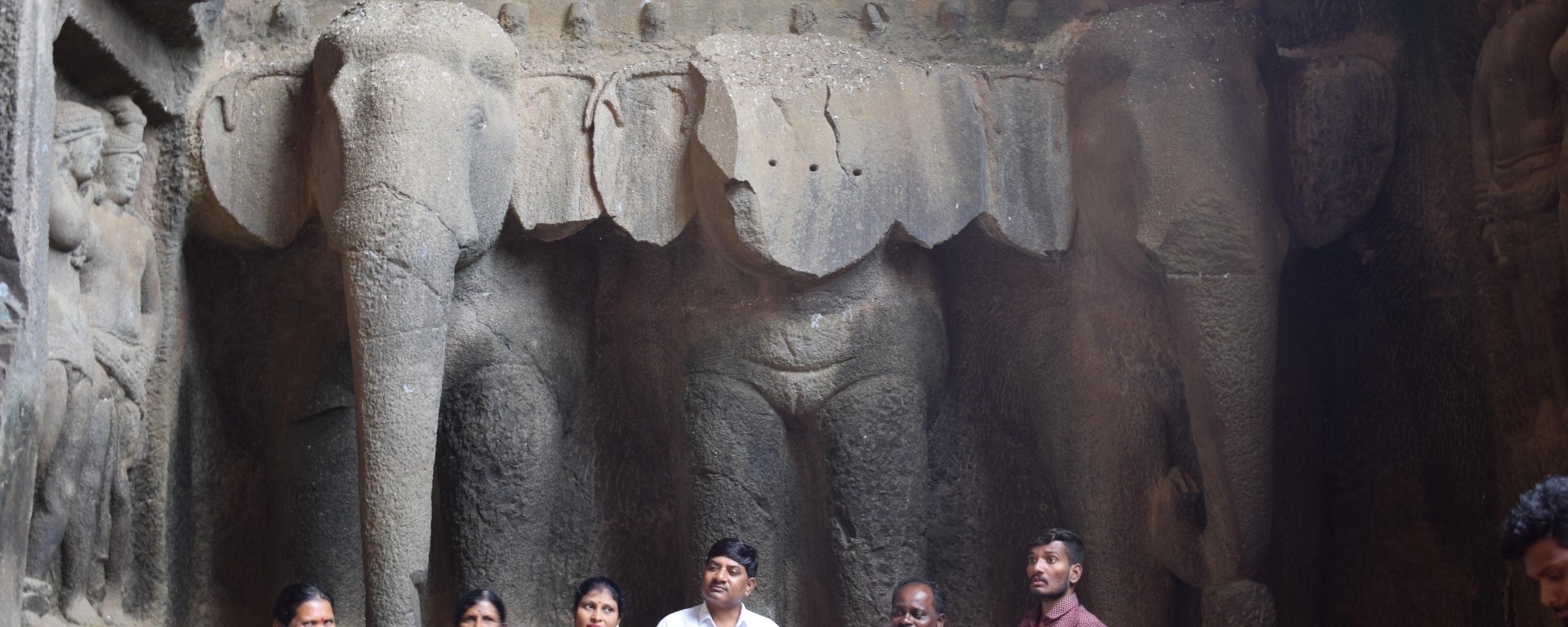
From the grandeur of the Chaitya Griha to the tranquil viharas and the transition into a temple complex, the Karla Caves offer a transcendental experience
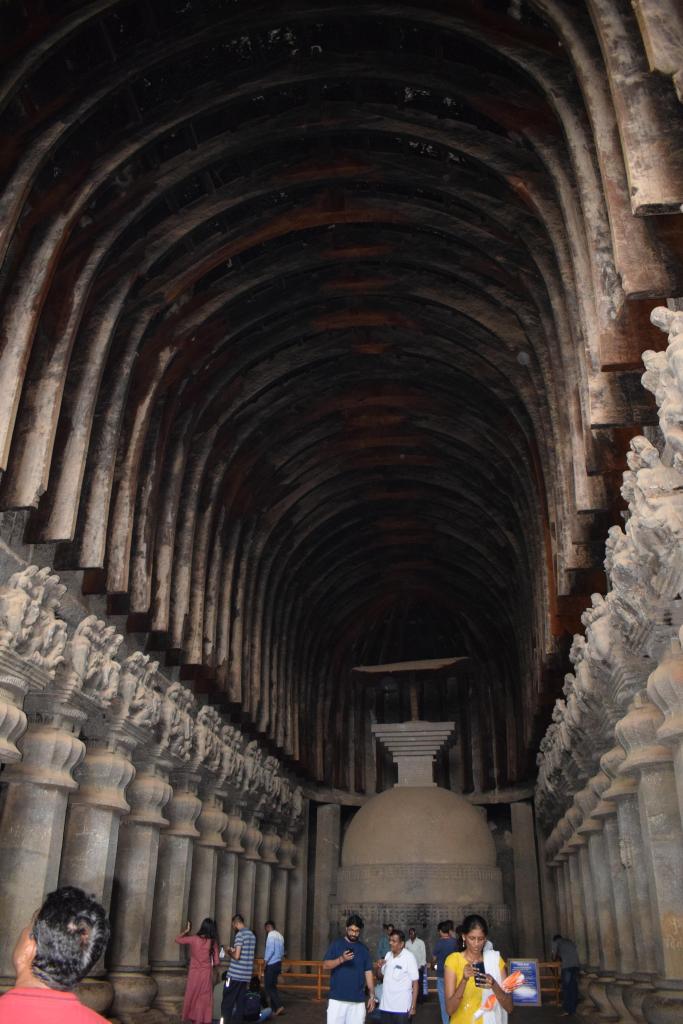
Utterly mesmerised by the awe-inspiring Chaitya Griha, or prayer hall, within the Karla Cave complex, I kept wondering how the Buddhists managed to carve such an extraordinary structure into solid rock. The wooden curved ribs on the roof, grand pillars adorned with intricate sculptures, the inscriptions, and even a window to let in the sunlight—this was no ordinary place of worship.
Perched atop a scenic hill, the journey to the complex involves a climb of 20 minutes over uneven steps that meander through the small hill. The path is slightly tricky during the rainy season. Walking past vendors selling religious items for puja (ritual worship) at the Ekveera temple located just outside the Chaitya Griha, I stopped frequently to breathe in the clean air, soak in the green views and generally feel good about being outdoors.
History of Karla Caves
The Karla Caves, also known as Karli Caves, Karle Caves, or Karla Cells, comprise a complex of ancient rock-cut Buddhist caves nestled near Lonavala in Maharashtra. In proximity, are other notable cave complexes such as the Bhaja Caves, Patan Buddhist Cave, Bedse Caves, and Nasik Caves.
Historically, the Karla Caves are closely associated with the Mahāsāṃghika sect of Buddhism. These caves came into existence over several centuries, with the earliest dating back to the 2nd century BCE. The oldest cave shrine within the complex is believed to have been carved around 160 BCE. The development of this complex continued till 6th-7th century AD.
Cultural Significance of Karla Caves
Karla Caves are strategically positioned along an ancient trade route that connected the Arabian Sea to the Deccan region. This highway facilitated trade between the seaports of Kalyan and Sopara, and the inland cities.
Karla’s geographical location marked the boundary between North and South India. Buddhist followers often established monastic complexes near major trade routes to offer lodging and support to travelling traders.
The construction and maintenance of these caves received patronage from traders, the Western Satraps of Saka origin, and Satavahana rulers, as indicated by the inscriptions.
The inscriptions discovered within the caves reveal the names of donors from various places, such as Vejamti (Banavasi, north Kanara district), Sopara, and unidentified towns like Umehanakata and Dhenukakata. Many of these donors hailed from Dhenukakata and were Yavanas (Greeks).
Usavadata and Vasisthiputra Pulumavi are among the notable donors mentioned in inscriptions. Pulumavi’s inscription is dated to his 24th year of reign (A.D. 154) and provides the ancient name of Karla as ‘Veluraka’.
Architecture of Karla Caves
The Karla Caves consist of 16 rock-cut excavations, with three being Mahayana caves and the remaining Hinayana. The dominant one is the Chaitya Griha, Cave 8, which dates back to 50-70 BC.
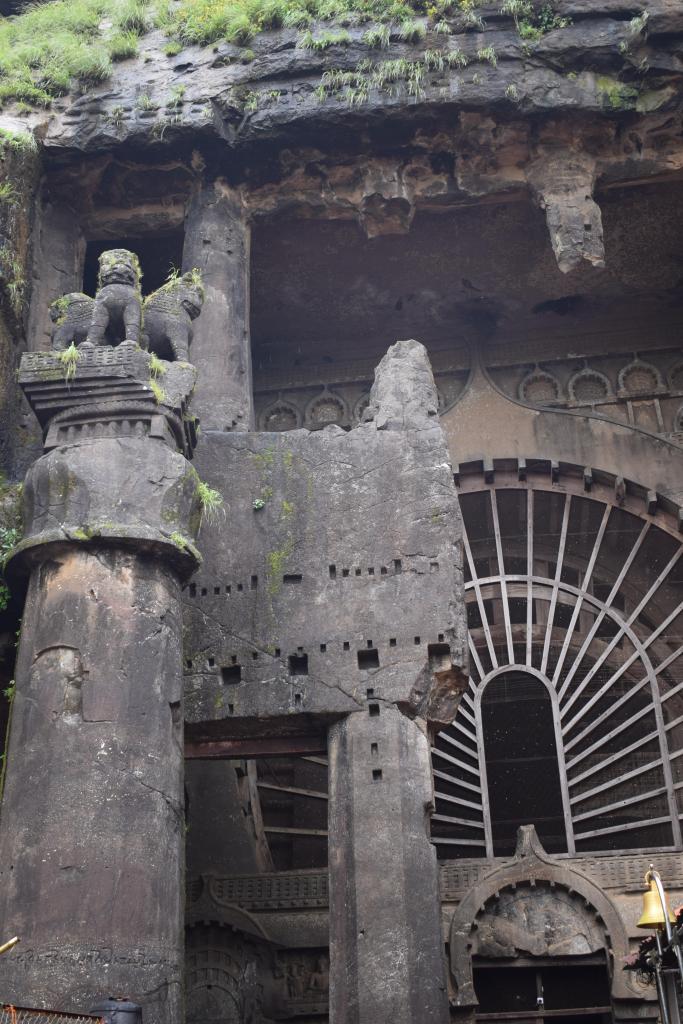
The gateway to the chaitya griha is flanked by a tall stone pillar on the right. Crowned by four addorsed lions, it gives the impression of the Ashoka pillar. Historians claim that the entrance was flanked by two pillars; the evidence of the left one is seen in the form of a short stump. The temple of Ekveera is located here.
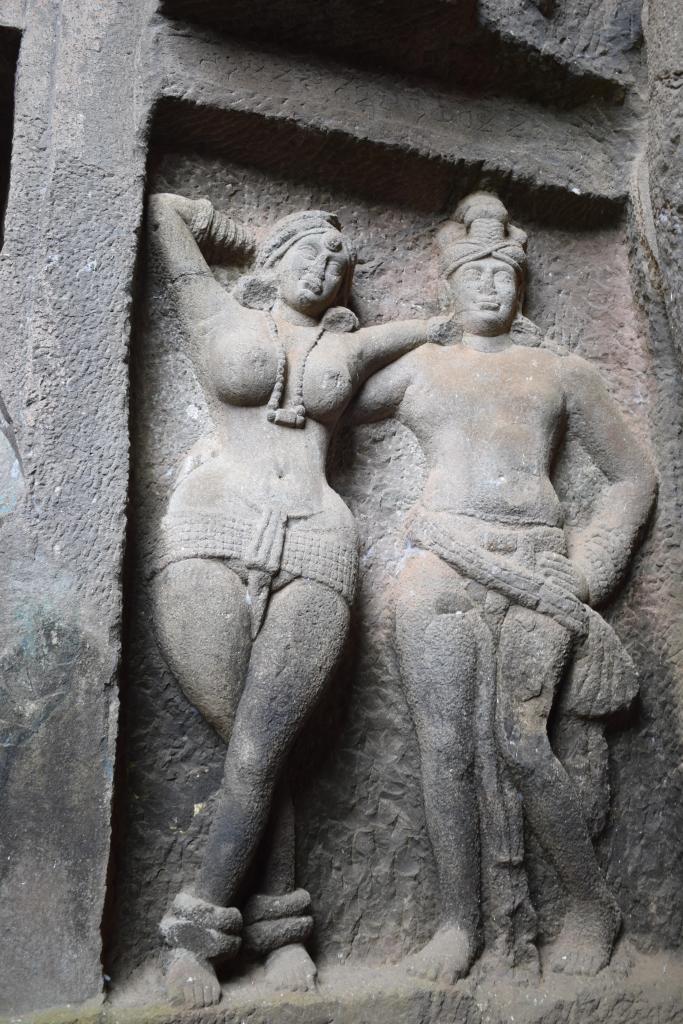
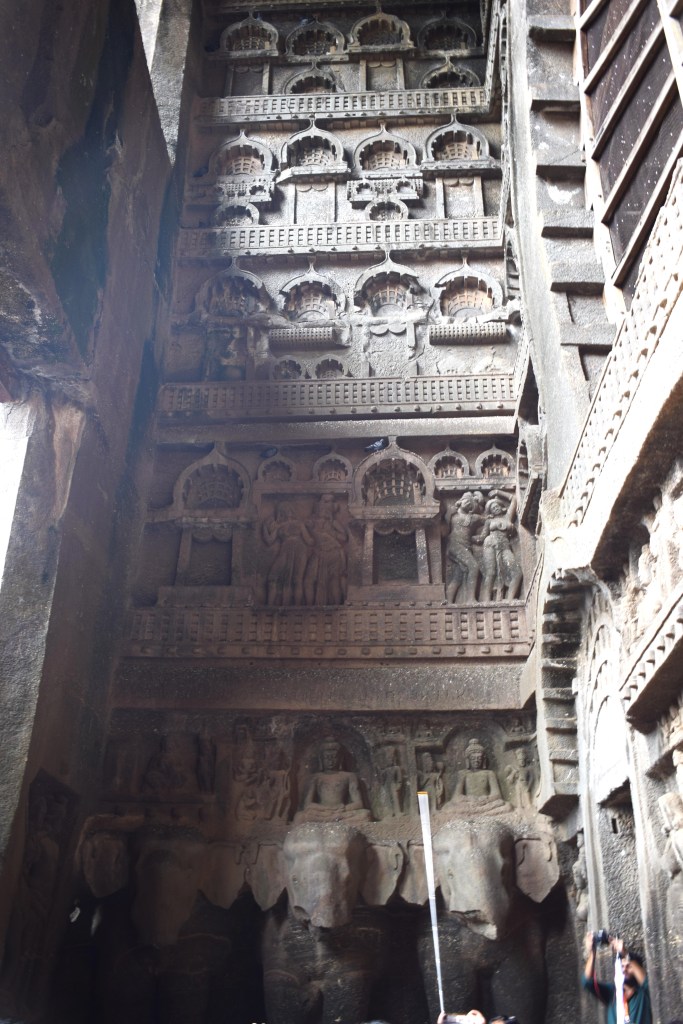
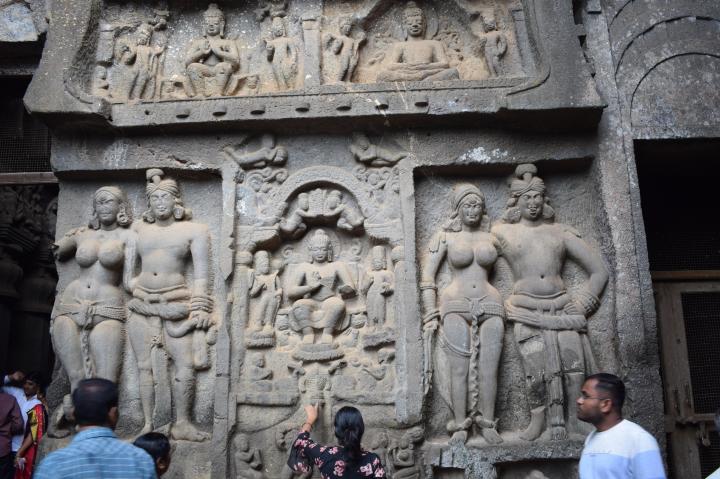
The verandah to the griha is a marvel in itself, adorned from top to bottom with inscriptions and sculptures. The lower portion of the wall boasts a row of railing patterns, while the upper part features six mithuna figures reaching up to the lintels. Above the doorways are miniature windows.
There are three entrances—the central one leading to the nave and the other two to the flanking aisles. But only the central one remains open for tourists and you need to take off your shoes before entering.
As you step into the Chaitya Griha, the grandeur unfolds. It is the largest rock-cut chaitya in India, measuring an impressive 45 meters in length and up to 14 meters in height.
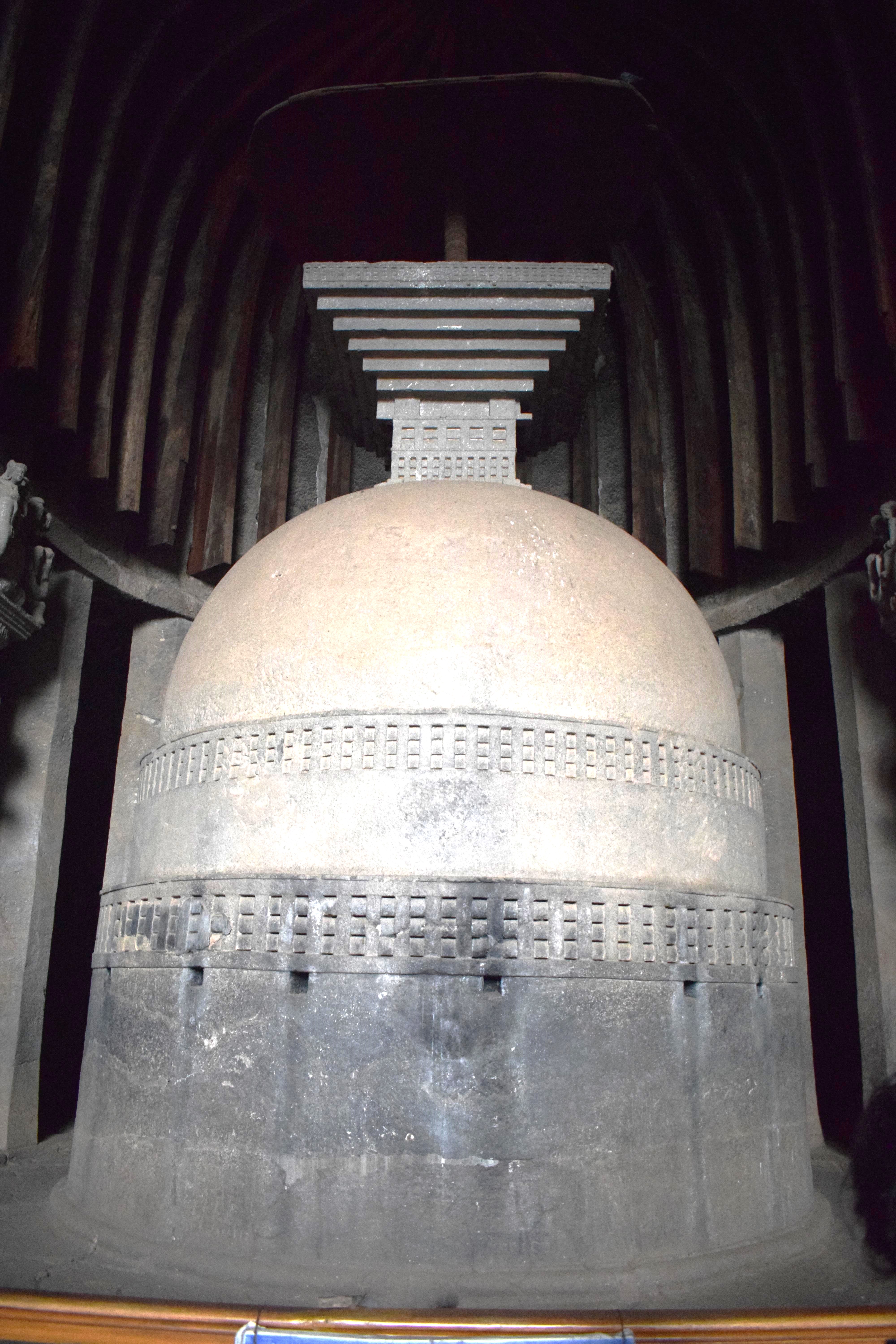
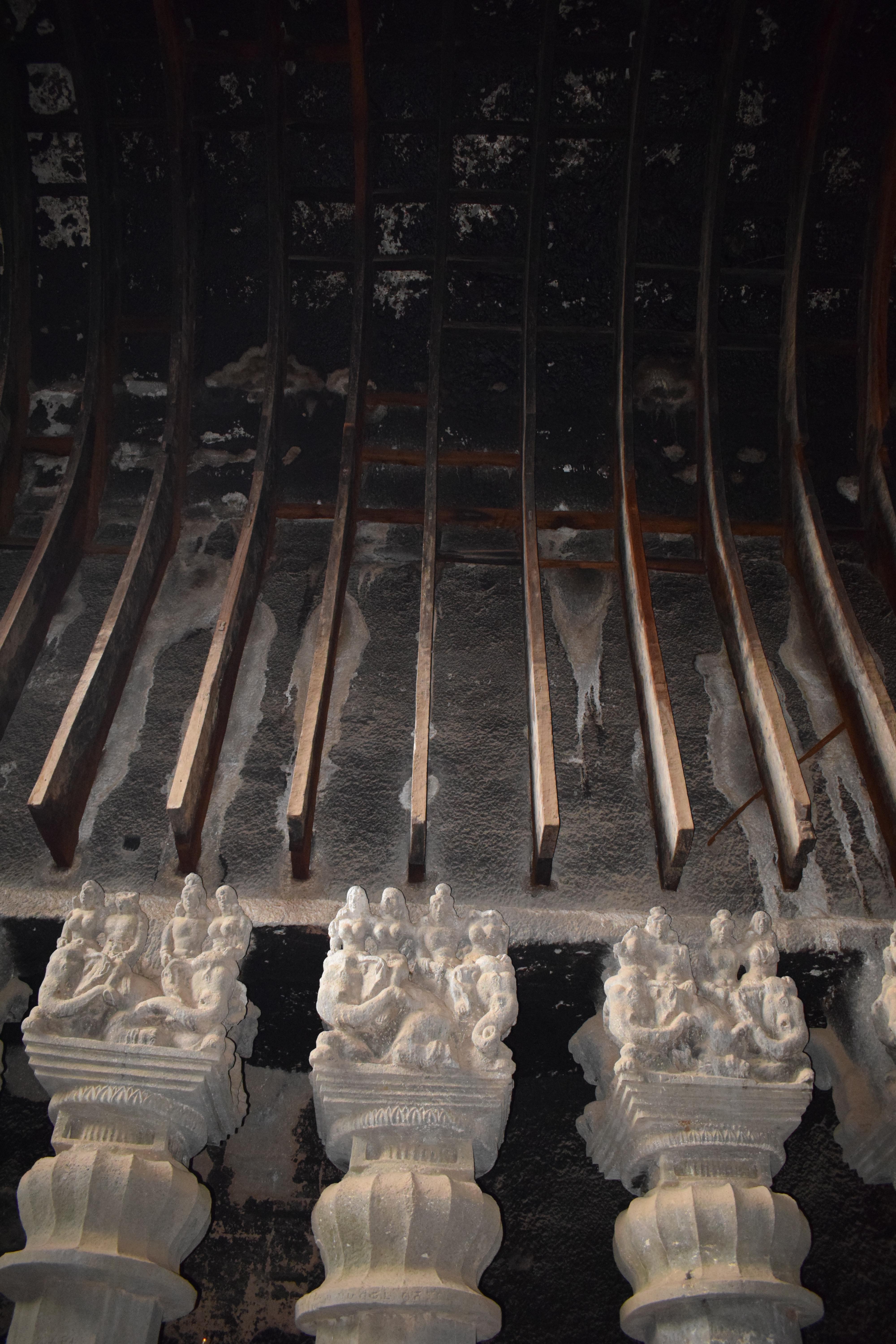
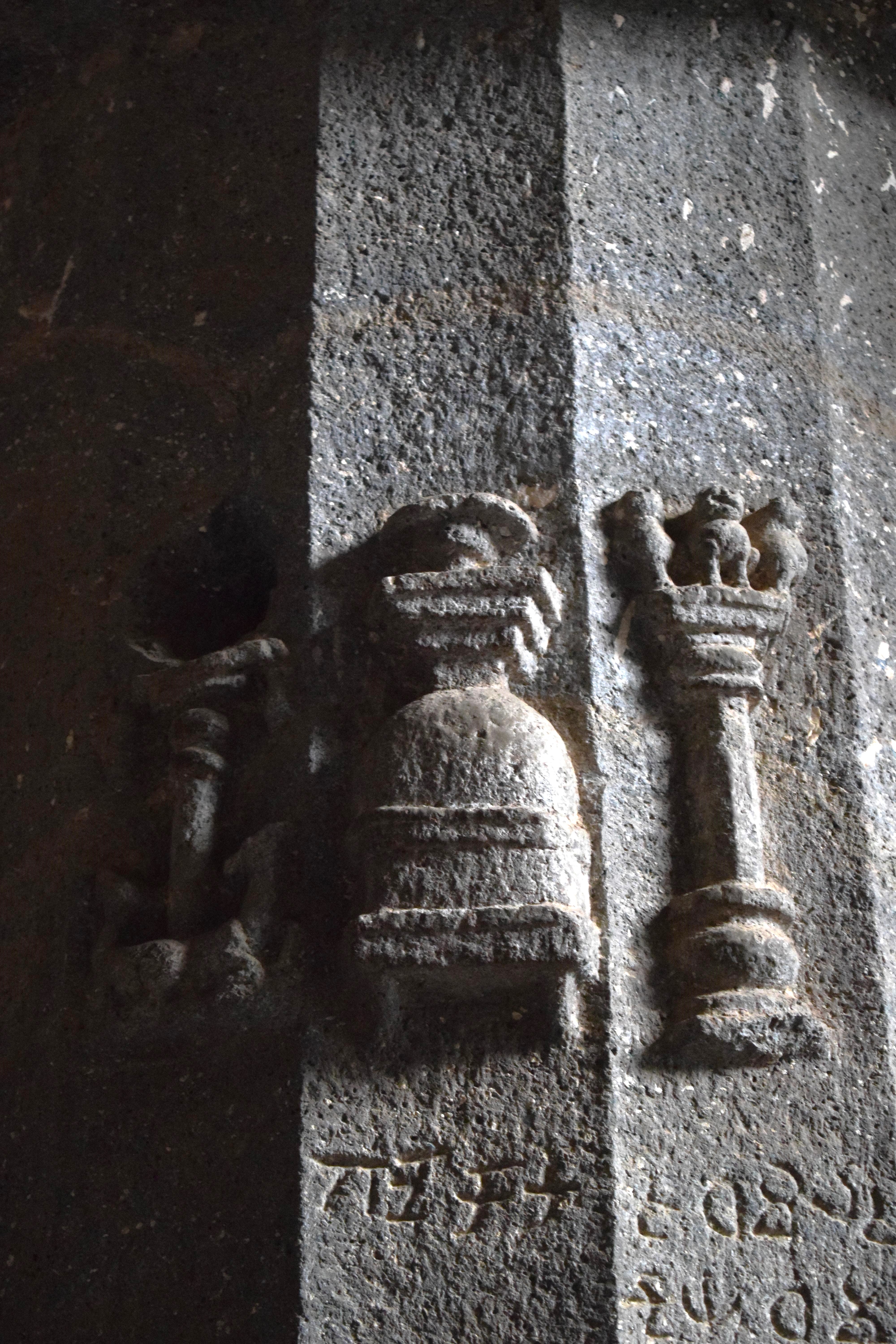
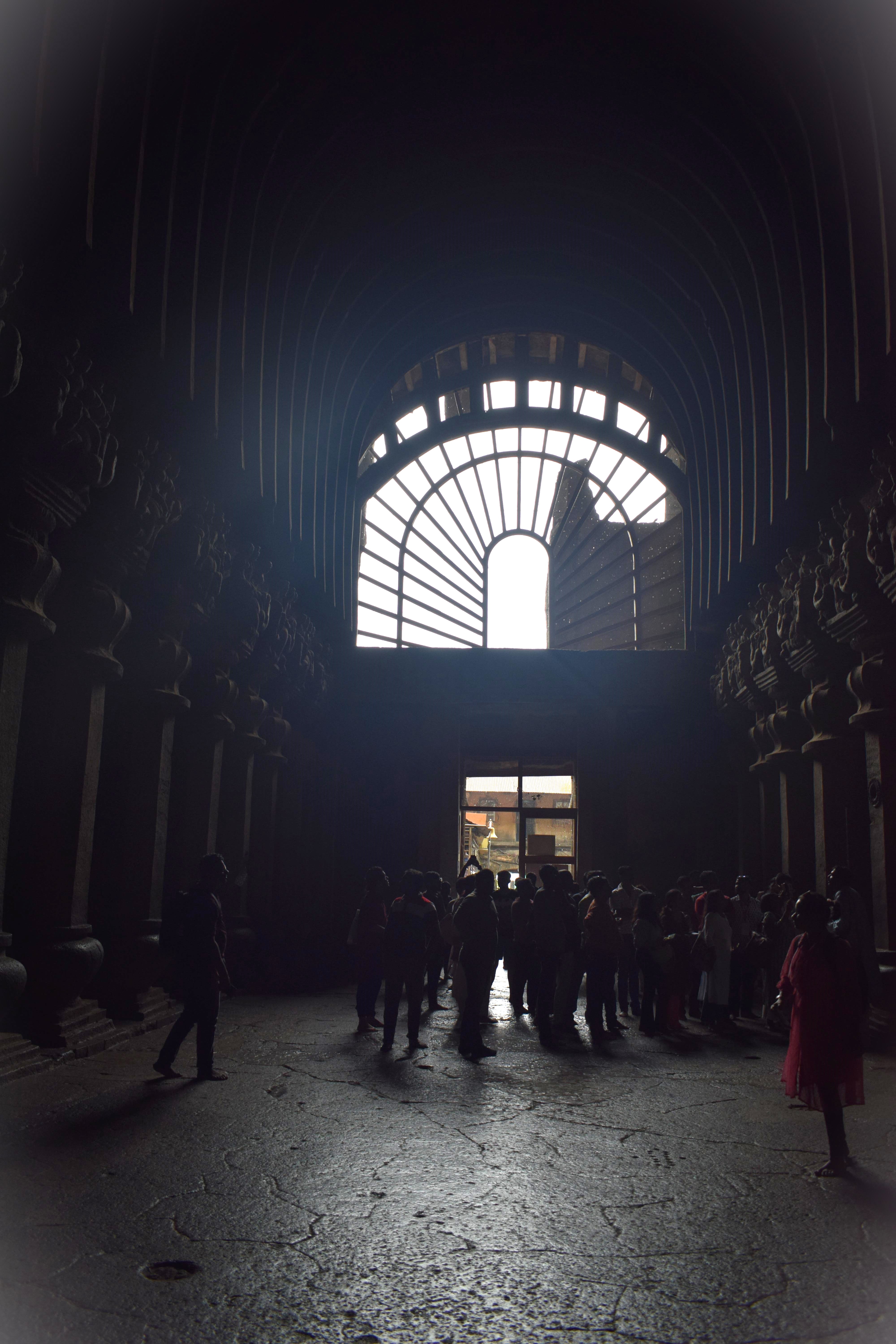
The hall is a masterpiece of rock-cut architecture and adorned with pillars on which humans, lions, elephants and other decorative elements, including inscriptions, are sculpted.
As my eyes got used to the dark stones, I could imagine the chanting of prayers echoing inside. It would have been a magnificent sight. Looking up at the wooden ribs on the roof of this horse-shoe shaped cave, I recalled my guide, Sukhbir Singh Solanki, calling it an inverted ship.
The heart of the Great Chaitya is the stupa, symbolizing Buddha, reminding me of the stupa at Sarnath where he gave his first sermon.
Illumination is provided by a single overhead opening, creating a breathtaking ambience.
Influences and Cave Paintings
Archaeologists say that the design of the great chaitya at Karla served as a model for other chaitya caves, including those at Kanheri and Ajanta.
One remarkable feature within the chaitya griha is a painting on the top backside of the 10th pillar on the right side of the entrance. This painting becomes visible when illuminated with a mobile light, although, regrettably, I missed this detail during my visit, probably because I was engrossed in capturing the cave’s beauty through my camera lens.
Exploring the Viharas or Monasteries
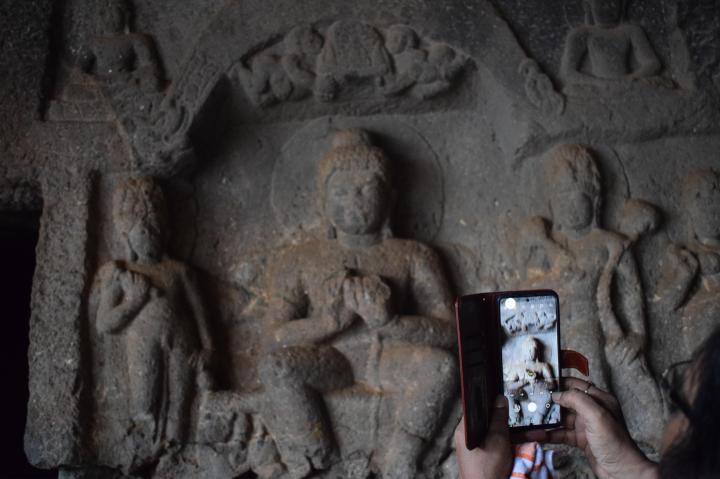
The monasteries at Karla are believed to have been constructed between 60-40 B.C. and the 4th century A.D. It appears that the entire monastic complex at Karla seems to have been conceived as a single design.
It was surprising to see that even the rooms were carved out on separate floors, and stone stairs led to the upper level. With small rooms and just one window for sunlight, the monks would have certainly been adept at meditating without any break.
It is the view around that brings the soul alive. With the clouds hanging low, the green and grey melting into each other, it is a sight to behold. A stream of water gently falls down from the mountain on one side.
There is an expanse that narrows down and runs almost like a ledge path along the rocky terrain, but we were not allowed to go that side.
Praying to Ekveera
The temple structure is in absolute contrast to the rock-cut splendour. This is an uninspiring structure. Ekveera, considered an avatar of the goddess Renuka, is the kuldevi (family goddess) of the Koli and Aagri tribes. Except for the two monsoon months, the complex is thronged by devotees.
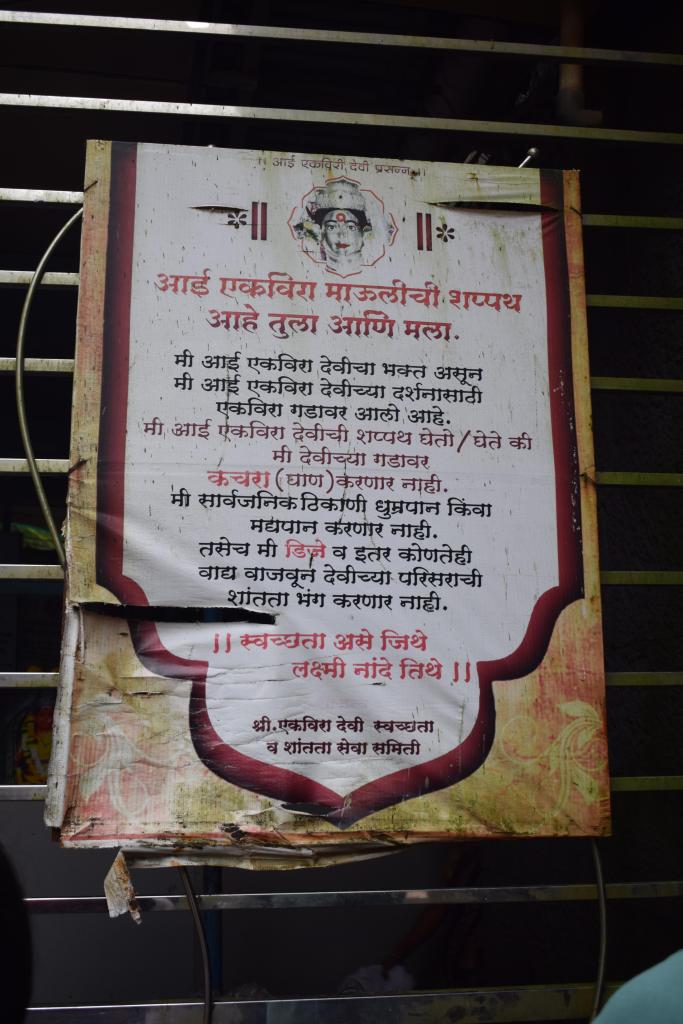
According to legend, the Pandavas built the temple overnight during their agyatvas (period of exile) to avoid detection, and it continues to be a site of reverence.
To read about the legend of the Ekvira temple, click here.
Planning Your Visit to Karla Caves
The Karla Cave complex is under the aegis of the Archaeological Survey of India. You can read all about it here.
Location: Karla Caves are conveniently accessible from both Pune and Mumbai. The complex is along the Pune-Mumbai highway, roughly 60 km northwest of Pune.
Timing: The caves are open year-round, welcoming visitors from 9 am to 5 pm. It’s advisable to check the opening hours in advance, as they may vary seasonally.
Accessibility: The site is well-maintained, and while it involves some climbing, it’s not overly strenuous. However, I recommend wearing comfortable footwear to navigate the uneven terrain.
You can leave your vehicles at the bottom of the hill and take an autorickshaw to the point where the road uphill begins. Then the climb up would be about 20 minutes, even for a slow walker.
Guided Tours: To gain deeper insights, consider hiring a knowledgeable local guide.
Entrance Fee: The entrance fee varies depending on your nationality. For citizens of India and visitors from SAARC and BIMSTEC countries, it ranges from Rs 20-Rs 25 per person. For others, the fee is Rs 250-Rs 300 per person, with children up to 15 years admitted free.
You can visit the temple without a ticket, but can’t go inside the Chaitya Griha without a ticket, which is obtained from where the walk uphill starts. Online booking is available as well.
Eatables and drinks are not allowed within the complex, but you do find eateries near the parking.
This trip was on invitation by Department of Tourism, Government of Maharashtra, for the International Ganesha Festival 2023. The views expressed are my own authentic experiences.


This is so good! Definitely want to visit it now!
LikeLiked by 1 person
YOU WILL LOVE IT.
LikeLiked by 1 person
I too would wonder how the Buddhists managed to carve the 16 Karla Caves into solid rock – especially around the time they were created. I am always stunned by the detail of the carvings on every surface. And I would not want to miss seeing the painting at the top backside of the 10th pillar. We would want to hire a guide and not miss anything on our visit.
LikeLiked by 1 person
It’s a marvellous place, I was so stuck by the beauty and the ability of our ancestors to create something like this.
LikeLike
I am astonished at the age of these caves and carvings, especially the chaitya griha. I can’t even imagine how anyone could carve all the details found here and some of the caves are so high! I think you made a good suggestion to hire a guide to fill you in on all the history and details. I am glad that they have been preserved so well…and that people still give respect for the traditions and religious aspects of the caves.
LikeLiked by 1 person
Yes. It felt good to walk on clean bare rock surface of the prayer hall. It was a like seeing a wonder.
LikeLike
I enjoyed reading your travel story about the Karla Caves. Your vivid descriptions of the Chaitya Griha, the viharas and the temple complex made me feel like I was there with you. I appreciate your insights into the Buddhist heritage, the rock-cut architecture and the natural beauty of the region.
LikeLike
Katla Caves in Lonavala is certainly worth visiting especially if you love history and architecture. It is indeed a true marvel how the Buddhists carved the caves into solid rock. I have visited this place some 40 years ago and do not remember much. A guide with good knowledge of the history is definitely a required for everyone who wants to visit Karla Caves. I enjoyed reading your informative blog post. :-)
LikeLiked by 1 person
I love how you were able to picture the people worshipping there! It tells how into it you were. The carvings are so lovely, and it also amazes me how people did intricate designs without the technology and tools we have today. I just got home from India but missed this region. I need to get back there someday!
LikeLiked by 1 person
I hope you enjoyed your trip to india
LikeLike
Its so funny that for the number of years I spent in Pune, I never really visited Karla caves. I only passed by them when I went to Lonavala. And look at the treasure I missed. You have captured them all so well and reading about them makes me want to get to it soon and capture all those carvings. I all for getting a guide to understand the various elements here. Thanks for the tips on getting there. I will be sure to visit.
LikeLiked by 1 person
You should go if you get a chance .. it’s quite a marvel
LikeLike
India has so many archaeological and architectural box of treasures waiting to be explored. I have not heard of Karla Caves but already seeing the first picture of Chaitya Griha reminds me of another architectural great temple of Abu SImbel in Egypt. You gave such a descriptive narrative of the cave network and those impressive carvings that I felt I was there in person.
LikeLiked by 1 person
I would love to go to Egypt. It’s full of.ancient treasures like India
LikeLike
The closest I’ve experienced to Karla Caves is Abu Simbel, in Egypt. What an amazing vision, knowledge and technique to build 16 caves inside the rock, in the 4th century. I am surprised that there are different levels inside, as usually there is only one inside a cave. I can only imagine the monks praying, with just a beam of light coming into their rooms from a small opening in the rocks.
LikeLiked by 1 person
I loved to read your post about the Karla Caves. I have been to Pune and Mumbai, but missed this gem. As I am very interested in Buddhism and Buddhist art it is always inspirational to visit old Buddhist sites that have Hinayana and Mahayana influences.
LikeLiked by 1 person
I hope you do get to visit it some time in the future.
LikeLike
It always amazed me to read about or visit ancient places like Karla Caves where people carved the rock and turned it into a place of worship. Imagine their vision and craftsmanship. Too bad you missed the cave paintings. But it means a good reason to go back. By the way, with lion sculptures on top of the pillar, does it mean there were lions in India many many years ago?
LikeLiked by 1 person
Indian wildlife is diverse, there were lions in Central India, and their power inspired KingAshoka of the Maurya Dynasty. He had built several pillars with lions across India. The national emblem of India has lions on a pillar too. He gave up war and embraced Buddhism, so he visited many sites to retrace Buddha’s steps. And the pillar is a hint of that influence.
LikeLike