
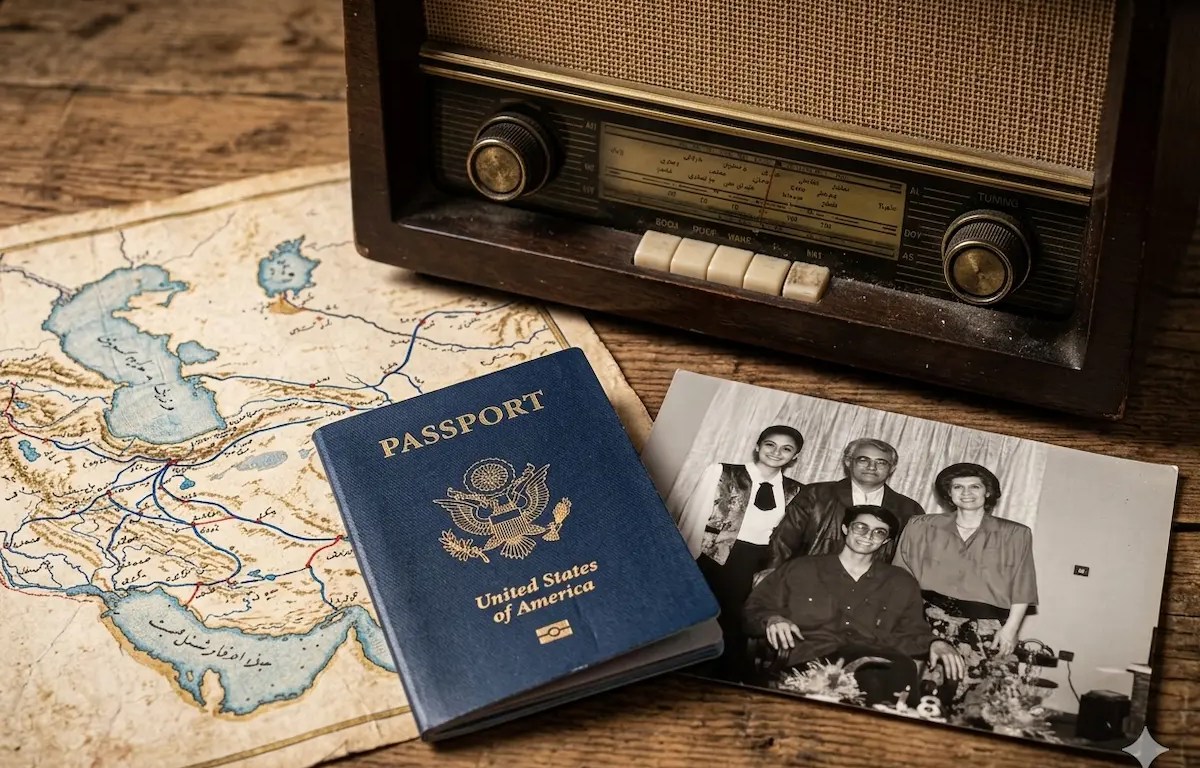
Beyond the headlines of drones and missiles lies a generation’s struggle for identity: a deep dive into Dr. Nizam Missaghi’s journey from theocratic Iran to freedom.
Social media is abuzz with kinetic data: missile and drone attacks, the closure of the Strait of Hormuz, and the looming threat of LPG shortage in India. But why are Iran and Israel at war, with the USA attempting to navigate the coveted strait? Is this about trade, nuclear weapons, or terrorism?
Peel back the layers, and then emerges an ideology rooted in absolutes, power and supremacy, theocracy and subjugation. Yet, this is not a recent phenomenon.
Under The Shadow of Theocracy
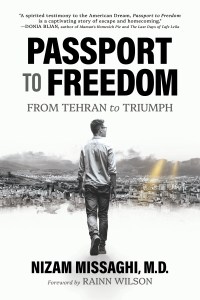
A glimpse into these troubling roots comes through Dr Nizam Missaghi’s memoir, Passport to Freedom: From Tehran to Triumph, which takes us to the Islamic Revolution of 1979. The last monarch of Iran, Mohammad Reza Pahlavi, was ousted by Ruhollah Khomeini, ushering in a theocratic regime. What followed was a tightening grip on civil liberties, particularly for religious minorities, forcing many to seek freedom beyond its borders.
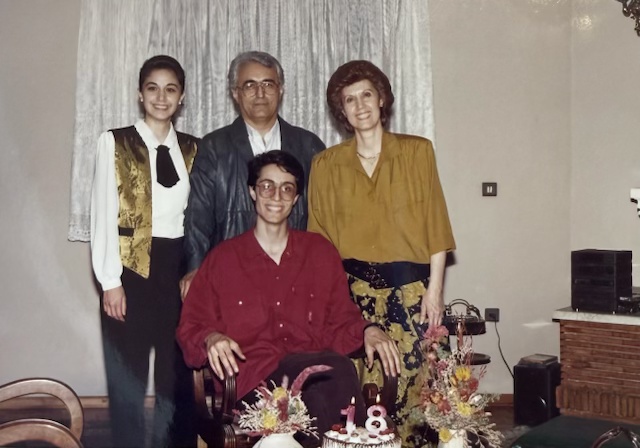
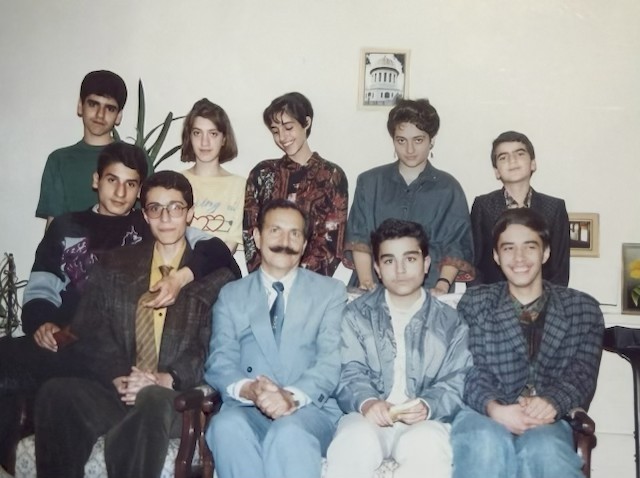
Dr Missaghi’s family followed the Baha’i faith, guided by principles of oneness and peace. That, however, was not acceptable to the Ayatollah regime, which curtailed their access to education, livelihood, and basic civil rights.
The only silver streak was that his parents had been educated in the USA, and both he and his sister were born there. During the Shah’s regime, Iran and America shared a good relationship. That American passport would eventually become his passage to a free life, albeit after much peril.
Passport to Freedom offers an inroad into what Gen X experienced: the steady erosion of civil liberties, the loss of choice in all things that make up human life, even listening to the music of one’s choice. Dr Missaghi, a brilliant student, was denied a certificate or transcript to progress. He could not have become a doctor in the Iran he grew up in. He yearned for this, given that his mother and her family comprised doctors.
His book raises questions about survival, the ‘strategic scarcity of opportunities’, and the uniform that drove a draconian system. It also speaks of the loss of identity, self-esteem, and credibility.
And then there are the other aspects: holidays with family, a nurturing community, forced secrecy, smuggled tapes, hidden lives. He grew up during the Iran–Iraq War, where raids, sirens, and bombs were part of everyday existence.
In the midst of it all was a teenager who dreamt, dared, and, with his family’s support, escaped to America. There, he found his extended family, education, work, home and the freedom he had longed for.
His memoir made me reflect on cultural identity, the preservation of heritage, inclusivity, and the richness of an ancient civilisation. Through his journeys, I glimpsed Iran’s beautiful topography and the simple desire to own a radio. For those who undervalue journalism today, his father’s love for a radio from Austria is a quiet reminder of its worth.
Dr Missaghi’s book also makes us pause on the impact of large-scale oppression on mental health and the behaviours that shape everyday life.
In conversation With Dr Nizam Missaghi
In an email exchange, I found answers to some of my reflections. Excerpts:
Why is Halley’s Comet a ‘she’ for you? How did it take on the role of a nourisher and dreamweaver?
I grew up speaking Persian and that is not a gender specific language. Accordingly, we never thought of abstract concepts or celestial bodies or even God as having a gender. The first time I noted that God was referred to as a “He” was actually when I was learning English.
Nonetheless, in children’s nursery rhymes, the sun and the moon typically are depicted as a nurturing female. We do not have any pronouns that are gender specific. But we do have such references, the ‘Sun Lady’ for example.
Halley‘s Comet was very precious for me because of its rarity. It was fleeting and if you missed it, you would likely never see it again in this lifetime. To me, it felt as if the comet was coming to check up on the Earth every 75 years to see if we had got our act together.
So, in my childhood, I felt that I could make a pact with the comet and make a wish upon a star. The comet came exactly during the time of when the sky was perilous with missiles from Iraq. In the middle of that war, it felt like that one peaceful celestial event from which I did not have to run.
You mentioned that your mother came from a lineage of Berjis, that is Jupiter. Are ancestral lineages in Iran traced to planets? In India, they are traced to the Seven Rishis.
My mother’s last name, Berjis, was actually very unique and rare among Persian last names. It was a last name that belonged to a small enclave of Persian Jews that came from Kashan in central Iran.
Persian last names originate either in relation to where someone is from or what trade their family is associated with or some attribute their family is known for. Some last names also may be religious if someone traces their ancestry to a prominent Iman in Shia traditions.
The use of planets as names are more common when it comes to first names.
Can we ever fall out of love with our motherland, even when there’s nothing for survival there?
When we leave our nation, we take a part of it with us. We romanticize about a time when we will return and serve our own nation and our own people. We long to see our nation prosper even if we do not live there.
Our nation is far more ancient than the ideology that has plagued it for the past nearly half a century. There have been many upheavals noted in Persian literature and Persian mythology where dark times of tyranny have cast a shadow over the nation, and all of those stories end with the people reclaiming their land and their heritage. The hope that such an occurrence is inevitable, that light will prevail over darkness, keeps us alive and connected.
You lived through a turbulent Iran-Iraq war, fear and resilience were your navigators. Do you still feel a current of those days in your life?
I experienced the devastation of war firsthand. When a few windows in our home shattered because of a proximity of a missile that landed not too far, I remember telling my parents that I did not have the privilege of a life in double-digits, like they did. I was afraid I would never make it given the uncertainty of the times.
To this day, when I hear the sound of thunder, my heart races, and my sympathetic system activates. And today, when I hear and see the images and video clips of the war that emerged from the homeland, I think about the children, and the worried parents embracing them.
My heart goes out to those who never will live a full and complete life because of the bellicose policies of the Islamic Republic towards its own people and the region.
You’ve also mentioned teachers and mentors who helped you with your passage to the USA. What do they feel about this revelation and the world you call home?
I’ve had teachers and mentors both in Iran and USA who have opened doors for me. They have become the proverbial passports that allowed me to go from one stage to the next.
I have lost touch with many of my mentors. Some of them have passed away.
Those with whom I kept in touch were always elated to hear, that against all odds, I made it out of Iran. I achieved my dream of becoming a physician, and I got to experience freedom. It is nothing short of a miracle that I get to live my life the way I dreamed I could.
In the face of ostracisation, did your family ever consider reconverting to Islam to have a smoother life?
This was never the case. Recantation of one’s faith is very rare among the Baha’is in Iran. The community made so many sacrifices. Within every family there are relatives, near and far, who have paid the ultimate price to preserve their faith and serve their communities. They all try to preserve their identity. A departure from the faith may constitute an act of betrayal of their community.
The media landscape has changed in the current times. Iran is winning the war on social media, but does this change the country’s ideology as an Islamic Republic with theocracy guiding daily life? How are the youth responding to this war?
The Islamic Republic has not moderated in any way in its 47-year history. If anything, it has hardened its stance in the face of the young population that wants nothing to do with it.
Iran‘s young population is very significantly wired and connected to the rest of the world and western culture. So, the chasm between the Islamic Republic and the Iranian people, most of whom born after the Islamic Revolution, could not be greater at this time.
Since the beginning of the recent conflict, Islamic Republic has attempted to silence the voice of its youth, and its population in general. They have shut down the Internet in its entirety. So, a country of 90 million people has been cut from the rest of the world where their opinions and dissension cannot be heard by the world.
Given the current context where Iran is ready for a World War, what are your views on Ayatollah and the native land now? What does your family think about the current war?
While I cannot speak for the majority of Iranians, the general impression I have is that most of us believe that this war was due to the provocations of the Islamic Republic in the region. Added to this, is its posturing towards the USA and its allies, by arming and providing material support to wage a significant proxy war.
We watch with mixed emotions, suspended between hope and terror. We hope that there will be regime change and the people will get to have their voices heard in a nationwide referendum.
We hope that the future generation of Iranians will not have to live through such fears as war and instability and economic devastation.
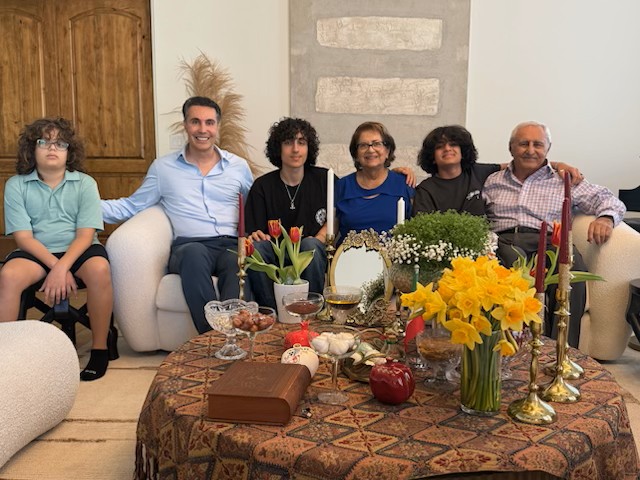
What is your message to the world which views the current war with mixed emotions, with few knowing about Iran, except for its exotic Persian roots and the glory of yesteryears, especially in the arts and crafts.
I wish to say that that Iranian people are not their government. The majority of the Iranian people are not in agreement with the bellicose policies of the Islamic Republic, and the havoc they have caused in the region.
The majority of Iranians feel that they are taken hostage by their own government, where the very basic freedom rights are restricted and their ability to reach their full potential curtailed.
The people of Iran deserve a life of dignity of joy and of prosperity, like the people of any other nation. They long for their nation to reclaim its rightful place in the international community.
About Dr Nizam Missaghi
An Iranian-American physician, he pursued his medical education at Virginia Commonwealth University School of Medicine. A founding member of Grand Canyon Anesthesia, he is a clinical assistant professor of anesthesiology at the University of Arizona School of Medicine and Midwestern University.
Chairman of the Iran Human Rights Documentation Center and a widely published author in Persian and English, Dr Missaghi investigates and verifies human rights abuses in the Islamic Republic. He is also the founder of the Arizona-based Simpatico Foundation, promoting diversity and the arts.
Book Details
Publisher: Regalo Press
Pages: 272
Language: English
Release date: September 22, 2026
Available on Amazon
Ambica Gulati is a journalist and editor whose work explores global affairs, travel, environment, and the intuitive arts. Beyond the laptop, she nourishes her creative practice through meditation, birding, reading, journaling, oracle cards, and yoga.
From the archives
If you enjoyed reading this interview, you may like to continue the journey:


6 thoughts on “From Missiles to Memoir: The Human Story of Iran’s War Beyond Hormuz”