
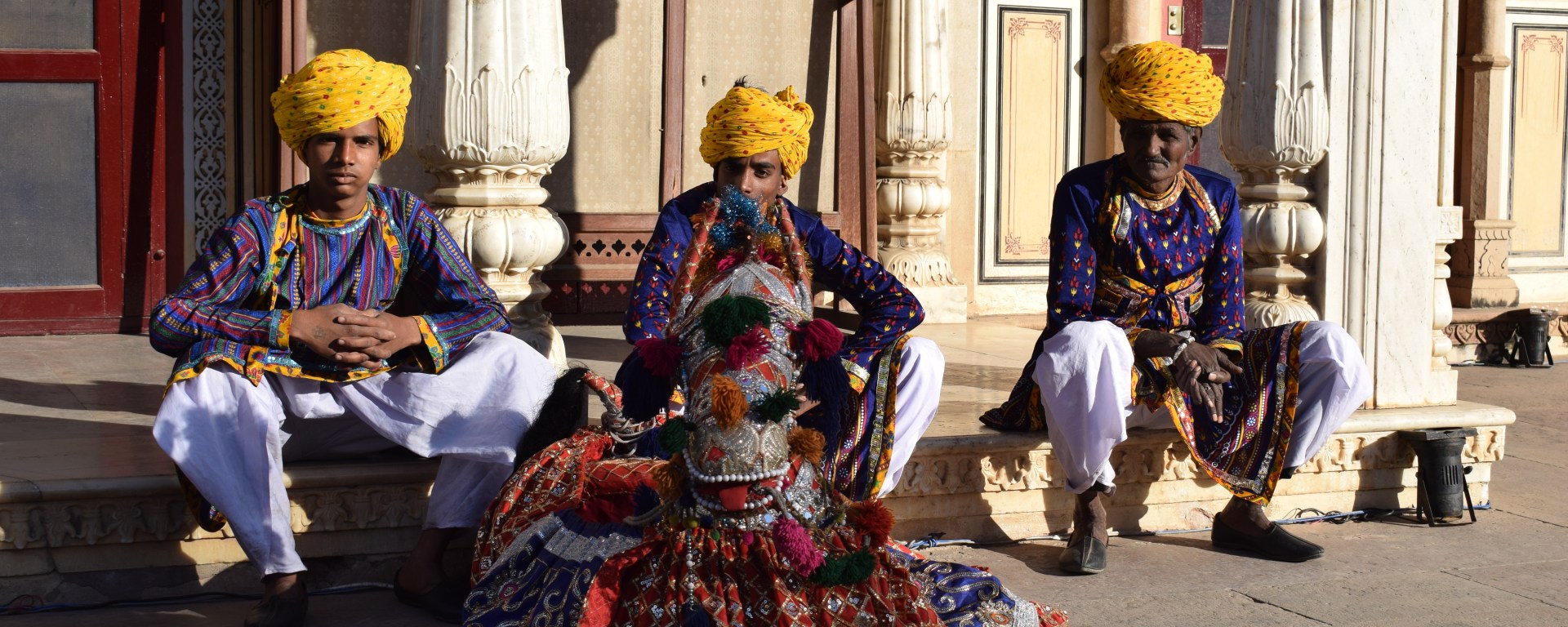
A photographic journey to some of the most popular attractions of Jaipur. The capital of royal Rajasthan is part of the Delhi-Agra-Jaipur golden triangle and among India’s top tourist destinations.
- Exploring Amer Fort: History and Hidden Courtyards
- Inside the Jaipur City Palace: Architecture and Royal History
- Jal Mahal: Palace on Man Sagar Lake
- Shopping in Bapu Bazaar: Traditional Crafts and Street Food Tips
- Iconic Street Food You Cannot Miss
- Dine in: Authentic Dishes and Local Delicacies
- The Perfect Dessert Finisher: Matka Kulfi
- Quick Jaipur Shopping Checklist
- More Incredible Places to Visit in Jaipur
- How to Reach Jaipur: Flight, Train, and Road Options
Exploring Amer Fort: History and Hidden Courtyards
Technically, Amer fort is in the town of Amer, just a kilometre away from Jaipur. Located atop a hill with breathtaking vistas, its main source of water is the small Maota Lake. A light and sound show is held every evening here.
It was the erstwhile capital of the kings. Amer was built by the Meena king Raja Alan Singh of the Chanda clan in 967 CE. It was later ruled by Raja Man Singh I of the Kachwaha clan. For almost 150 years, successive rulers kept adding to the structure.

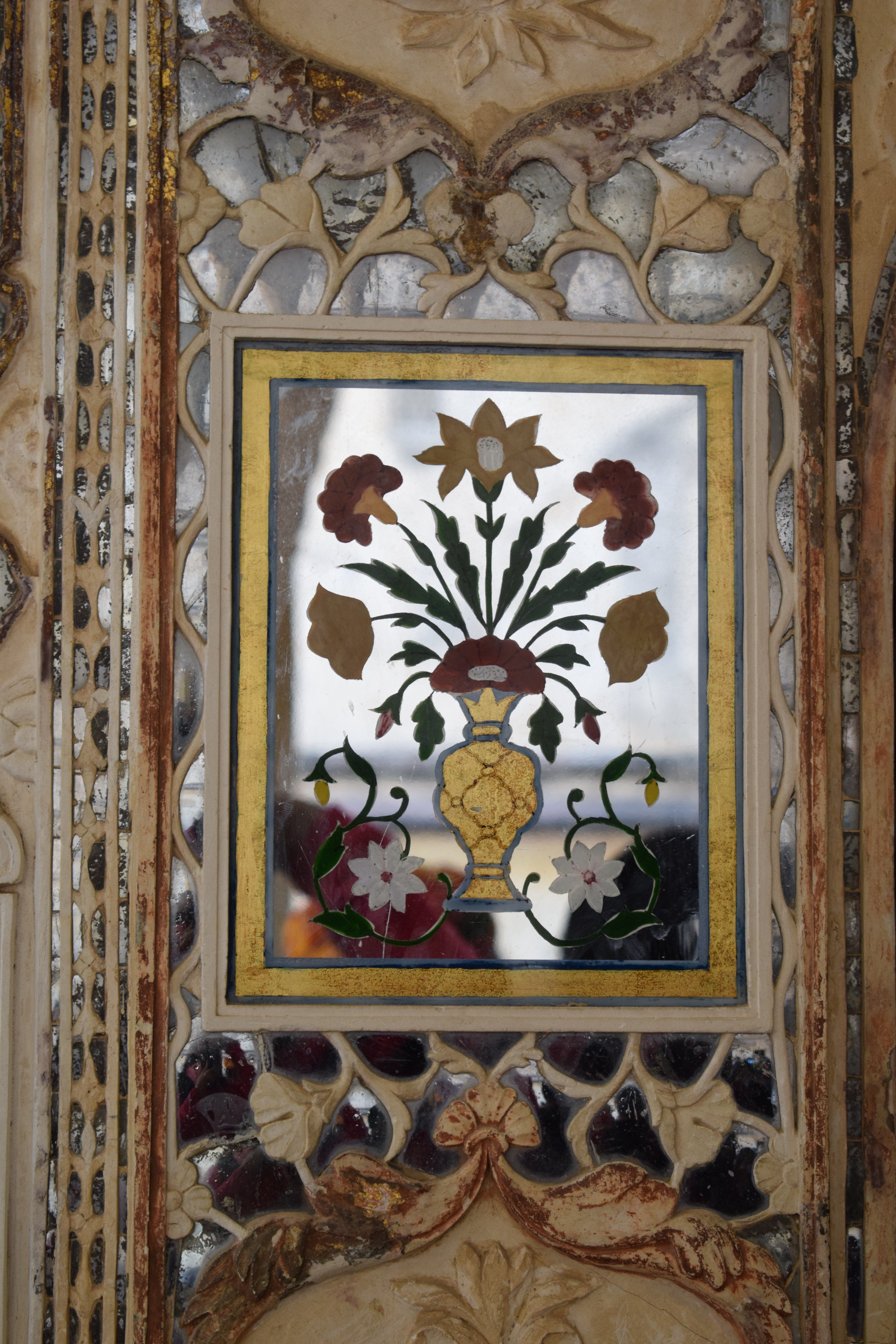

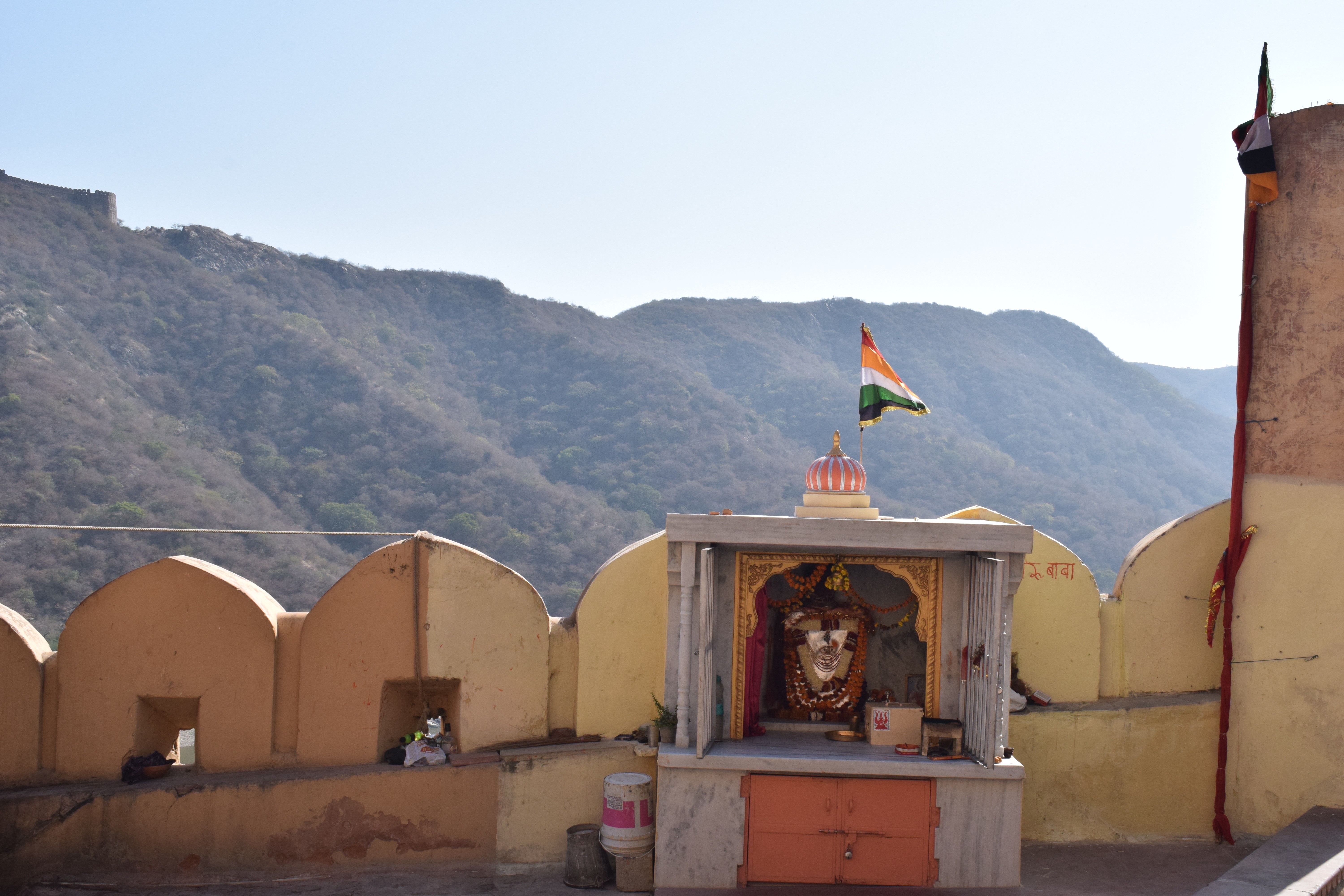
It’s the intricately carved pillars, the flowery motifs, the colourful ceilings and the gardens that make Amer a must-visit in Jaipur. The large ramparts, multiple gates, ancient cobbled paths bring a long-gone era come alive. I imagined the queens with her group of ladies sitting in their courtyards, dressed in embroidered silks, watching the sun rise and set over the hills.
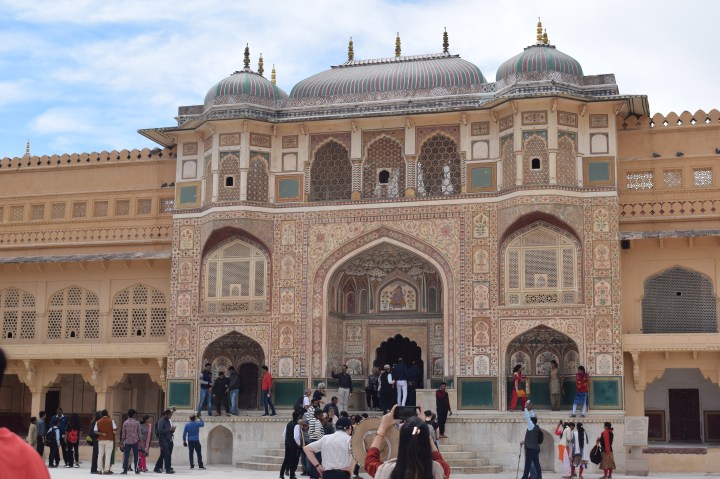
Built of red sandstone and marble, the massive structure with its multiple levels houses a Diwan-e-Aam or hall for public audience, Diwan-e-Khas or hall for private audience, Sheesh Mahal aka mirror palace, Jai Mandir and Sukh Niwas. This is cooled by the winds that blow over a water cascade within the palace.
Before stepping in to the main fort, we had paid obeisance to the guardian goddess, Shila Devi, whose temple is at the entrance. She was worshipped by the Chaitanya cult and the idol was given to Raja Man Singh when he defeated the Raja of Jessore, Bengal, in 1604. The fort even has a museum and some souvenir shops. Of course, it’s easier on the pocket to buy trinkets from the vendors outside the fort.
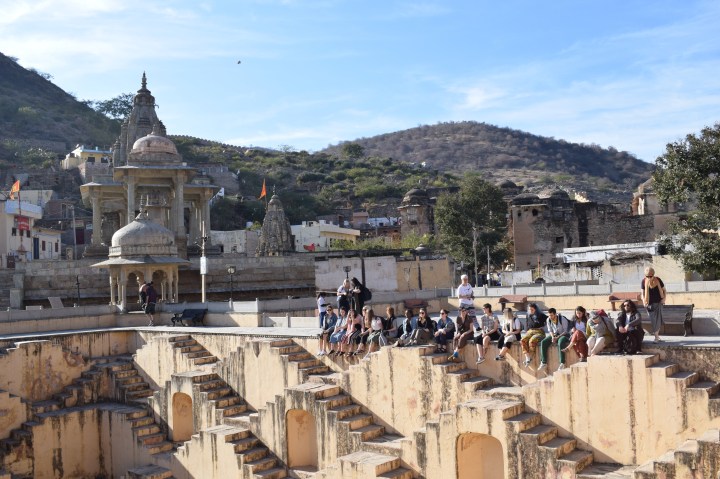
Inside the Jaipur City Palace: Architecture and Royal History
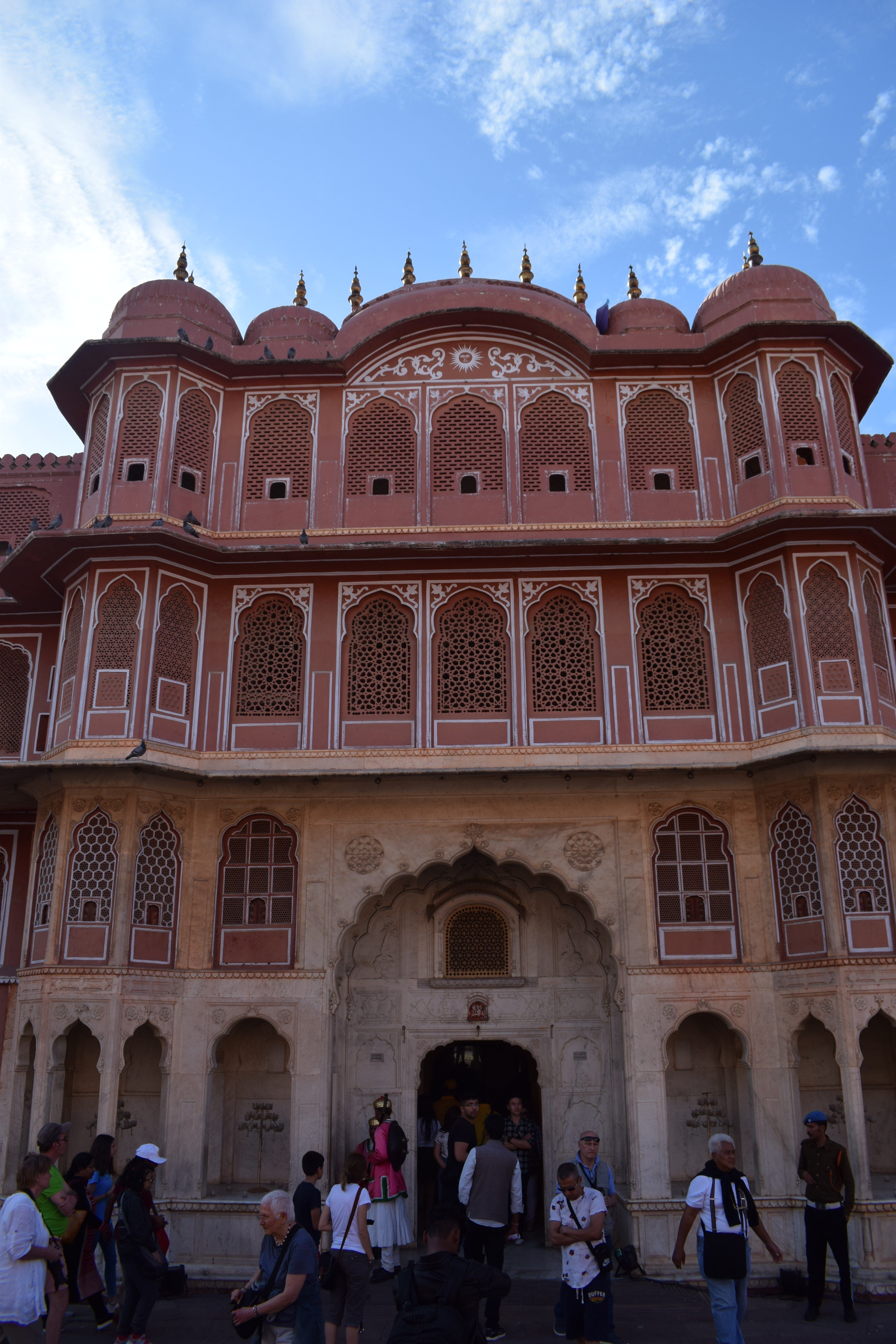
Even though the journey from Delhi started in the wee hours, no one was inclined to rest and miss seeing the City Palace, the luxurious residence of the kings of Rajasthan. Here lie antiques, weapons, halls painted with flowers and gold, museums, and the private area where the royals still live. Among the most famous are the Chandra Mahal and Mubarak Mahal.

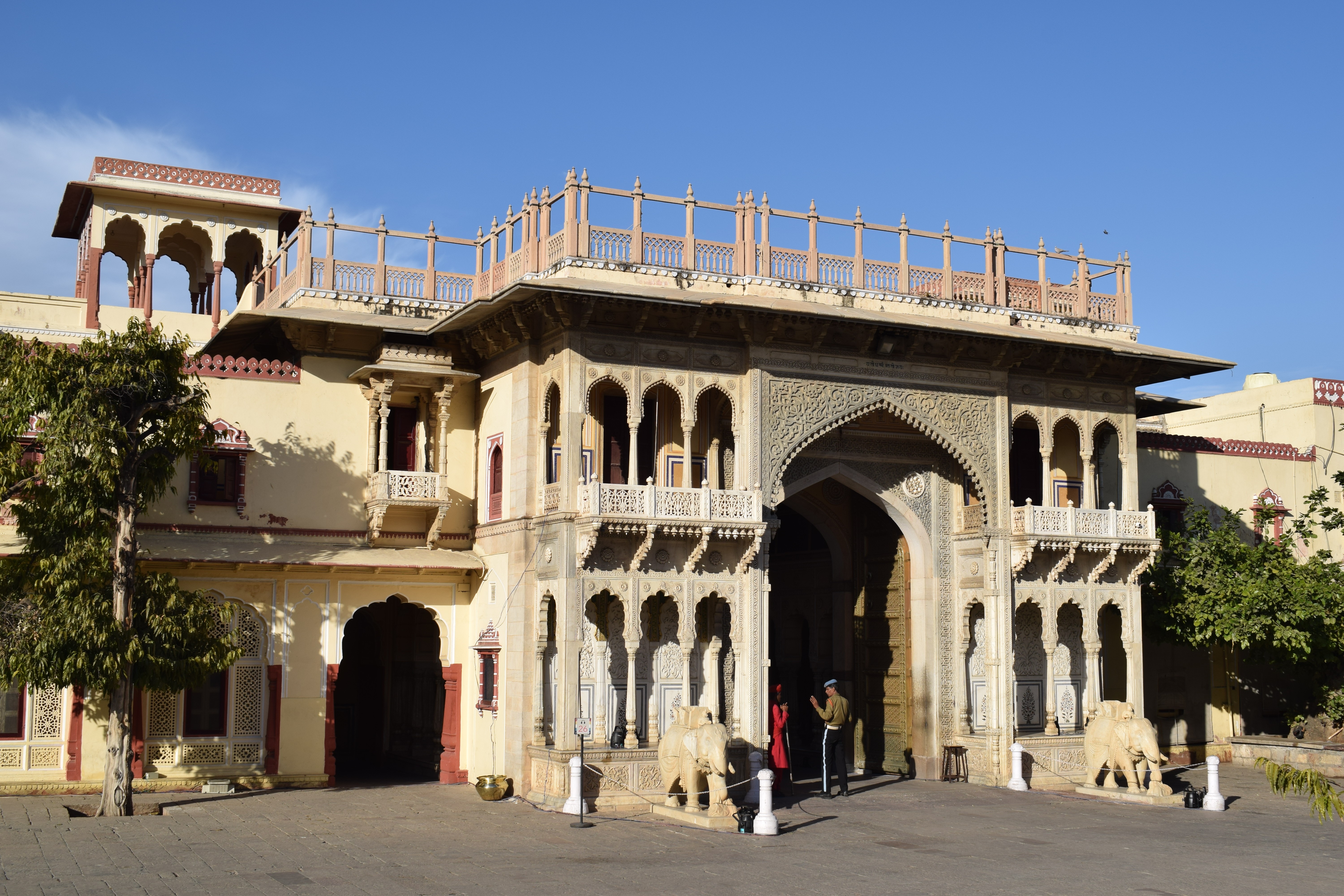
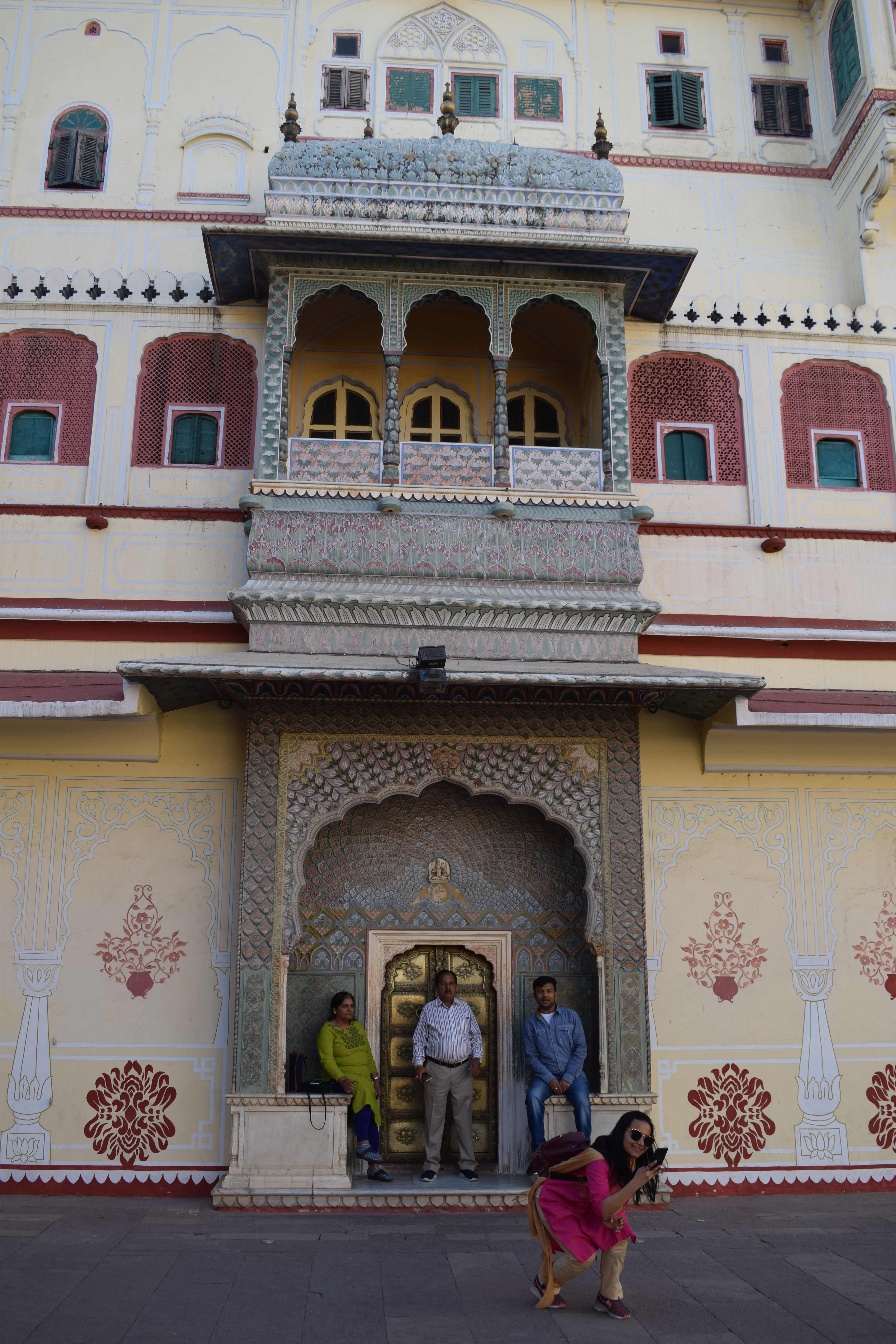
The palace was built between 1729 and 1732 by Sawai Jai Singh II. The beautiful gardens, flowery courtyards with amazing colourful doors are based on the principles of Shilpa Shastra and have Mughal and Rajputana motifs. The palace complex was designed by two architects — Vidyadhar Bhattacharya who was the chief architect in the royal court, and Sir Samuel Swinton Jacob. The Sawai had shifted the capital from Amer to Jaipur in 1727.
The Rajputs had inter-clan clashes after Jai Singh’s death in 1857 but they were friendly to the British. It was Maharaja Ram Singh who aided the British in the Uprising of 1857 and won himself favours by the Imperial rulers. When the Prince of Wales (who later became King Edward VII) visited Jaipur, Ram Singh painted the city pink to welcome him. Jaipur then became the pink city. Very little of this happy pink remains now. Only the old market area, Bapu bazaar, and some monuments have some shades of pink.
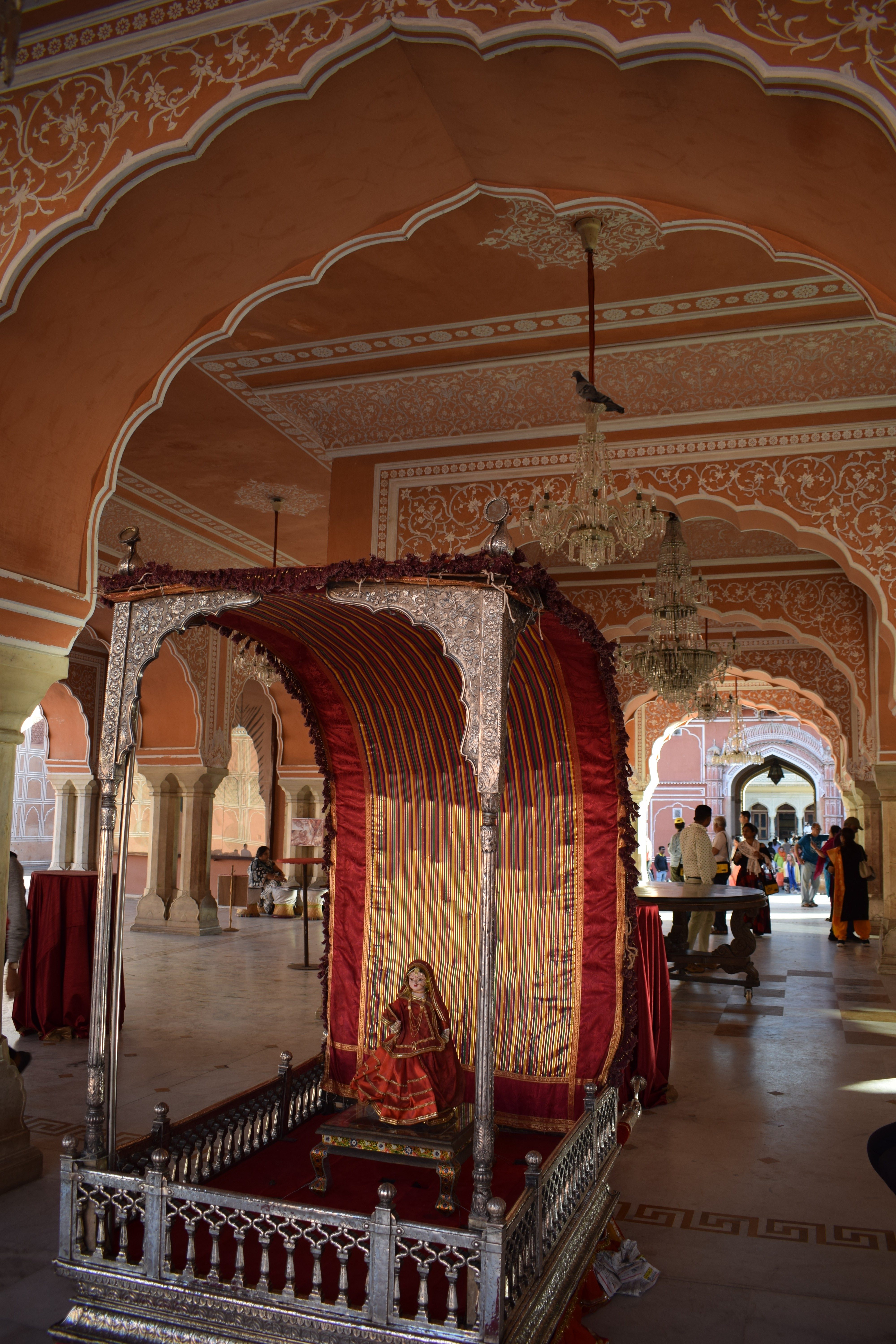

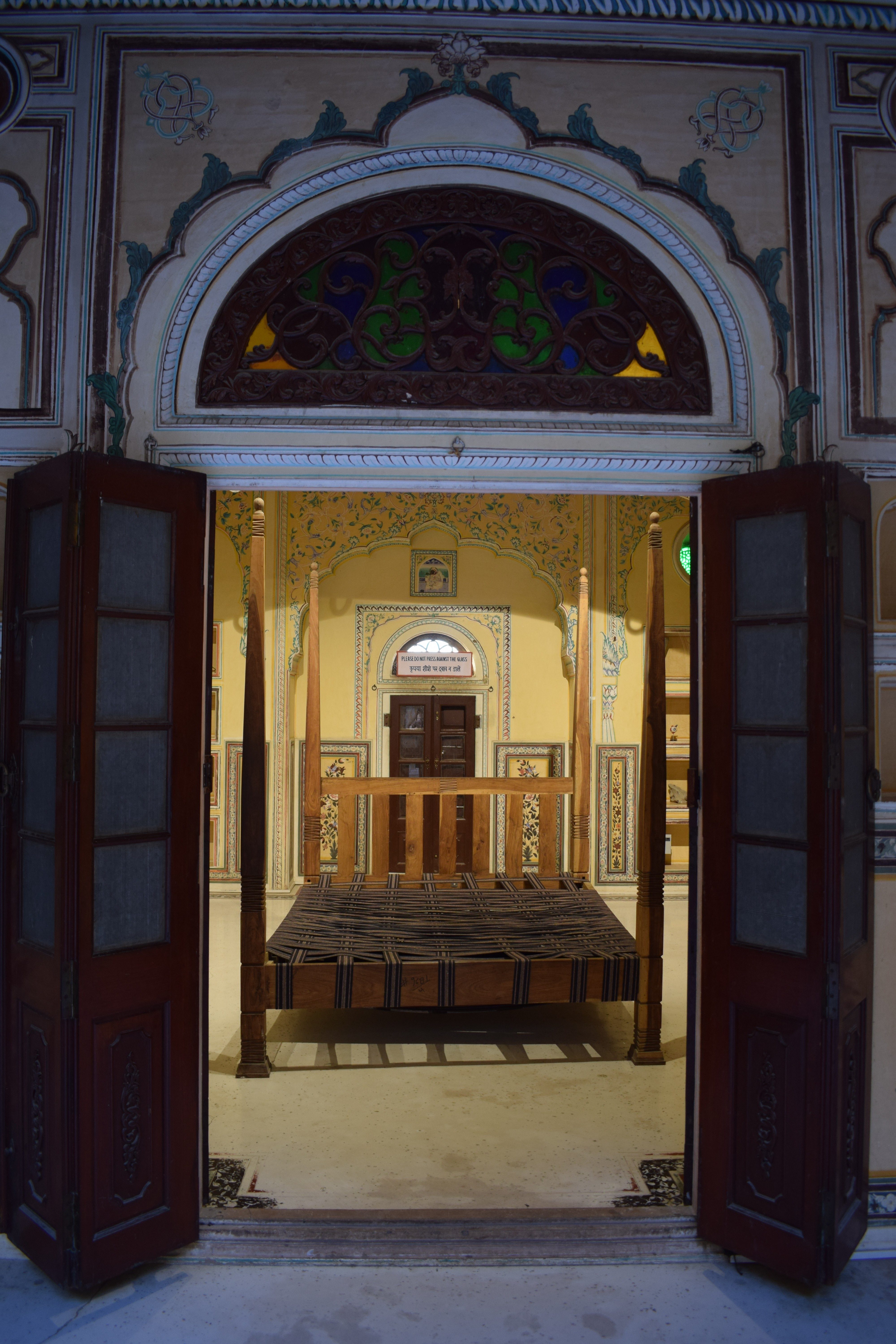
The last Maharaja of Jaipur was Man Singh II, the adopted son of Maharaja Madho Singh II. When the princely states were brought under the umbrella of the Republic of India in 1949, he became the Rajapramukh (present day Governor) of Rajasthan and later became the Ambassador of India to Spain.
Jal Mahal: Palace on Man Sagar Lake
I woke up early to see the sunrise over Jal Mahal aka water palace. The frolicking migratory pelicans and the shimmering ripples satiated my soul. The morning air was buzzing with the sound of prayers from the nearby Krishna temples and the chirp of birds in search of food. The sun turned the water into many shades of orange.


The five-storeyed marvel was built in Man Sagar Lake by Maharaja Jai Singh II. With four storeys beneath the water, and one above, this is made of red sandstone. The palace has gone through multiple renovations and can only be seen from the shore. The promenade buzzes with camel and horse rides in the evening.
The night lights give a surreal glow to the royal palace in the water.
Shopping in Bapu Bazaar: Traditional Crafts and Street Food Tips
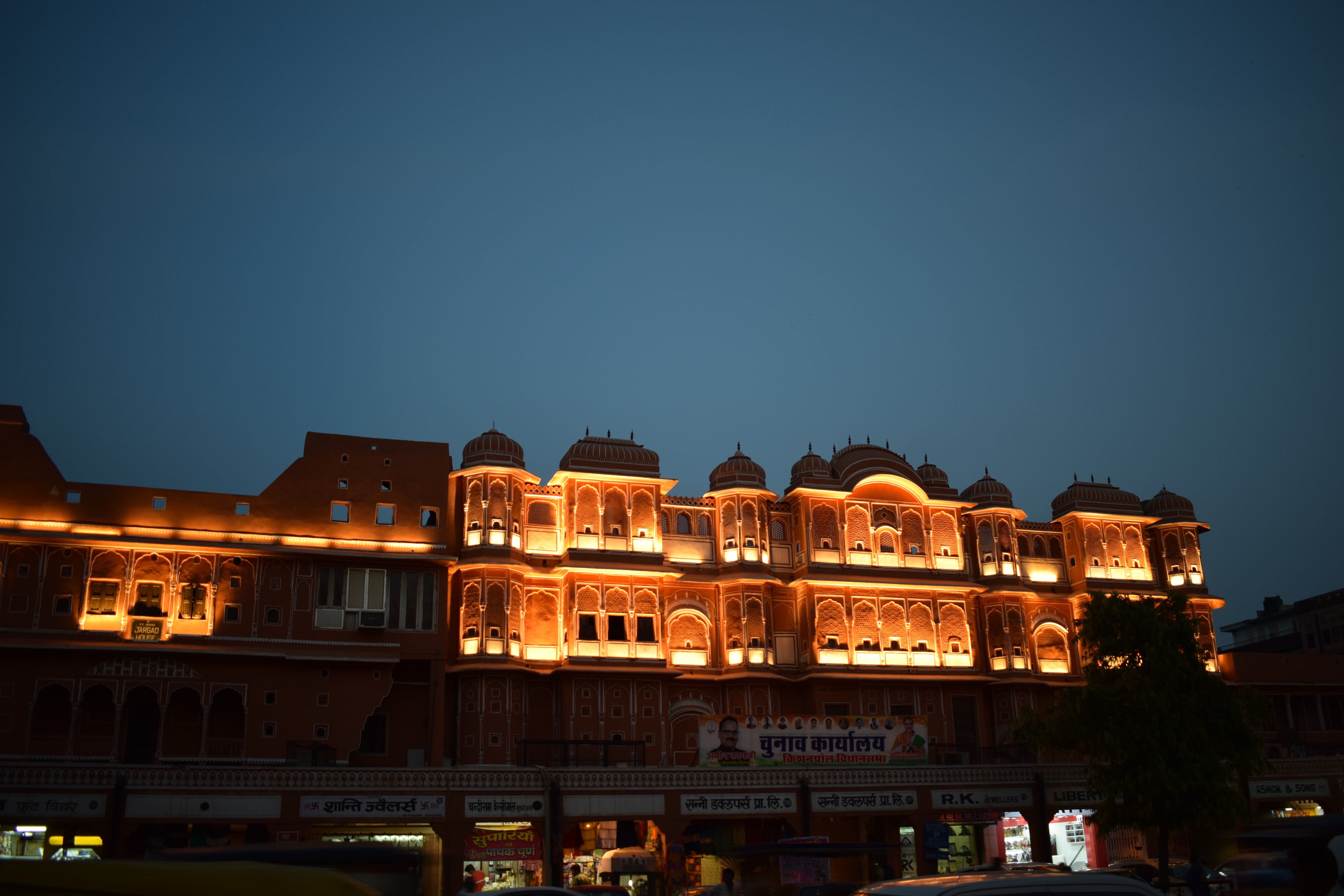
With the last stop being Laxmi Misthan Bhandar for some ghevar and other traditional sweets, the long drive to Delhi began with mixed emotions.

Iconic Street Food You Cannot Miss
- Pyaaz Kachoris: Crisp, flaky pastries stuffed with a spiced onion filling.
Ghevar: A porous, disc-shaped sweet cake soaked in sugar syrup—a true local delicacy.
Kanji Wada: Light, savory lentil dumplings soaked in a tangy, fermented mustard water.
Dine in: Authentic Dishes and Local Delicacies
The Traditional Rajasthani Thali
A magnificent platter that balances rich, complex spices with cooling textures with these legendary preparations:
- Dal Baati Churma: The undisputed crown jewel of regional cuisine, featuring slow-baked wheat balls (baati) crushed into a rich, slow-cooked lentil broth (dal) and paired with sweet, cardamom-infused crumbled wheat flakes (churma).
- Gatte ki Sabzi: A deeply comforting, spiced yogurt curry cooked with melt-in-your-mouth steamed gram flour (chickpea) dumplings.
- Ker Sangri: A rare, hyper-local royal dish made from desert berries (ker) and dried wild beans (sangri), stir-fried with mustard oil and sour, sun-dried mangoes.
- Bajre ki Roti: A rustic, stone-ground pearl millet flatbread served hot, glistening with a generous dollop of fresh yellow clarified butter (ghee).
The Perfect Dessert Finisher: Matka Kulfi
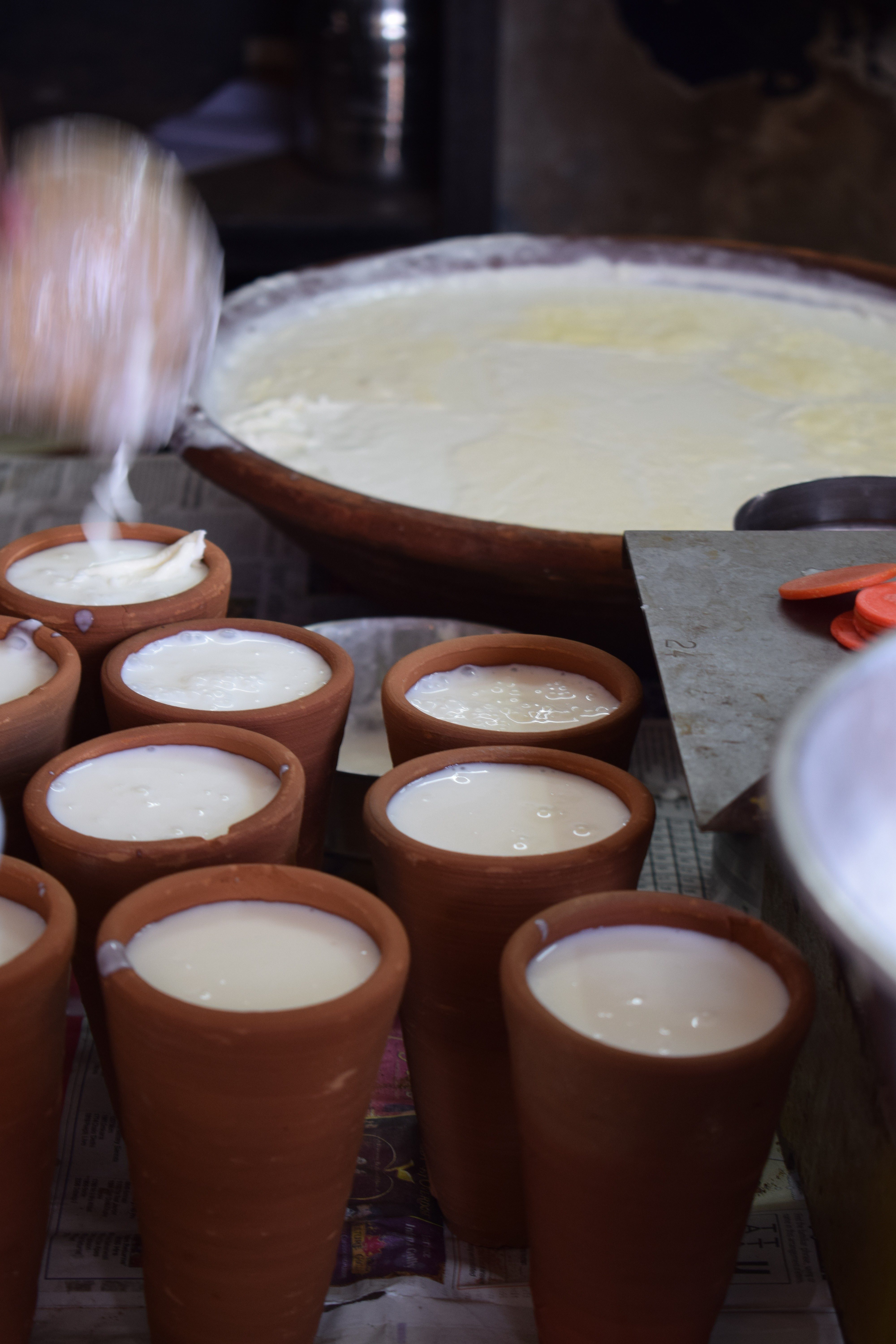
- A dense, unchurned traditional Indian ice cream slow-simmered with reduced milk, fragrant saffron strings, and crushed pistachios. It is frozen inside miniature terracotta clay pots (matkas), which absorb moisture and leave the dessert with a distinct, earthy finish.
Quick Jaipur Shopping Checklist
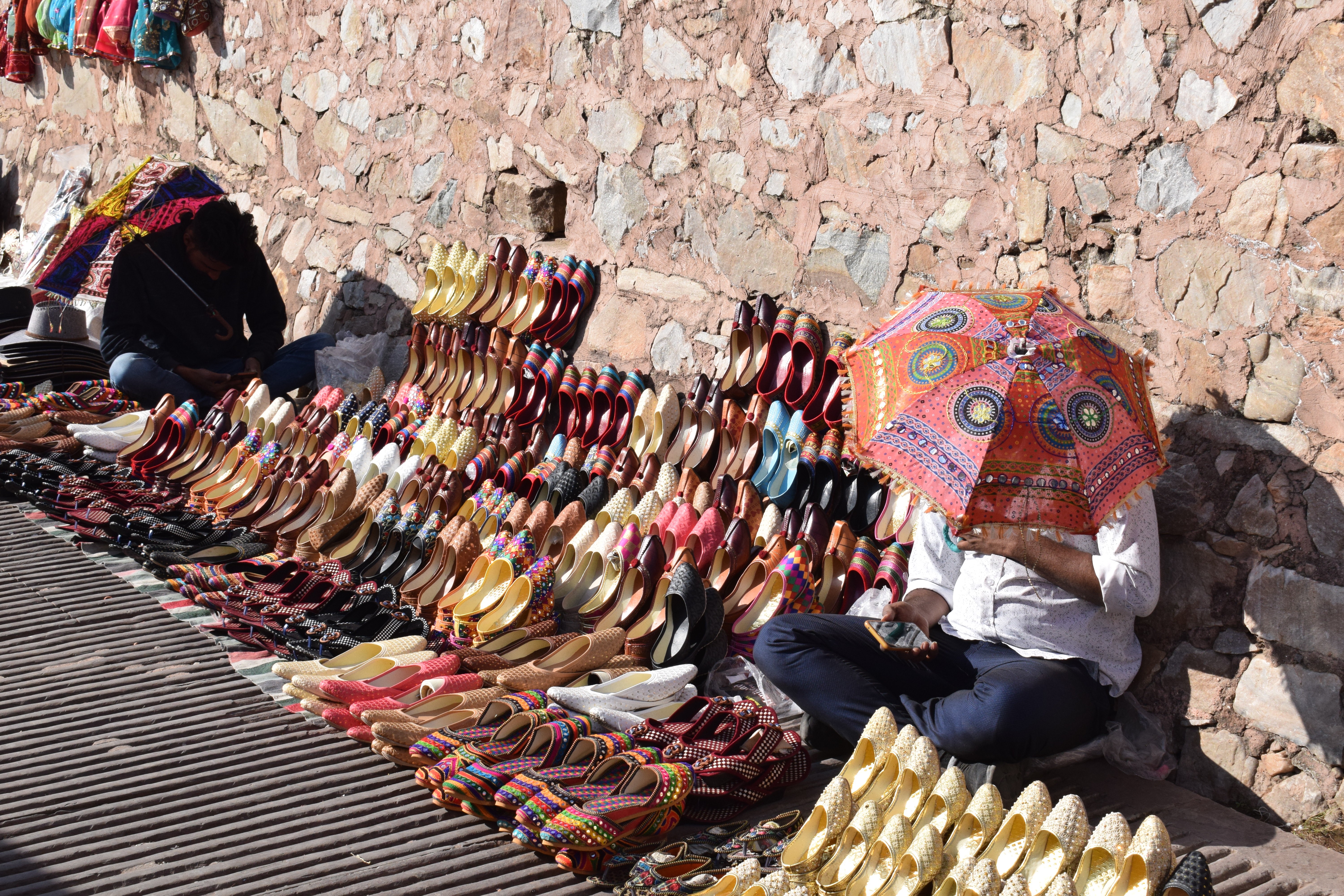
- Juttis & Leatherware: Handcrafted traditional footwear available in the old market alleys.
- Bandhani Textiles: Vibrant tie-dye dupattas, ghagharas, and lightweight fabrics.
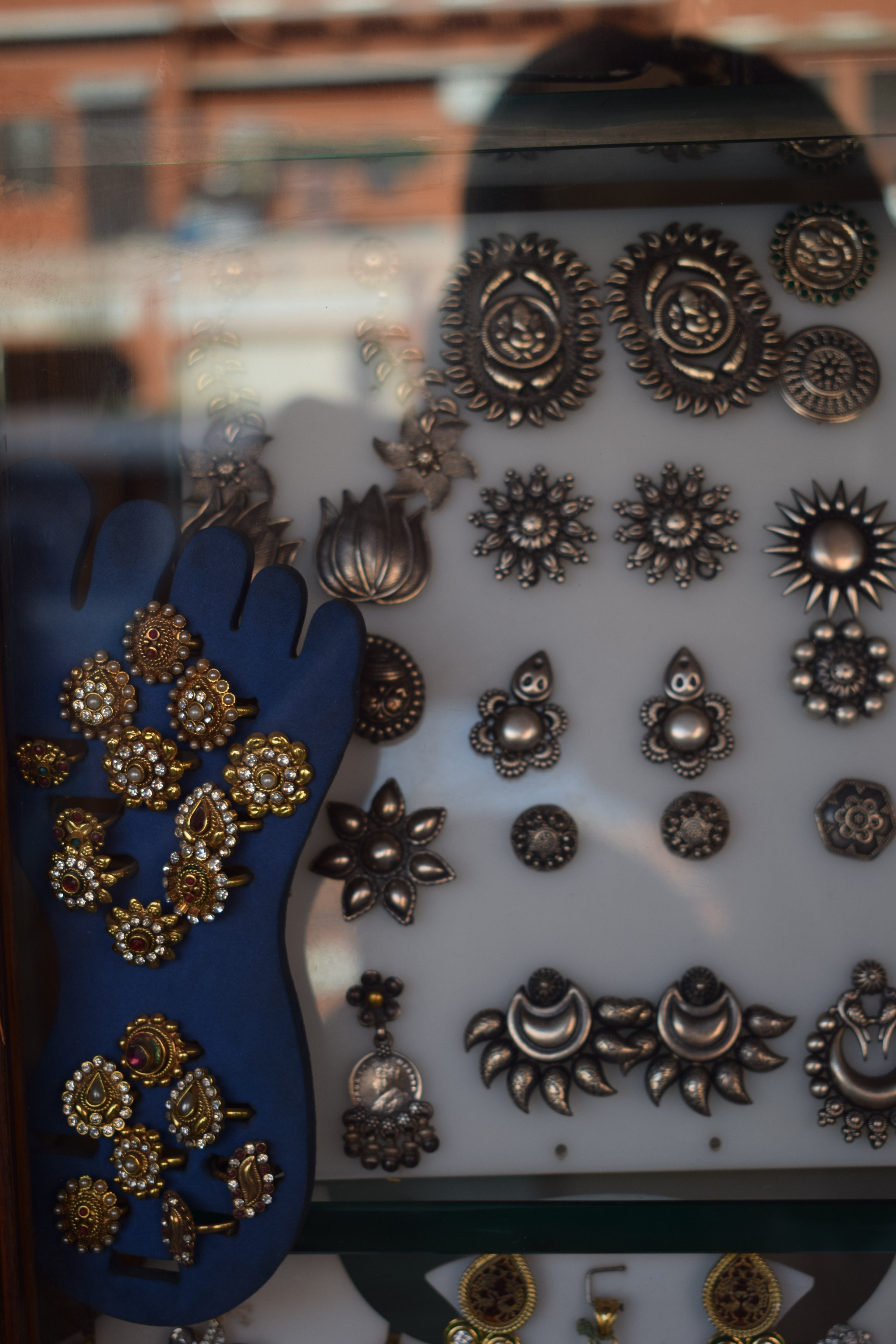
- Oxidised Jewelry: Intricate metal earrings, silver trinkets, and handmade pouches.


More Incredible Places to Visit in Jaipur
If you have extra days to explore the Pink City, you can experience deeper history, royal astronomy, and breathtaking panoramic views. Here is an editor-curated breakdown of Jaipur’s essential secondary landmarks, organized by location to save you travel time:
1. The Old City Heritage Cluster (Walking Distance from City Palace)
- Hawa Mahal (Palace of Winds): An architectural marvel featuring 953 miniature pink sandstone windows (jharokhas). It was designed specifically to allow royal women to observe street festivals below while remaining completely hidden from public view.
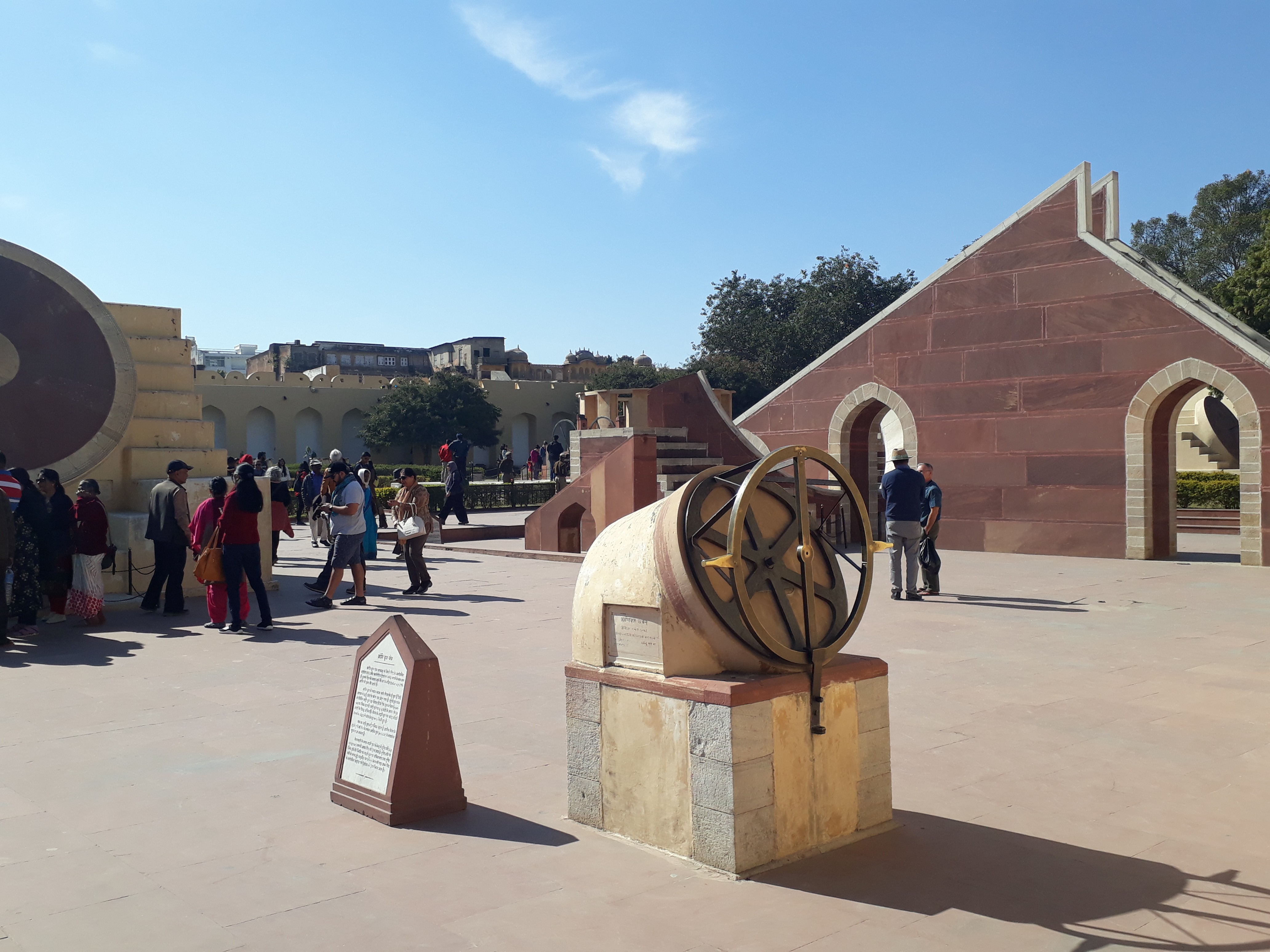
- Jantar Mantar: A UNESCO World Heritage site housing the world’s largest stone sundial. This open-air astronomical observatory showcases an incredible historical mastery of time, shadow tracking, and star mapping.
- Albert Hall Museum: Located just outside the old city gates, this stunning Indo-Saracenic building functions as the state’s oldest museum, storing rare collections of traditional garments, miniature paintings, and historical metalwork.
2. The Majestic Hilltop Forts & Royal Cenotaphs
- Nahargarh Fort: Perched high on the edge of the Aravalli Hills, this fort provides the absolute best panoramic sunset views of the entire Jaipur cityscape spreading out below.
- Jaigarh Fort: Built to protect Amer Fort, this massive military structure houses Jaivana—the world’s largest 18th-century cannon on wheels—alongside a complex historical network of water-harvesting reservoirs.
- Royal Cenotaphs at Gaitore: Located at the foothills of Nahargarh, this peaceful, uncrowded valley contains the beautifully carved marble and sandstone memorial tombs of Jaipur’s past royal rulers.
3. Sacred Spaces & Nature
Kanak Ghati Temples: Located in a lush green valley at the base of the Amer hills, these beautifully landscaped gardens and traditional temples offer a serene escape from the city’s busy markets.


How to Reach Jaipur: Flight, Train, and Road Options
Jaipur is well-connected to major Indian metros and international hubs, making it an easy addition to any North India itinerary. Here is the most efficient way to plan your journey:
By Air: Flying into Sanganer
- The Hub: Jaipur International Airport (JAI) is located in the suburb of Sanganer, roughly 10km from the heart of the main city center.
- Connectivity: It operates daily direct domestic flights to major hubs like Mumbai and Delhi, along with direct international connections to key Middle Eastern hubs. Pre-paid airport taxis and app-based rides are readily available at the arrivals terminal.
By Road: Driving from New Delhi
- The Route: The drive from New Delhi to Jaipur spans roughly 268km.
- Travel Time: Thanks to the modern Delhi–Mumbai Expressway corridors connecting parts of the route, the drive can be comfortably completed in under 5 to 6 hours. Private cabs, self-drive rentals, and luxury air-conditioned tourist buses run frequently along this highway.
By Train: Rail Connections & Luxury Travel
The Luxury Experience: For an unforgettable heritage journey, Jaipur is a signature stop along the route of the world-famous luxury train, the Palace on Wheels.
The Station: Jaipur Junction (JP) is the primary railhead and welcomes express trains daily from across India.
The Express Routes: Premium options like the Vande Bharat Express and the Shatabdi Express provide fast, air-conditioned, day-time connectivity directly from Delhi. I have been on the Double Decker train as well, which is another unmissable experience.


I had visited Udaipur & had fallen in love with it. Reading your post, I crave to explore more of Rajasthan. Your write ups are beautifully detailed. Great work !
LikeLiked by 1 person
Being a fauji kid was the best thing as we often got a chance to travel in India. I have spent my initial school vacations in Udaipur and loved it that time. I remember clicking pictures in the traditional attire in a garden. I wish to revisit the place now with my daughter. This is such a beautiful compilation :)
LikeLiked by 1 person
I want to visit Udaipur and Mount Abu as well
LikeLike